August 4, 2026
Posted on

August 4, 2026
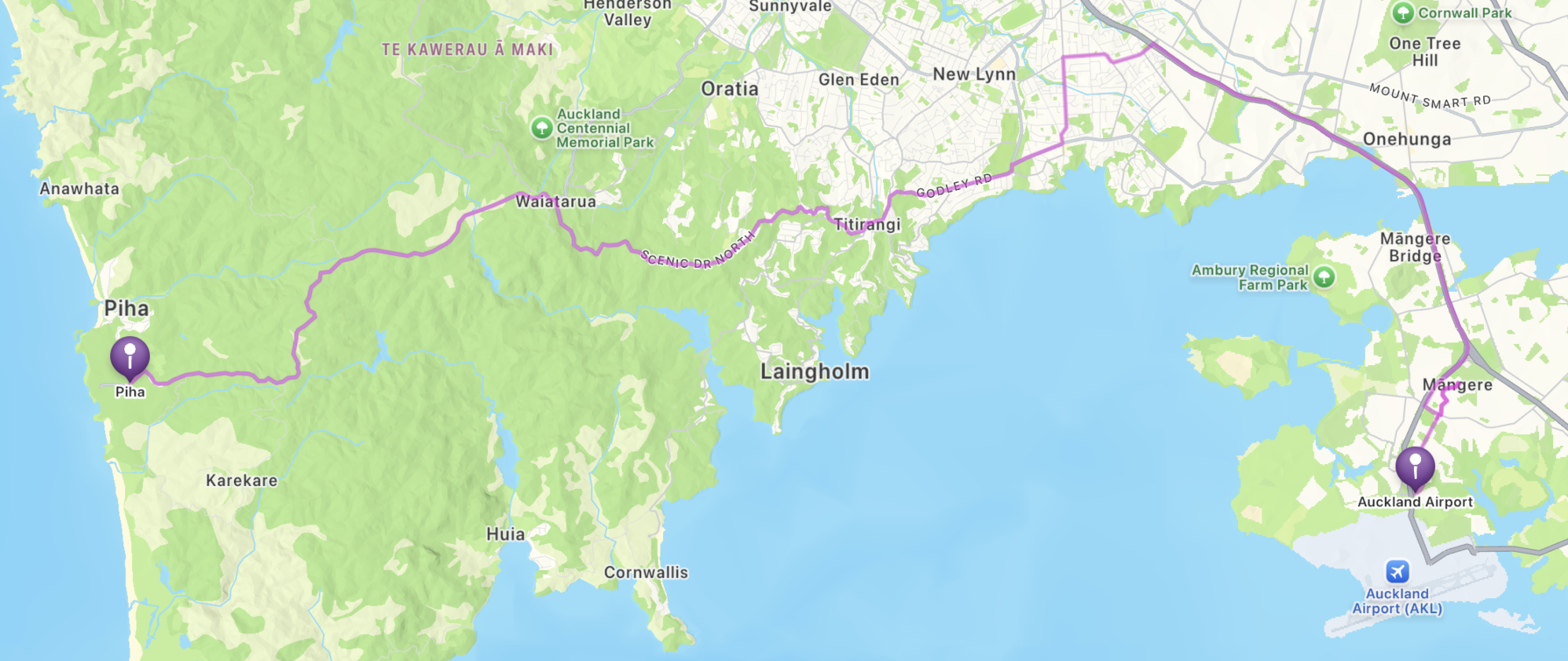
The morning was much nicer than the day before, with partly cloudy skies. Since our delayed flight was not leaving until that evening, we had a bonus day for more activities in Piha.
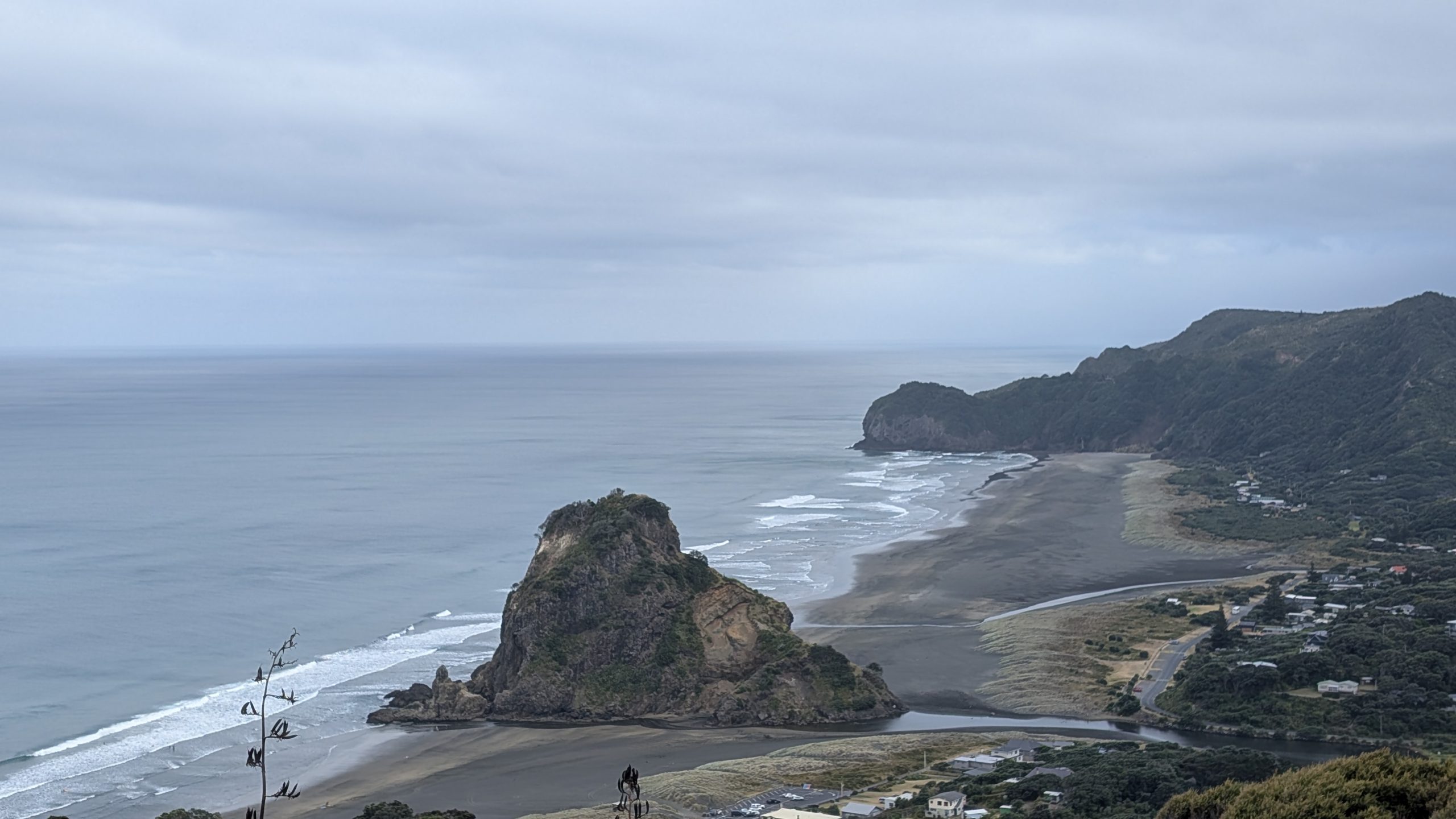
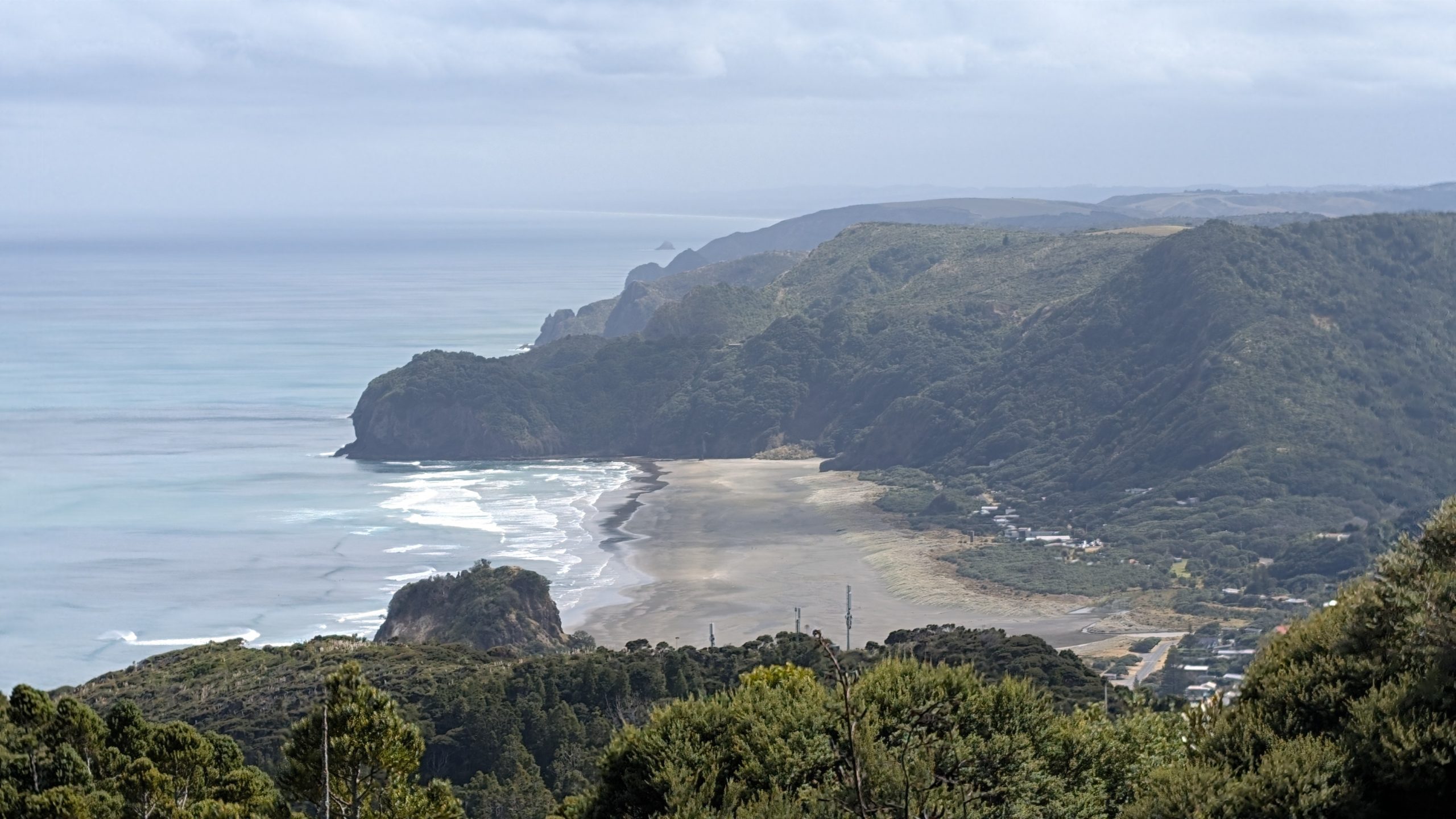
After finishing more leftovers for breakfast, we drove down to Piha and stopped at a roadside overlook of Lion Rock and the Piha beaches.
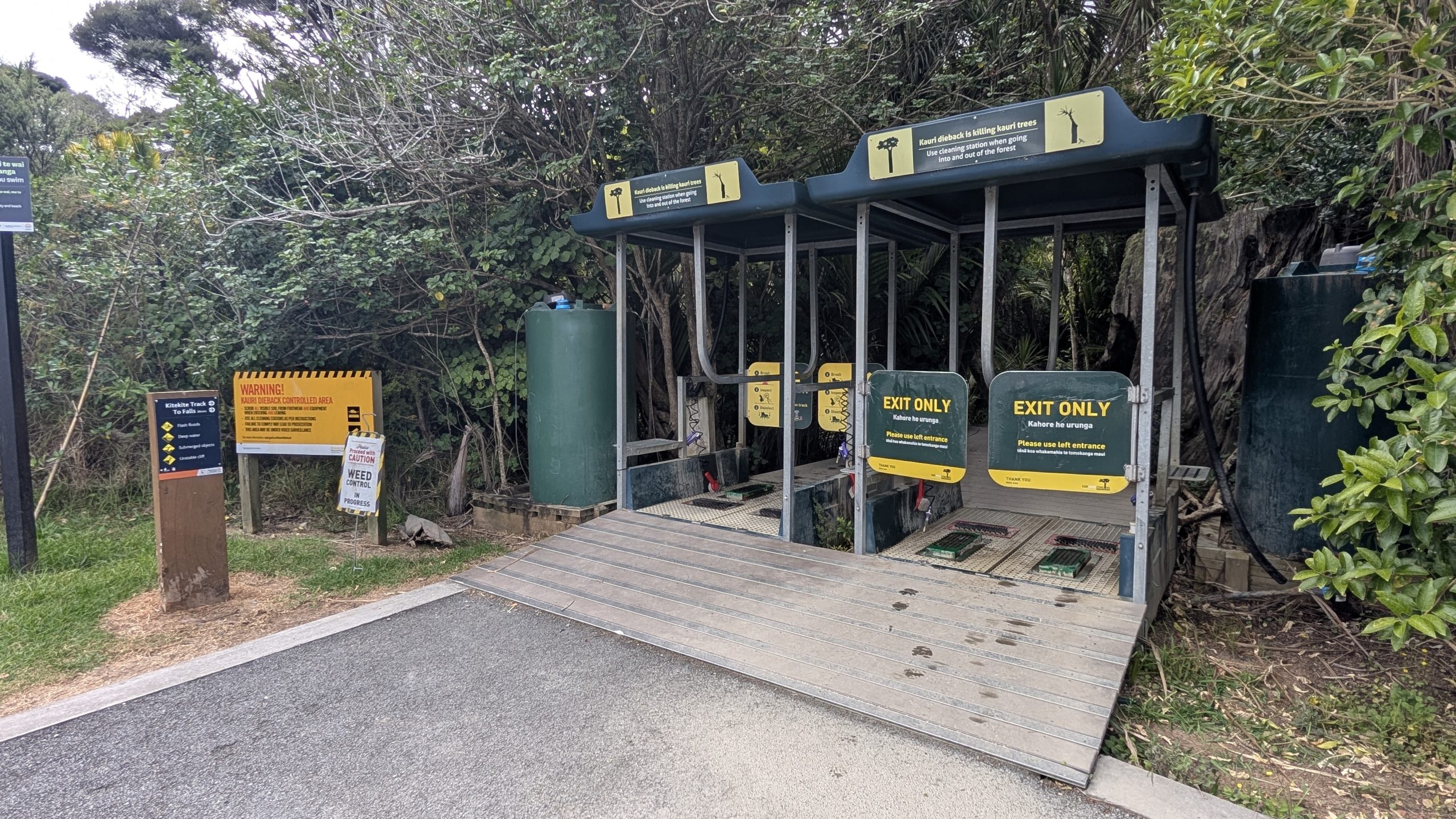
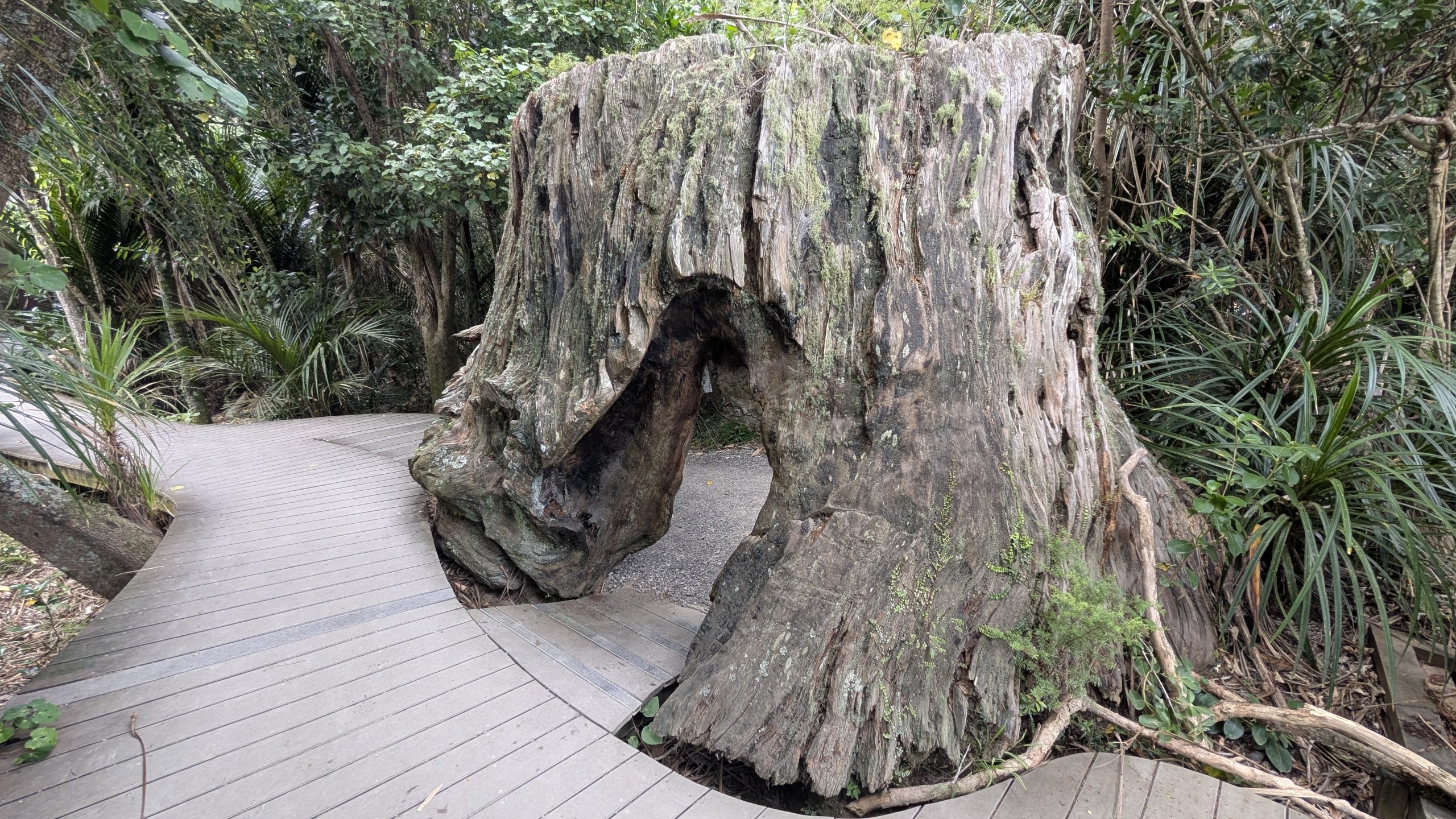
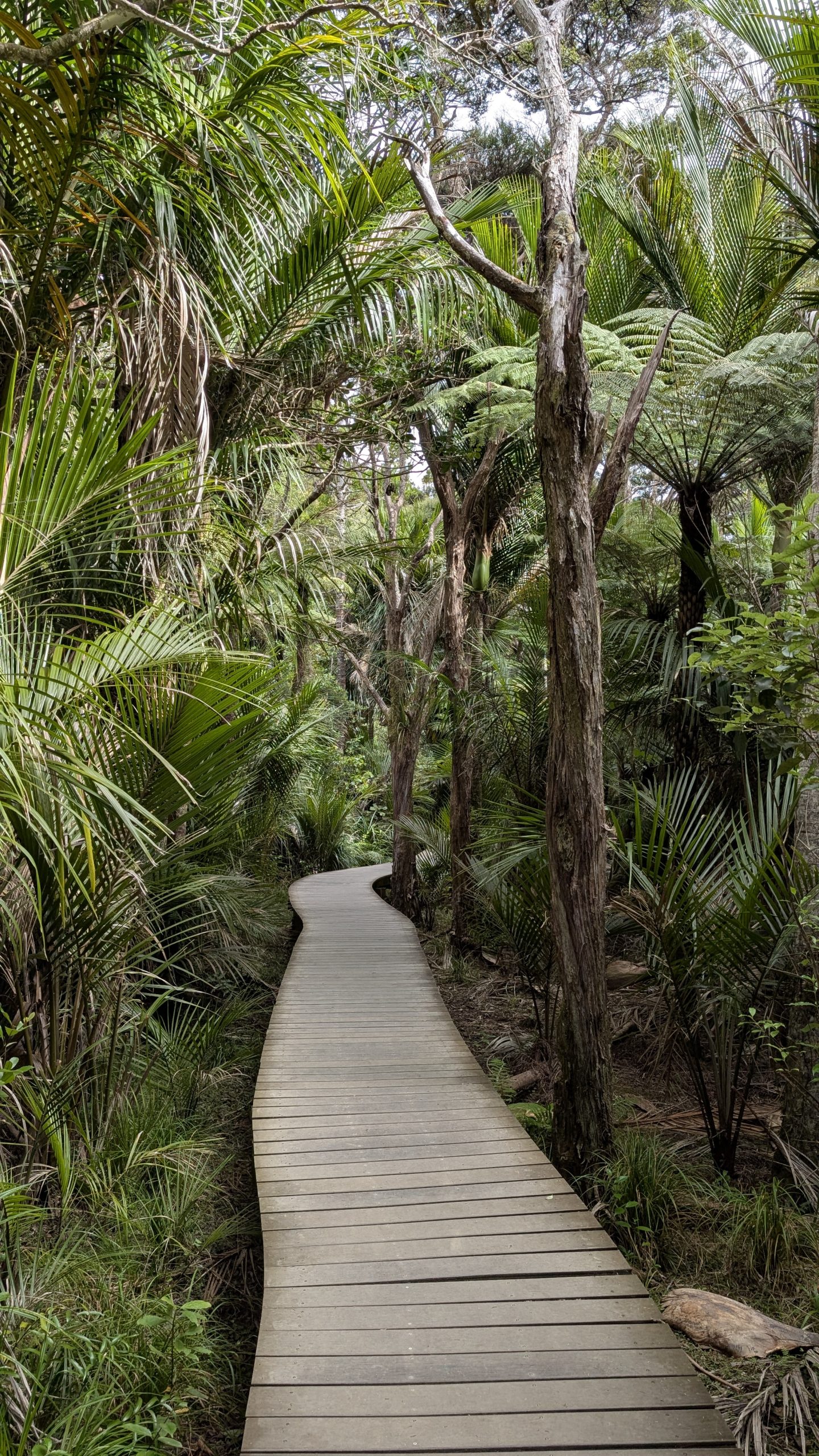
Then we drove to the trailhead to Kitekite Falls. It was a fairly easy 2.8 km loop hike to the waterfall, going out on the Kitekite Track and returning via the Byers Walk. We passed through the cleaning station at the trail entrance to disinfect our boots to prevent the spread of kauri dieback.
The first half of the trail was flat and easy, with boardwalks passing through a lush forest with tree ferns. The second half was a fairly steep climb to the waterfall.
Kitekite Falls was a nice 40-meter high, 3-tiered waterfall with a small pool at its base. We had a nice view, and in good weather, too. The trail was not crowded.
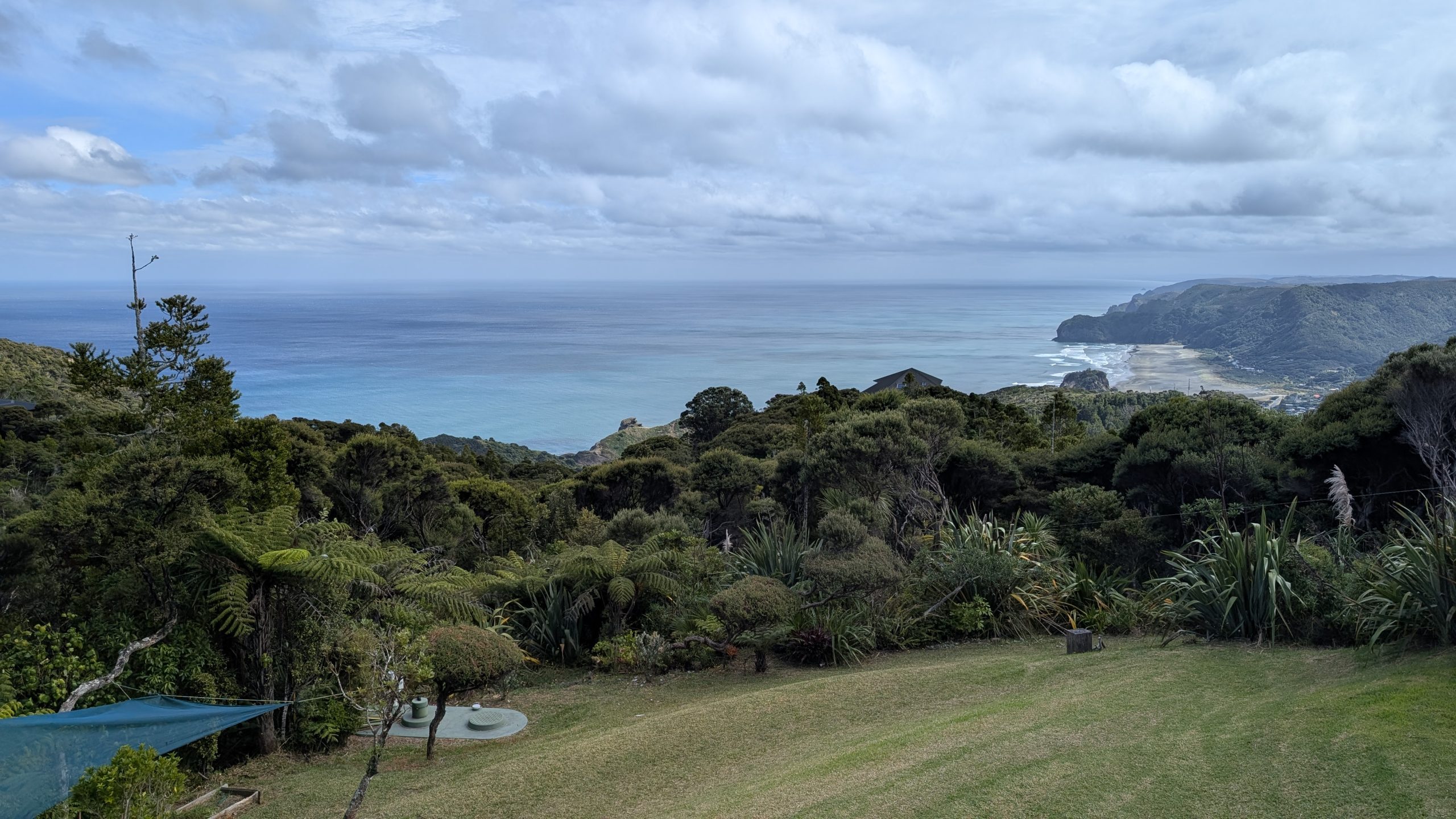
After the hike, we returned to the cottage to finish packing and have lunch. The weather continued to be nice, and we enjoyed one last view from the deck.
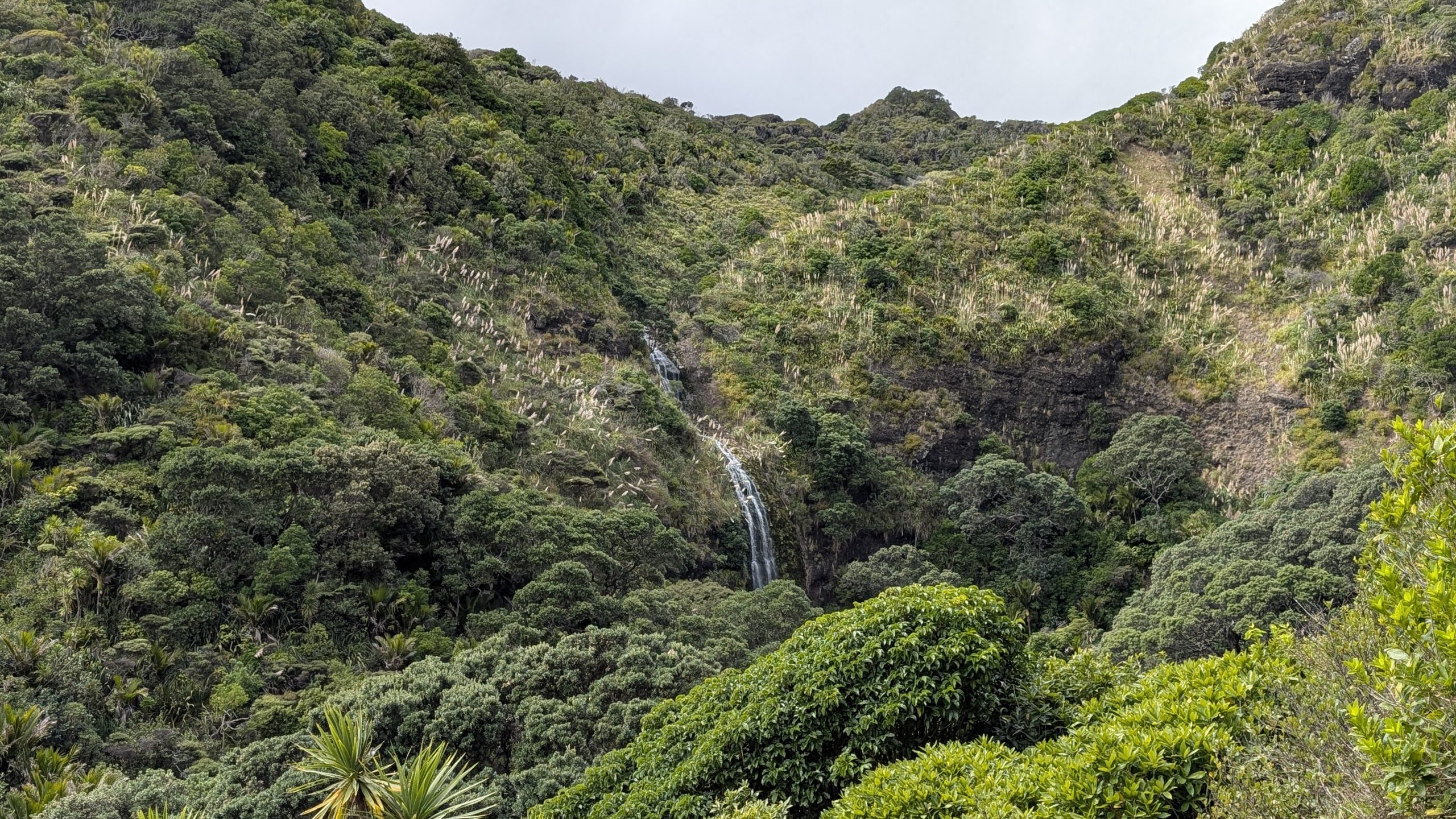
We checked out of the cottage in early afternoon and drove 10 minutes down the road to the car park for Karekare Falls and the beach. It was a 10-minute walk up the road and then a short trail to the 30-meter high Karekare Falls. At the waterfall were several people swimming at the base and enjoying the view.
On the return trip from the falls, I stopped to take a photo of the small Opal Pool Stream Cascade at the side of the trail, and another photo of Karekare Falls from the road.
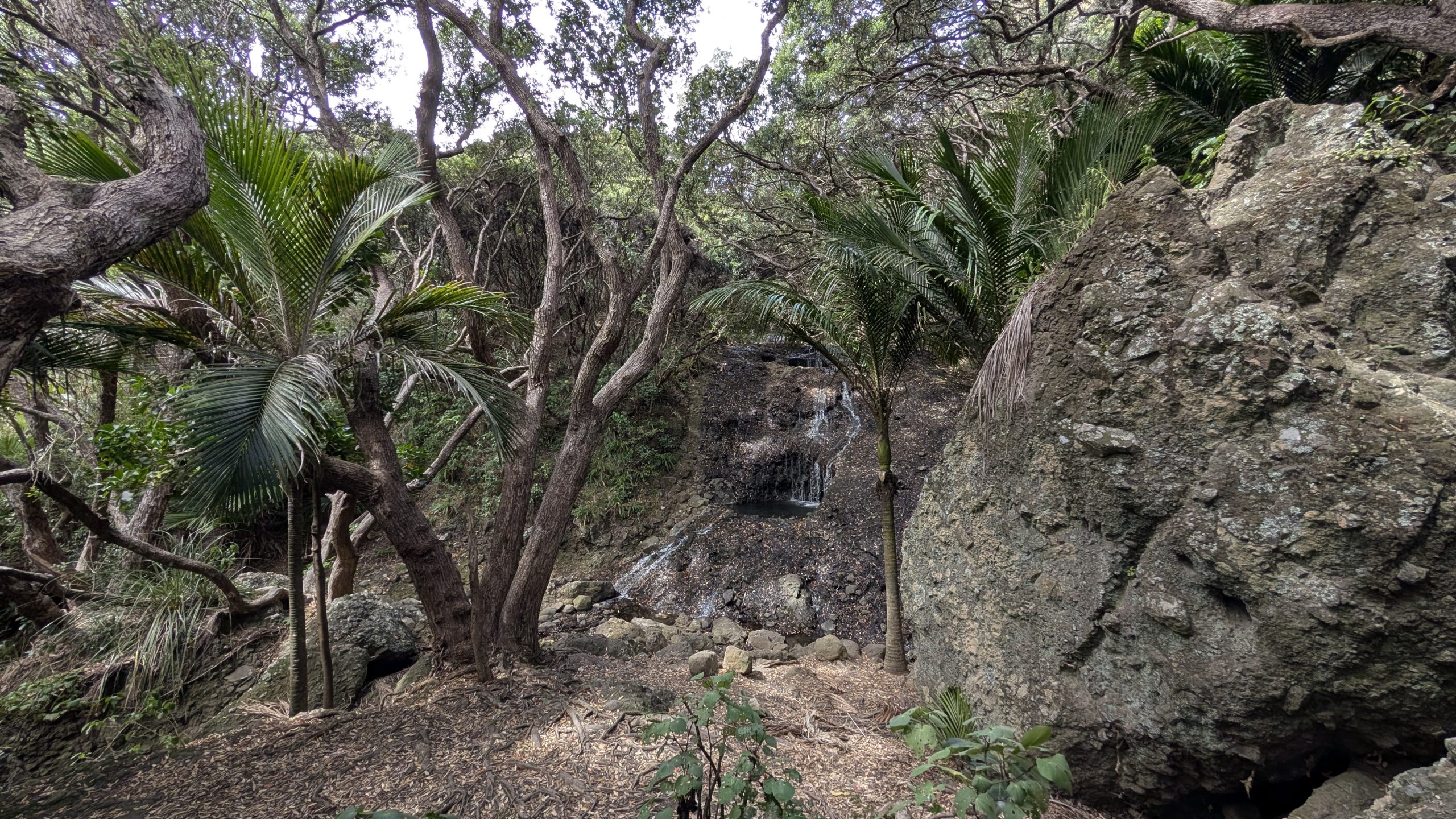
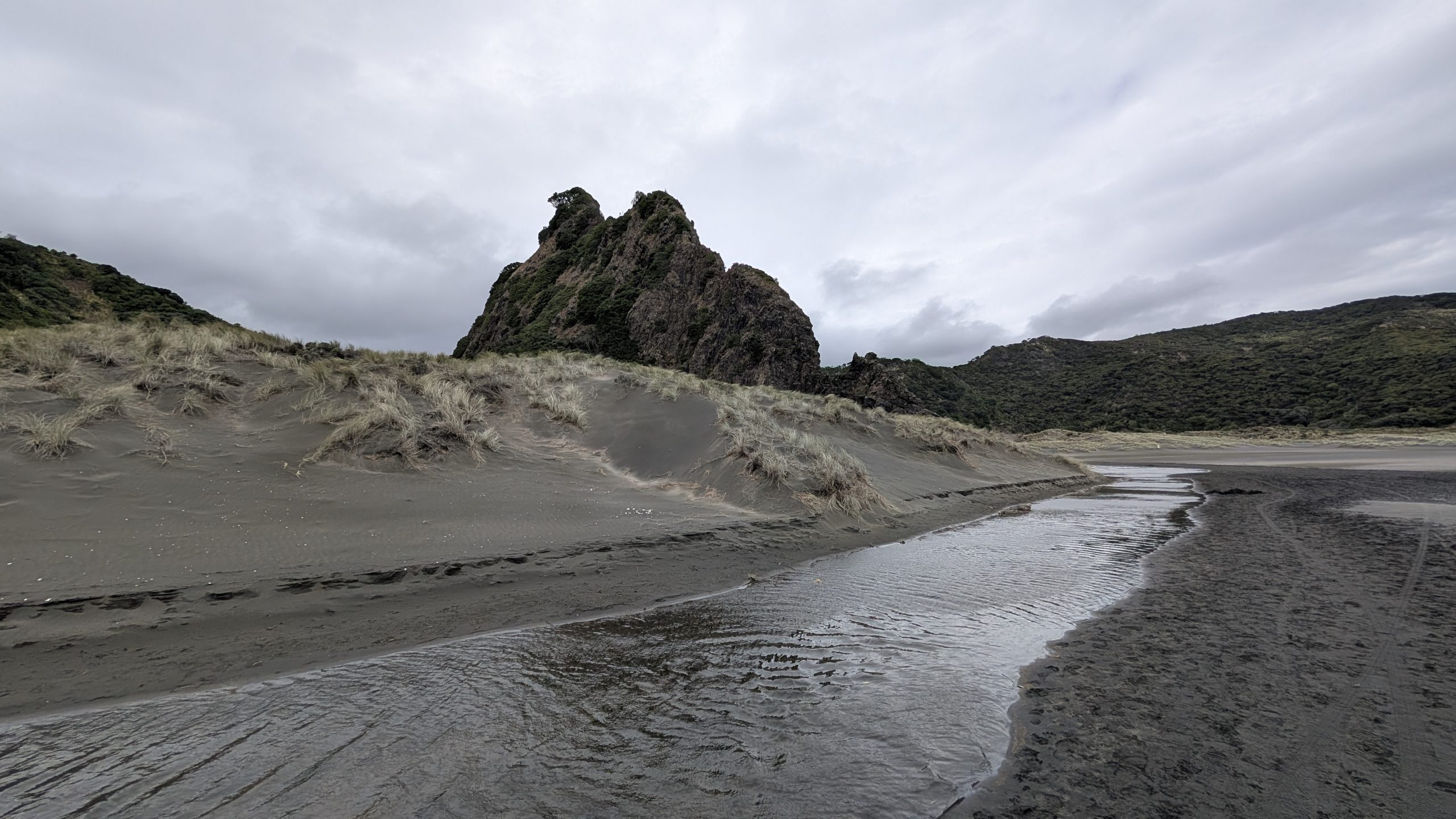
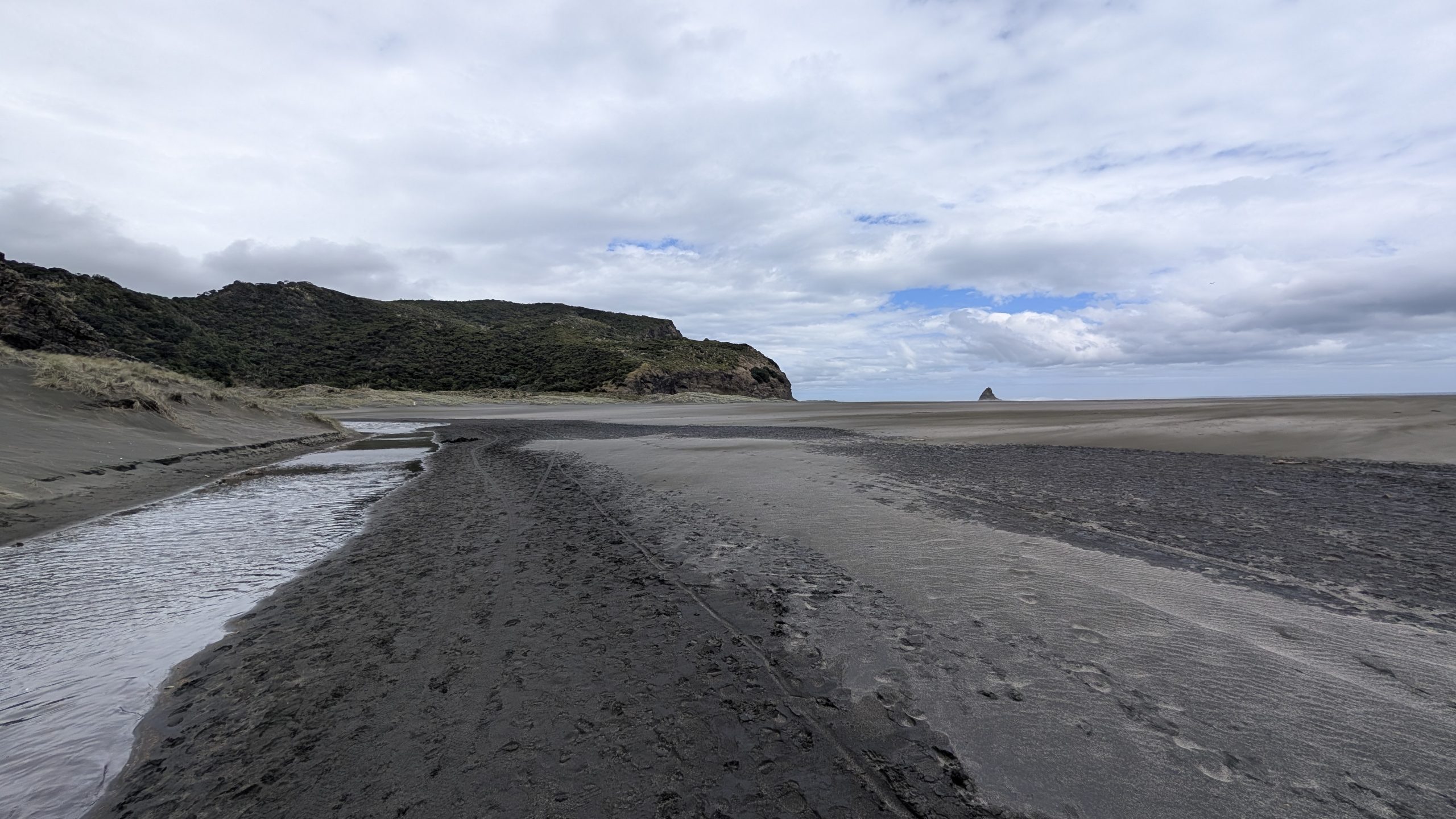
I wanted to make one more stop to see Karekare Beach before we left the area. It was another 10-minute walk from the car park. After we walked a few minutes, the trail opened up to the beach area, and it got increasingly windier as we got closer to the beach. At that point Heinrich decided to turn around: the wind was pretty uncomfortable. I continued on to the beach, but it really was not a pleasant hike. I got to the edge of the beach where I could see the Tasman Sea in the distance, but the wind was kicking up the sand and blasting it everywhere, so I did not continue on to the ocean. This was actually one hike I wished I had never bothered to take. I was not surprised that I was the only person on the beach. It was lonely and desolate.
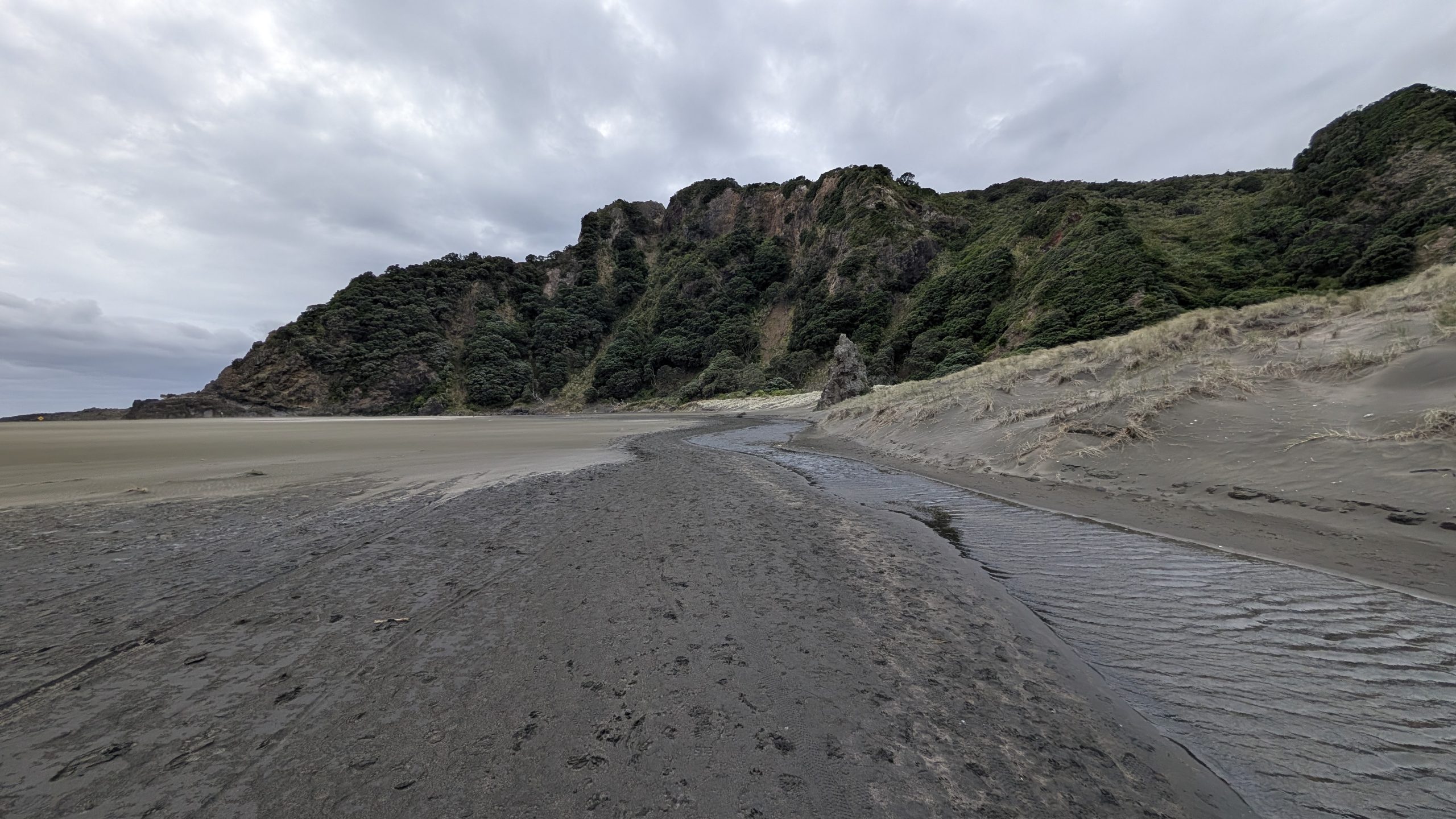
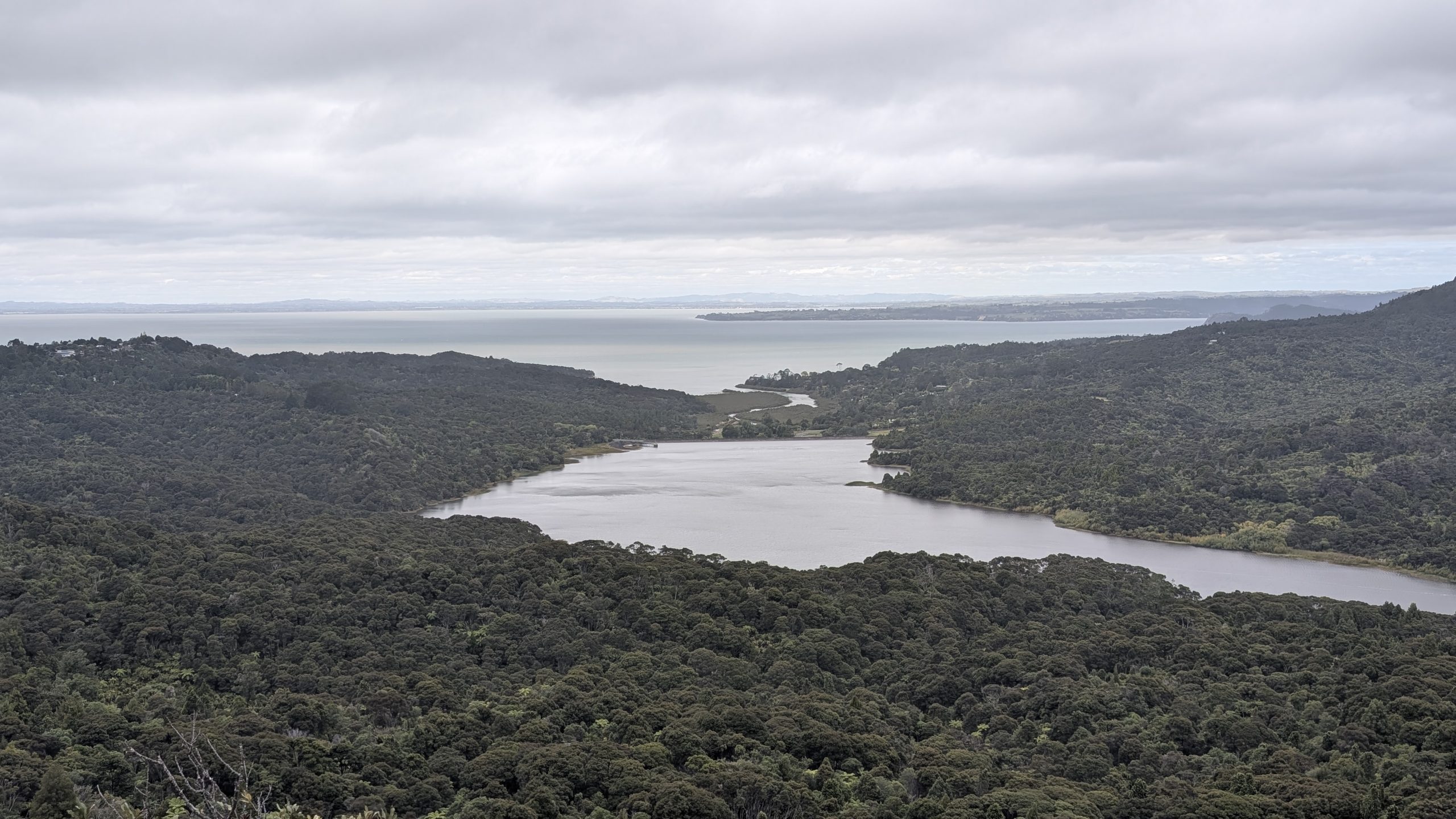
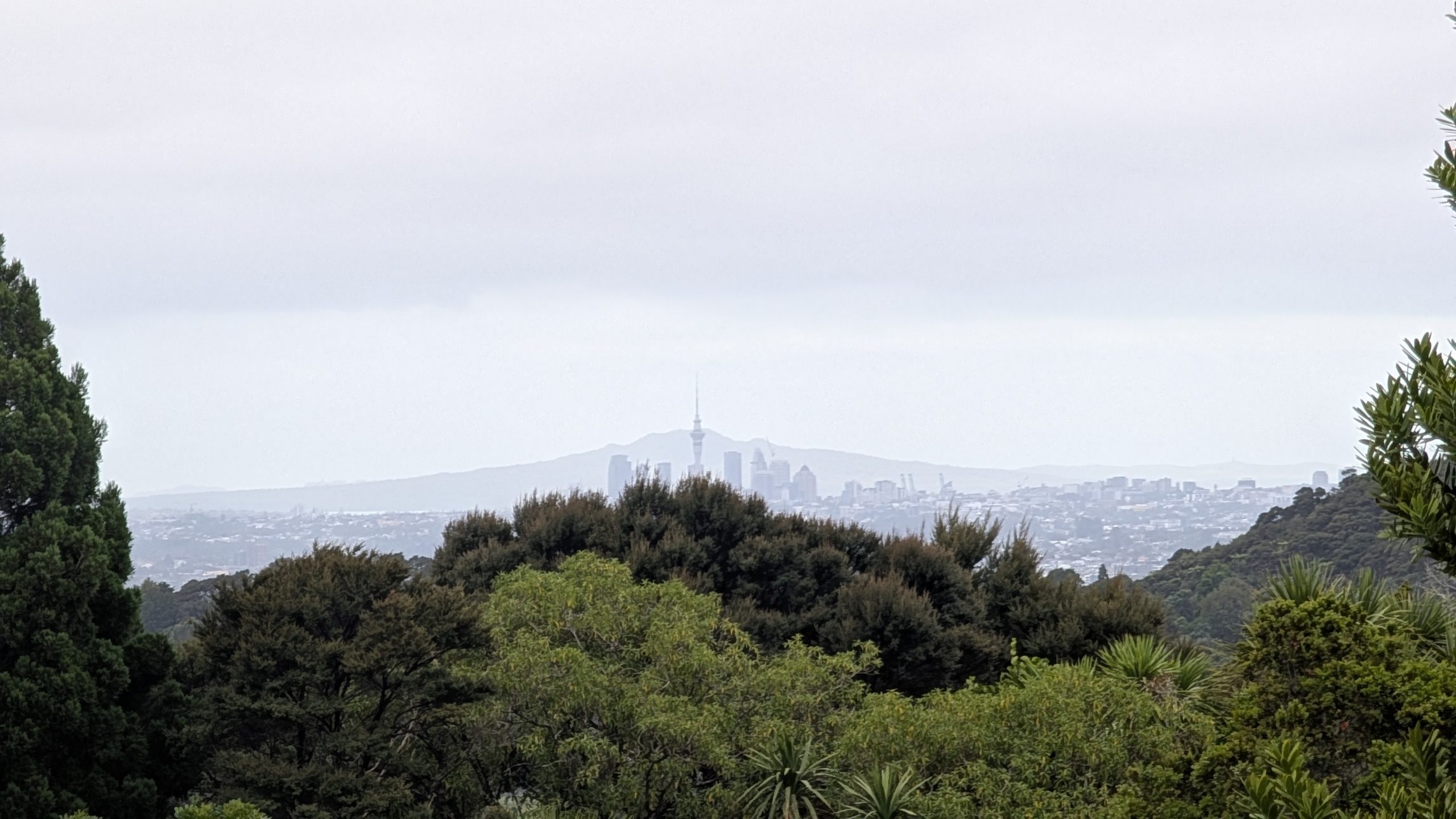
On the drive back to Auckland, we stopped to visit the Arataki Visitor Centre in the Waitakere Ranges Regional Park. We picked up some brochures of the area inside the visitor centre. Then we stopped at lookouts to the Manukou Harbour and downtown Auckland just outside the entrance. The weather had deteriorated as we got closer to Auckland, and it was now mostly cloudy, windy, and cold. There was a nature trail at the visitor centre that we could have explored, but we were running out of time and were done dealing with the weather.
We drove through the outskirts of Auckland to the vicinity of the airport and stopped at a Pak'nSave supermarket to use our remaining New Zealand cash on a few more bars of Whittaker's Chocolate. The road traffic was heavy, so it was not a fun drive. The supermarket parking lot was crowded, especially after we were done shopping.
We were going to use a coupon to make our last gas fill-up at the Pak'nSave gas station that was just a few feet away from where we had parked the car, but there was a very long line to get in. Heinrich said he did not want to deal with the line, so I searched on my phone for another gas station. We found a Mobile gas station that was about a 10-minute drive away. It had no way to pay at the pump, so he had to go inside.
Finally we navigated through more crowded roads to drive back to the Apex Car Rentals building to drop off the rental car. Then we had trouble finding someone to return the car key. We were finally taken care of after about a 15-minute wait, just as the next shuttle bus was arriving to take us to the airport.
At the airport terminal we had trouble finding the American Airlines counter to check in for our flight to Dallas. Once we passed that hurdle, we got through security fairly quickly. We had enough time before our flight to use our Priority Pass to access the lounge, but when we got to the entrance, we were turned away because the lounge was full. So we went to our gate. There was no good place to sit, so we walked upstairs and found a fairly quiet place to spend time before boarding began.
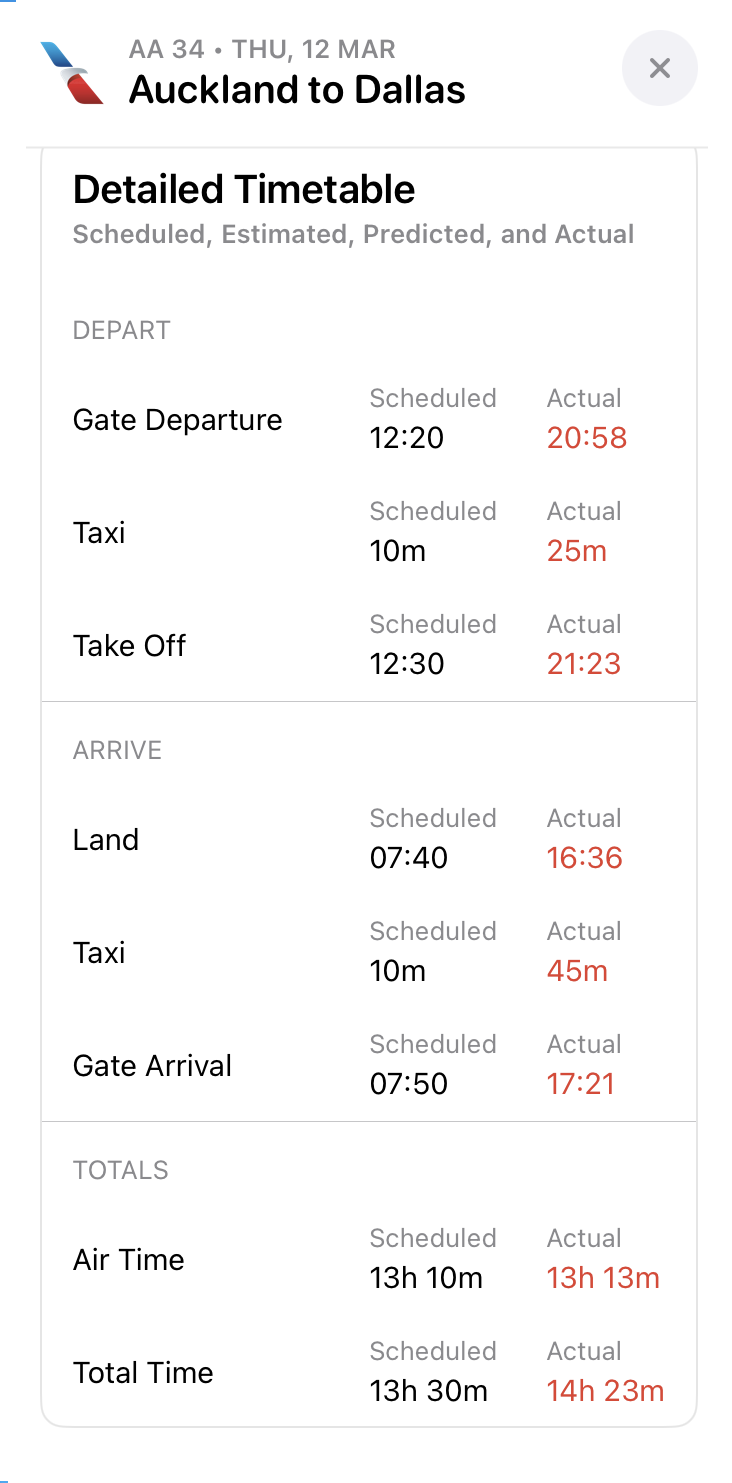
The boarding procedure consisted of taking a bus to go out to the plane. We were in group 6 for boarding, and we were the first in our group to board the bus. We stood at the back door entrance of the bus, thinking we could get off early, but we ended up being last since they didn't open the back door when we arrived. After we got on the plane, the compartments above our seats were already filled, but we managed to squeeze our carry-on luggage into bins a few rows ahead of us. Boarding was extremely slow, and it delayed our flight even further. We finally left at about 9 PM, 45 minutes behind schedule.
We were in a row with just 2 seats at the back of the plane, with 3 seats in front of us. We had used this same setup on previous trips to and from New Zealand, and it had worked out well because we had more room at the extra seat in front of us. This plane's configuration was a bit different because the extra seat was near the window and not the aisle. My seat was directly behind the middle seat, so there was a big gap between my seat and the window, making it impossible for me to lean against the wall to try to sleep.
I used my noise-cancelling headphones which helped a lot with the background noise. But I just couldn't get comfortable to sleep. I finally gave up and watched a couple of movies. There were no lavatories at the back of the plane, just the crew galley. So we didn't have a lot of traffic going past us in the aisle, which was nice. We were served dinner, a snack, and then breakfast on the plane.
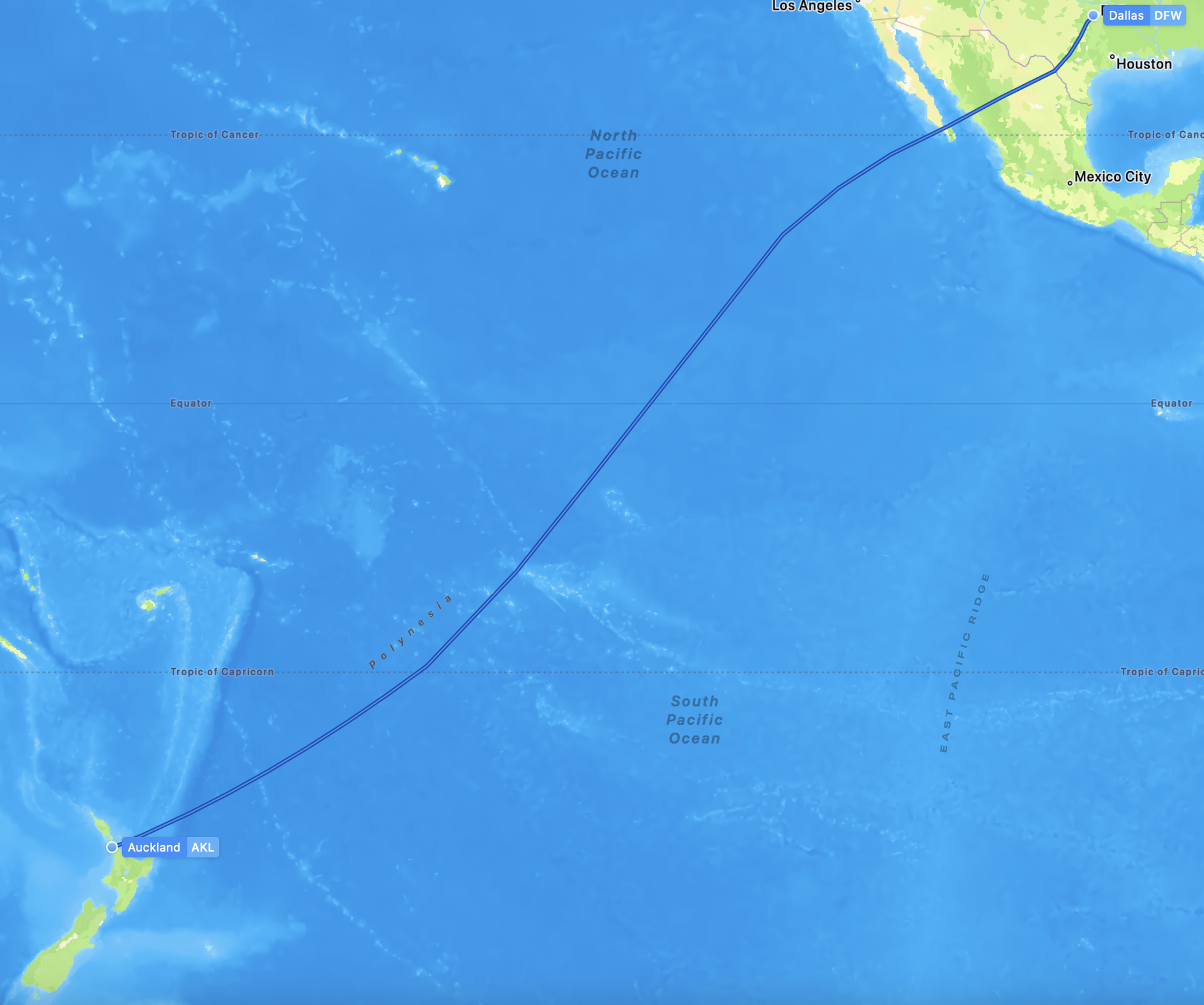
As we approached Baha California it started to get light outside, but we were not able to see anything due to the electronic window shades being darkened for the entire flight.
We finally landed in Dallas. Then the plane came to a stop on the taxi way. The pilot said there was no gate open for us to arrive. We sat on the taxi way for another 45 minutes before we finally arrived at a gate. Our total time on that plane, including the boarding and deplaning time, was about 15 and 1/2 hours. The chart below shows how delayed our flight was, from beginning to end.
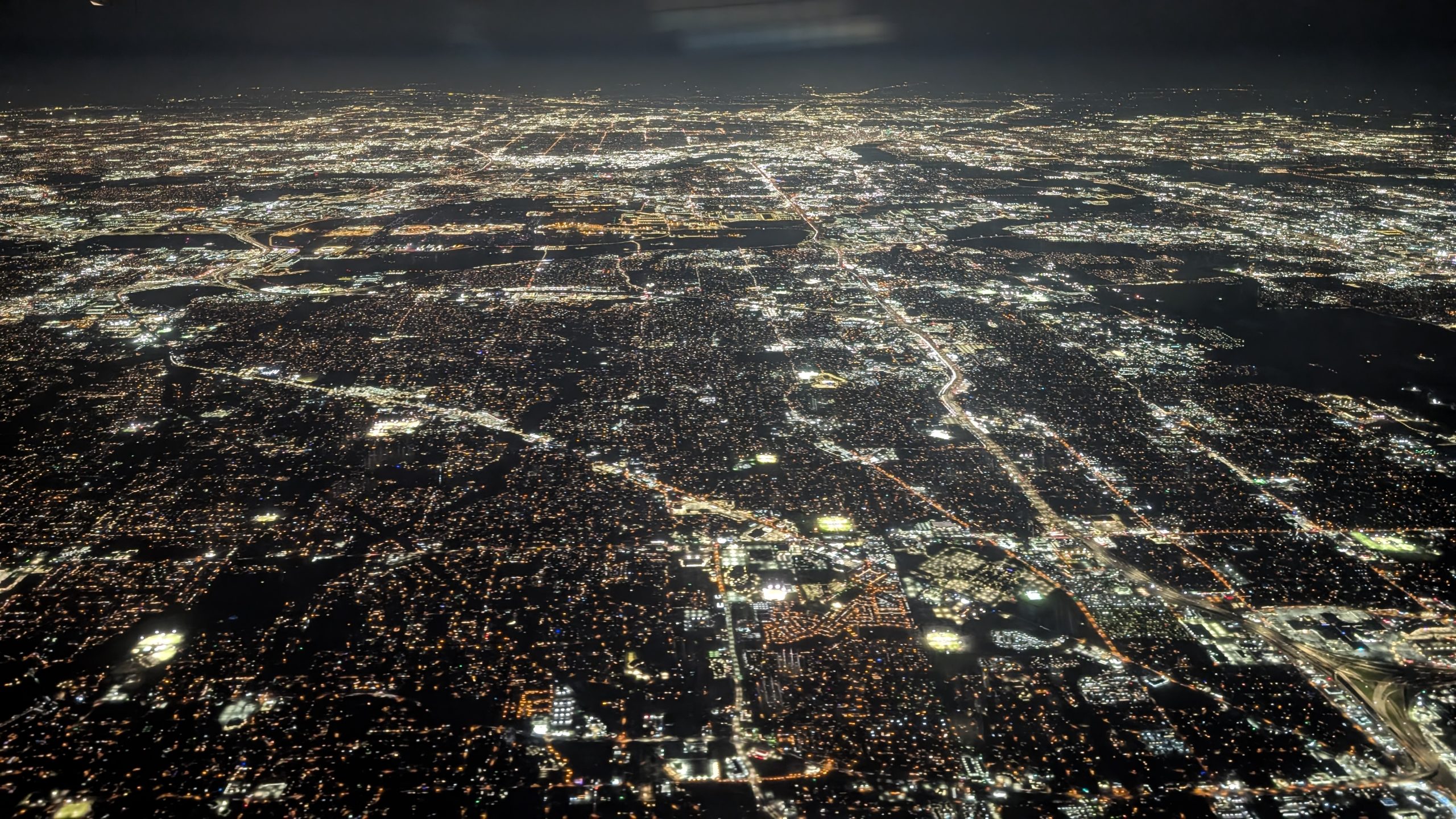
Our flight to Denver was also delayed by an hour due to very high winds in Denver. With all of the delays, our original 3-hour and 10-minute layover in Dallas got shortened to 2 and 1/2 hours. Fortunately going through customs ended up being fast. The global entry program, which had been closed by the government shutdown, reopened the day of our flight. The wait to go through customs was only about 10 minutes. We were sent through with no questions asked. We picked up our luggage, and nobody wanted to check it. There was a drop-off area for our luggage to be taken to the next flight to Denver. Once out of the customs area, we had to go through security again, which was quick with the TSA Precheck. The entire process took about 45 minutes.
Since we still had about an hour before boarding started for our flight, we were hoping to use the Priority Pass to make a visit to the lounge that was nearby. Once again the lounge was full, but this time we got put on a wait list. I asked the agent how long the wait would be, and she said, "not long." Not a very helpful answer, but we waited about 25 minutes and then we gave up. We had to take a train to another terminal for our flight to Denver, and we weren't sure how long that would take. Originally the flight was scheduled to leave from the same terminal as the lounge, just a few gates away, but the gate got reassigned. It took us about 15 minutes to take the train and walk to the gate.
Boarding was late in getting started, so we arrived in plenty of time. And even with the delayed boarding, we actually managed to leave at the rescheduled time. The flight to Denver was uneventful and arrived at about 9:20 PM.
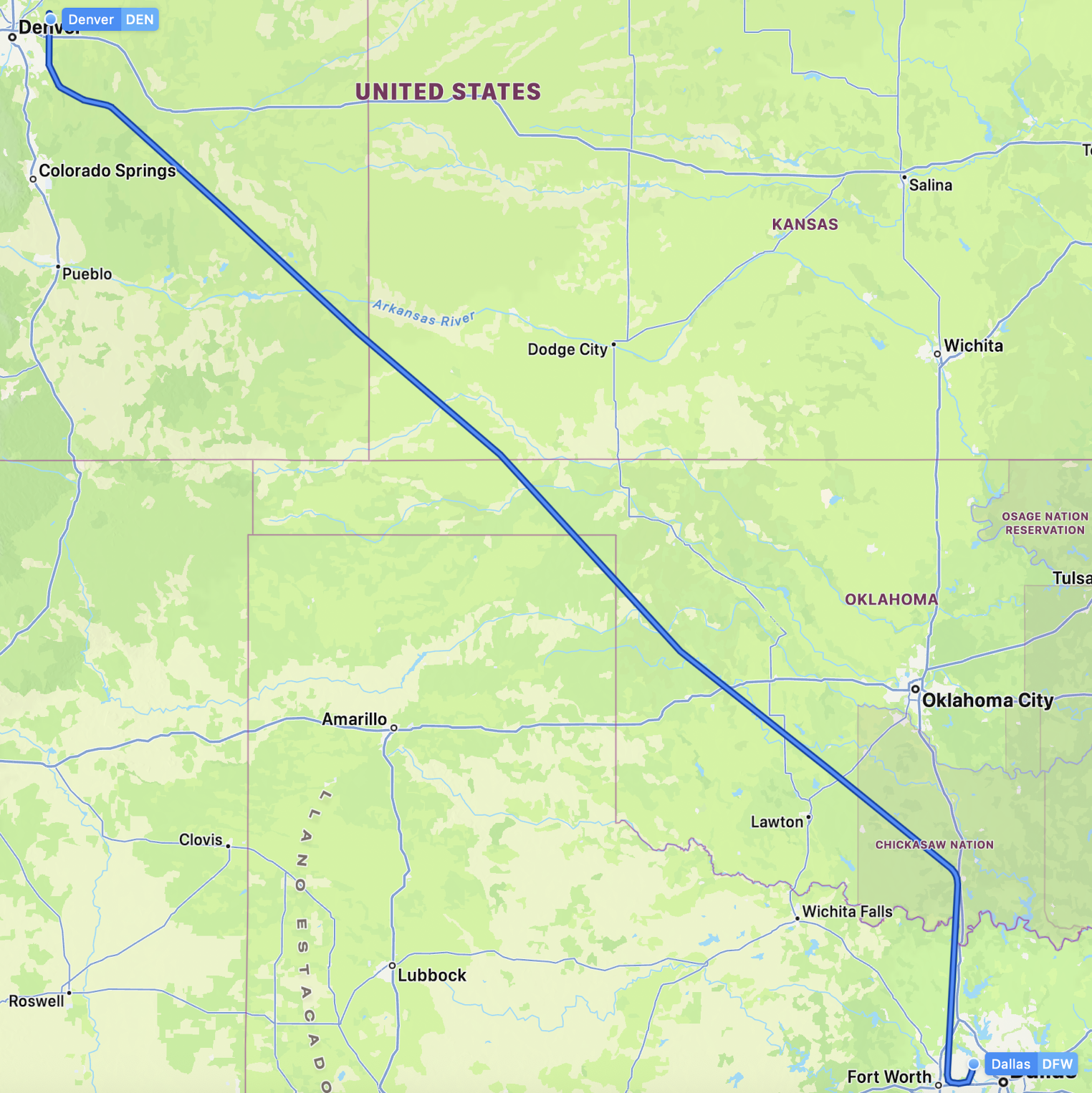
My daughter Linda met us at the arrivals area and drove us home. We finally got home at 11 PM, and it was still March 12 because of crossing the International Date Line, making it a very, very long day with a lot of experienced frustrations.
It was a very good trip, although I would rank it third out of the three trips we have made to New Zealand, due to having bad weather for several days which sometimes caused us to change our plans. On the South Island it rarely felt like summer. Even on the nicer days it was usually cool and damp. However, the weather in Rotorua was the nicest of the trip with no rain and many sunny days, which was good for watching geysers. The geyser activity was a bit disappointing though, with a few geysers not erupting at all and Kererū being finicky. The Milford Track hike, visiting Stewart Island with the kiwi birds, seeing the penguins in Dunedin, and seeing the vivid blue of Hokitika Gorge were the big highlights for me. Would I go back for a fourth trip? Absolutely, but that will be a few years away.
It was our last full day in New Zealand, and it started out cold and rainy. The weather system that was developing the previous night had moved into the area. The nice view from the deck of our cottage had disappeared.
That was disappointing because I was really looking forward to exploring Piha in nice weather. Two times before this trip we had planned to go to Piha, and in both cases the trip got thwarted: in 2019 due to some logistics in our travel plans, and in 2023 due to the entire area being closed from cyclone damage.
However, on that morning something else happened that kept me preoccupied. Kilauea Volcano in Hawaii started its high fountaining for episode 43. The night before, I had turned on the big screen TV to view the webcam due to reports that an eruption was close. When Heinrich got up that morning, he saw the North Vent was in heavy overflow, and less than an hour later I was receiving messages that the episode had started. Two hours later, lava fountains from the North and South Vents were reaching record heights. Since the weather was still miserable outside, that gave me an excuse to sit in front of the TV and watch the volcano while I packed for the trip home.
Later that morning, the weather started to clear. It stopped raining. It was still very cloudy and gray outside, but decent enough to go out. Also by that time the best part of the Kilauea eruption was over.
We decided to visit the Gap, an area south of Piha Beach that was accessible only within 2 hours of low tide. I checked the tide tables and it was about 1 hour past the low tide, so we had just enough time to go. It was only about a 15-minute drive down to the beach, and we headed out quickly.
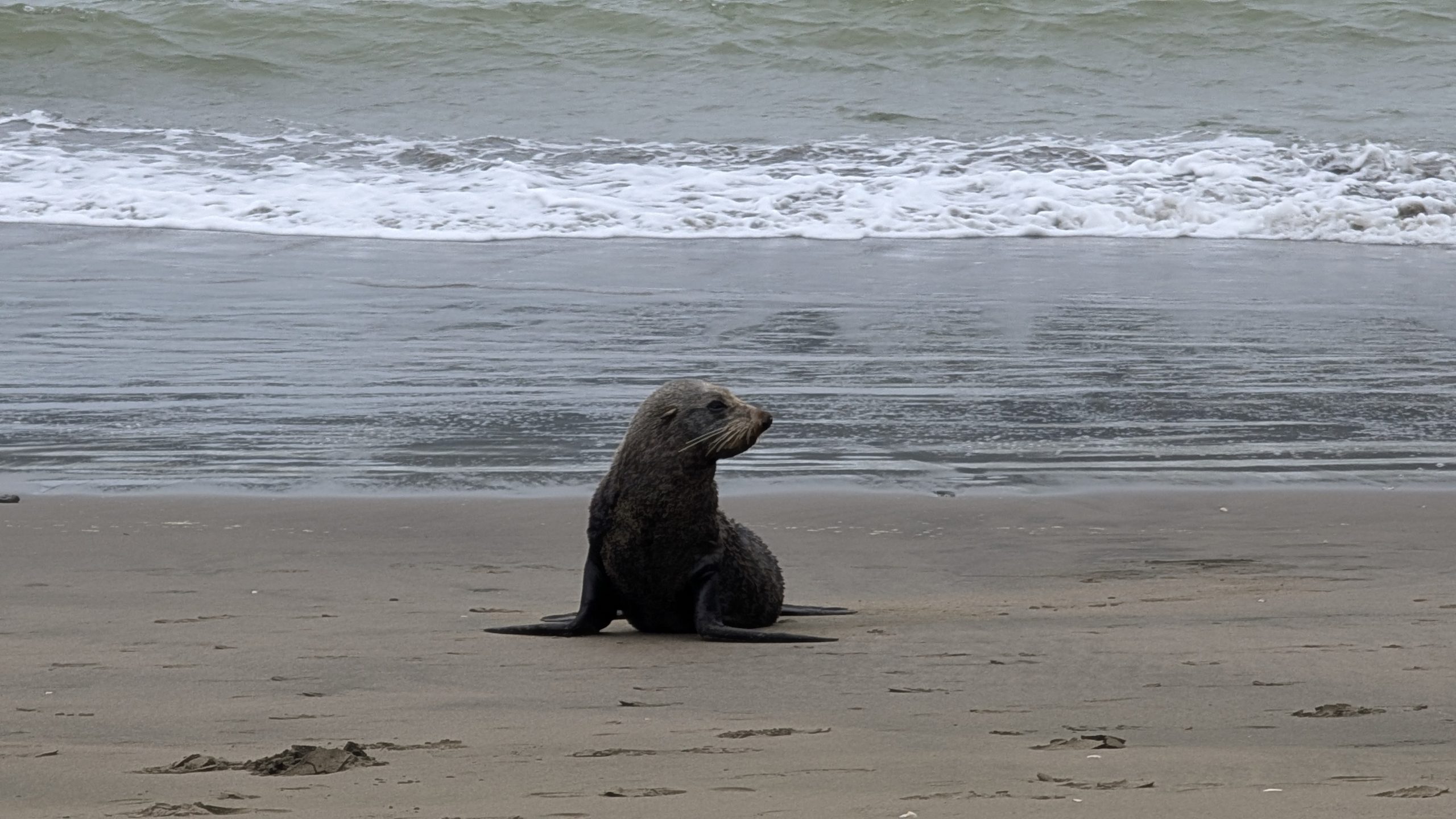
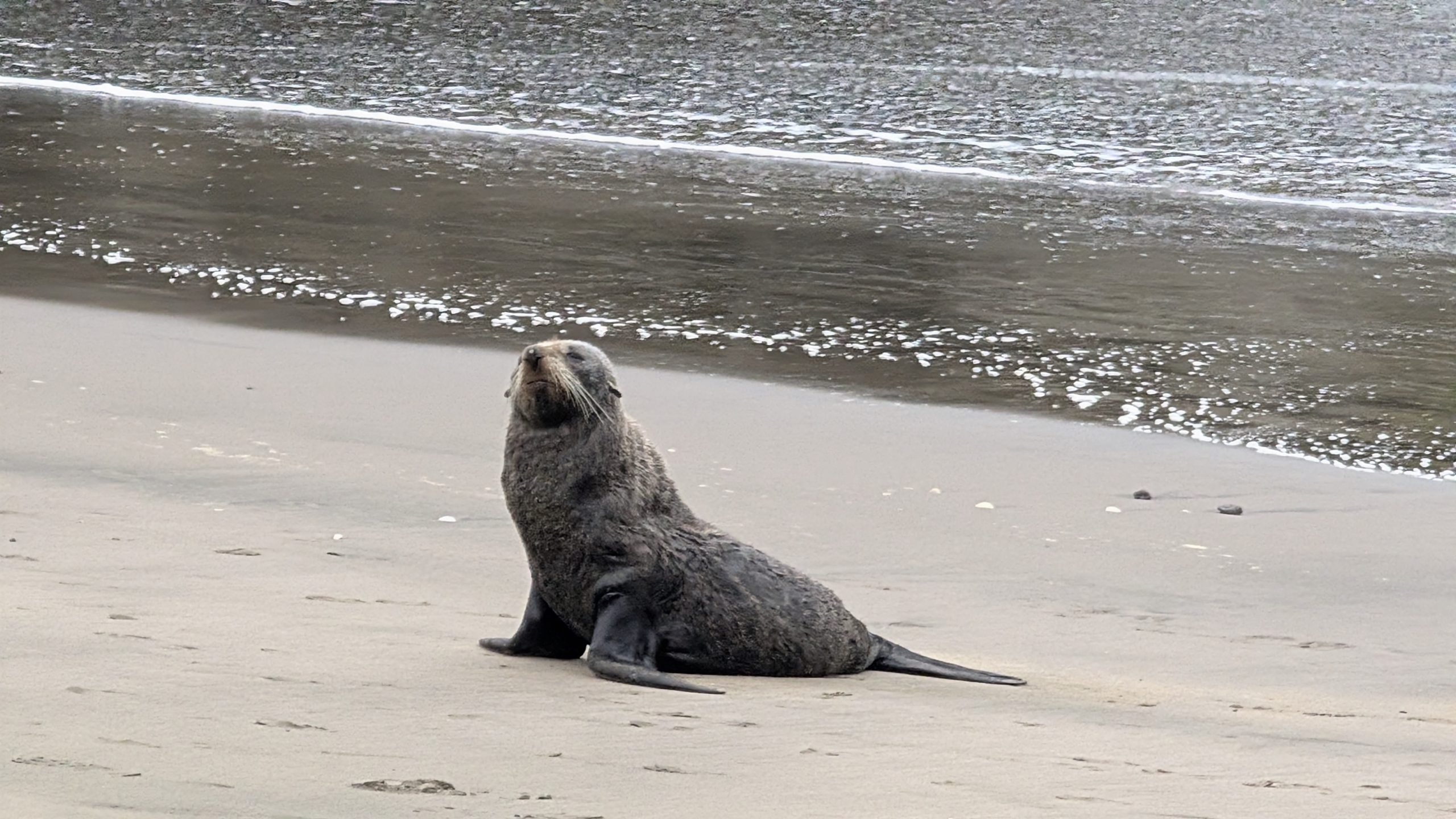
We walked through the sand and passed a lone sea lion on the shore. Ahead of us was Camel Rock which was part of Taitomo Island. It was still very windy from the weather, and the waves from the Tasman Sea were impressive.
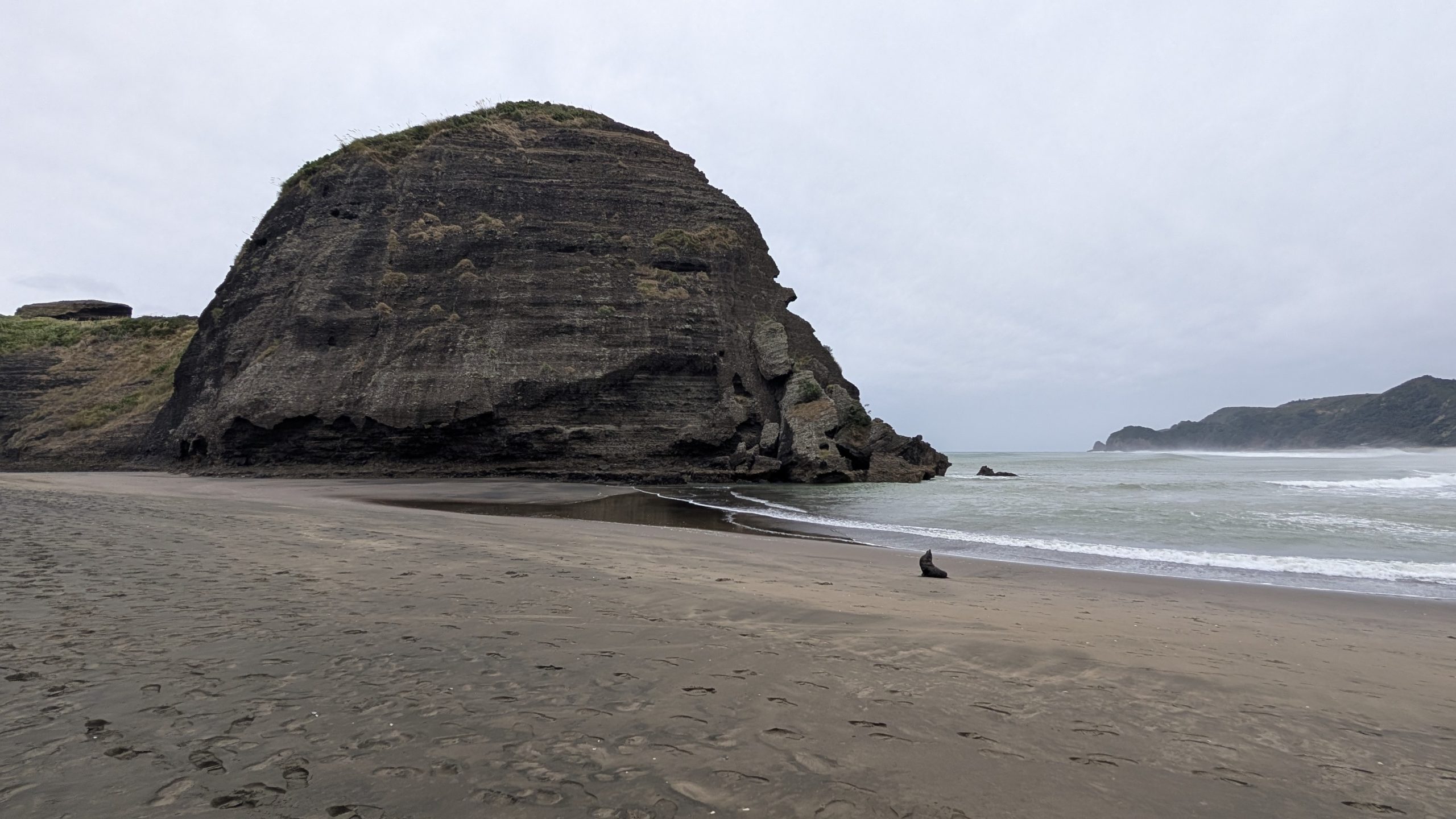
We walked further into Puaotetai Bay and saw the Keyhole, a sea arch on the side of Camel Rock. At very low tide it was possible to walk through the Keyhole, but when we arrived, water from the Tasman Sea was already surging through it.
Further south past the Keyhole was the Gap, which separated the mainland from Taitomo Island. The tide was still low enough that I was able to walk through sand on the left side of Puaotetai Bay to reach the rocky edge of the Gap.
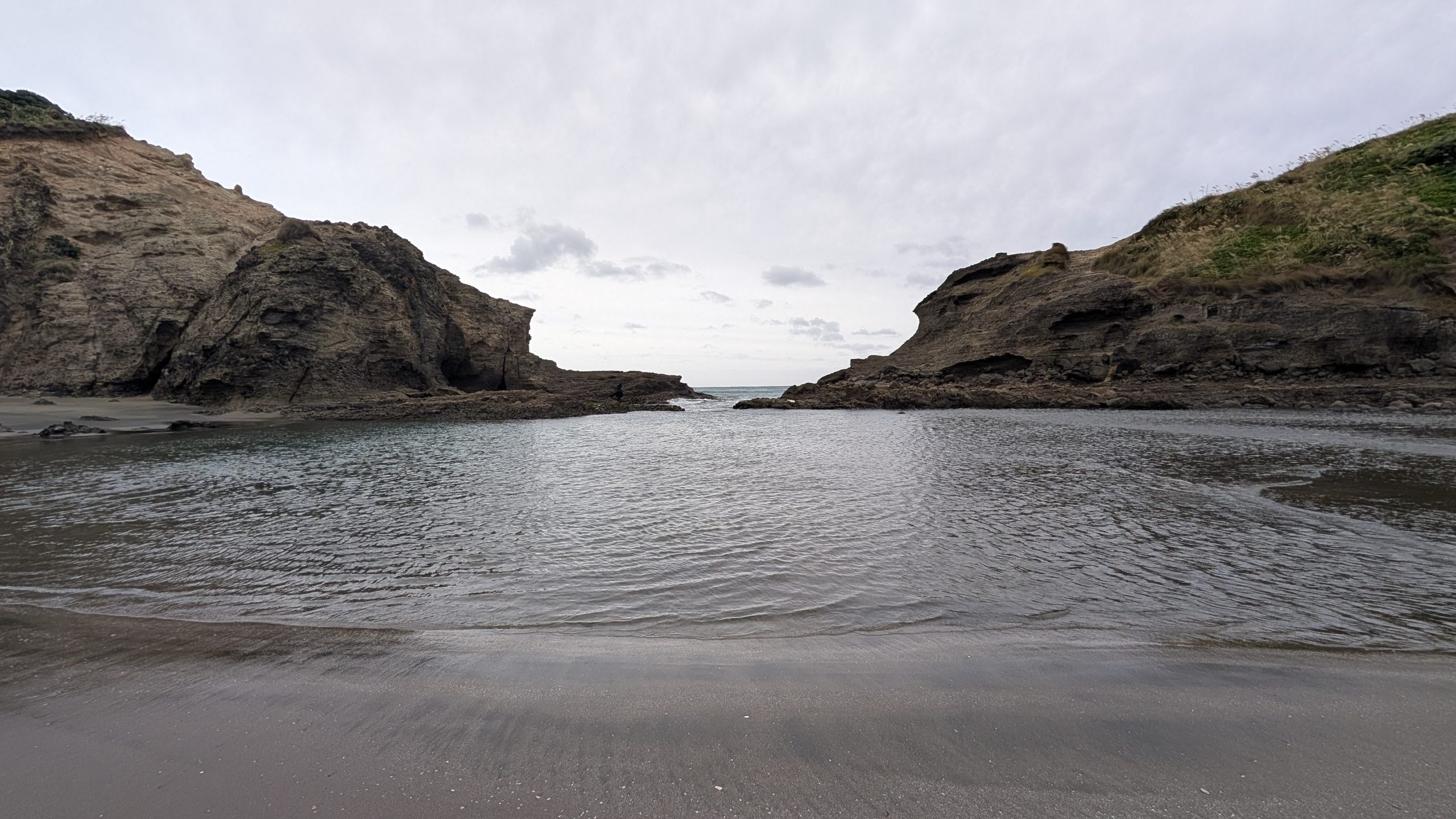
From my rocky vantage point I had a nice view of the Keyhole and Puaotetai Bay. In front of me the waves from the Tasman Sea were rushing through the Gap and into the bay.
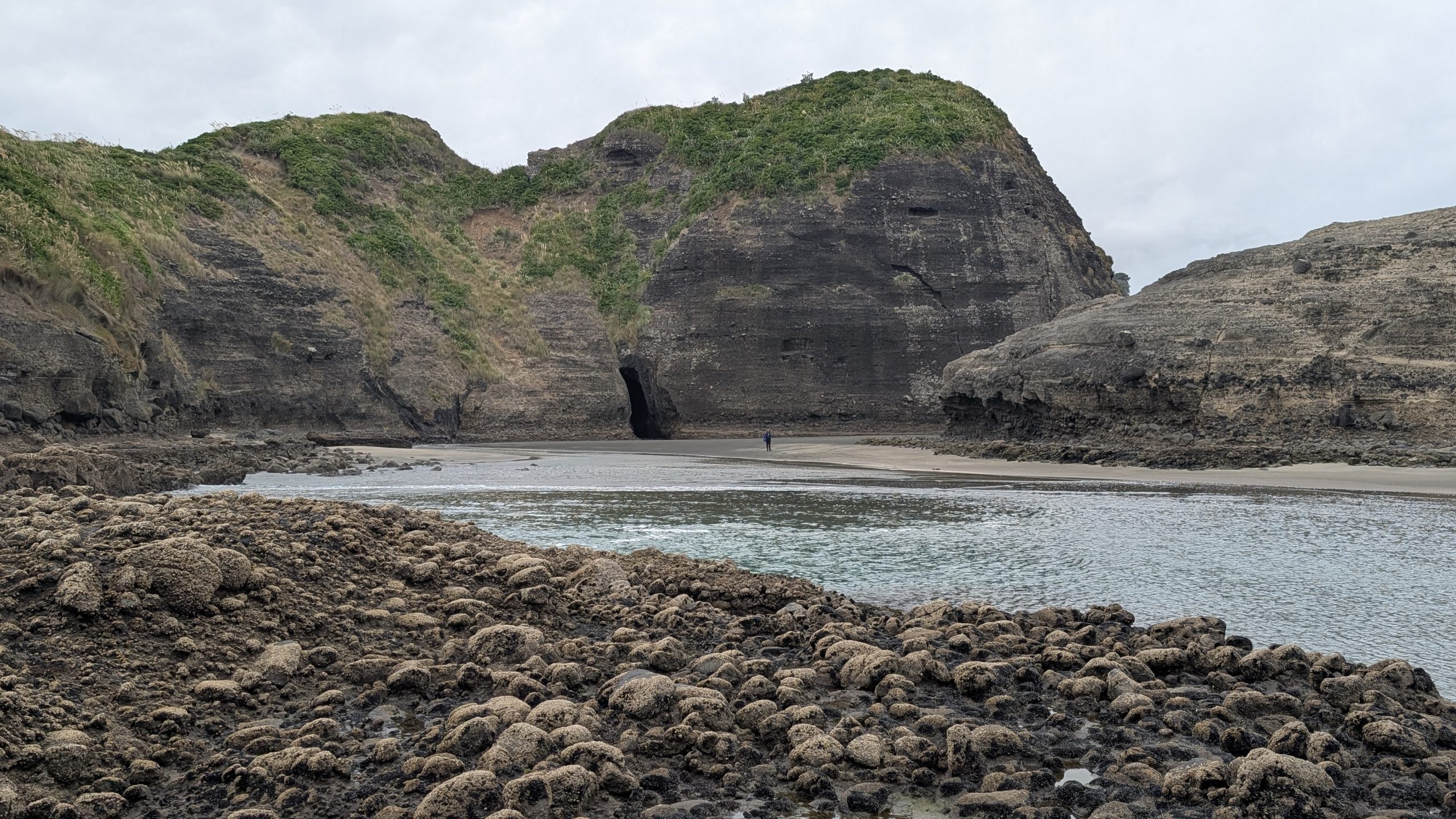
We did not stay too long since the tide was rising quickly, and the fierce wind made it uncomfortable. Walking back to Piha Beach, we saw the sea lion had moved very little.
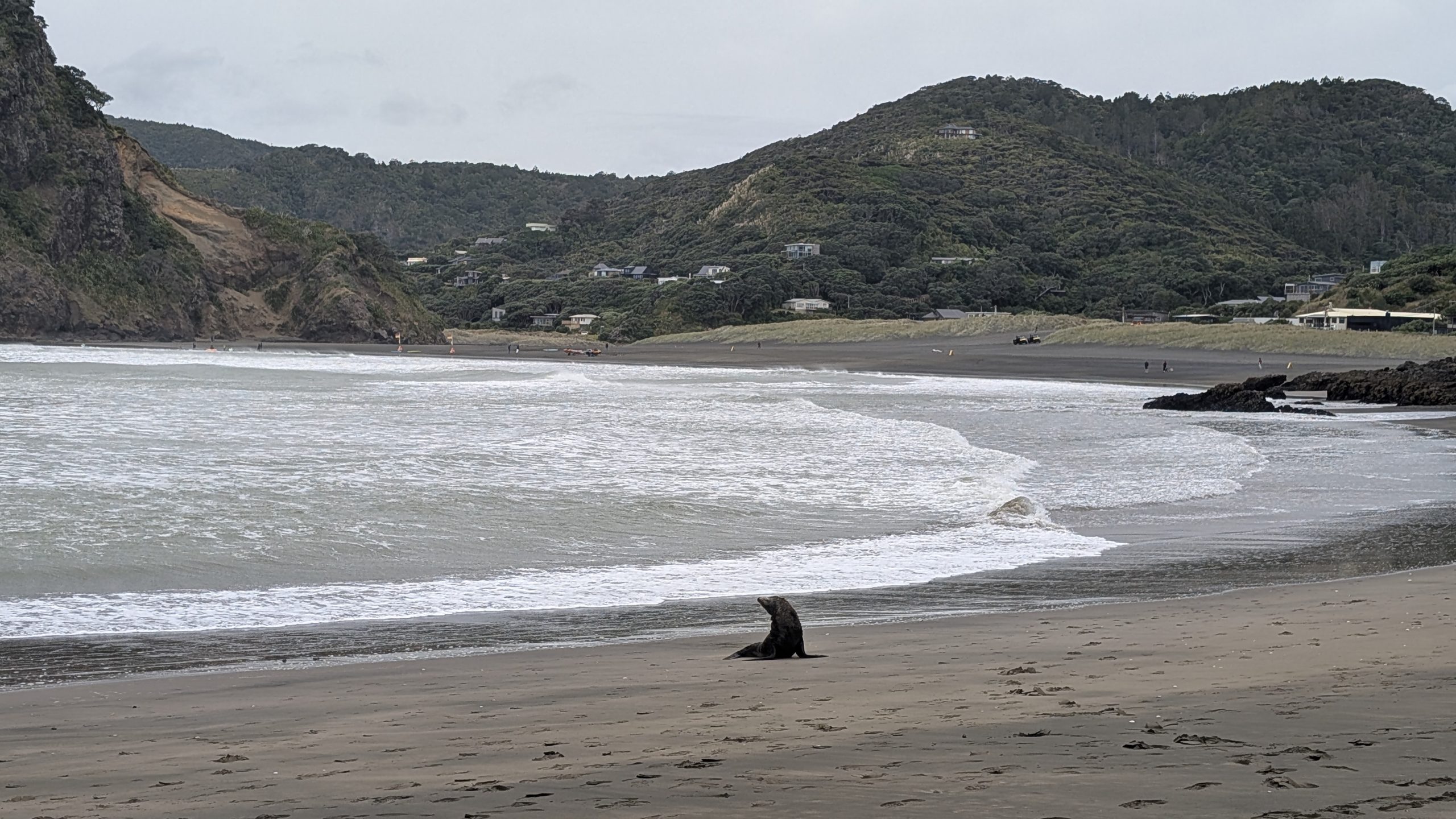
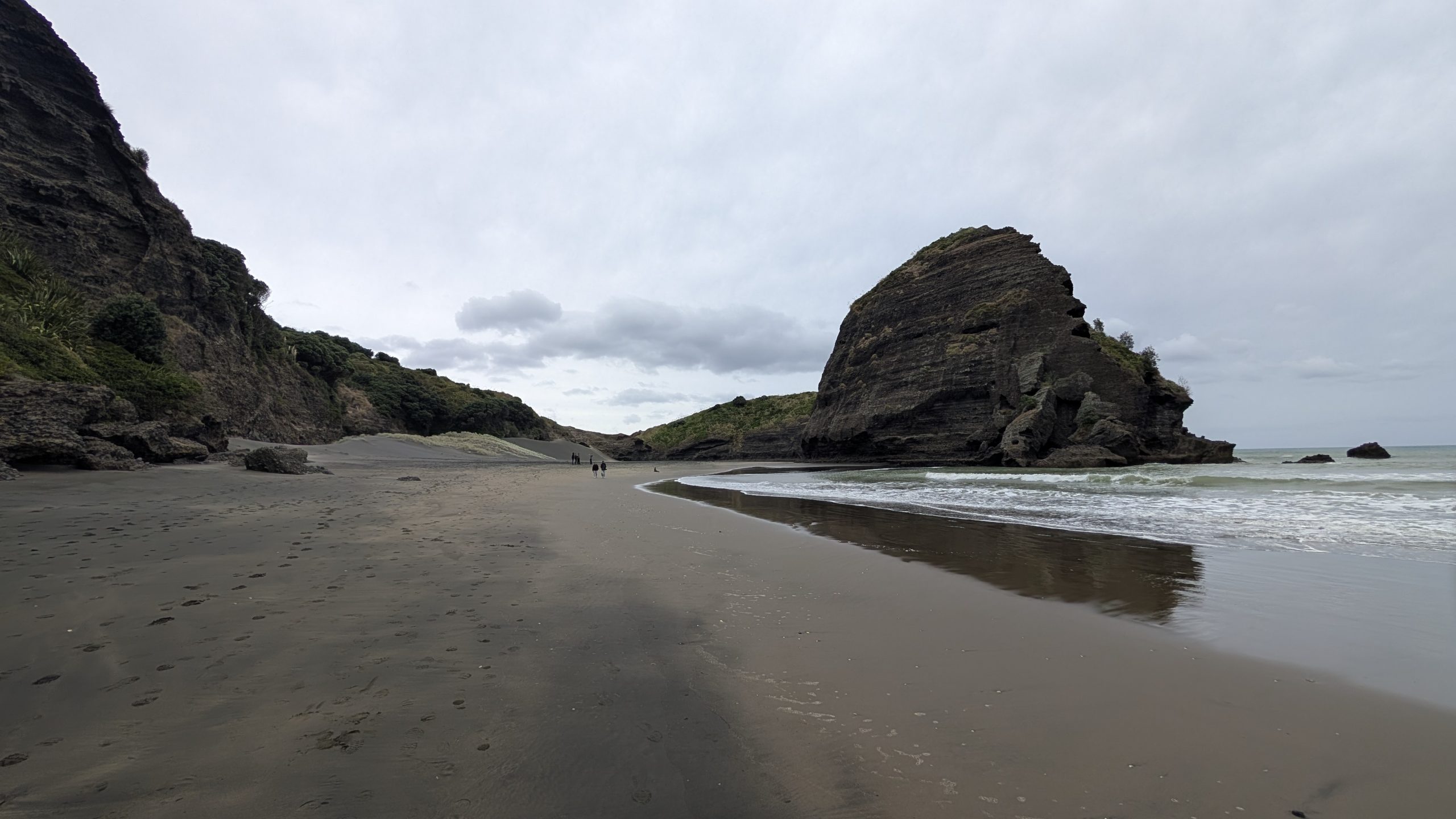
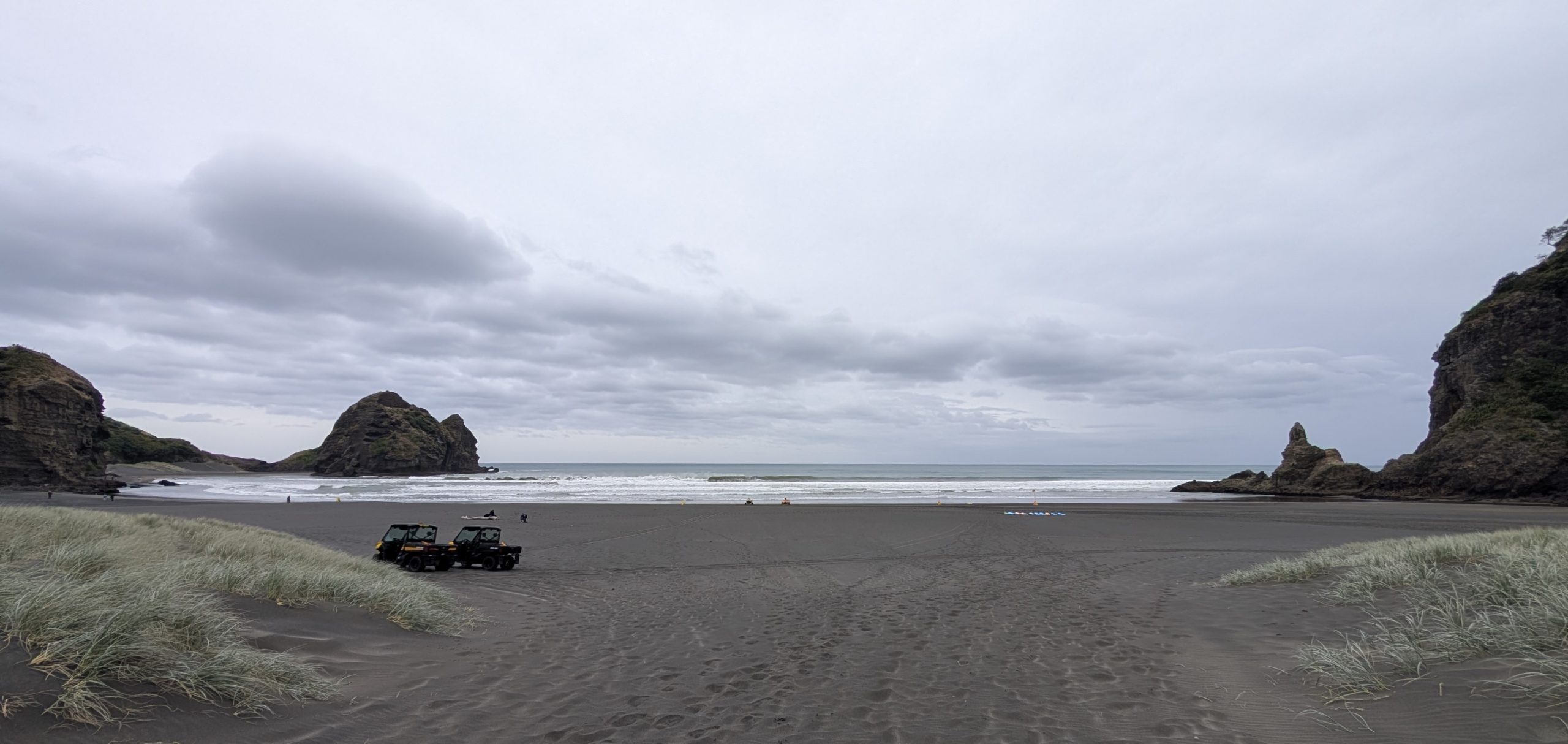
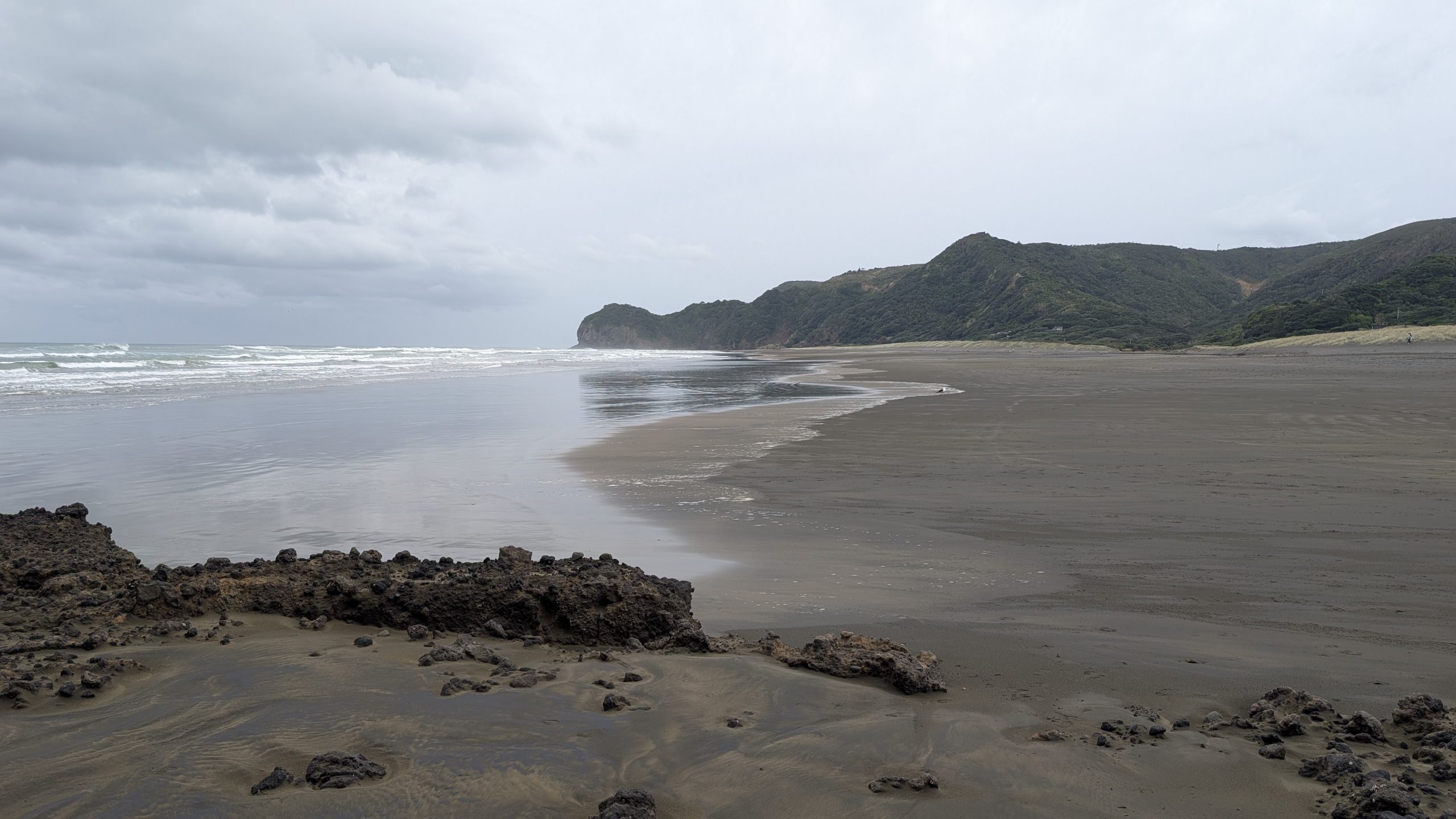
Next we explored the main Piha Beach area. The beach was black sand, with Lion Rock to the north and Camel Rock (Taitomo Island) to the south.
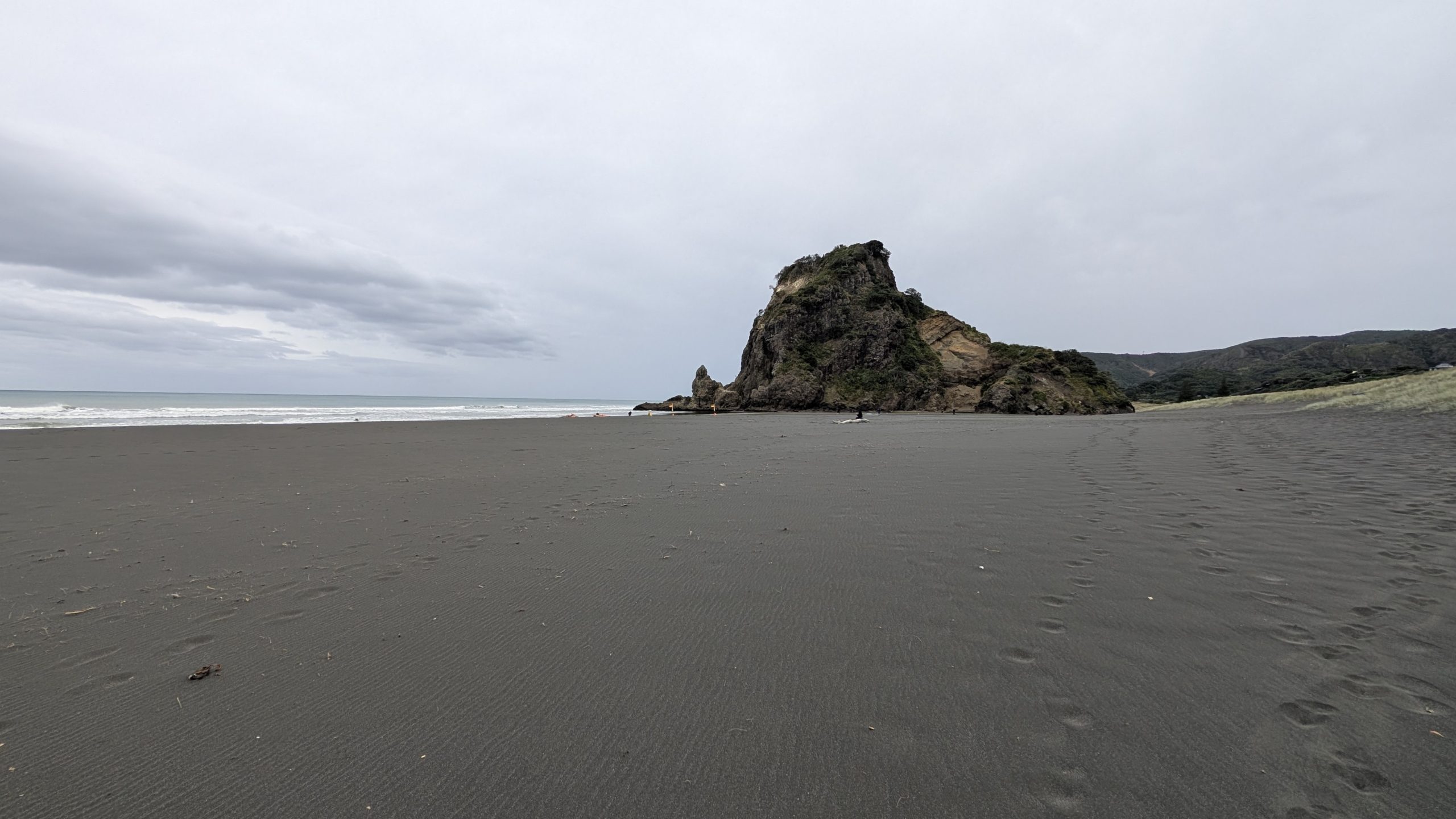
We walked closer to Lion Rock. In previous years it was possible to use a trail to climb to the top, but the trail had been closed several years ago due to storm damage. The photo below shows the trail closure sign at the base of the rock on the right side.
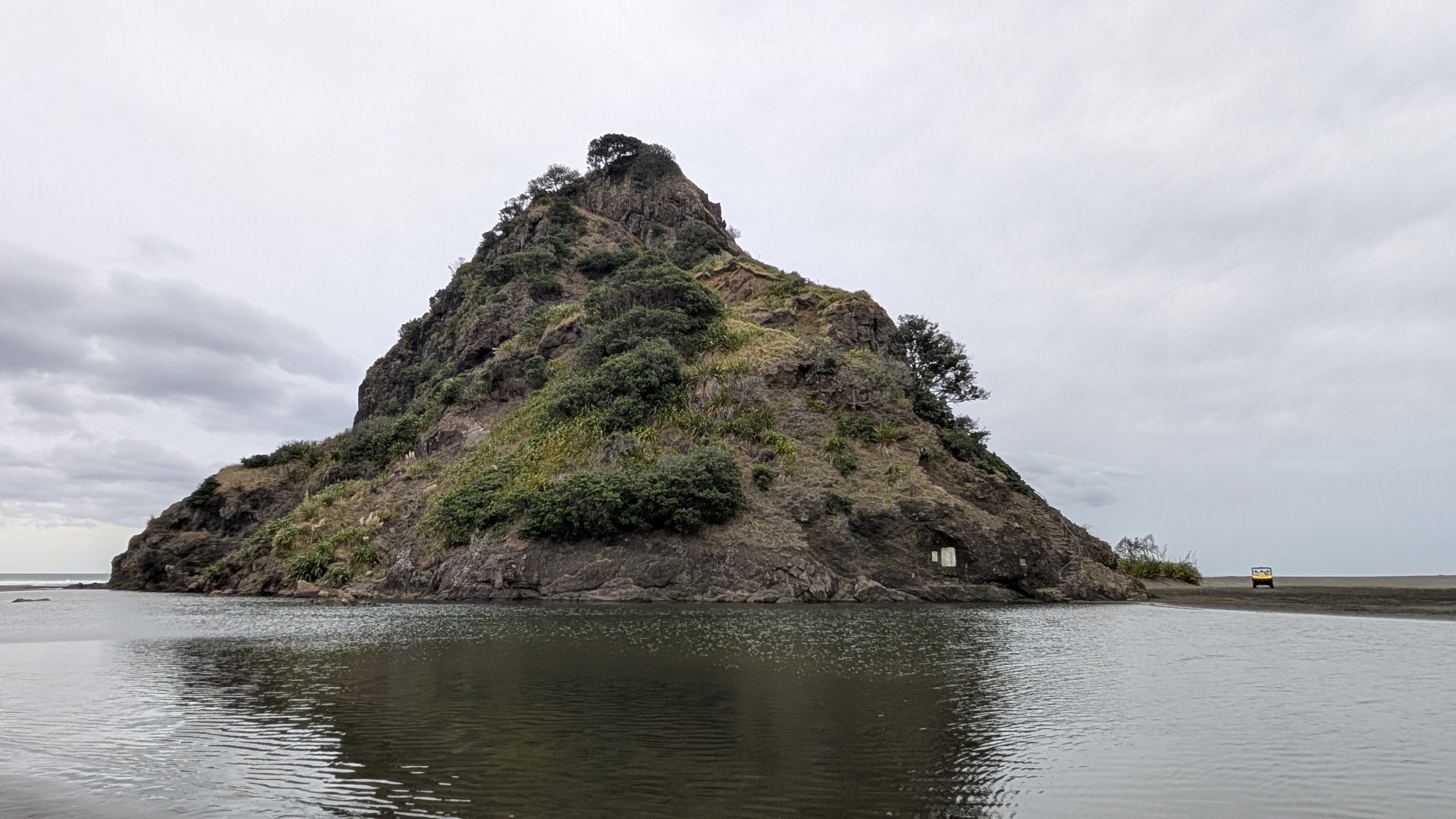
We walked to the north of Lion Rock to get a view of North Piha Beach. We did not stay long because we had to deal with some travel issues. While on the beach, I received a message from American Airlines that our flight out of Auckland to Dallas had been delayed by 8 hours, and we had been automatically booked on a later flight from Dallas to Denver. Because of the delay I was going to have to extend the car rental by a day, and all of the paperwork was back at the cottage.
We returned to the cottage, and I had no issues extending the car rental. During that time, our host showed up with the electric heater, and he also supplied some firewood so we could use the fireplace later. I told him about our flight delay and asked if it would be possible to have a later checkout time. He said nobody else was checking in, so we would be able to stay all day if we wanted. That was really good news, because it meant we could spend all morning until early afternoon in the area if we wanted. And the weather forecast was improved for the next day.
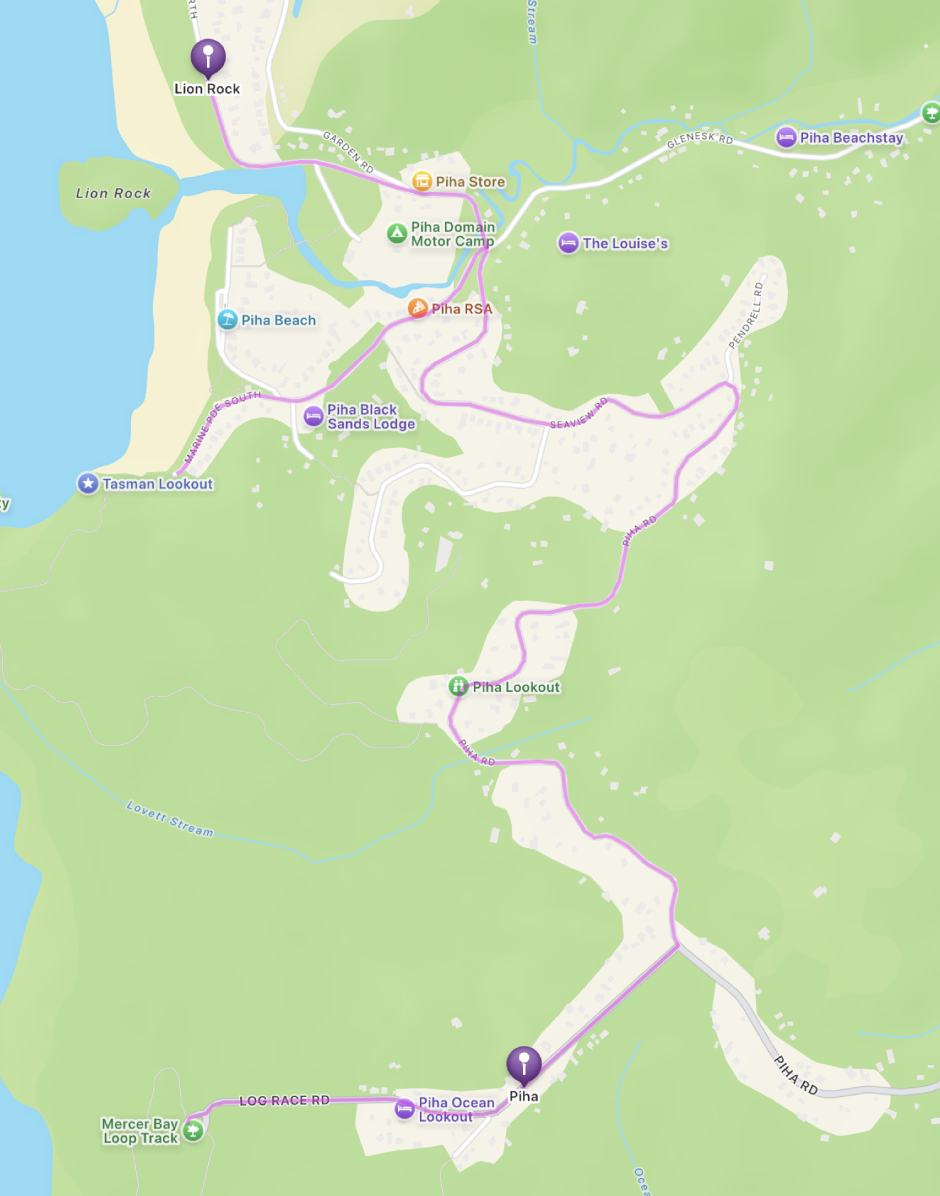
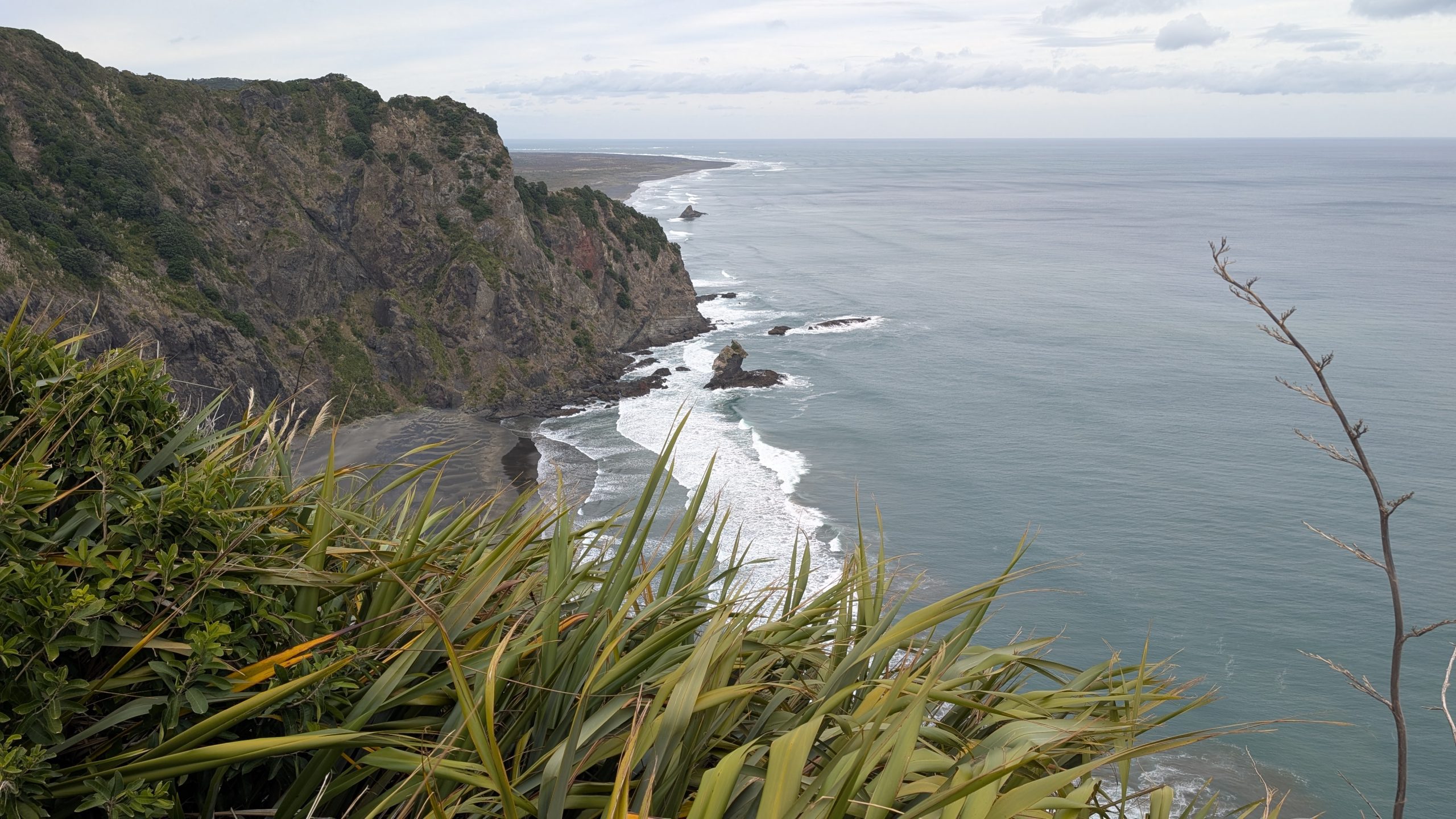
Later that afternoon we drove a mile down the road to the Mercer Bay Loop Track Car Park. This was a trail that had been recommended to us by our host. It was a 1.4 km loop around a large headland with great views of the coast.
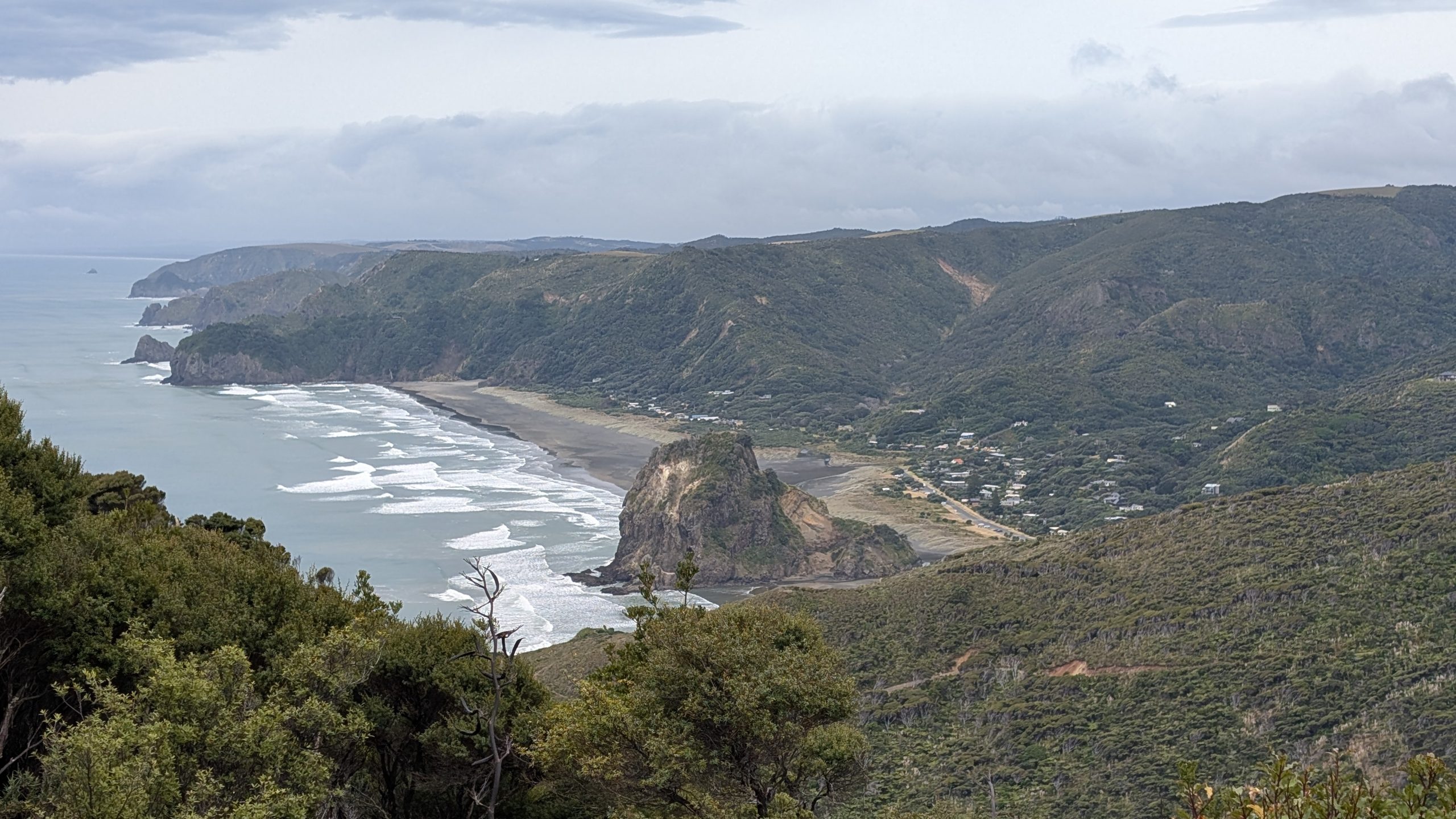
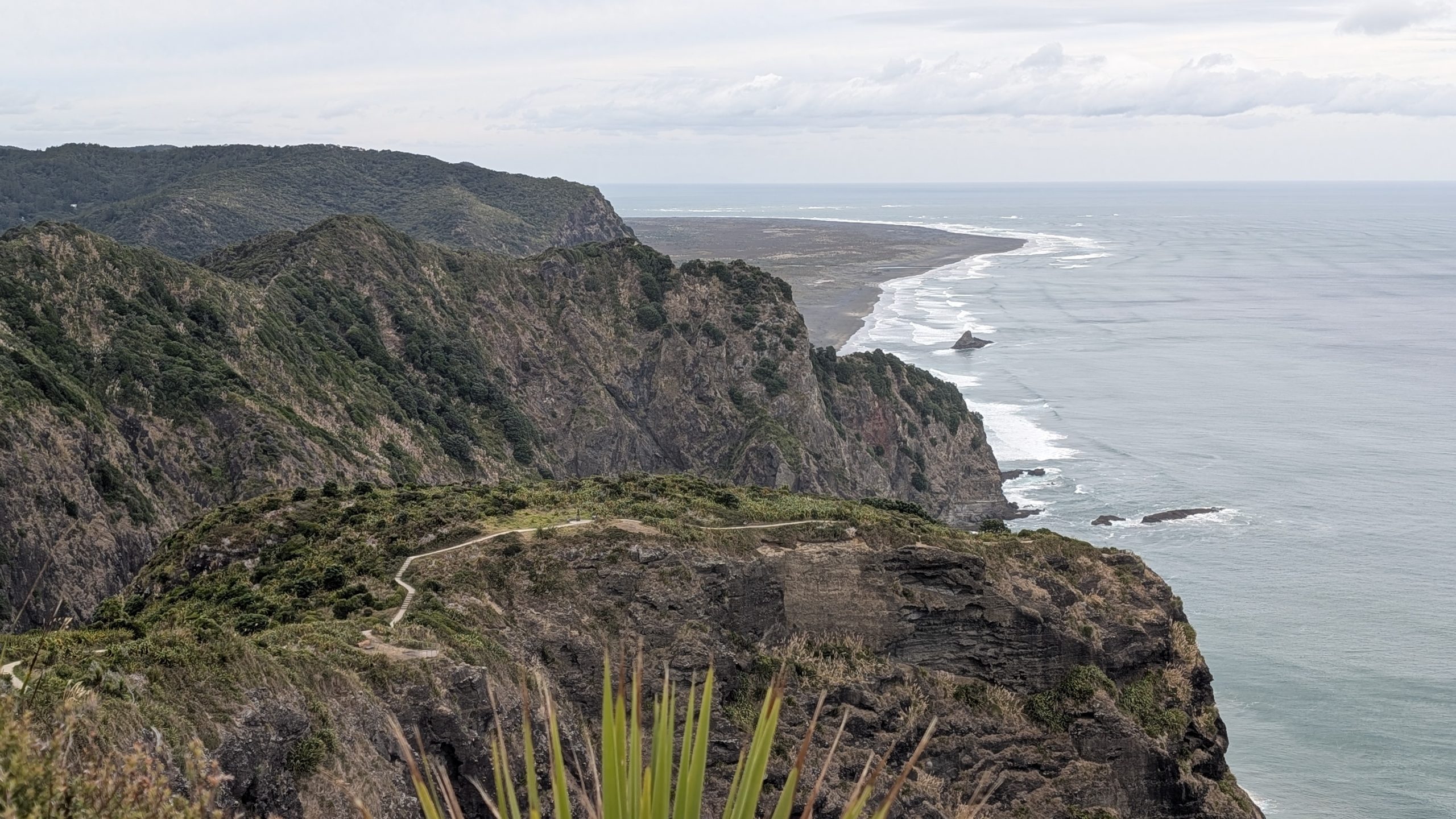
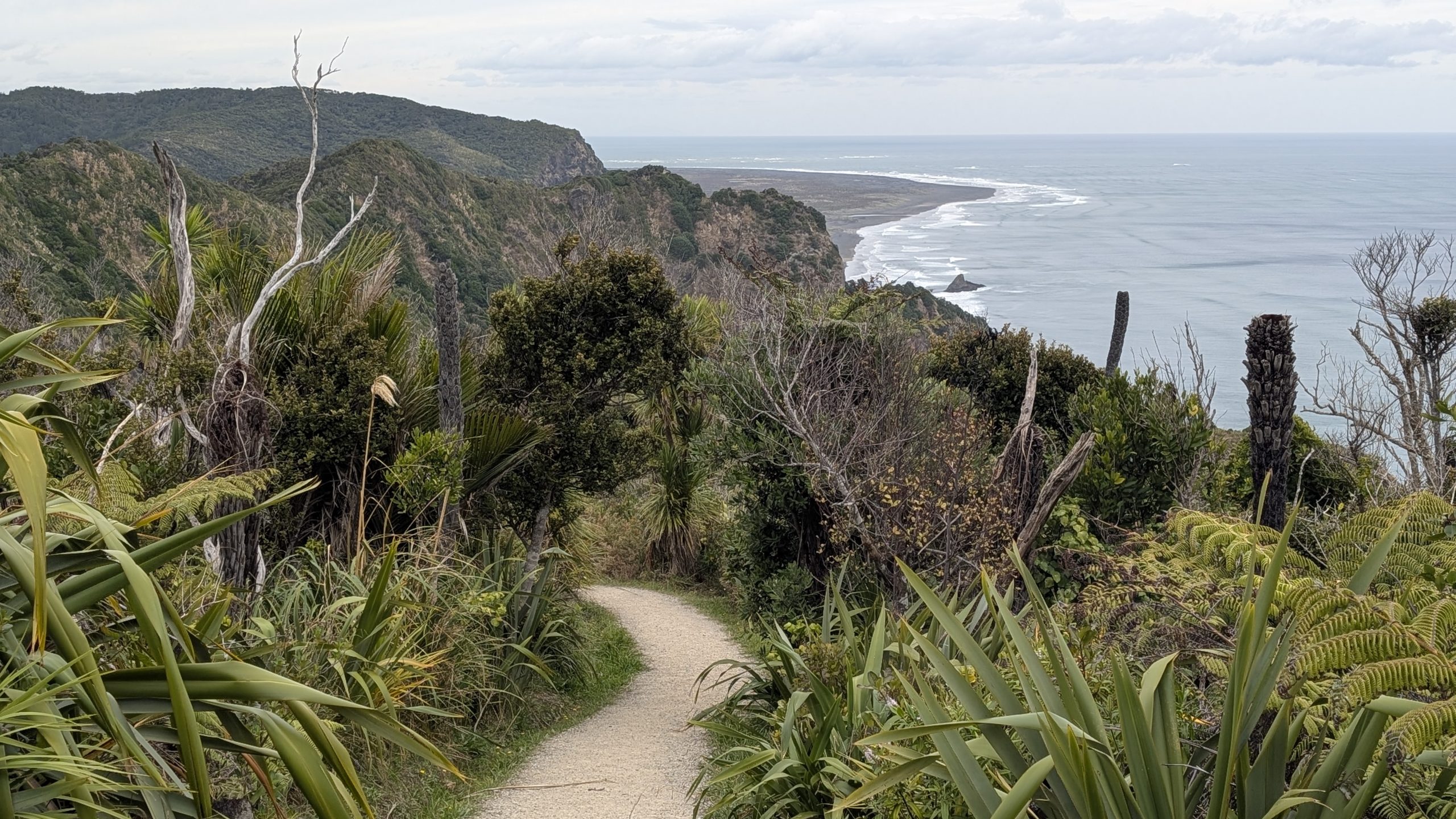
We took a short side trail to Te Ahua Point, which had another great view of the coastline, Mercer Bay, and the Karekare Beach area.
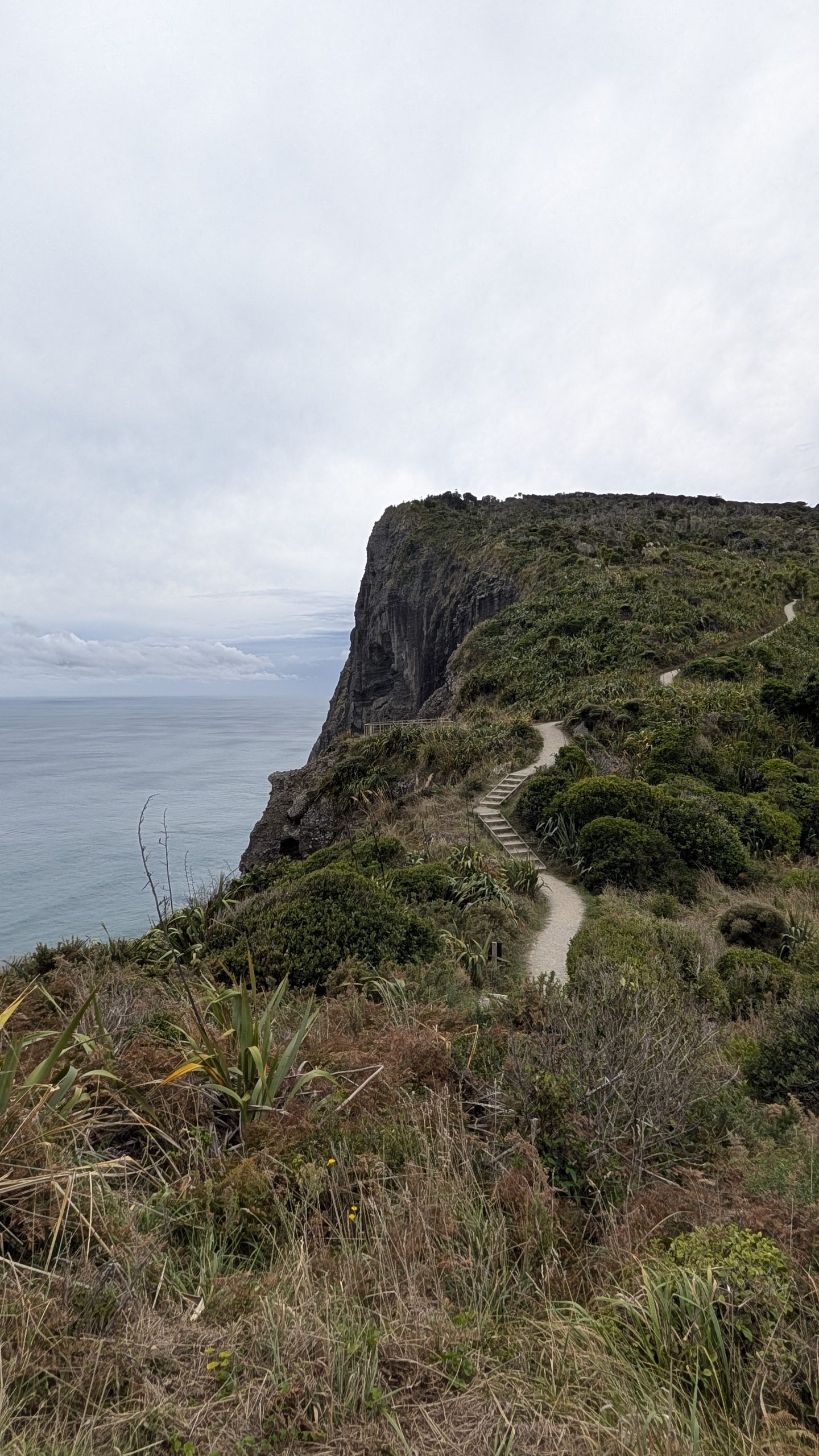
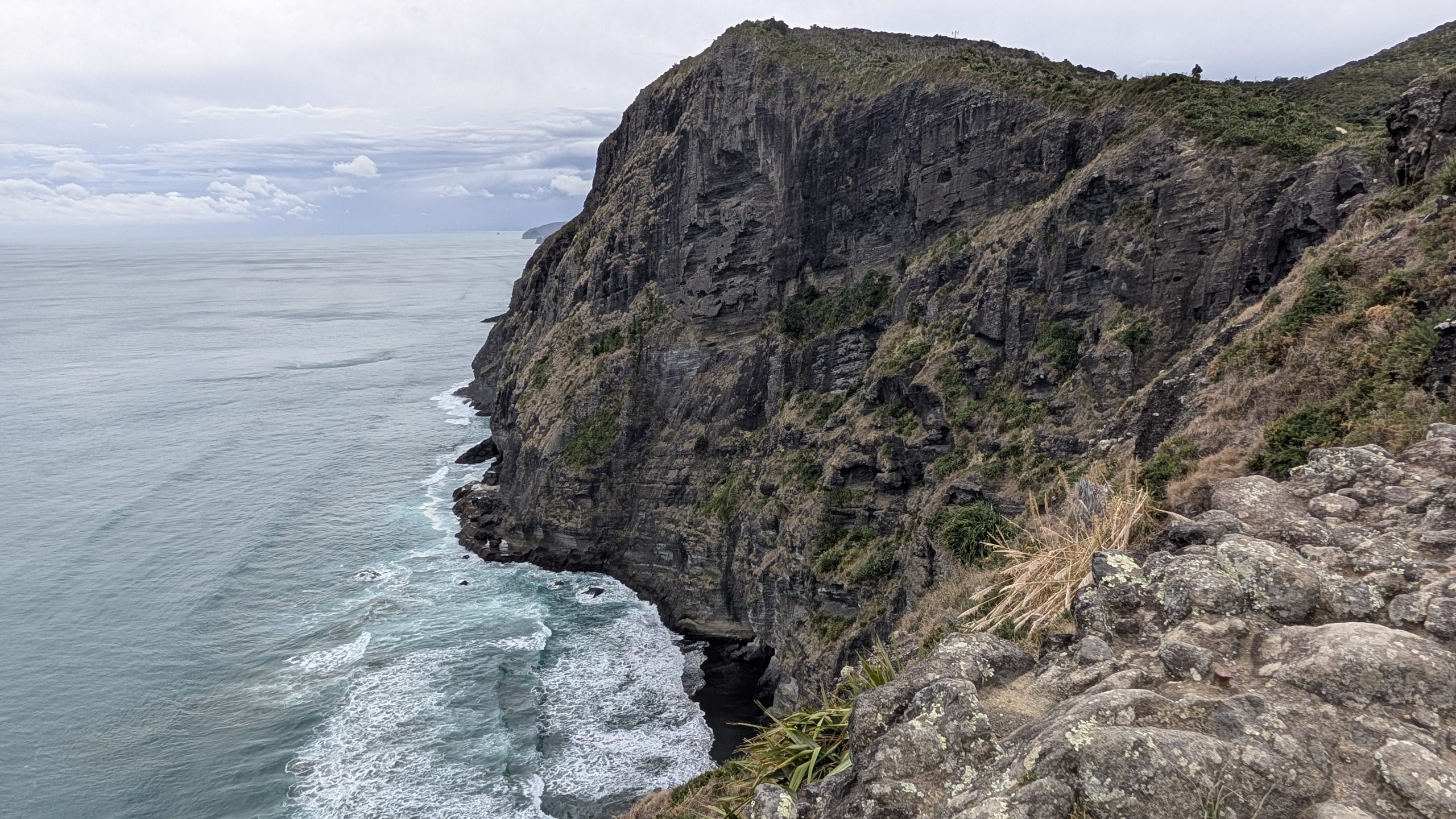
We walked back to the main trail and completed the loop hike.
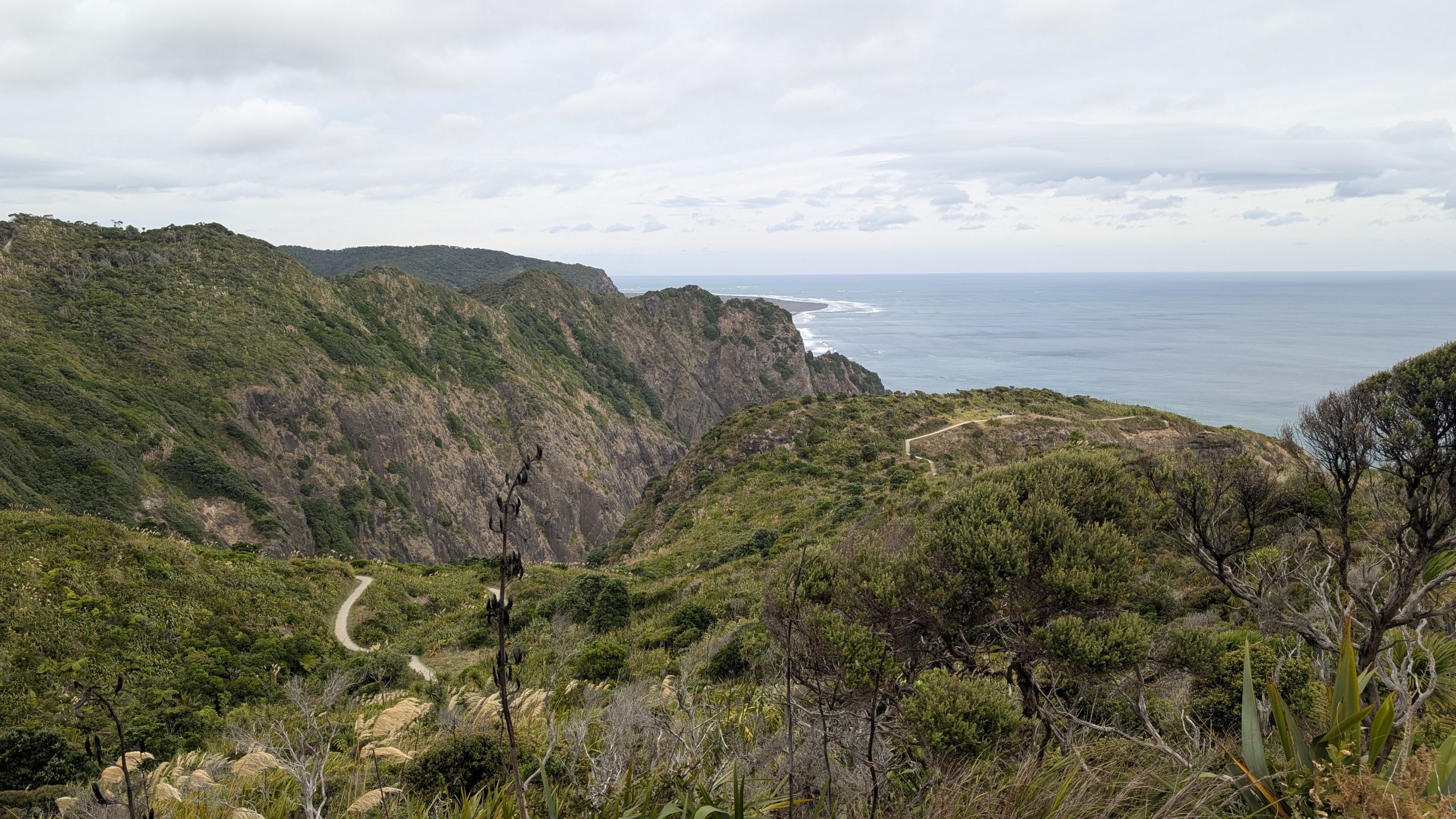
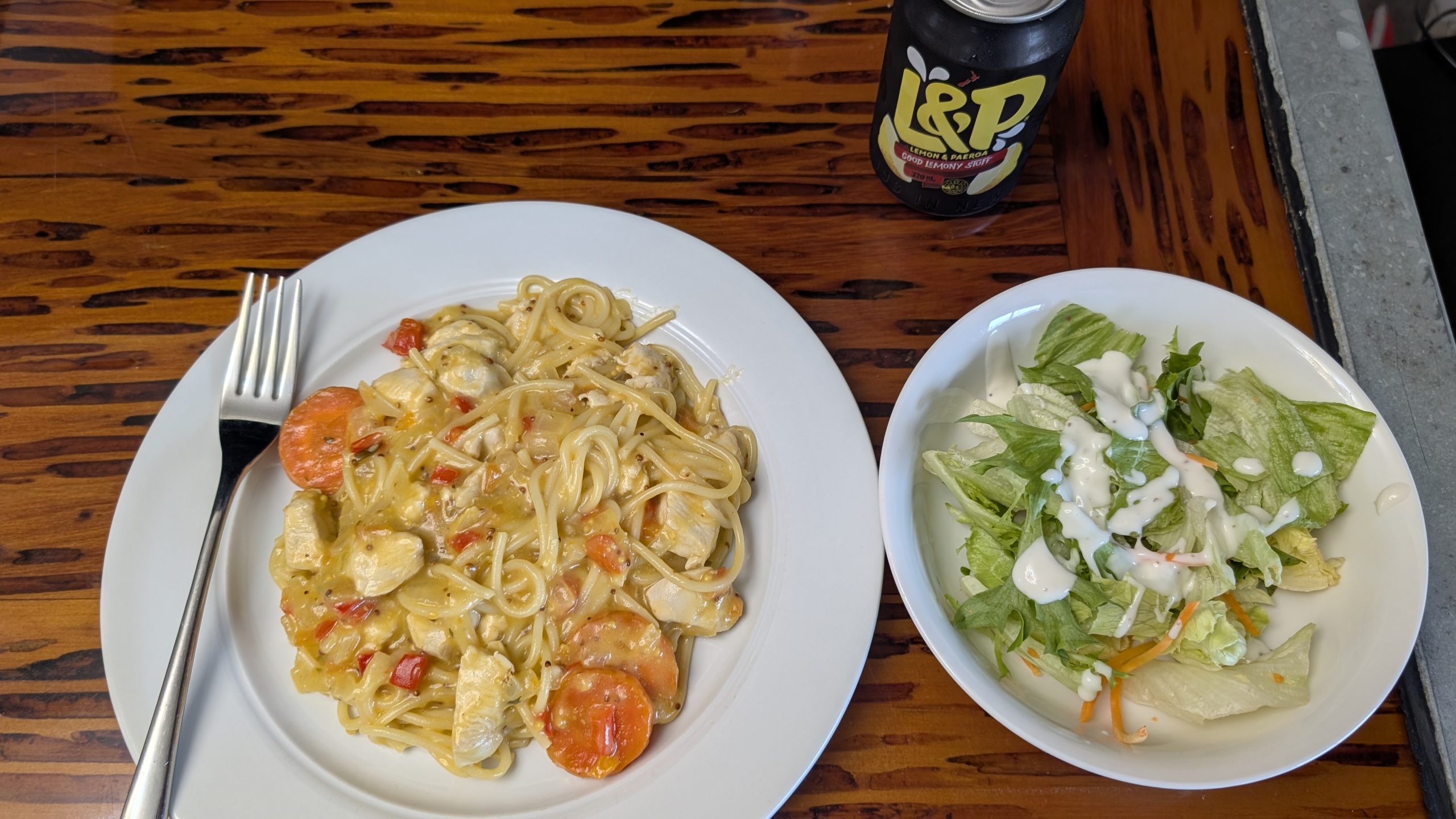
Back at the cottage we fixed dinner, made from all of our leftovers since we needed to finish our food supply.
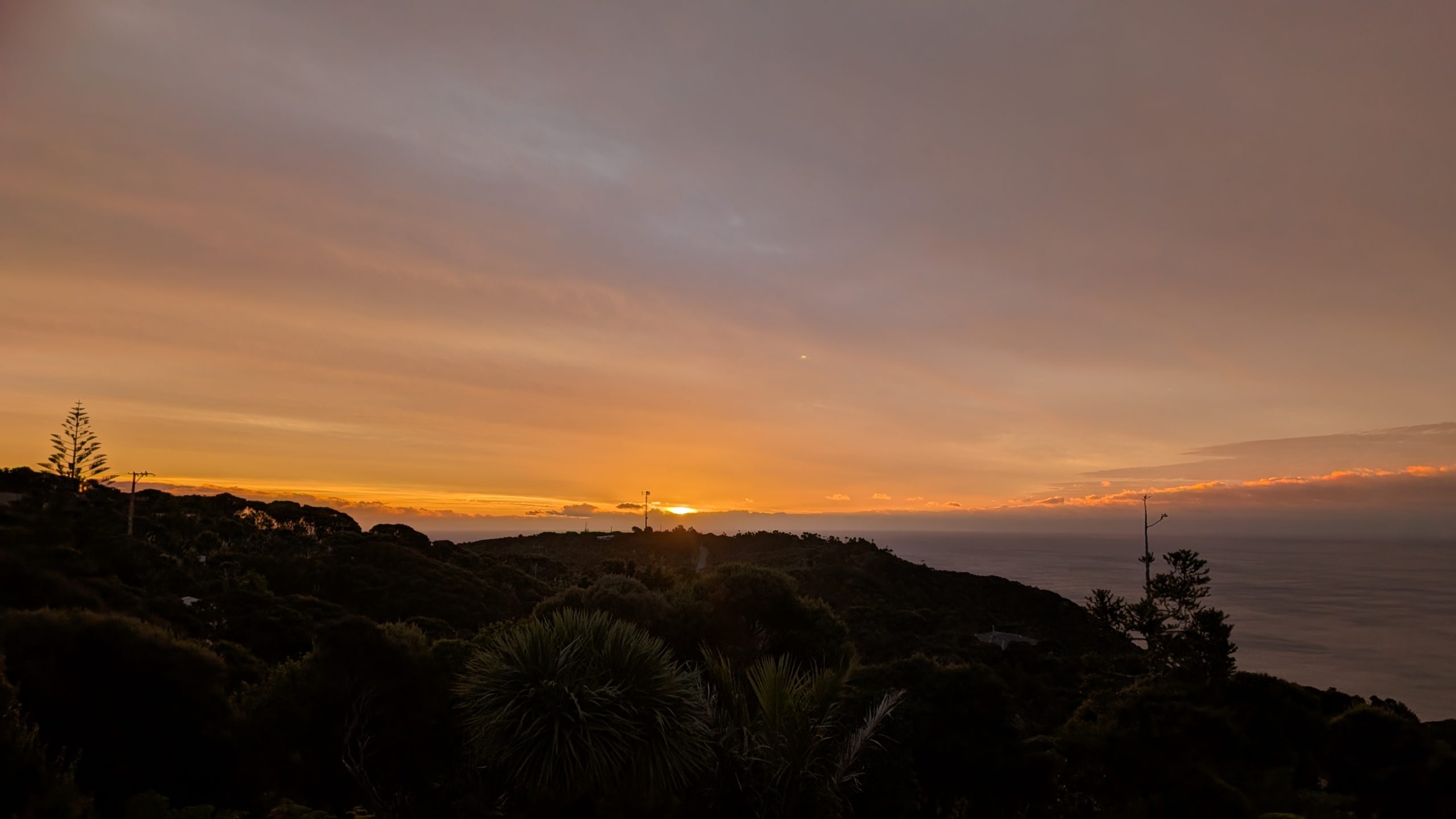
The weather was clearing, and about an hour after dinner we saw our last sunset of the trip. That sunset turned out to be the best one of all. The colors in the clouds were spectacular.
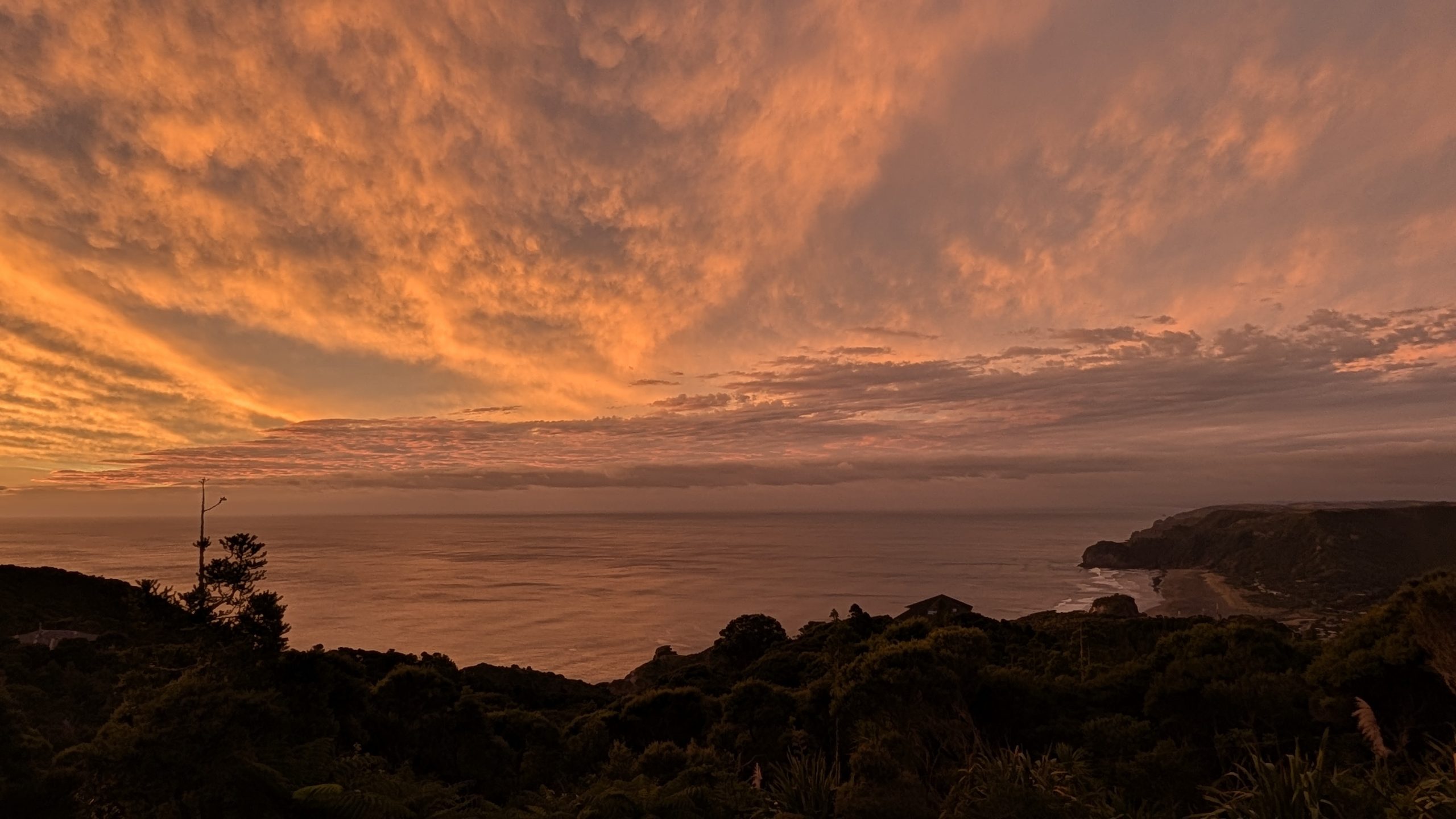
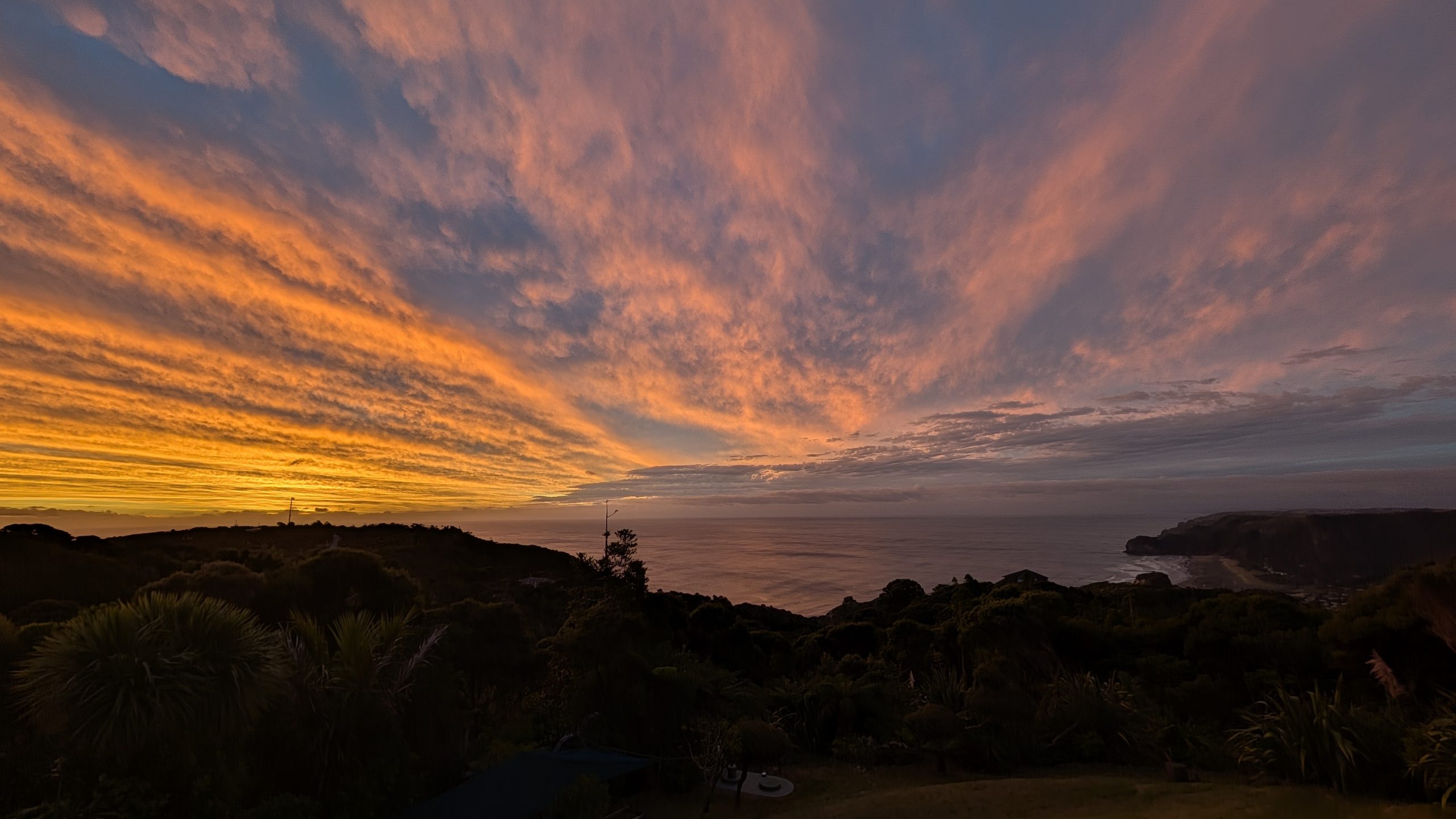
We built a nice fire in the fireplace that evening. It did a great job of warming up the cottage.
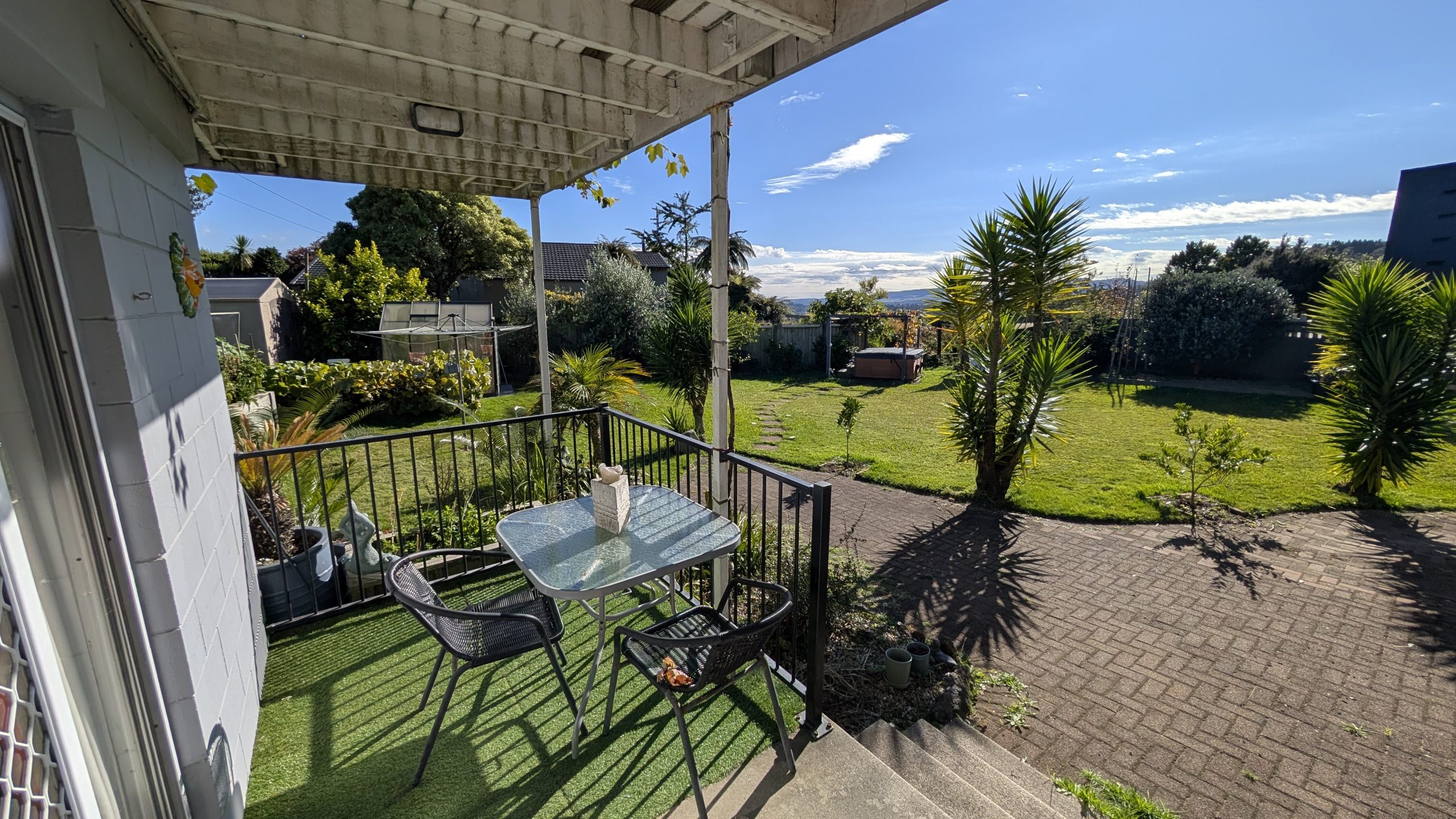
It was time to say goodbye to Rotorua and all New Zealand thermal activity. We had our last breakfast and said goodbye to Shami and Dave at the Geyser Lookout BnB. I realized I had not yet taken photos of our view from there, so I took a few pictures before we left. It was a nice sunny morning.
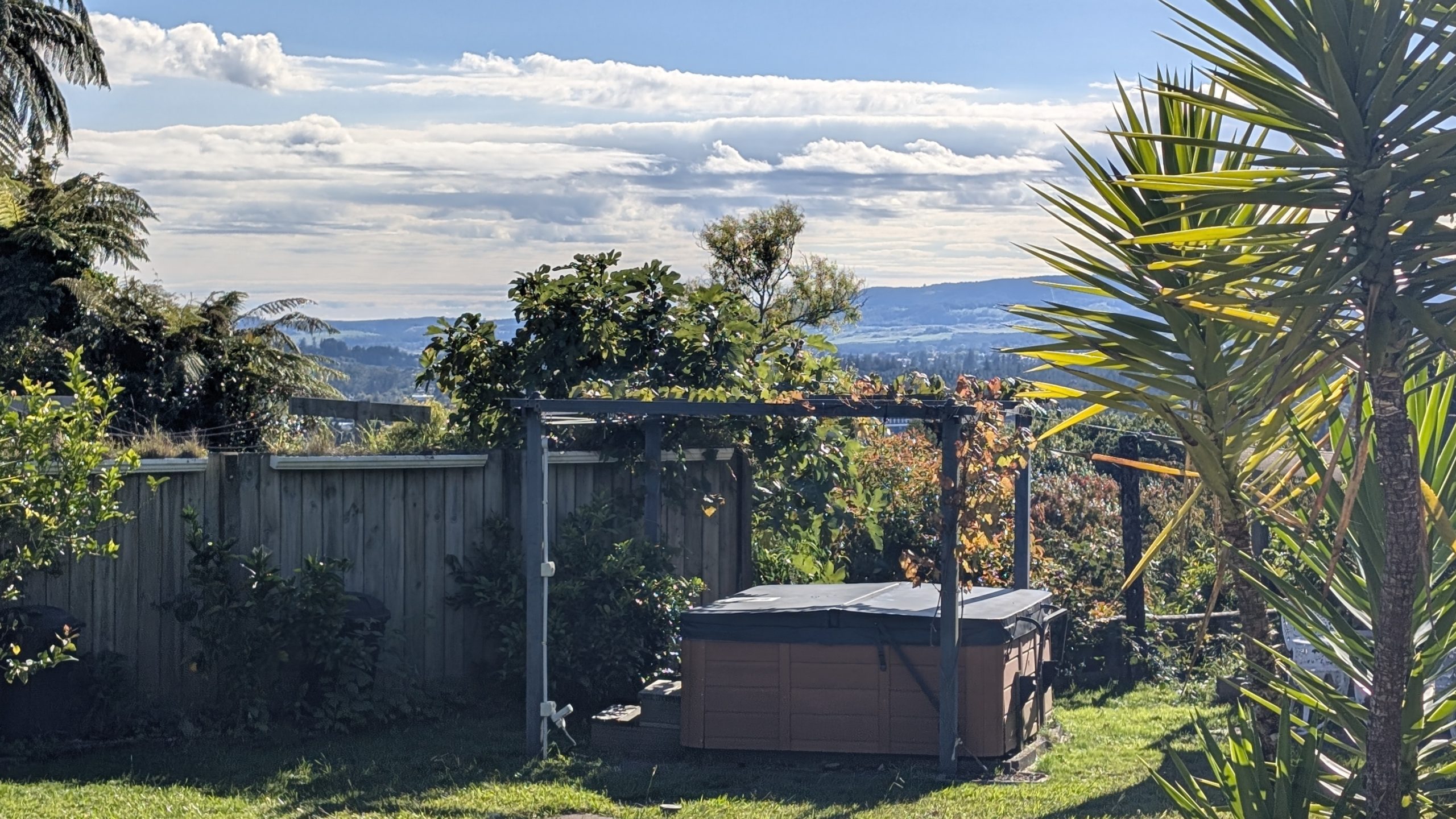
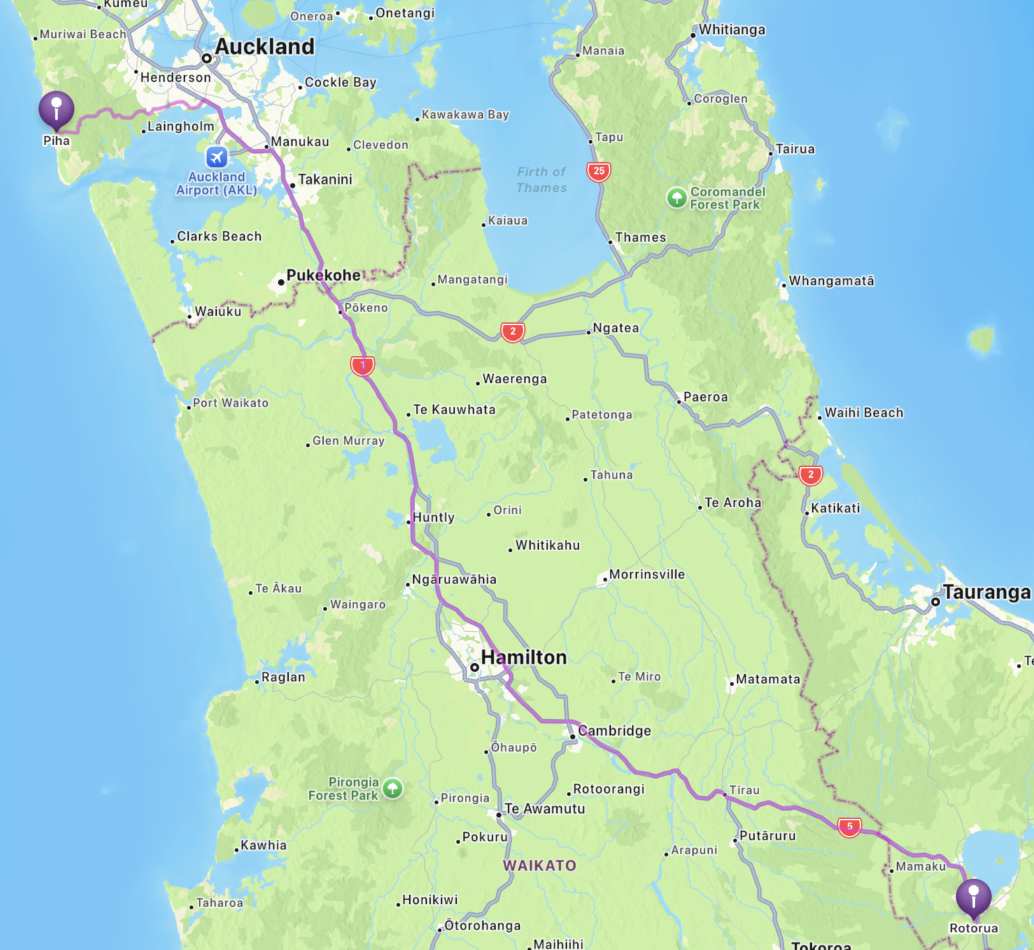
It was a 3-hour and 25-minute drive to our next destination in Piha. We wanted to get an early start since we would have to drive through the Auckland vicinity to get there, and we did not want to have to deal with rush hour traffic.
So we made only a few stops along the way. The first stop was at the New World supermarket in Rotorua where we bought more Whittaker's Chocolate to stock up on some flavors that Pak'nSave did not have. We also filled up on gas using the small discount that New World gave us on the grocery receipt.
We made brief rest stops near the city of Hamilton and the town of Huntly, and then afterwards it was a nonstop drive all the way to Piha. The last 1.5 hours was city driving in Auckland, and after we left the motorway it was slow going with heavy traffic. The traffic was no longer an issue once we reached Piha Road, but the road was very steep and windy.
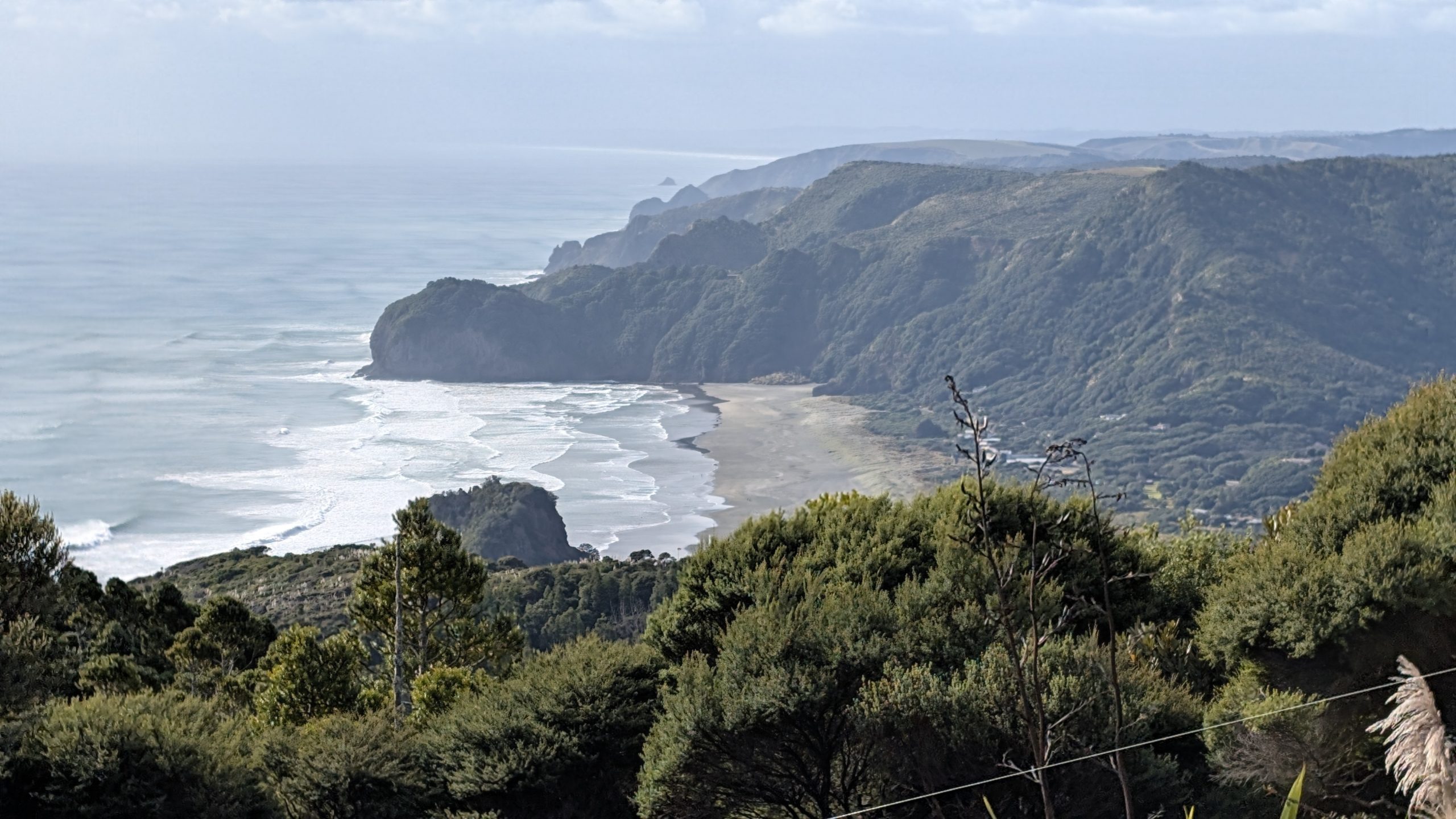
Our accommodation for the next two nights was at a cottage perched high on a hill just south of the Piha beaches, and it had a killer view.
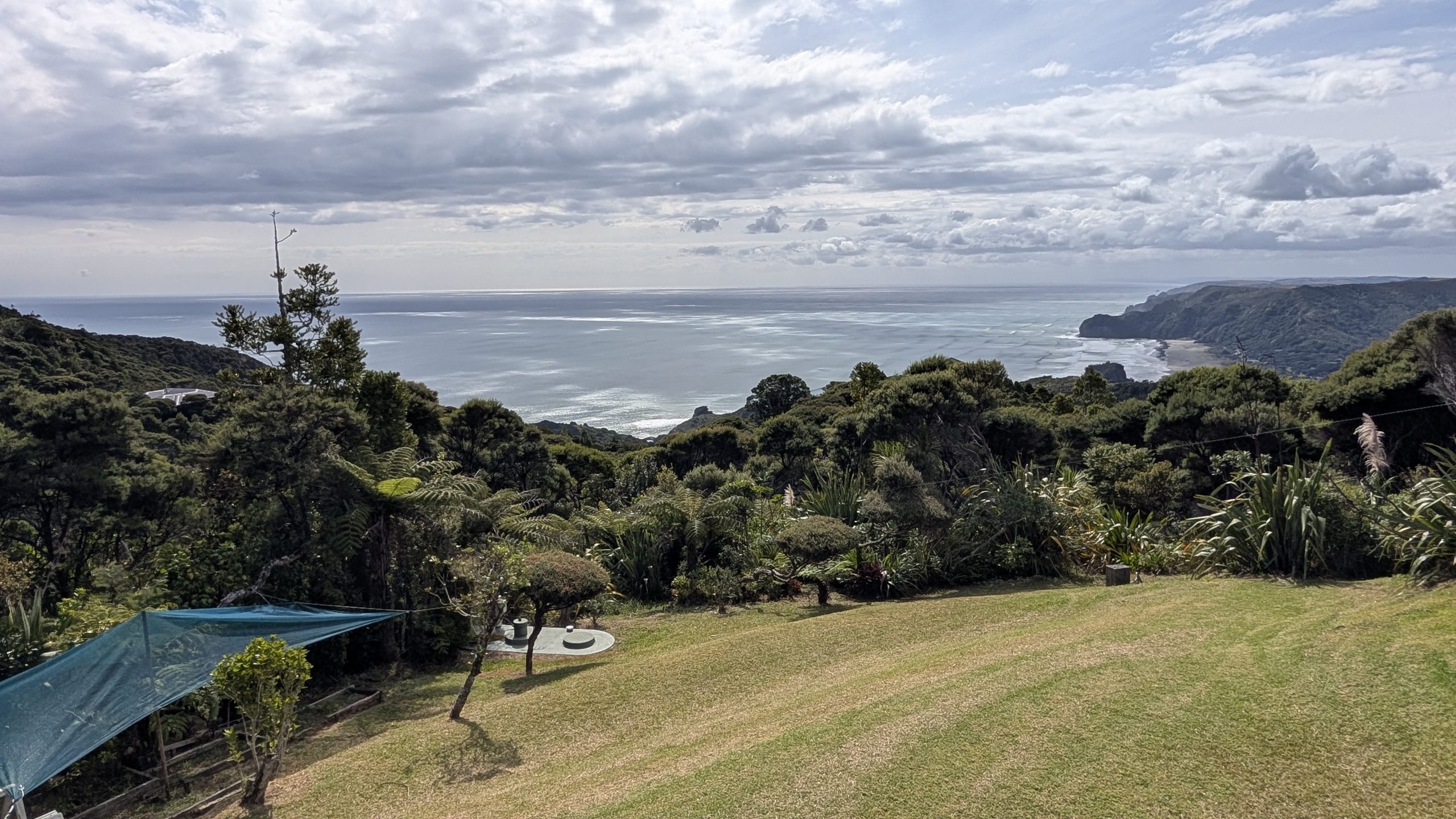
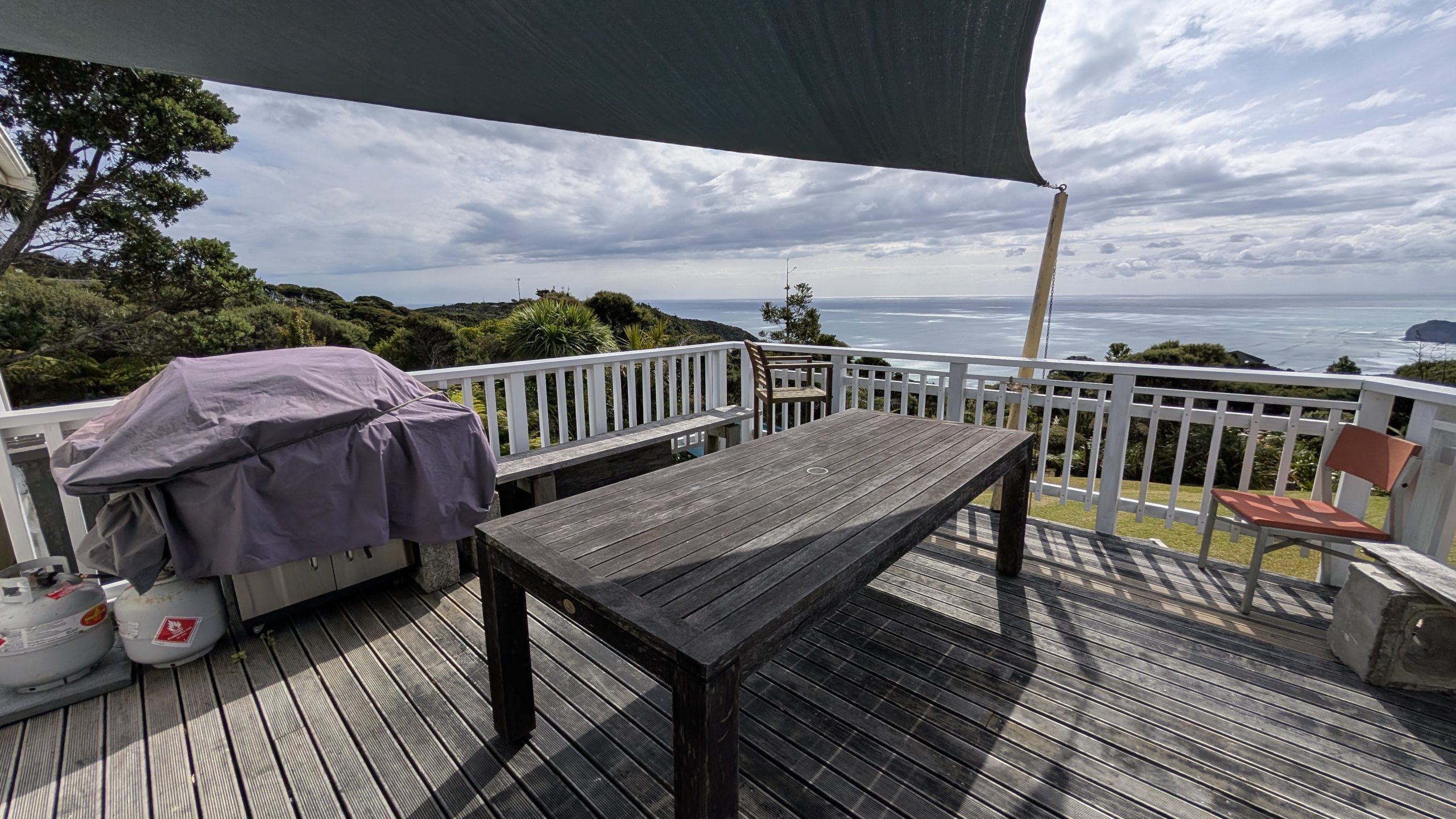
We unpacked and then used the grill for a nice dinner on the deck.
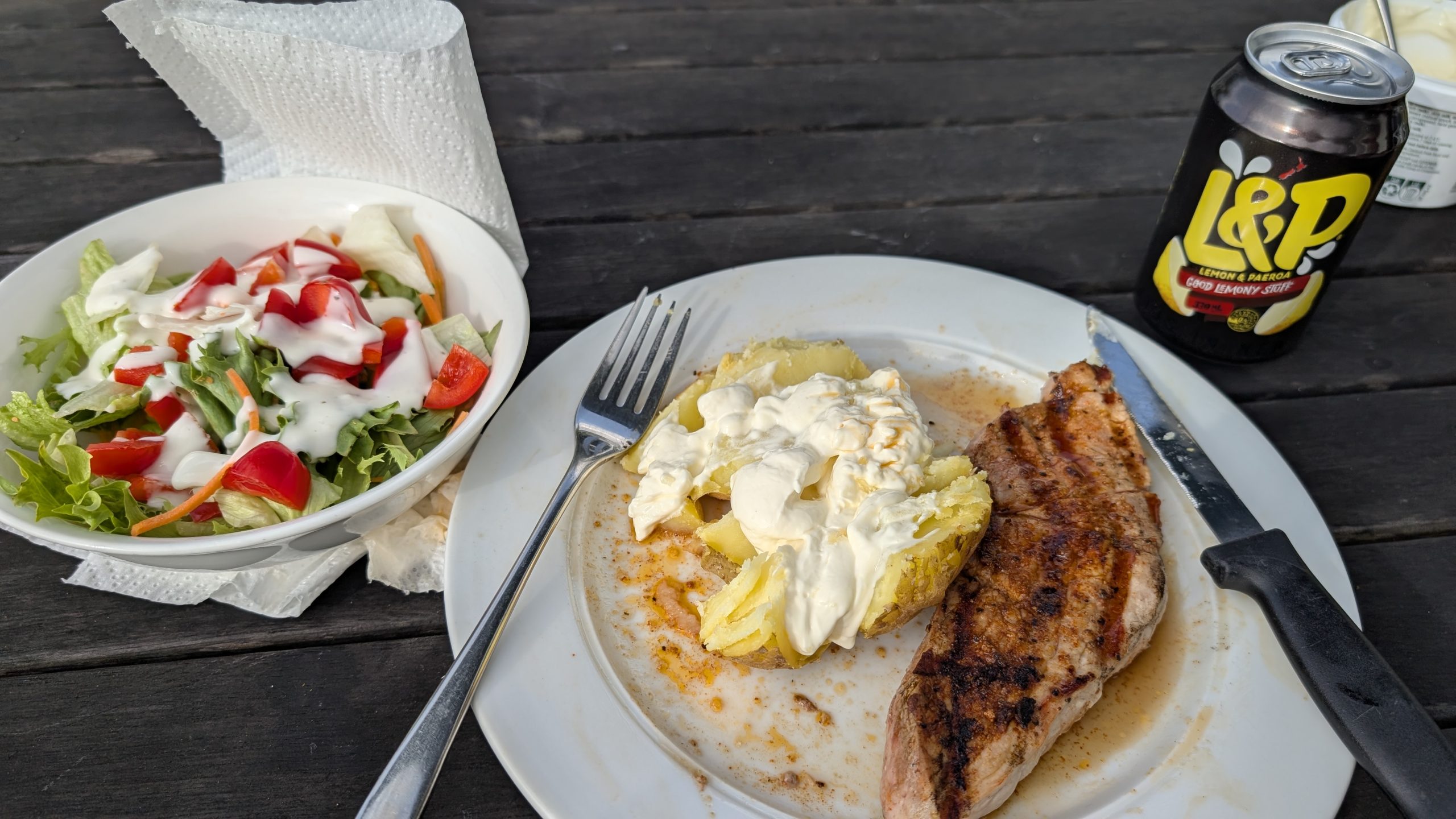
That evening, a storm system started to move in across the north going from west to east, and we were right on the edge of it. The temperature was supposed to drop overnight, and we were concerned that we would not be warm enough since we could not find the space heater that was advertised. I messaged the host, and he said he could bring a heater, but it would not be until the next day. In the meantime we used extra blankets from the closet. It turned out to be okay.
Link to Heinrich's thermal observations: http://geysers.org/wordpress/2026/03/09/observations-for-2026-march-09/
We had one last day in Rotorua, and we decided to spend it going to Te Puia for another day. The temperature was in the upper 60's, and it was a nice sunny day. Once again we were able to skip the 9:00 AM tour and go directly to the geyser basin.
Kererū Geyser was quiet when we arrived, so we settled in to wait for a major eruption. And we were rewarded with a major less than 45 minutes after we arrived. There wasn't a single cloud in the sky, but... the conditions were awful. A few minutes before the eruption, the wind shifted and was blowing straight toward us. So all of the steam from Kererū came straight toward us, along with the stream from Pōhutu and Te Toru which were also erupting at the time. All we saw was a big massive cloud of steam. My video is so bad that I won't post it here. I even had to ask Heinrich afterwards if that was a major eruption since I couldn't see anything.
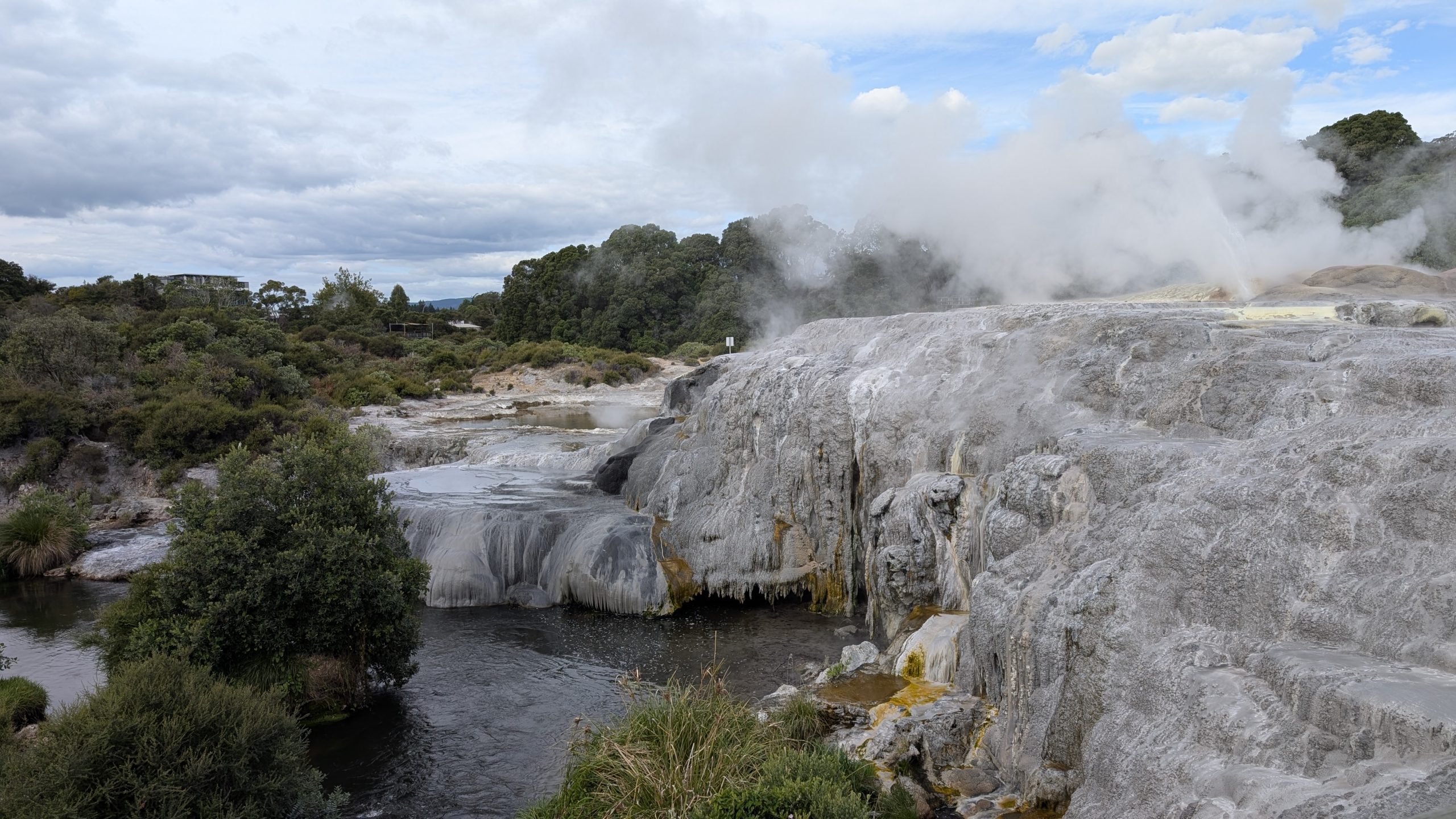
Immediately afterwards, Kererū went into minor eruption mode, and the minors lasted the entire day until we left at the 5:30 PM closing time. This was a new personal record for us in seeing almost 8 hours of minors. It was frustrating for me to have to leave without ever knowing how much longer those minors would last. And sadly I now have to say that I broke my previous record of recording minors with 111 posted for the day. I would have posted even more except for taking a much needed break for 2.5 hours when I walked around elsewhere. Heinrich recorded 8 more minors while I was on break, giving a total of 119 minors for the day.
During that break, I visited the kiwi house. The entrance to the house was locked, so I had to wait for a tour to show up to enter. When the guide saw me standing at the entrance, he asked me if I would like to go ahead of the group, and I happily agreed. So I had somewhere around 5 to 10 minutes of uninterrupted time to watch the kiwi while the guide gave an introductory talk to the people outside. There was an adult kiwi running back and forth inside the first enclosure, and the second enclosure contained a baby kiwi that was sitting in the front corner. It was fun to see them again.
Back at Geyser Flat, Pōhutu cooperated with a total of 8 eruptions for the day. We also saw many eruptions of Mahanga and Waikorohihi geysers. I spent more time at the overlook near the Ngā mōkai-ā-Koko mud pool since it was much more comfortable for me to stand there instead of on the bridge. For most of the time it was quieter there as well, since the tours usually did not stay long at that location.
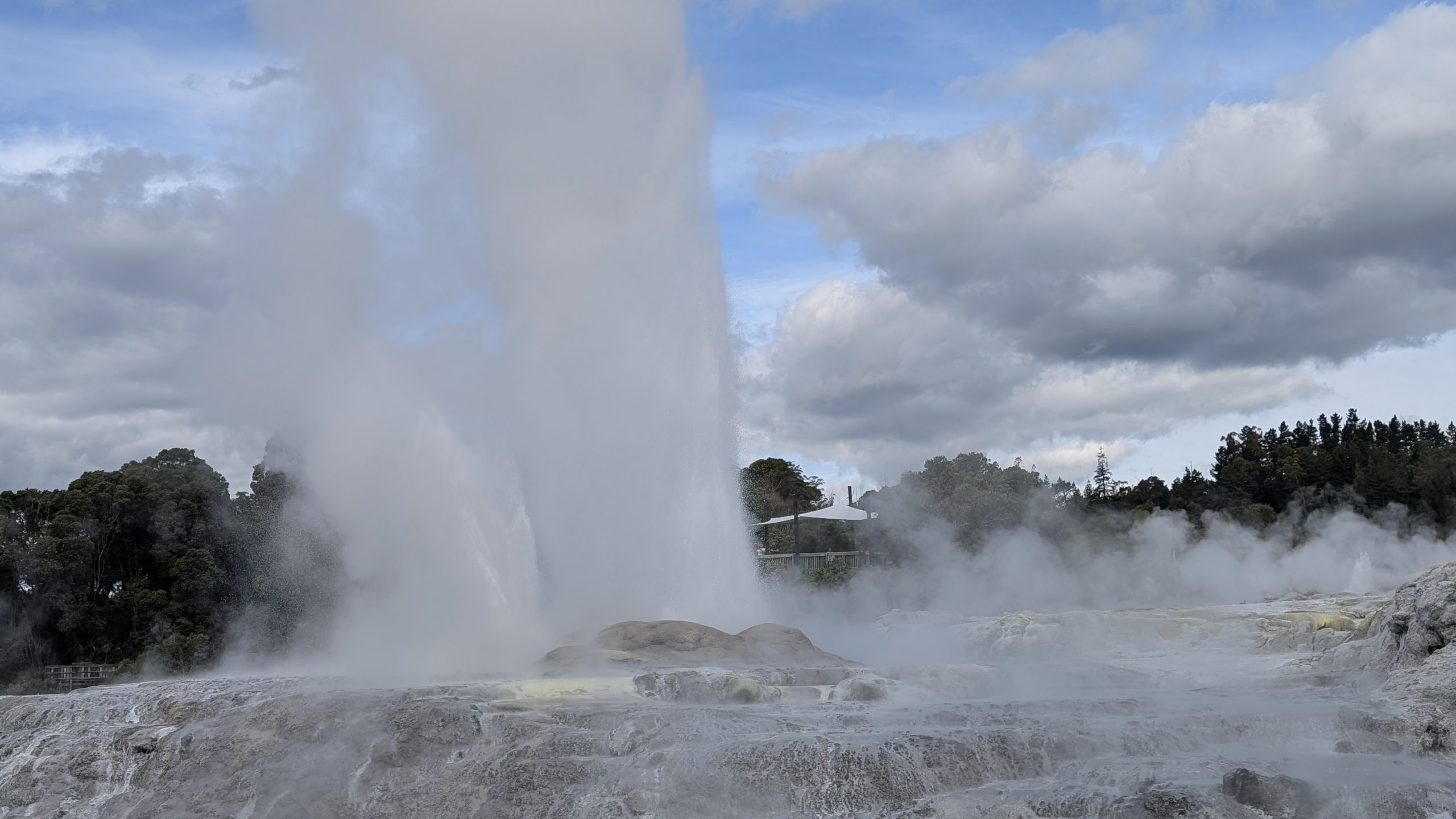
We checked on the level of Te Horu pool, and while it was too steamy to see in the morning, it appeared to be full in the afternoon. It had been empty the day before when Graham reported the unusual Pōhutu minor activity with Te Tohu erupting almost non-stop all day.
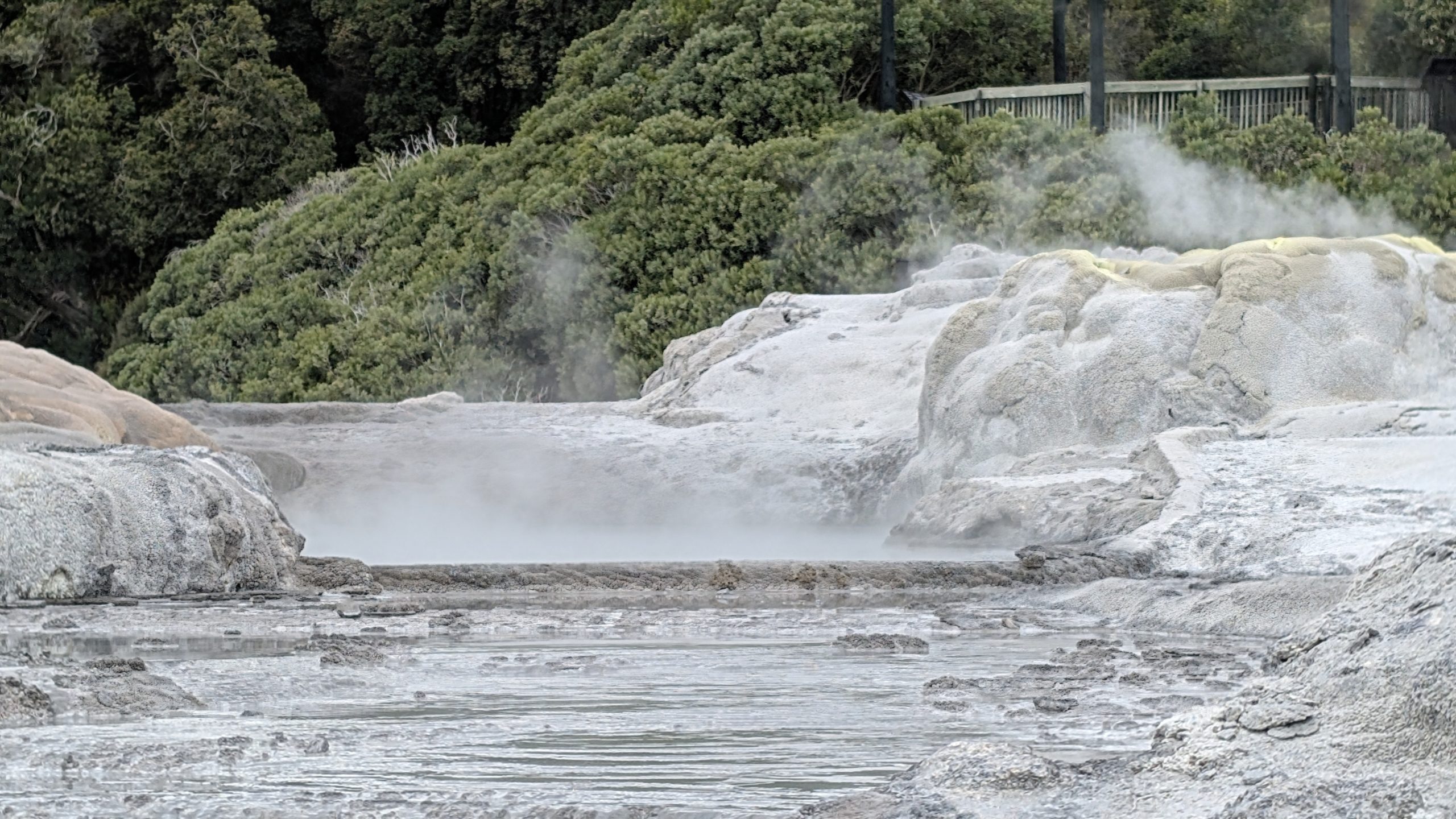
After the park closed, we drove back to the BnB and packed most of our luggage to get ready to leave the next morning. I made a big potato and egg dinner with a lot of leftovers.
Link to Heinrich's thermal observations: http://geysers.org/wordpress/2026/03/08/observations-for-2026-march-08/
We had a free day to travel around various places in Rotorua. The weather was mostly overcast, but it was fairly warm and it didn't rain. We took our time getting up and had a leisurely breakfast.
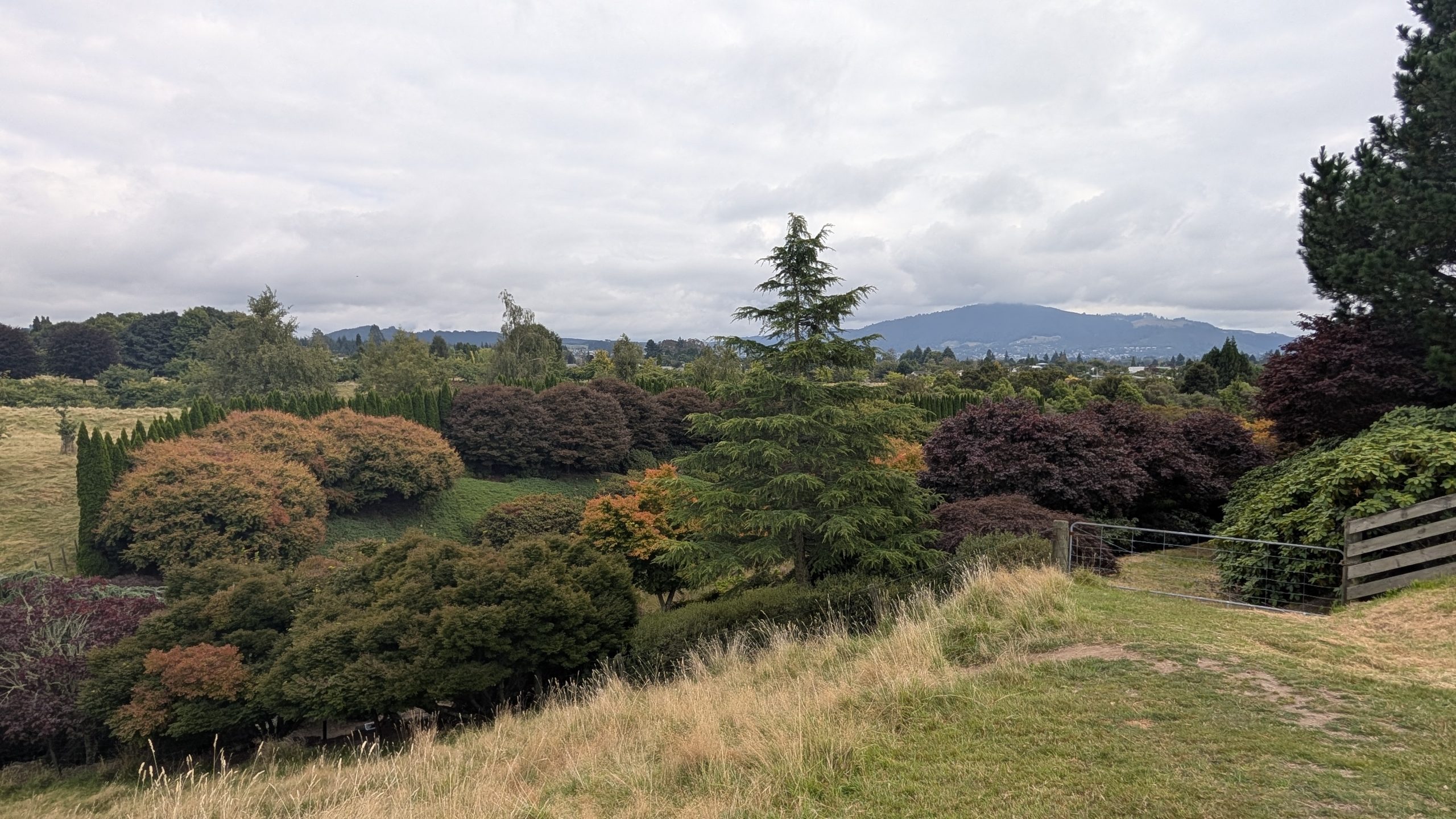
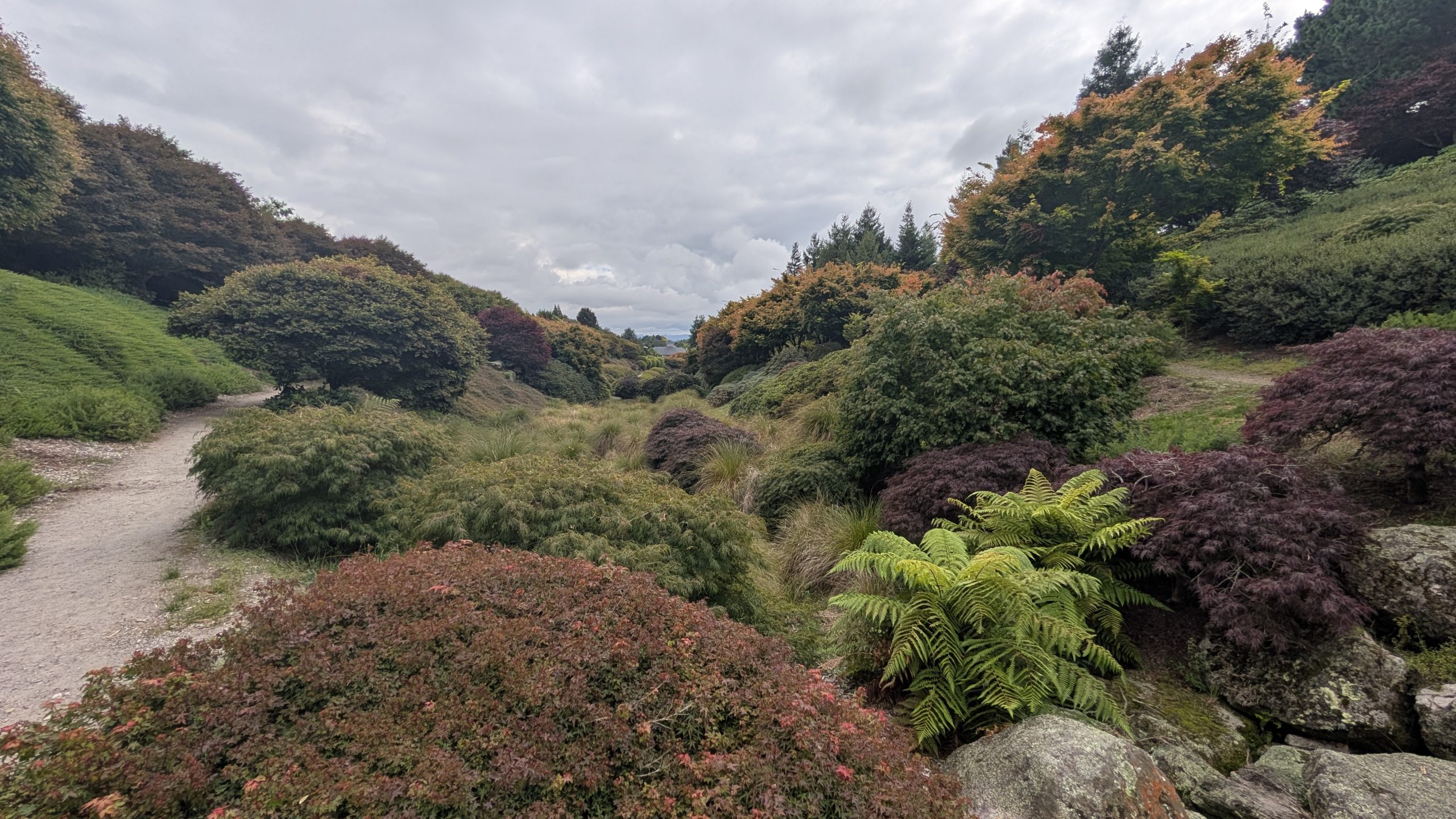
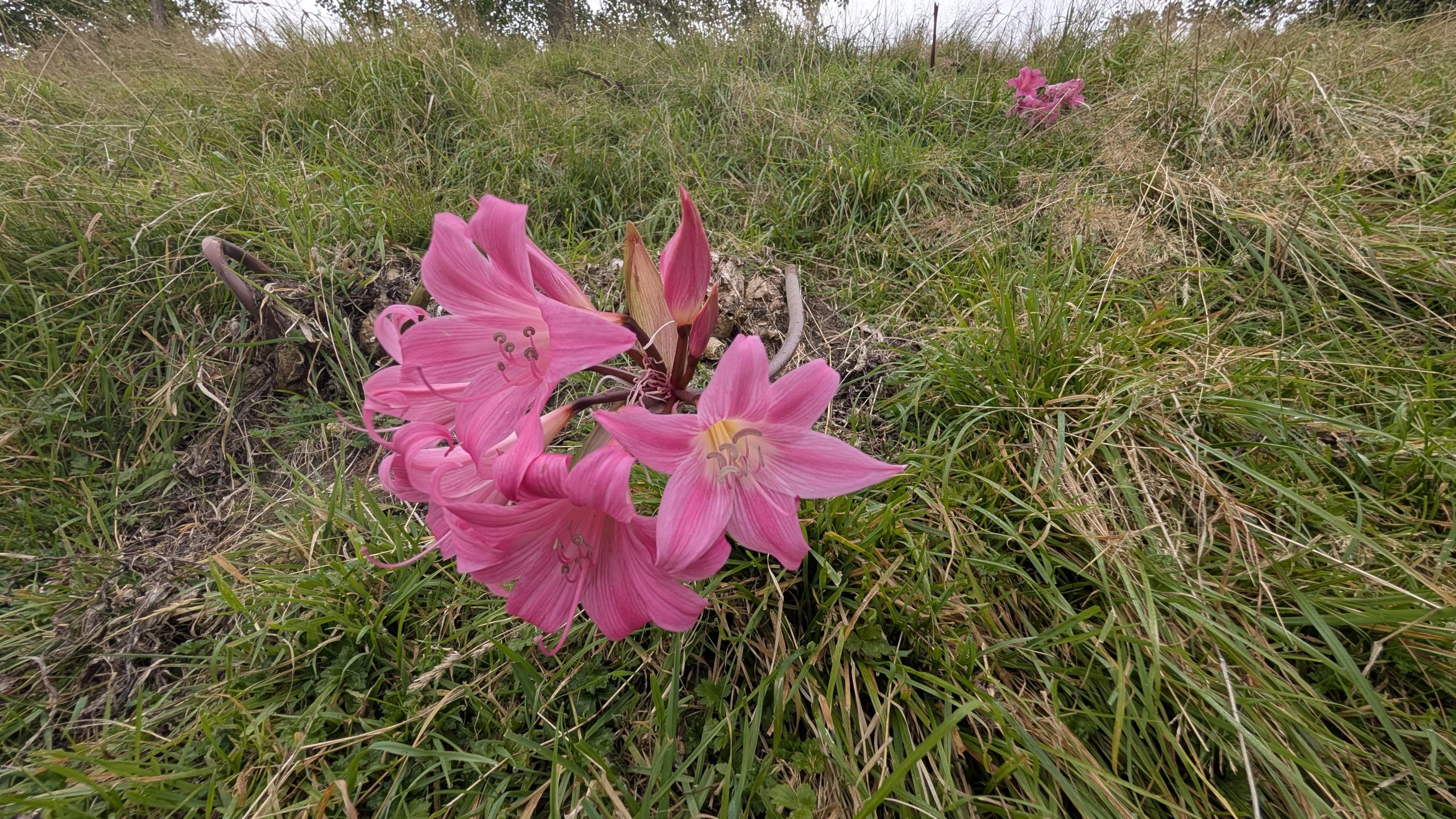
Our first stop was the Rotorua Tree Trust which was less than a mile away from our BnB. The park contained trees from around the world, including maple trees which I had seen nowhere else in New Zealand. It was interesting to see the maple trees were already turning color in March. There were many trails in the area, and we walked a short way along one of them.
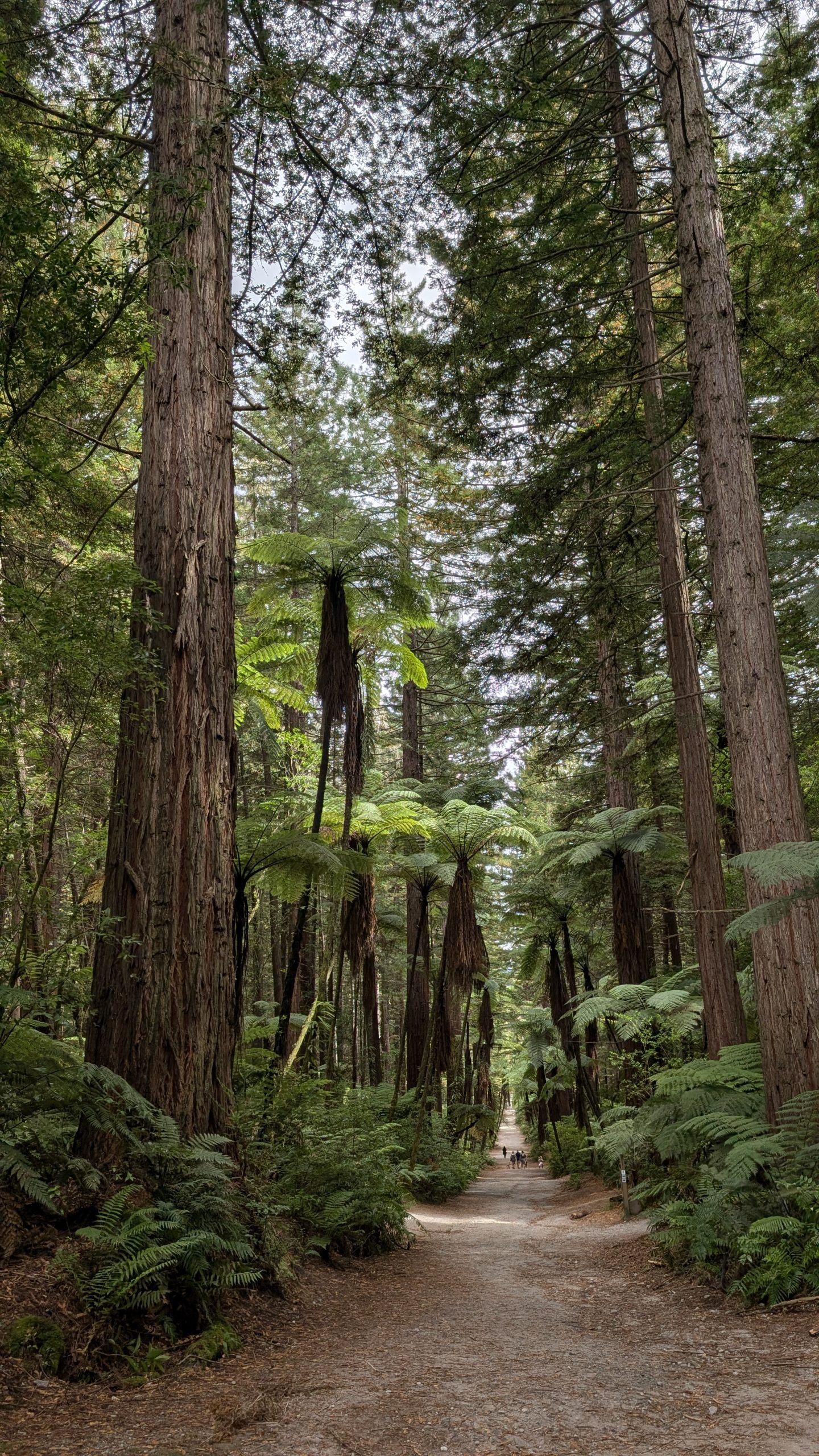
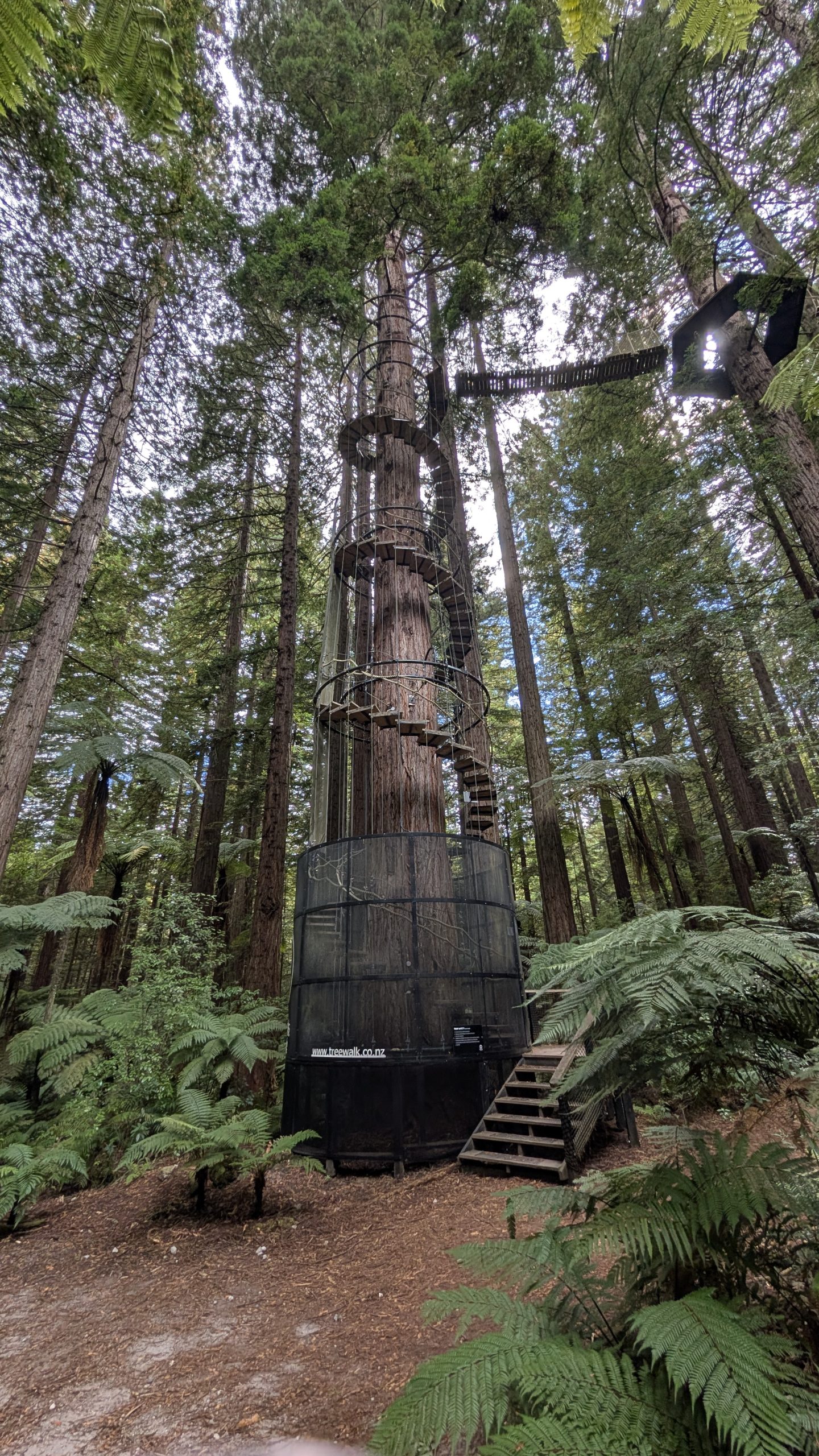
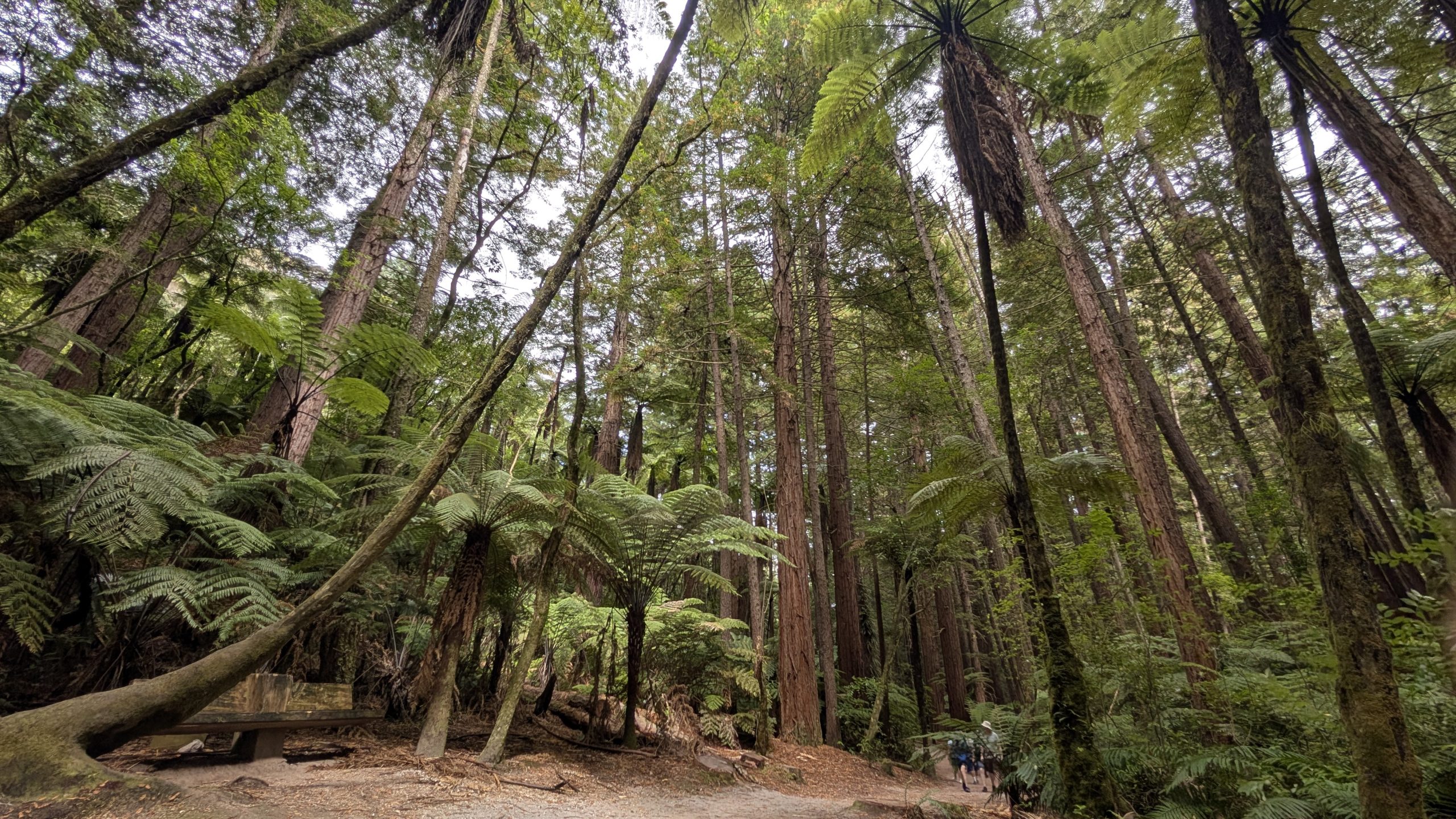
Next we drove to the Whakarewarewa Forest with non-native redwood trees. We spent a few hours hiking some of the trails. The forest was not too crowded while we were there, which made the hiking very pleasant. We passed a few of the structures used for the Redwoods Treewalk, a paid attraction with suspension bridges high above the forest floor.
Next we drove to Kuirau Park and visited its various thermal features. It was one of the few places in New Zealand where we could see thermal activity for free: a steaming lake, hot springs, and mudpots.
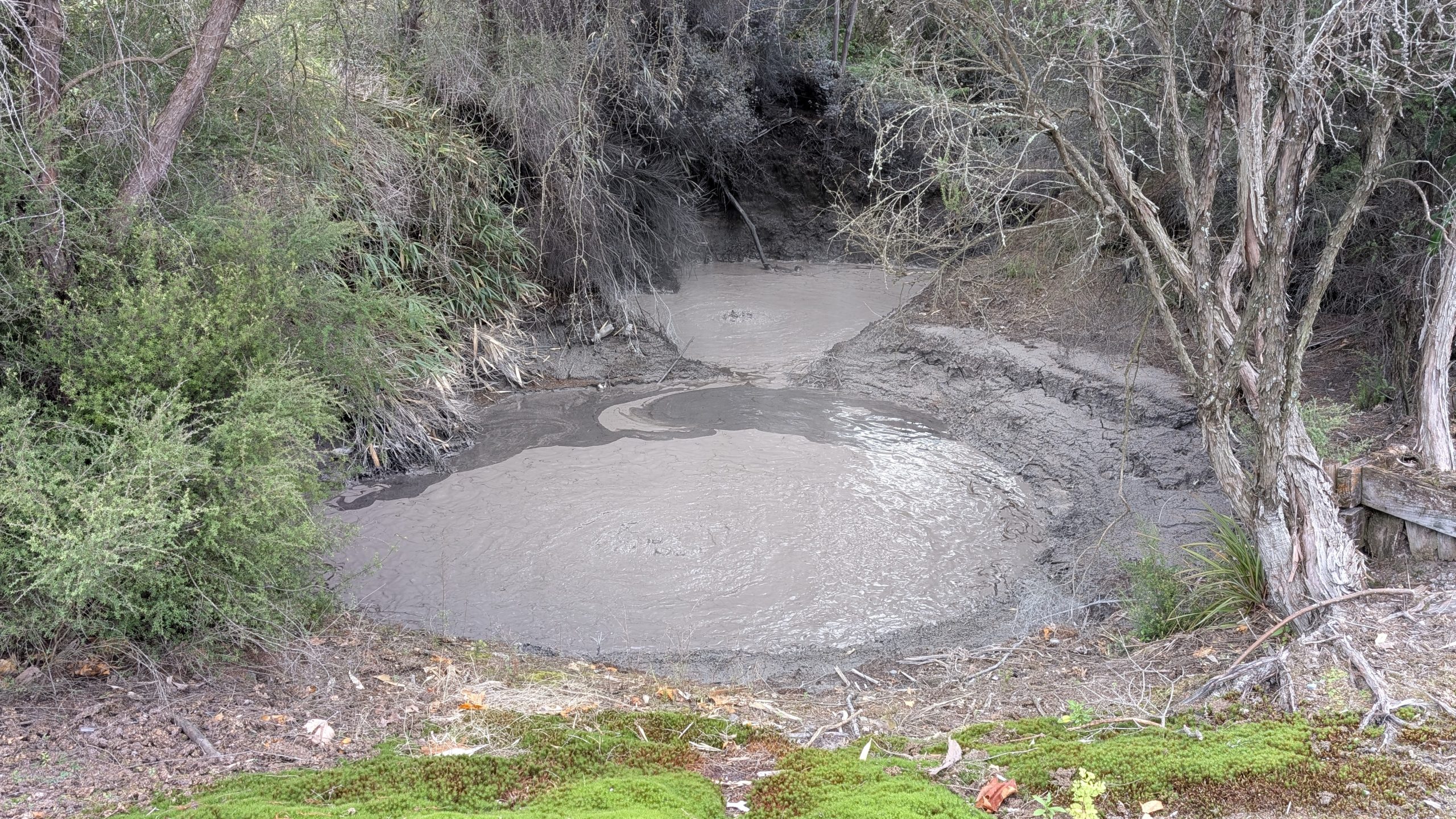
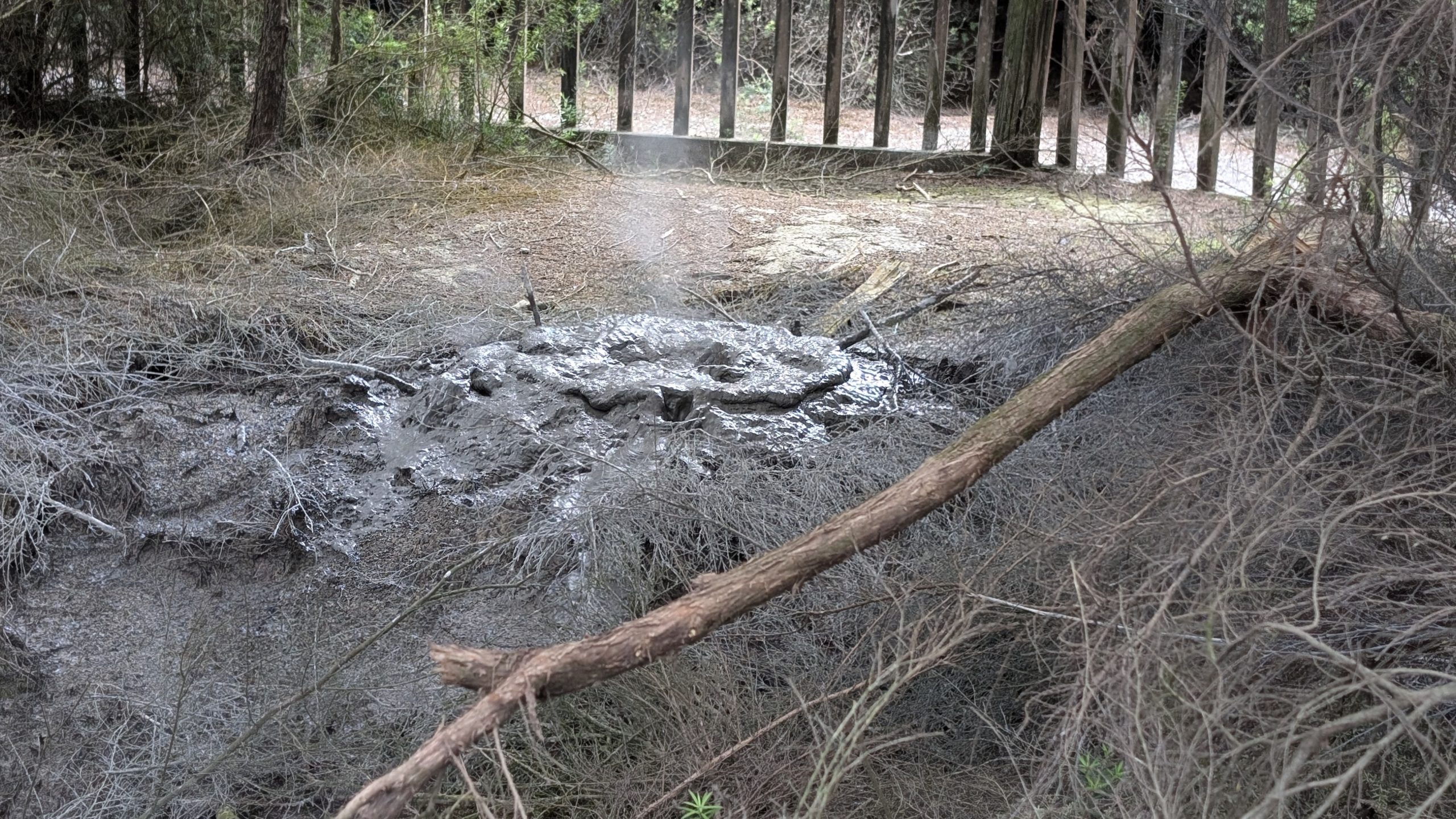
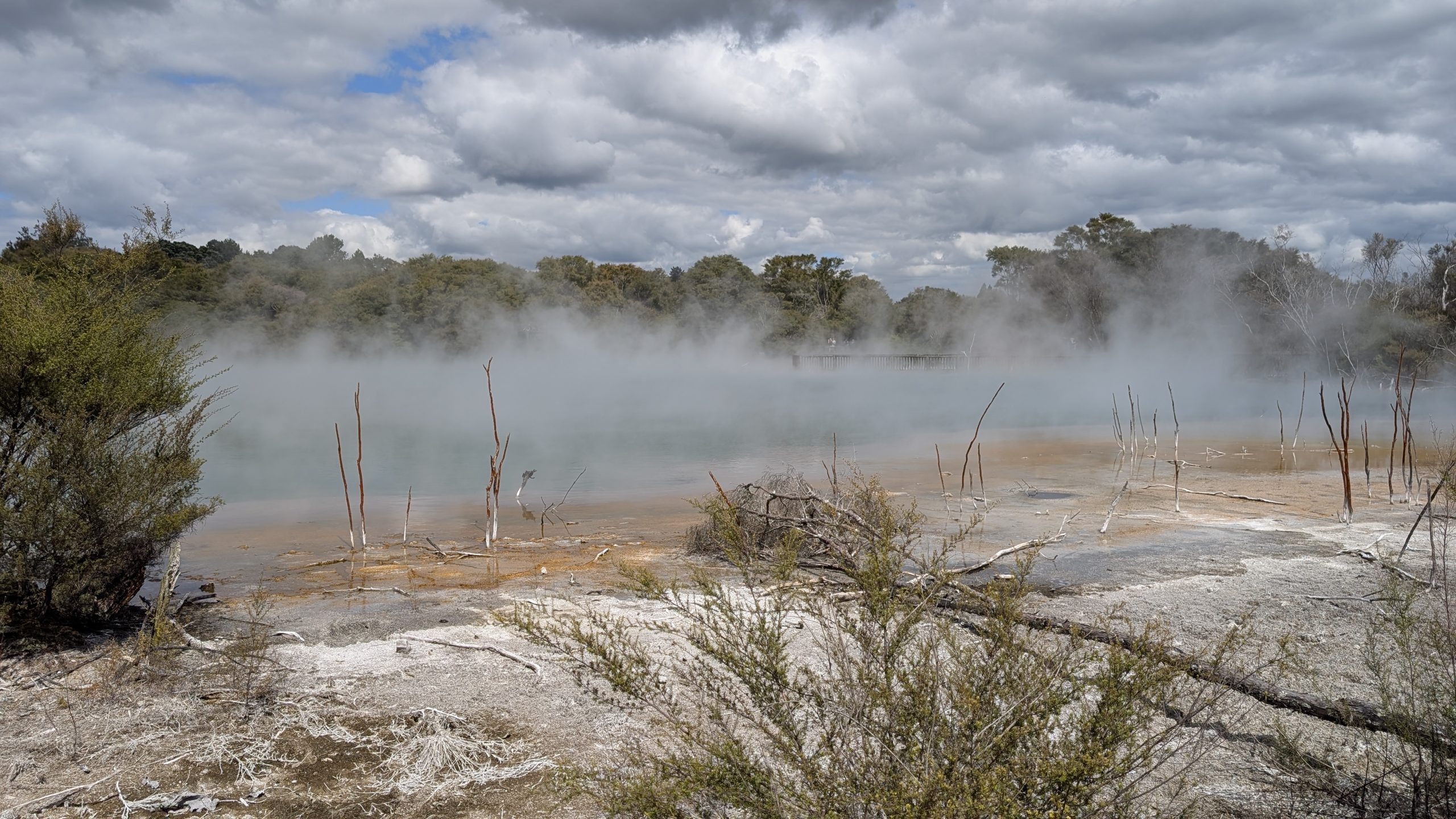
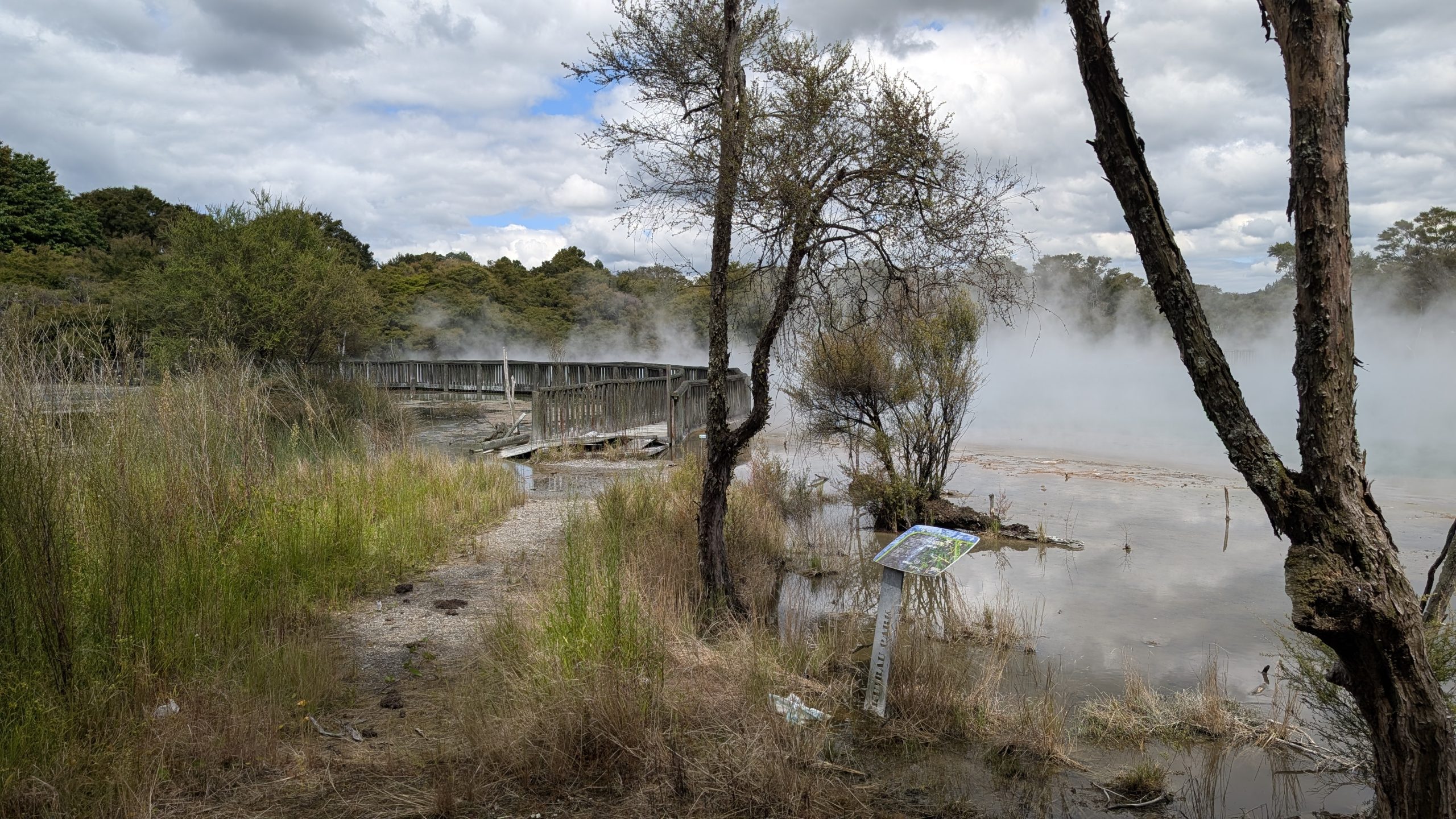
The most interesting area was on the west side of the park near Tarewa Road. A hot spring, which Heinrich identified as #648 on his map, was continuously boiling heavily and producing copious amounts of runoff. We walked around the area and found a trail that looked newly closed due to the runoff. (The following day Graham visited this feature and saw distinct pauses in the boiling, making #648 a geyser.)
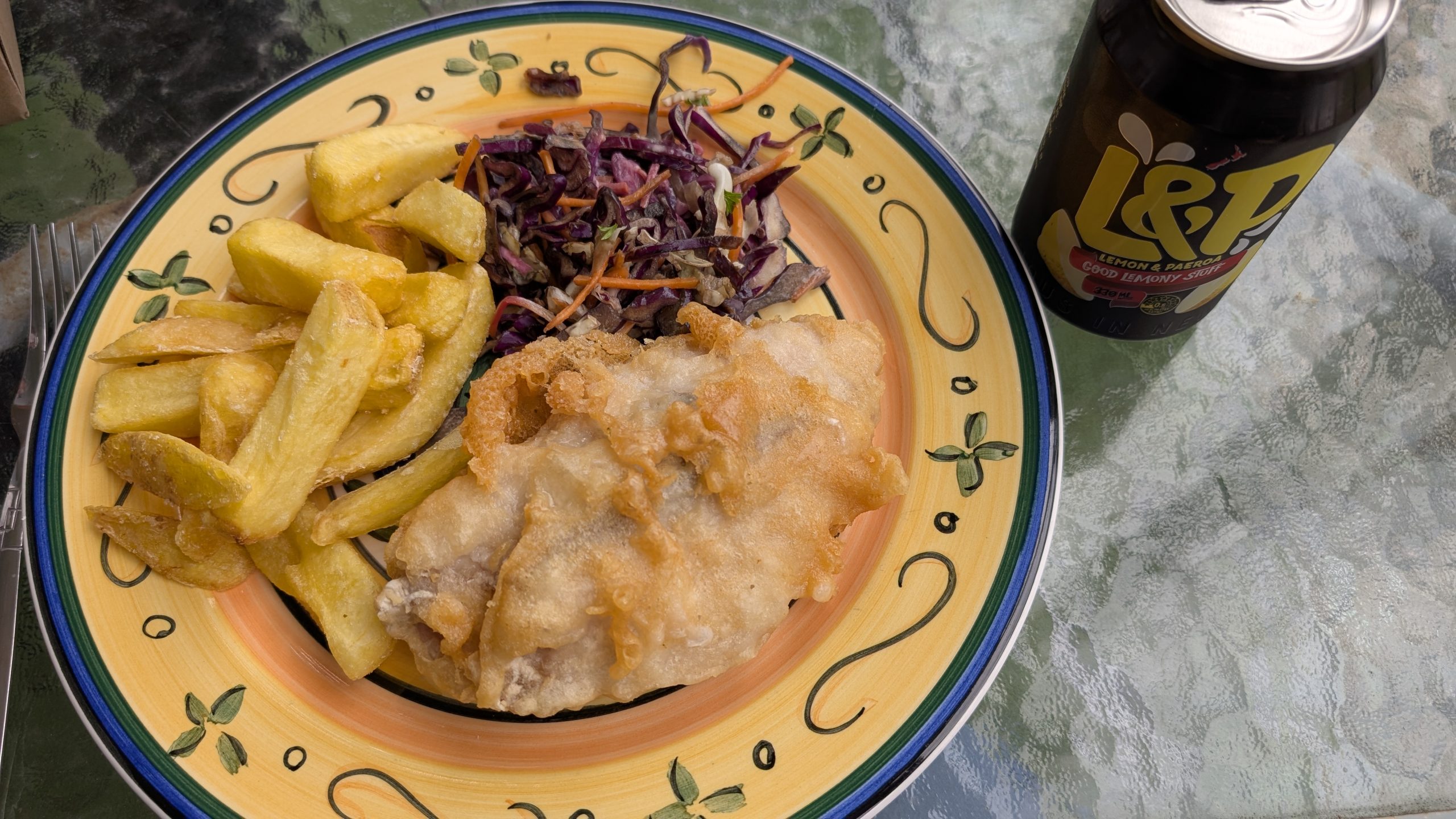
Next we drove to the River's Catch takeaway, which was conveniently close to our BnB. We bought a package of fish and chips and brought it back the BnB for an early dinner.
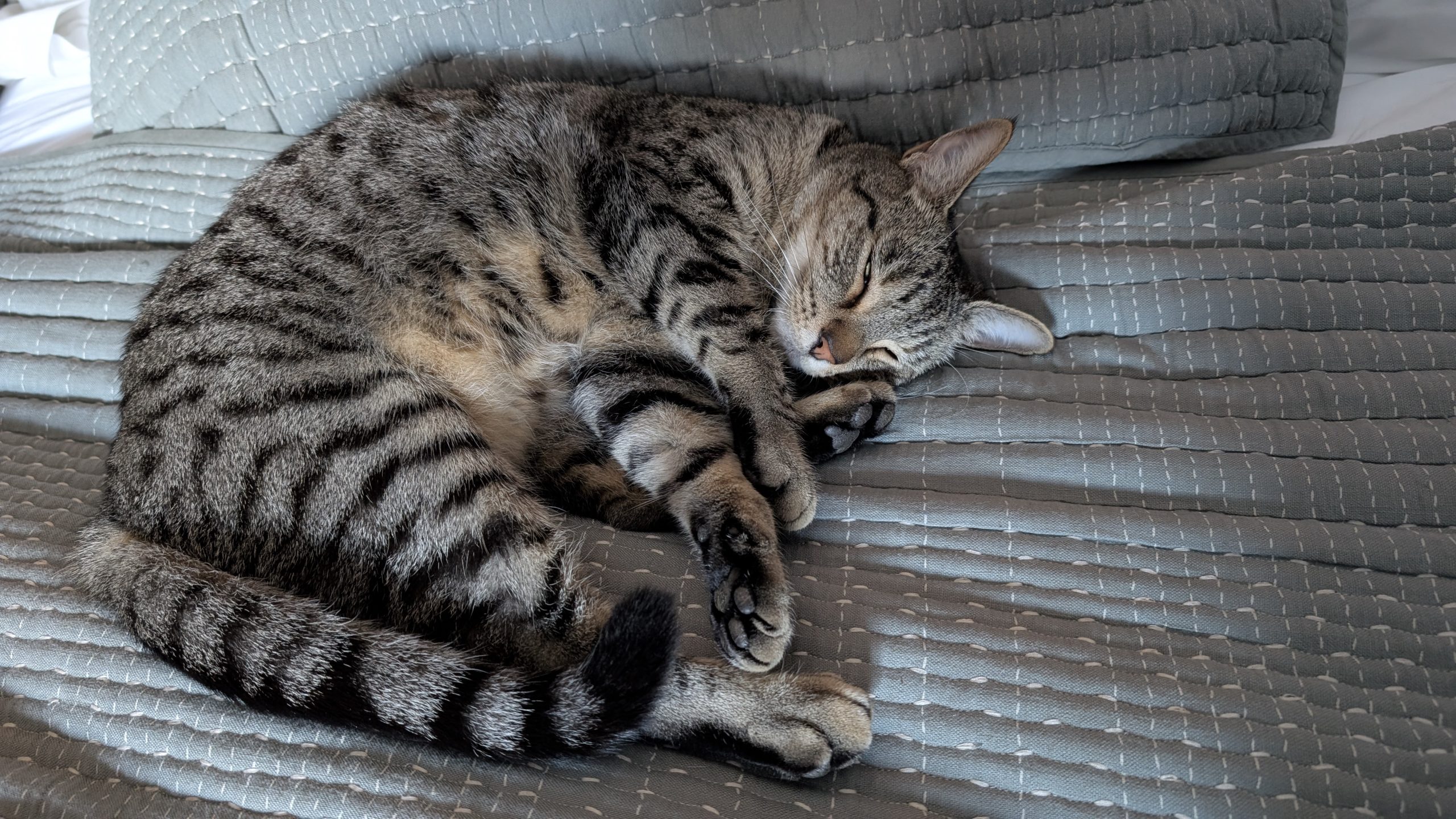
Antonio, the resident cat, wanted to visit us and curled up on the bed for a while.
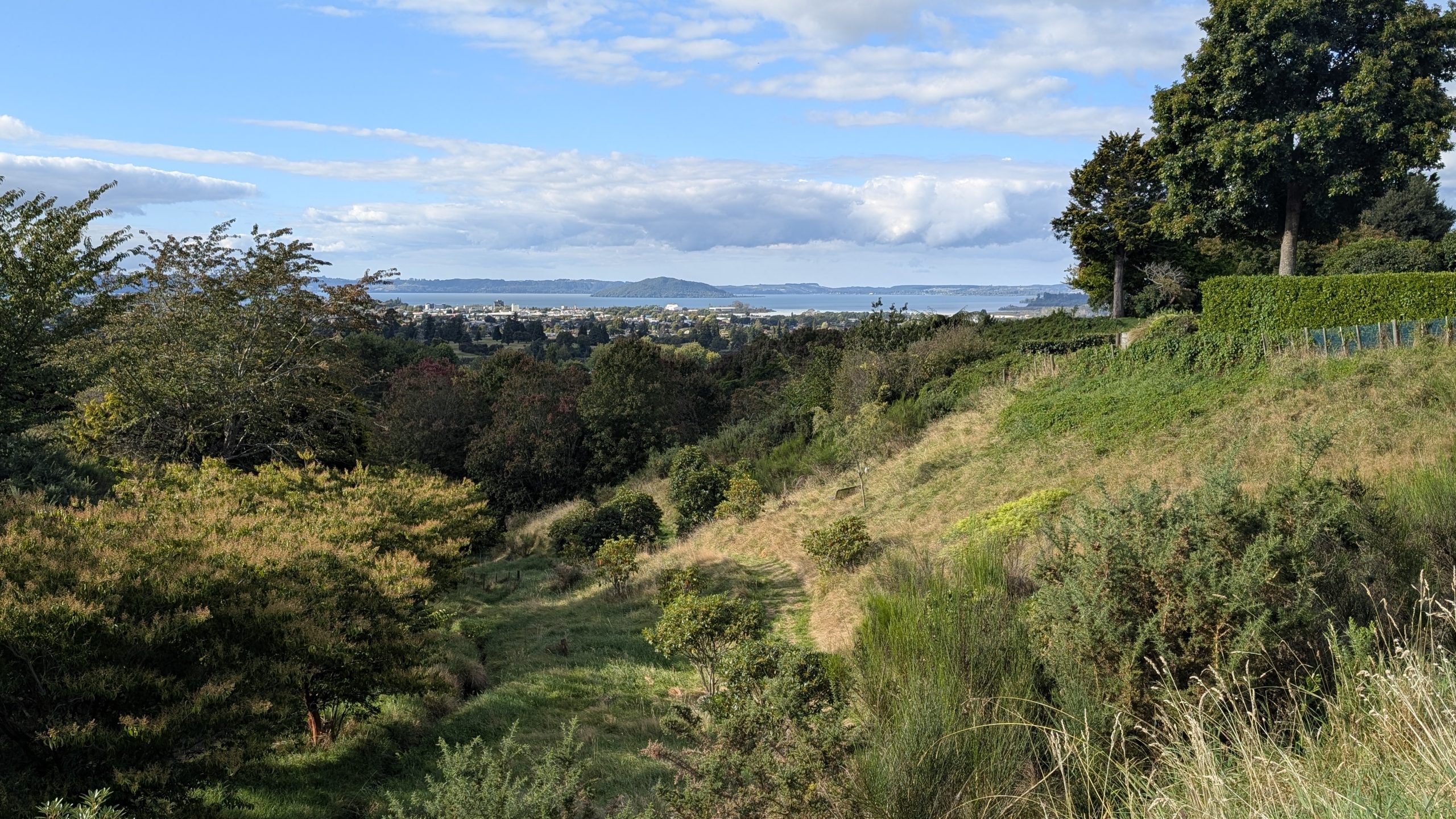
After dinner I took a short walk in the neighborhood and had a nice view looking down the hill to the Rotorua Tree Trust and Lake Rotorua.
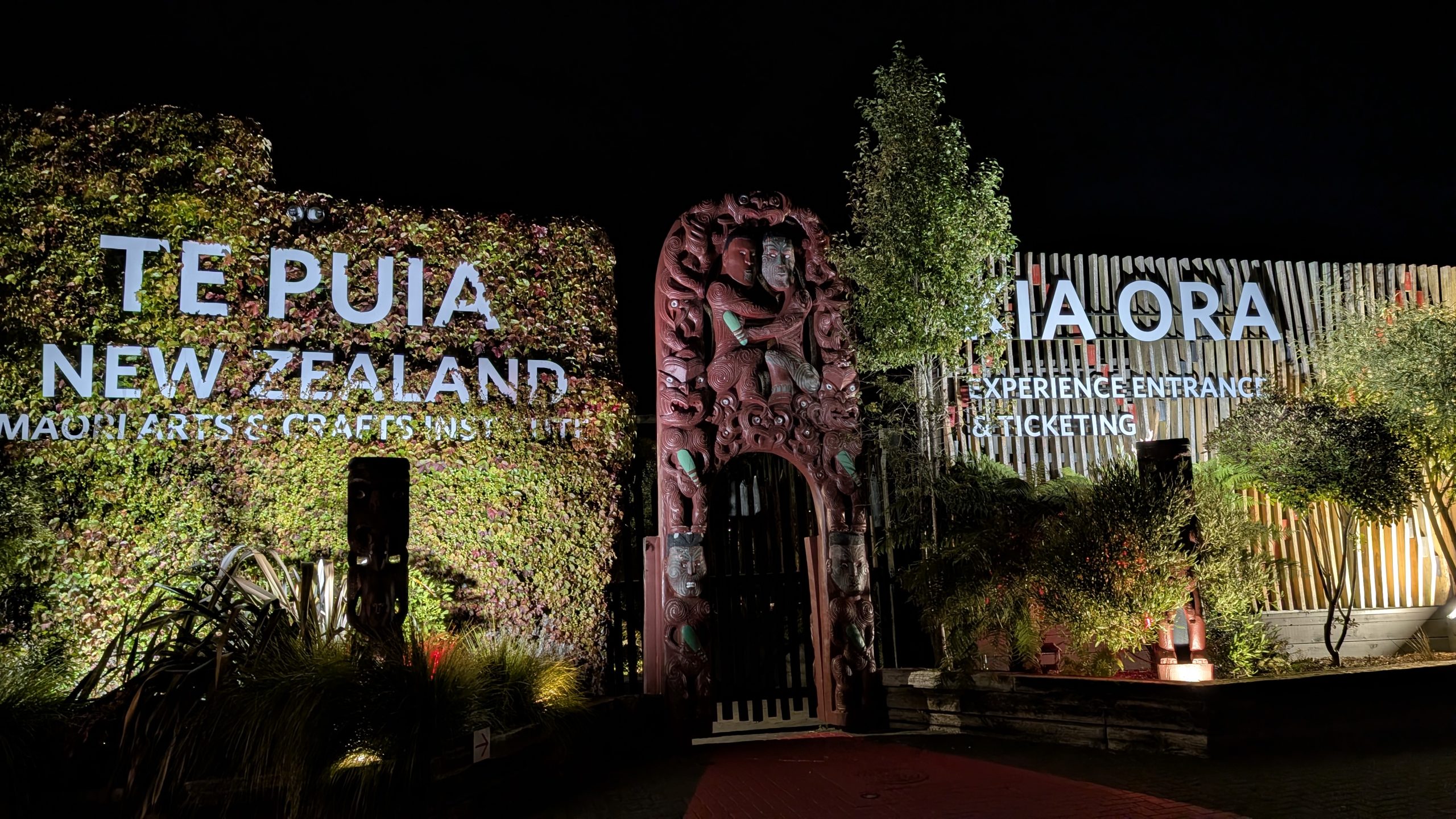
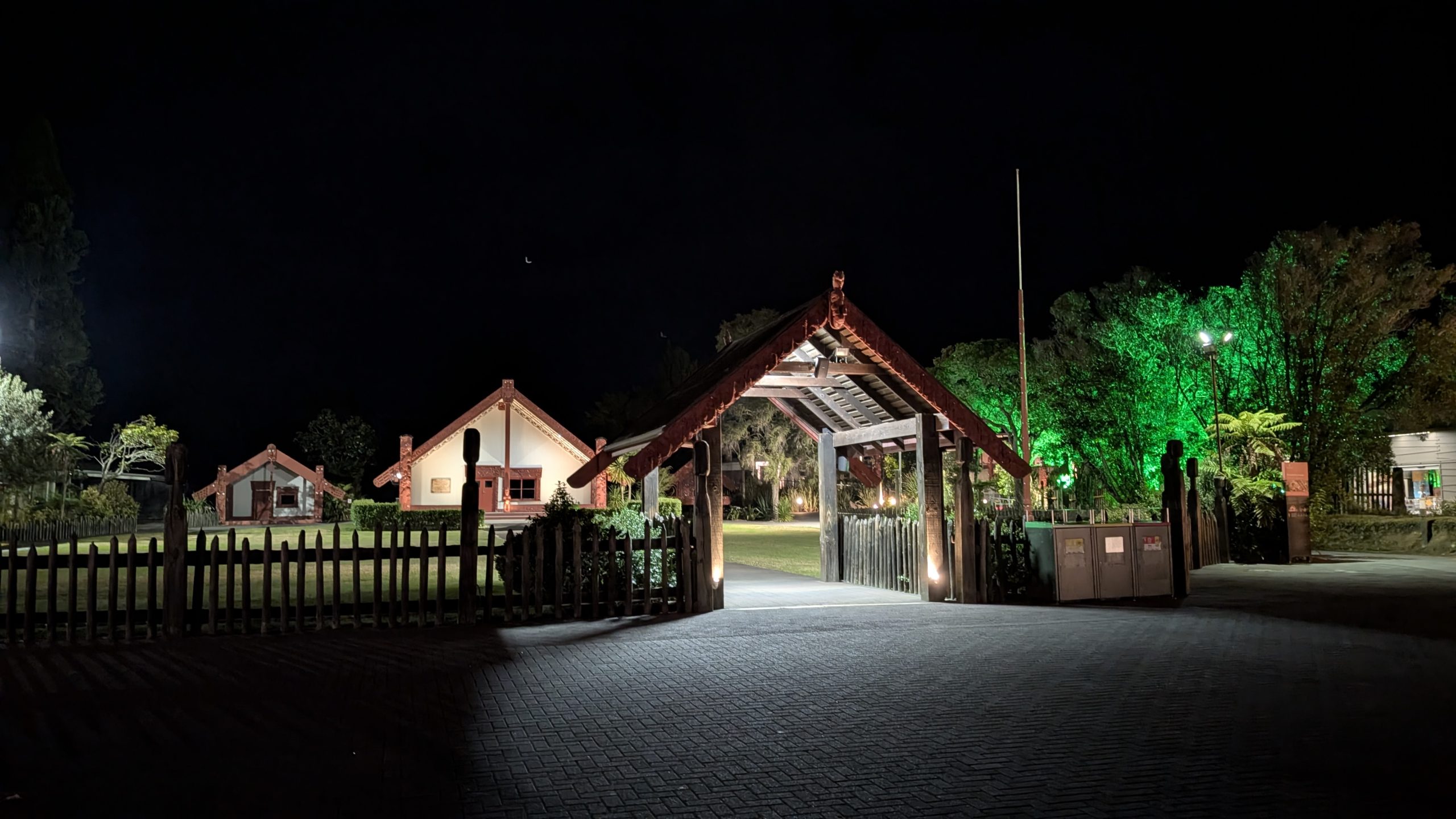
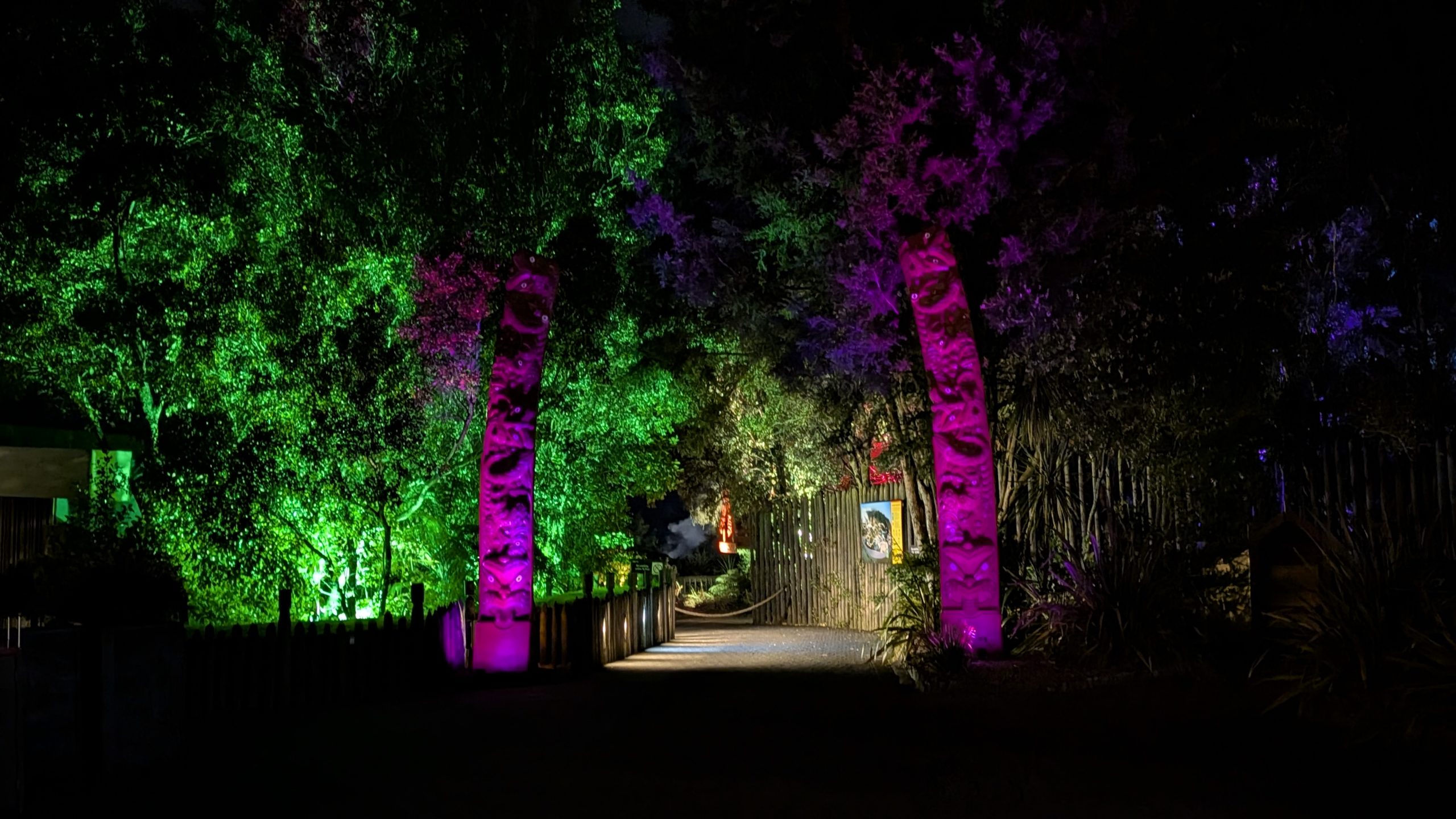
Afterwards we went to our nighttime activity: a visit to Te Puia for the Mārama light show. This was a self-guided tour: after our reserved entry time, we could spend as much time as we wanted (until the park closed at 12:30 AM) in the geyser basin along the trails that were illuminated with lasers and colored lights. Our admission time was 8:45 PM, but we arrived early and were able to join the 8:30 PM tour. We watched a short video for a safety briefing, and then a tour guide led us to the start of the trail. The guide offered to show a hāngī to the group, but we skipped that and bypassed just about everyone else in the group to get a head start on the trail. Thus it was very quiet all the way down to the geysers. We took our time walking down the path and enjoyed various displays of colored lights.
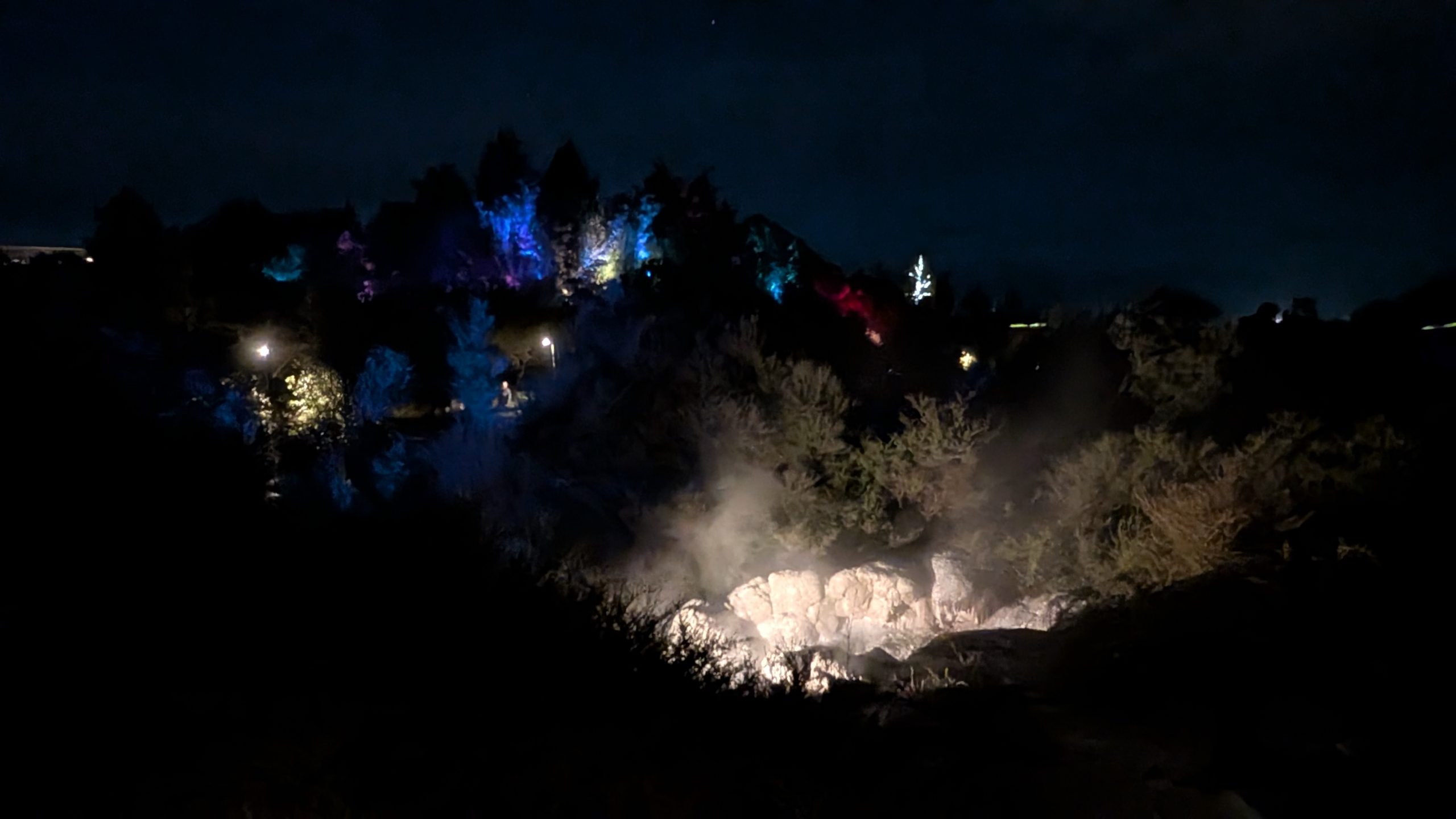
It was interesting to see various thermal features illuminated with other colored lights in the background.
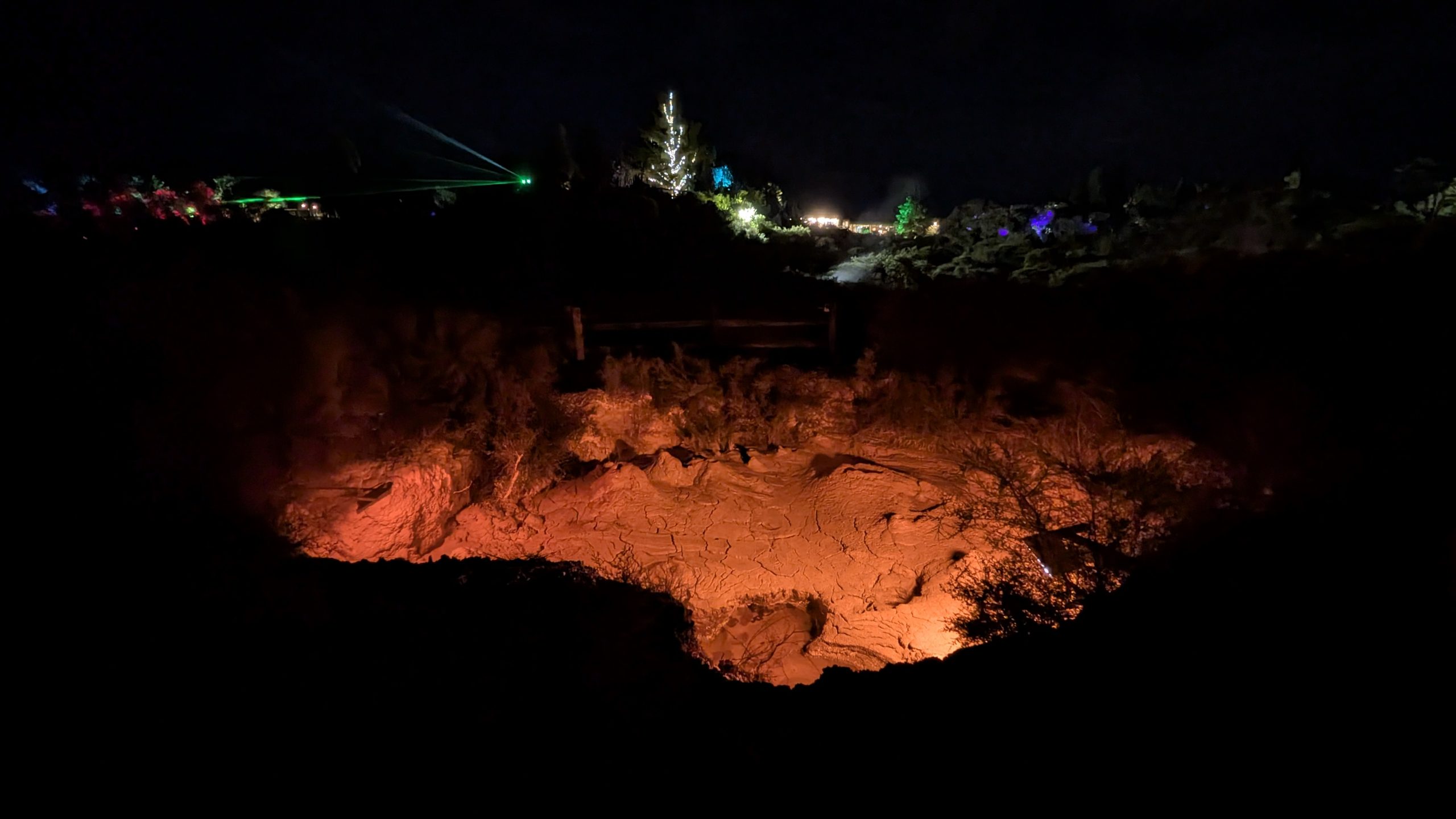
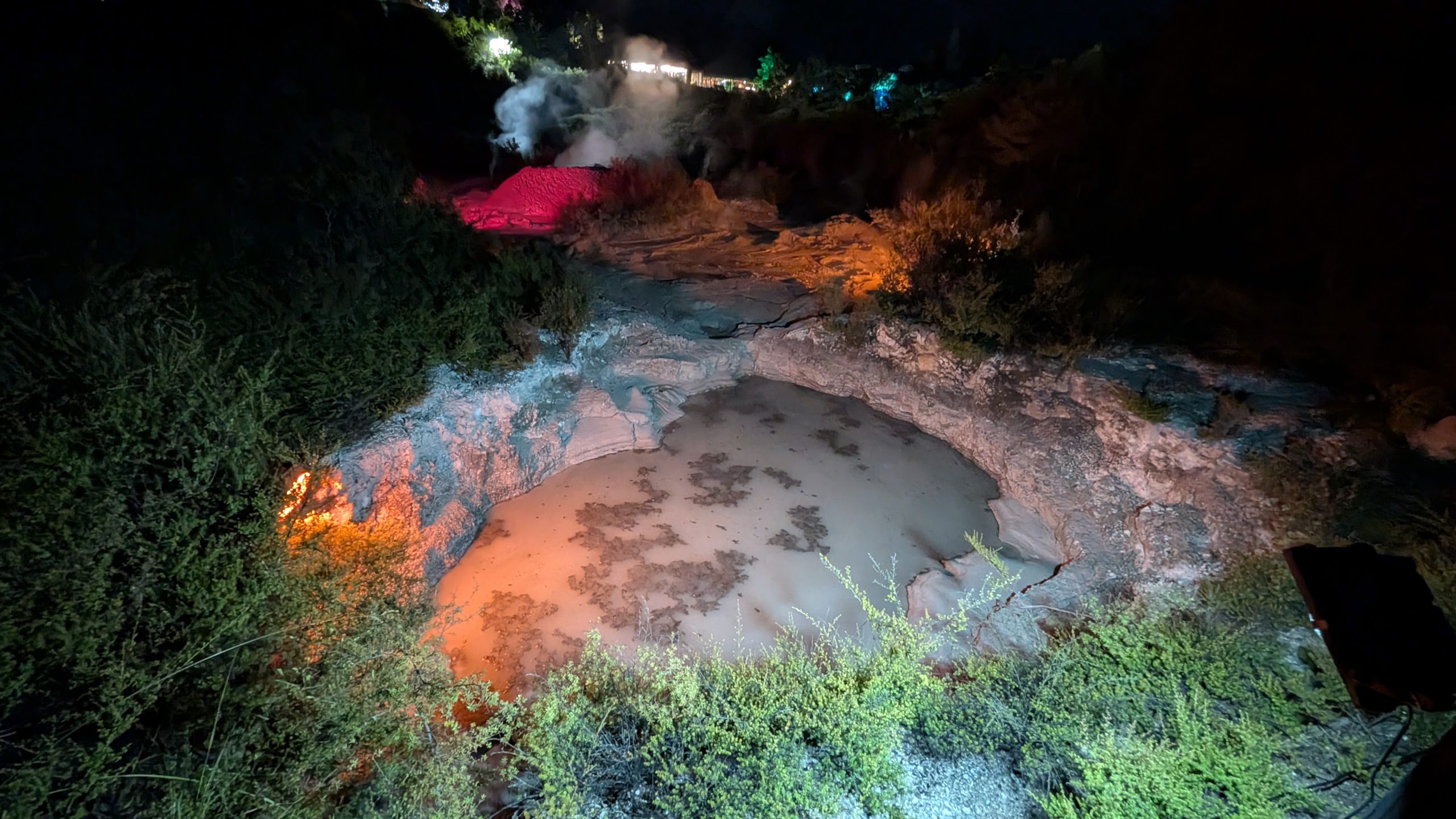
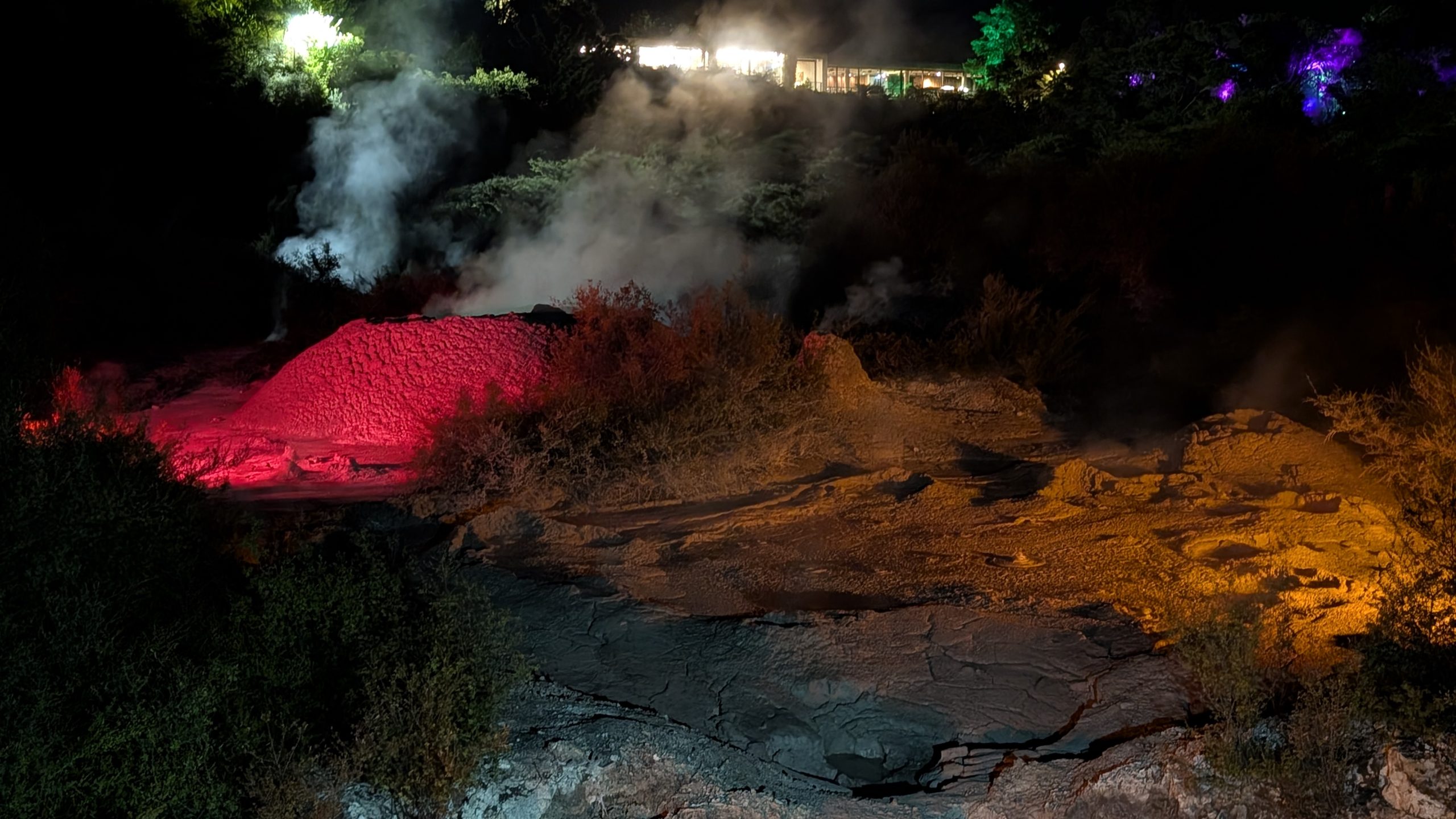
When we reached Geyser Flat, Kererū was having minor eruptions. Graham had made a second visit to Te Puia earlier that day, and Kererū had been in a quiet period starting at 4:07 PM until he left at the 5:30 PM closing time. So a major eruption must have occurred between the time he left and before we arrived that evening. We were hoping the minors would quit soon so we would have a chance to see a major, but that was not the case. Kererū had minor eruptions the entire time we were there. Lucky me got to record another series of minors from 8:58 PM until we left the area at 11:32 PM.
We saw two eruptions of Pōhutu and Te Tohu while we were there. This was in contrast to what Graham had seen earlier in the day: unusual conditions with Te Tohu erupting non-stop (except for a 2-minute pause) the entire day and no Pōhutu major eruption. He saw only two minor eruptions of Pōhutu that were not full height and only lasted 4 and 5 minutes respectively. A guide had reported that this behavior was associated with nearby Te Horu pool being empty when usually it was full.
It was too dark for us to be able to see the level of Te Horu pool, but the two eruptions we saw of Pōhutu that night were normal, so the unusual activity ended sometime after Graham left.
We did not stay until the park closed at 12:30 AM. We started walking back to the entrance an hour earlier, after we decided there would be no way we would see a Kererū major eruption that evening with the minors still continuing. There was another long light show on the walk back.
By the time we reached the overlook near the entrance, we could see that Pōhutu was in eruption for a third time that night.
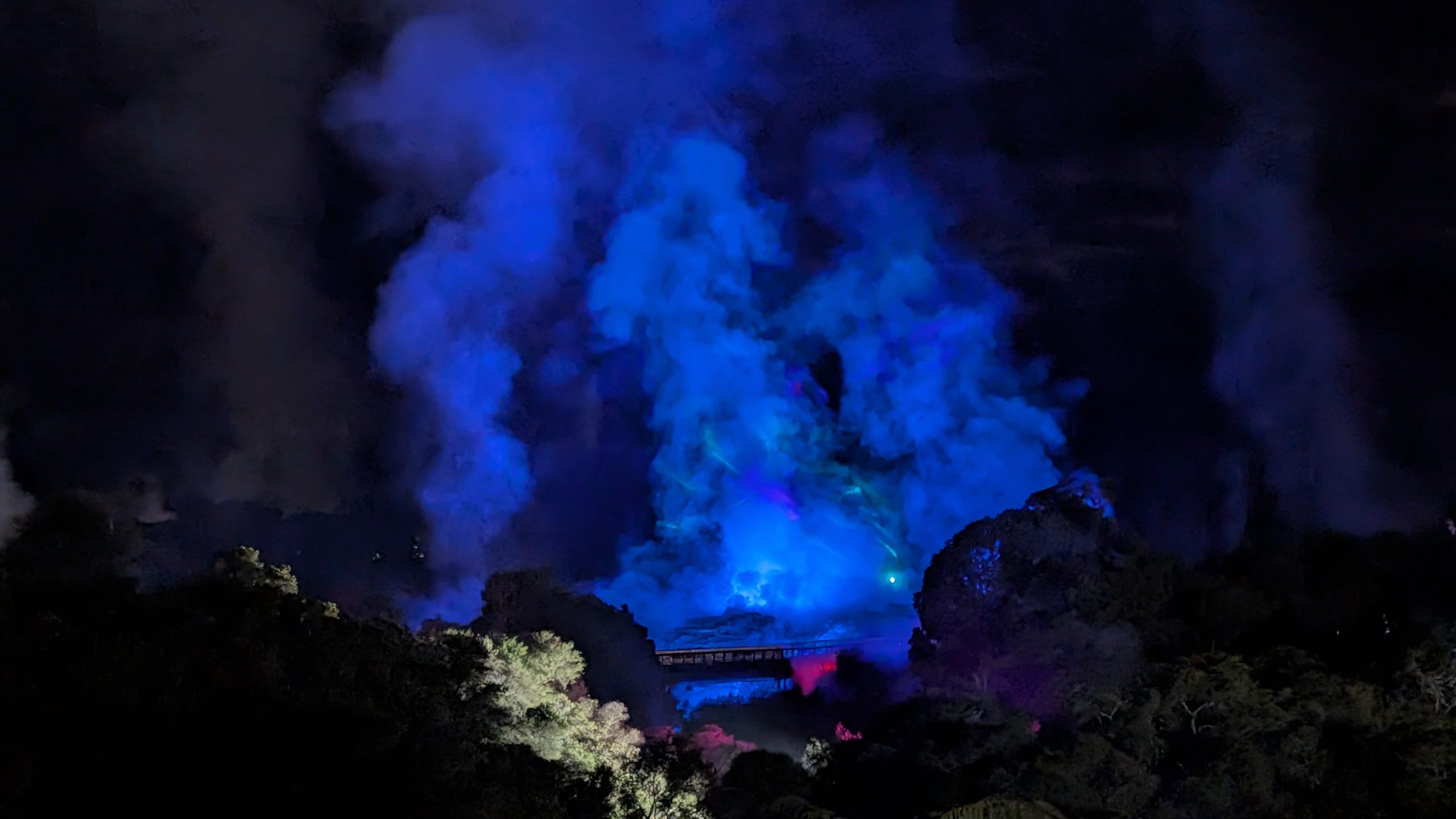
I enjoyed the nighttime tour and would do it again. I was surpised at how few people were there. Maybe it was an off night, but I wondered how many people were needed for Te Puia to make a profit. At any rate, I enjoyed it because it was so peaceful and it was a fairly cheap way to get an extra 4 hours in the geyser basin.
Link to Heinrich's thermal observations: http://geysers.org/wordpress/2026/03/07/observations-for-2026-march-07/
This was another great weather day. Months before, along with Graham we had booked a private kayaking tour on Lake Rotomahana in the Waimangu Volcanic Valley. It was about a 20-minute drive to the Waimangu Vaolcanic Valley entrance where we met Graham and our guide for the tour. This was the same guide that we had 3 years ago when we went on a slightly different public kayaking tour. We were able to customize this tour to spend as much time as possible on the lake near where the geysers were erupting.
We rode a bus down through the valley to the shore of Lake Rotomahana, where we got our kayaks. Graham was in one kayak, and Heinrich and I shared another, with me in the front and Heinrich in the back doing much of the steering.
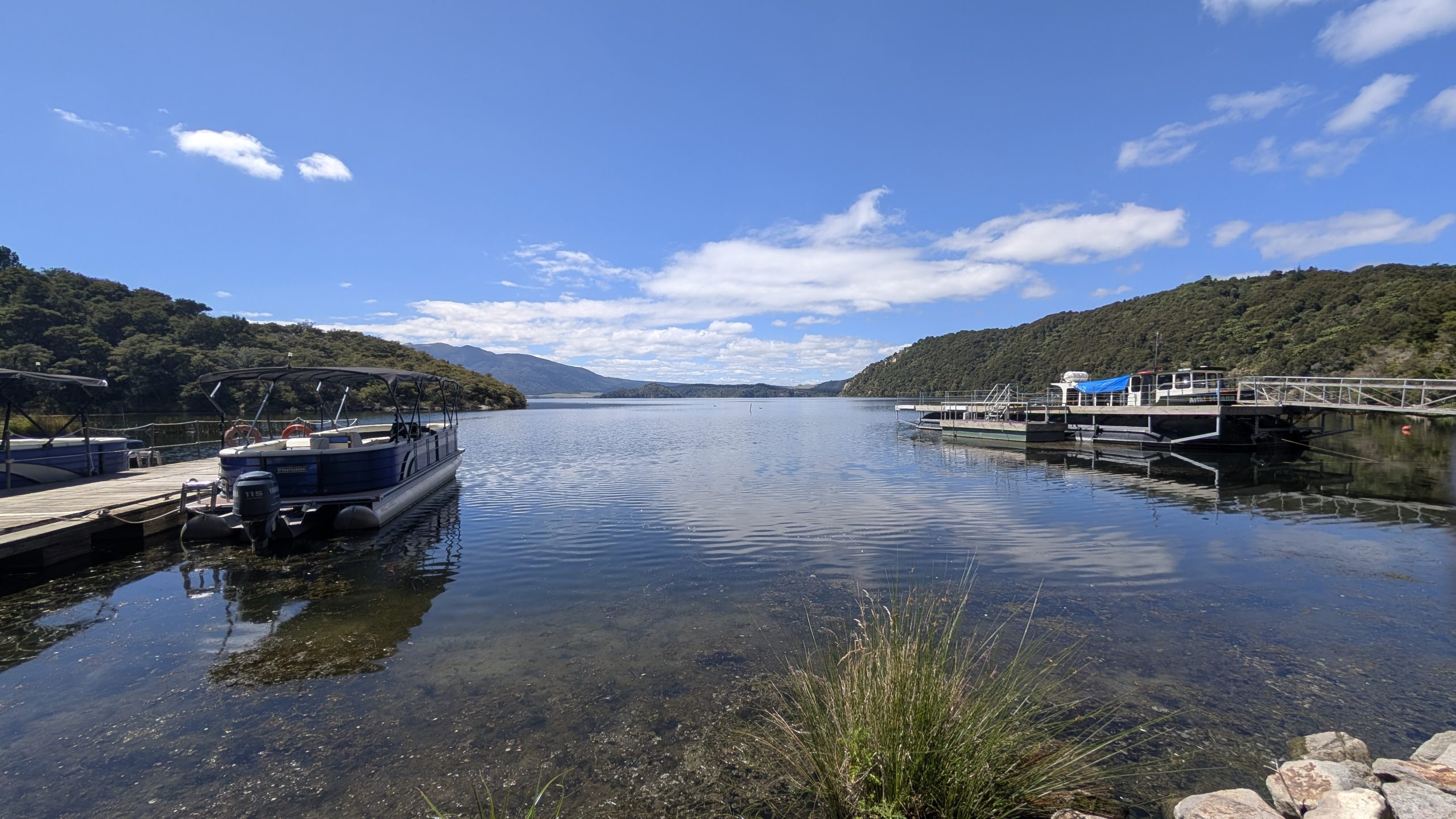
We kayaked close to the shore where we saw many steaming vents and small bubblers. We stayed several minutes near the Angel Wings perpetual spouter and waited for at least 5 eruptions of "Oyster Geyser," as it was called by our guide. Oyster sent out a spray about every 2 to 3 minutes from its uniquely shaped vent.

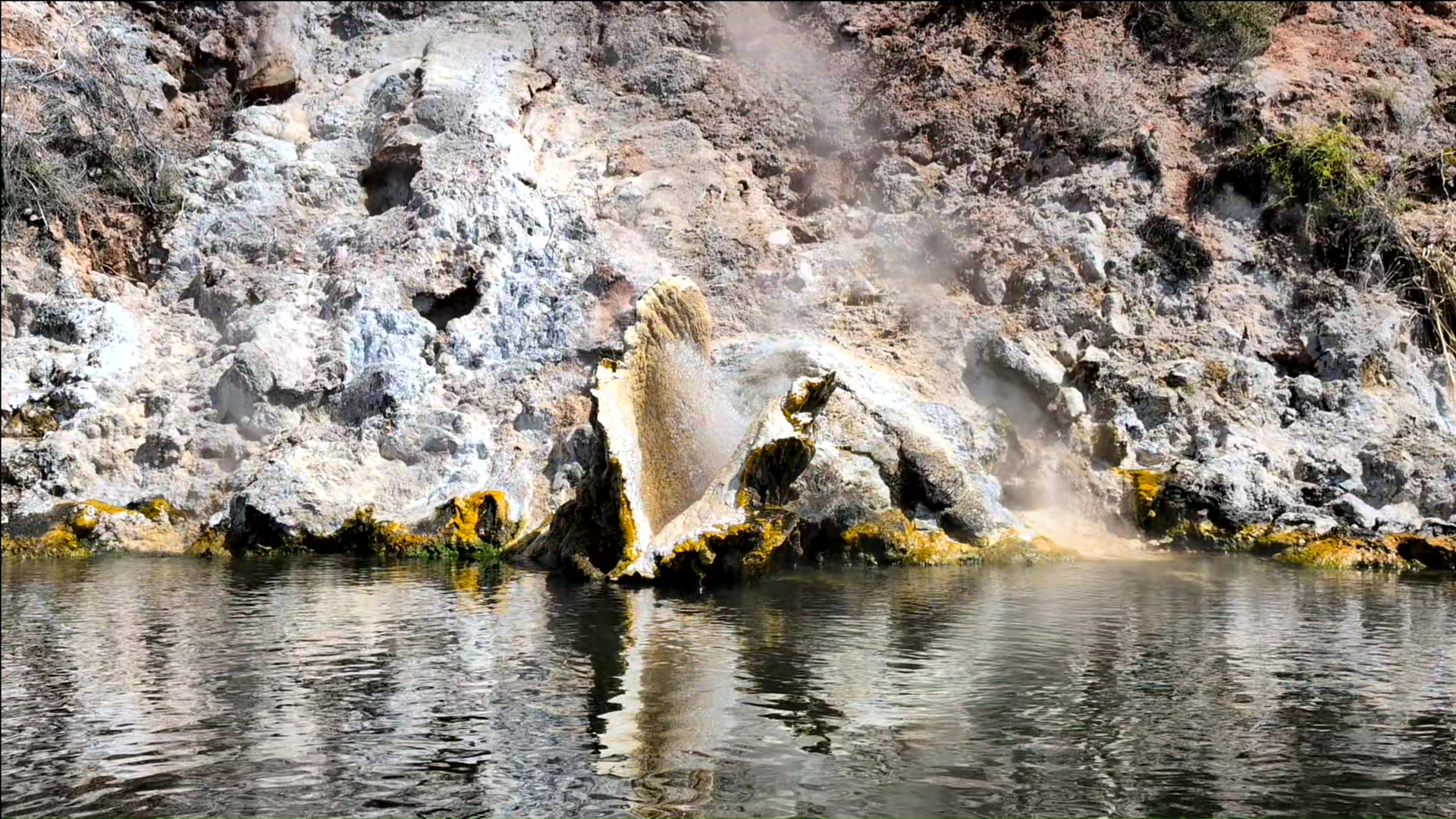
We paddled on to see several other steaming cliffs and bubblers in the lake.
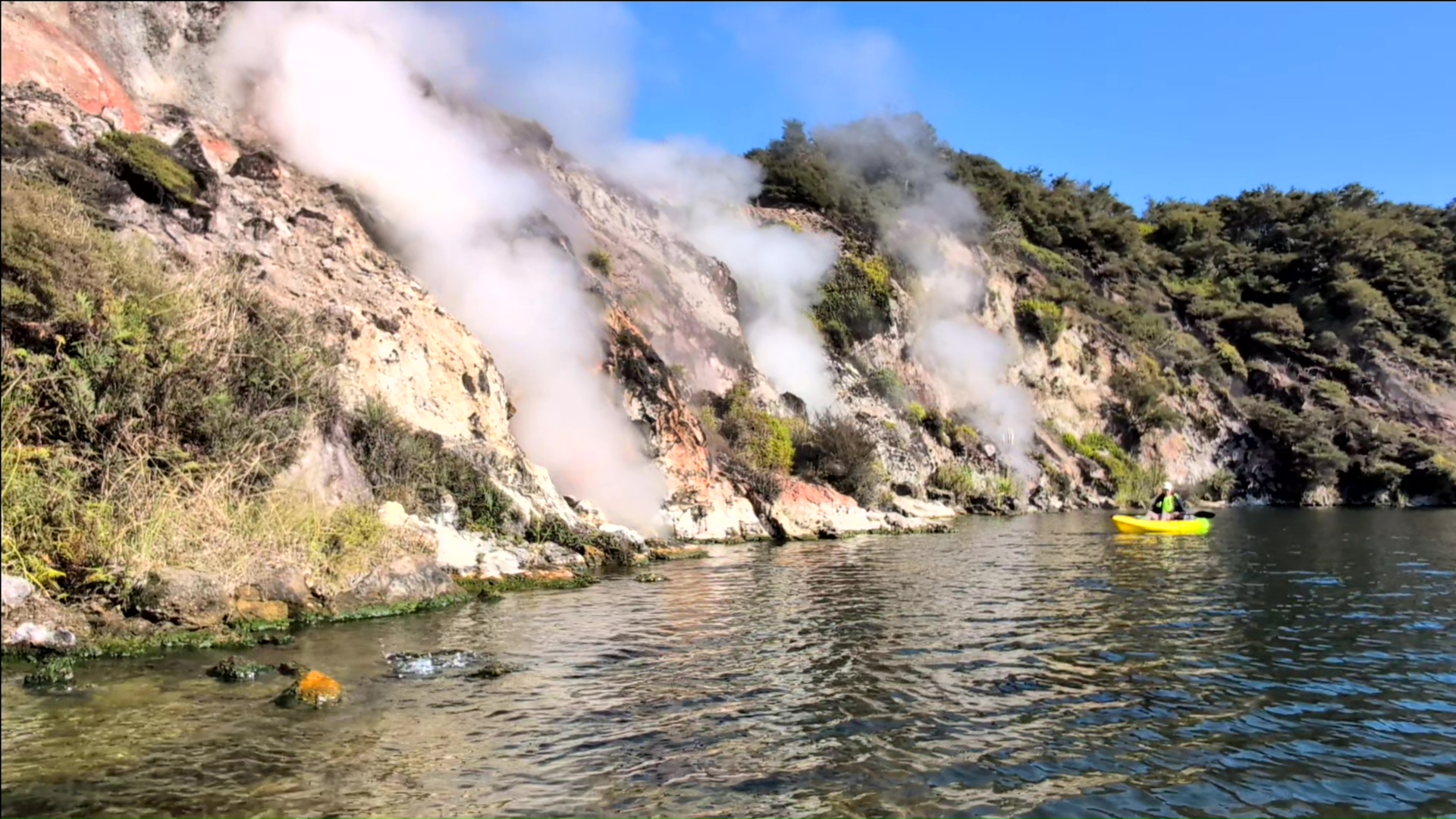
Then we reached the main focus of our trip: the Pink Terrace Geyser (its Māori name is Otukapuarangi). This was a really nice geyser with intervals of about 8 and 9 minutes and a height of about 10 meters. We watched a couple of eruptions up close, and then we paddled past the geyser to our turn-around point where there were more bubblers and steaming cliffs.

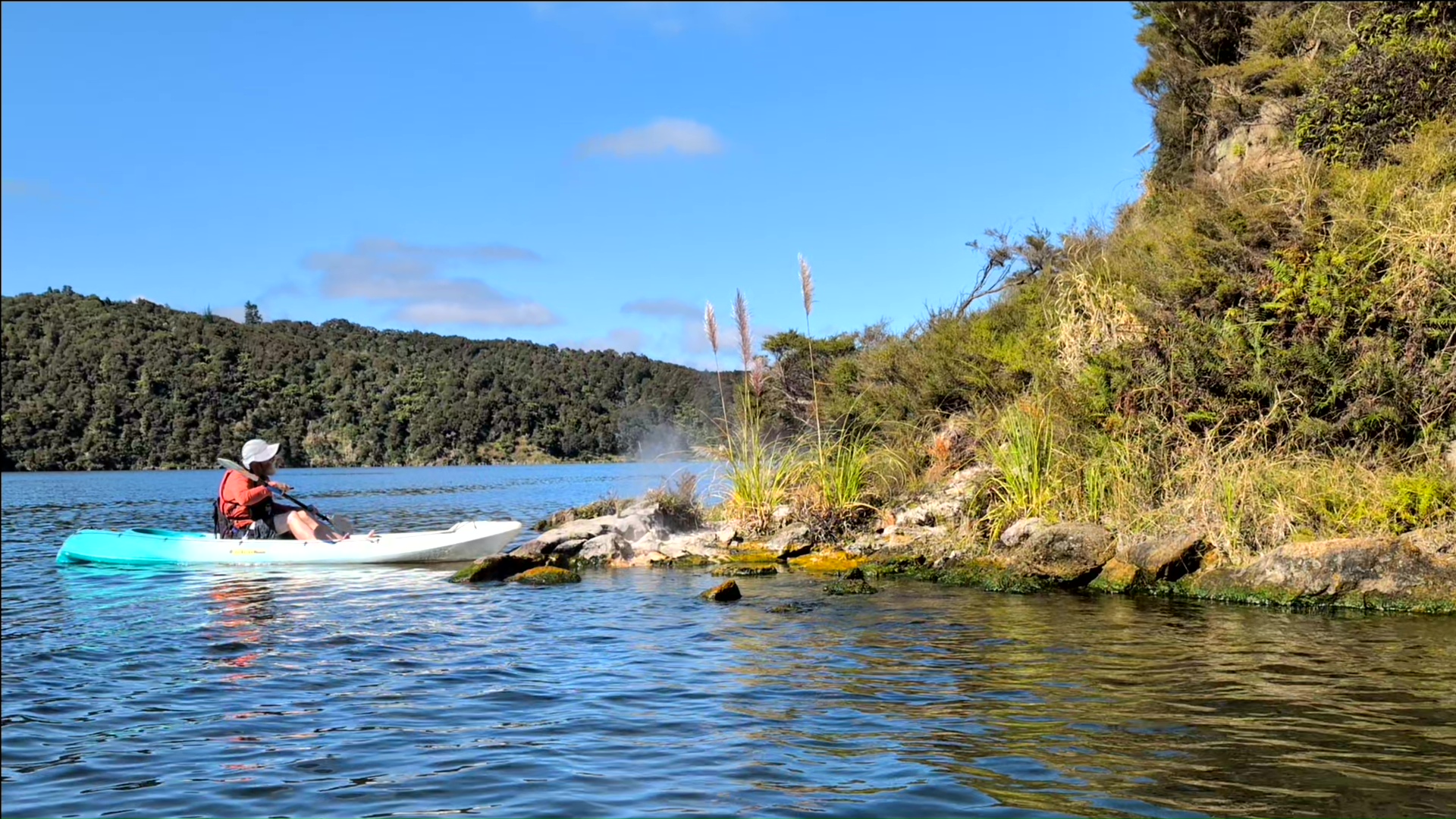
We were back in time to see the next Pink Terrace eruption from a distance, and then we paddled closer to it to watch a few more. Our guide had picked out a beach on the way back from Pink Terrace to stop and have lunch, but when she saw how much we liked watching the geyser, she found a place on the shore within viewing distance: Pink Terrace was just on the other side of a small hill. So we sat on a small rocky area with ground very nearby that was steaming. Our guide said she had never done this before. We thought it was great: we saw 3 more eruptions while I was eating my chicken and avocado sandwich and pastry.

After lunch we paddled closer to the Pink Terrace vent, and I got a nice video from there. It was interesting being so close to it. The runoff grom the geyser poured into the lake, and hot water didn't mix with the cold water. It was easy to see the separation of the runoff from the rest of the lake. I put my hand in the water and it was quite warm.
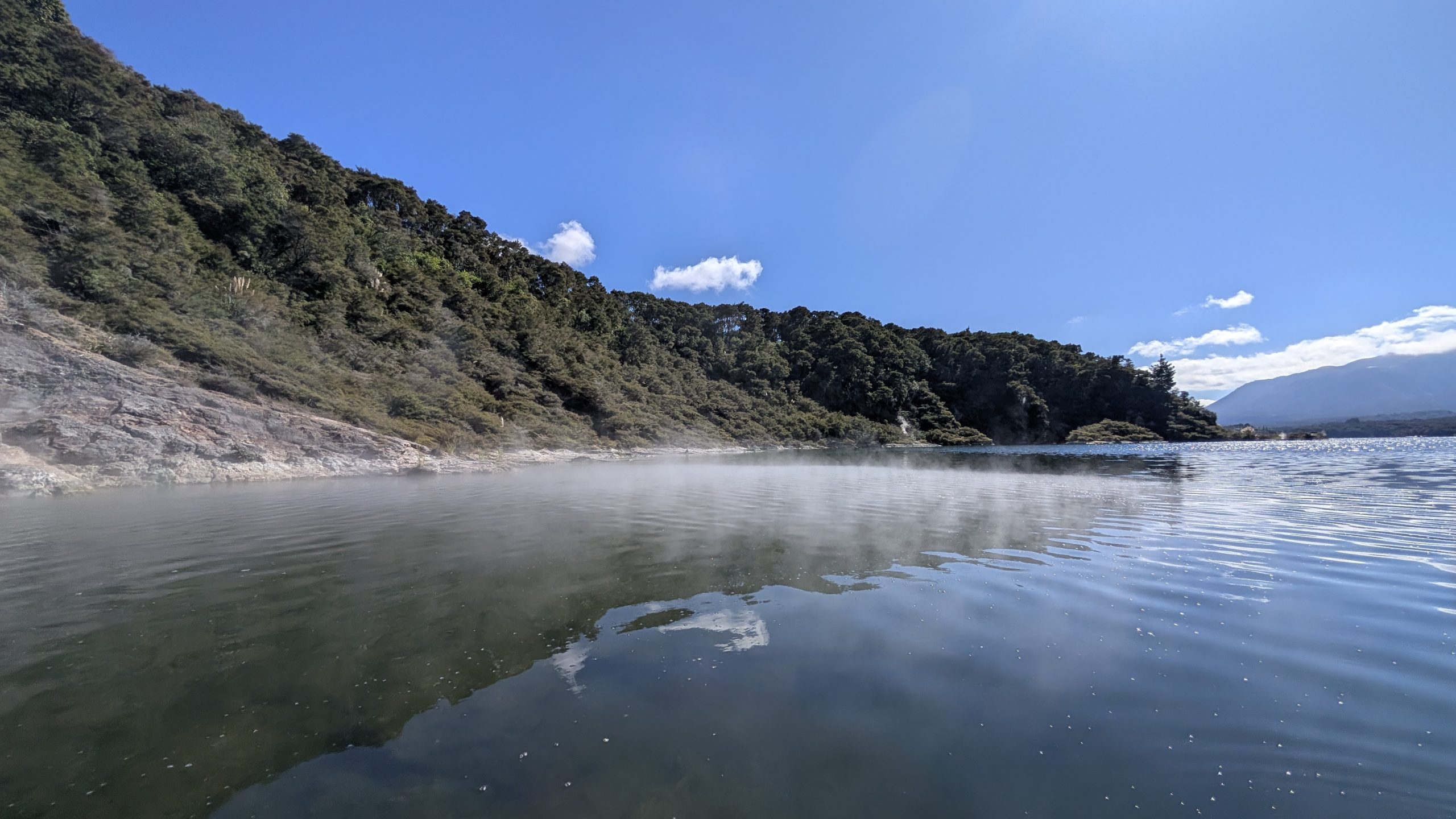
We recorded 11 total eruptions of Pink Terrace Geyser while we were out on the lake. We took our time paddling back to the dock and saw 3 more eruptions of Oyster Geyser before we had to leave the area. Our total time in the kayaks was about 3.5 hours. Our guide said this was the longest she had been out on the lake. Normally the tour included a guided walk through the valley, but we swapped that for more time on the lake.
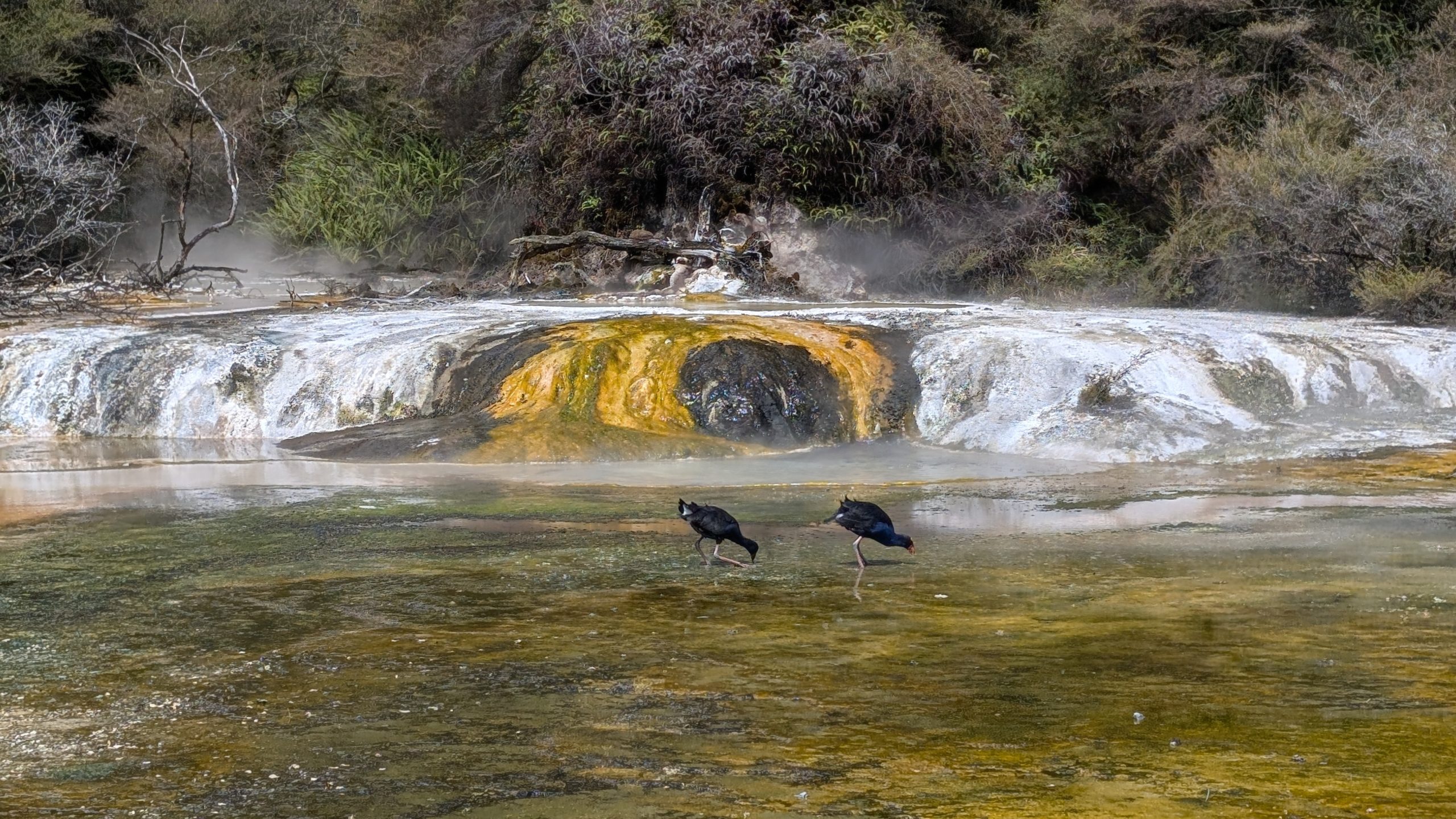
We said farewell to our tour guide at the dock and started our way back through the valley. Graham walked the entire way, but we rode the bus and got off at the first stop where we met Graham again near Warbrick Terrace. This was a colorful area with a perpetual spouter at the top of the terrace. I had fun watching some variable oystercatcher birds that were quite vocal in the runoff channel.
We walked to Iodine Geyser and saw 3 small eruptions with about 8-minute intervals.
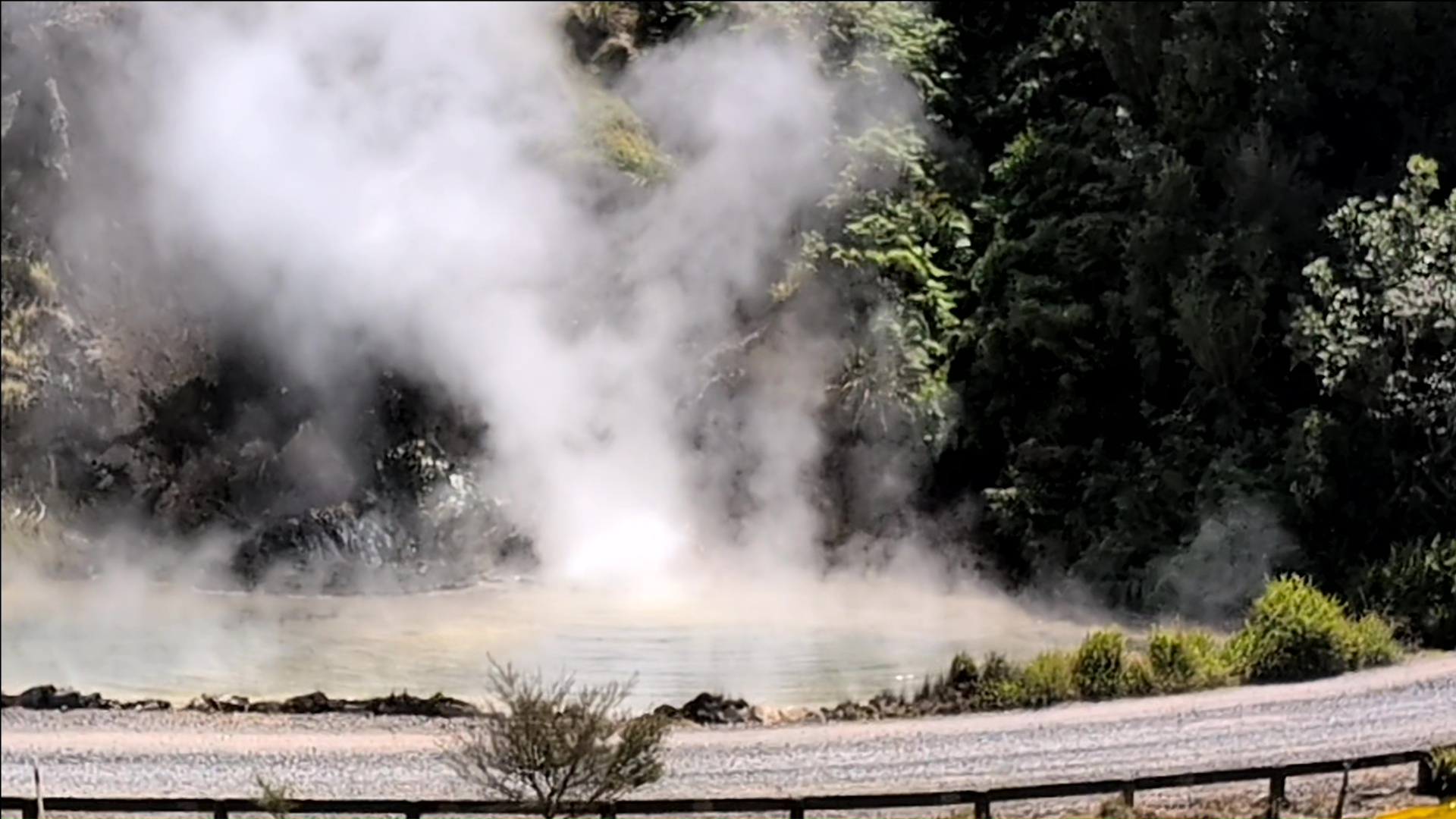
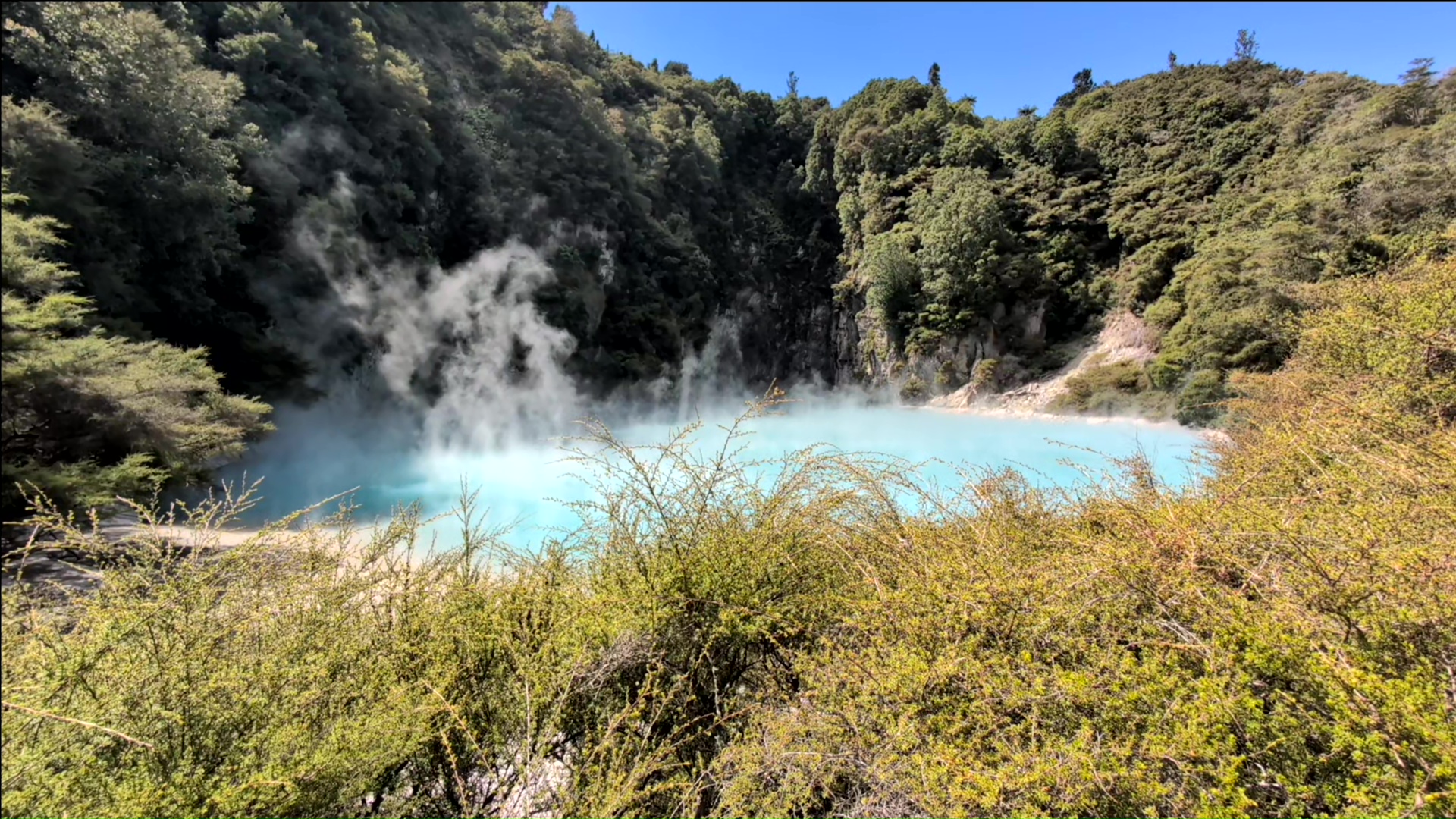
Then we continued on to Inferno Crater. We found out from the morning bus driver that it had started overflowing, probably overnight, and we were eager to see the overflow because the water level cycled, and it overflowed only once about every 38 days. Unfortunately by the time we had arrived the overflow had already stopped, probably recently. Graham said he could see a visible drop in the water level during the short time he was there. The pool was still a pretty blue color, so worthwhile to visit.
Near the base of the hill to Inferno Crater was the Bird's Nest perpetual spouter, which was a favorite of mine because of the pretty green colors surrounding the crater.
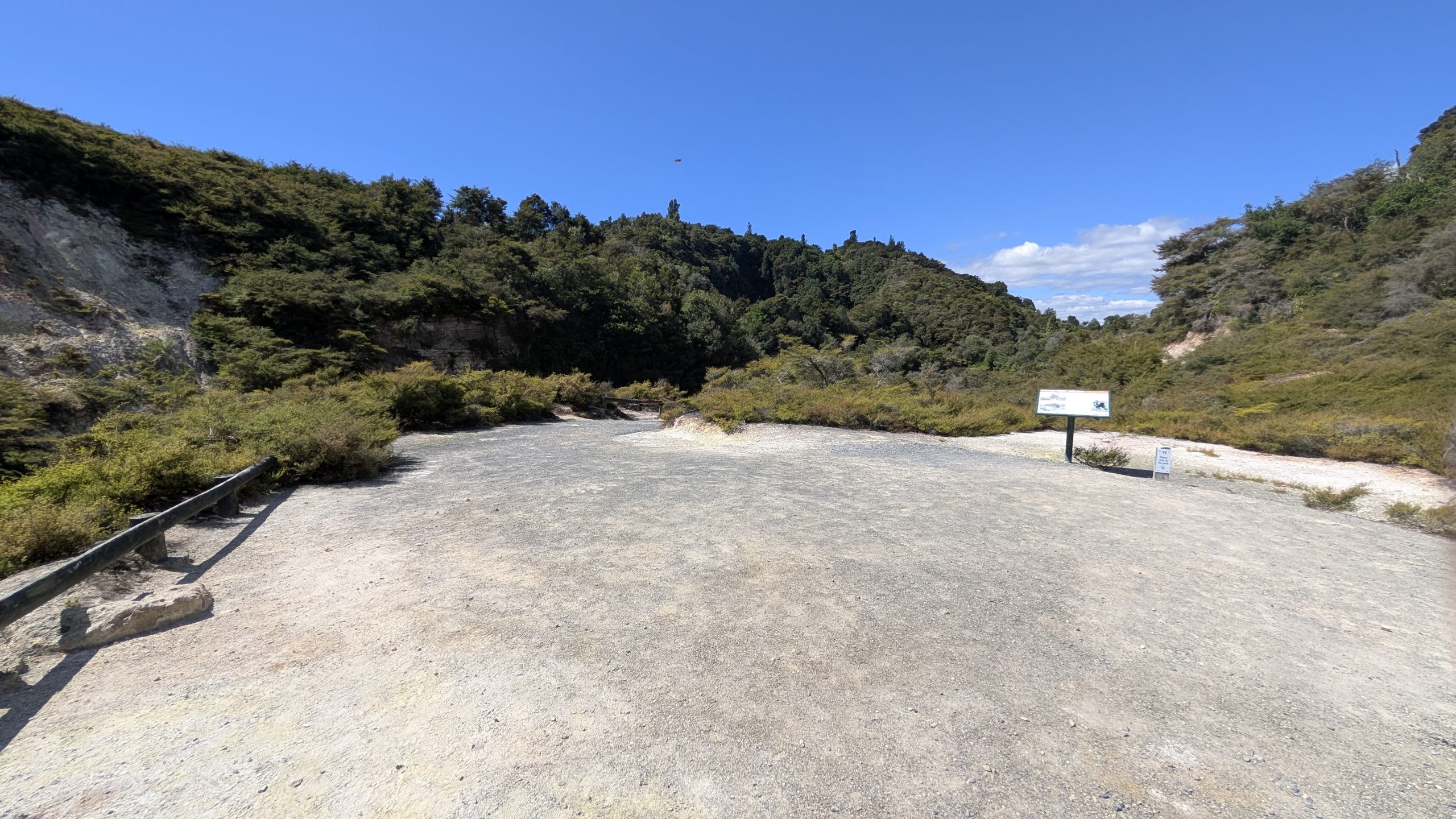
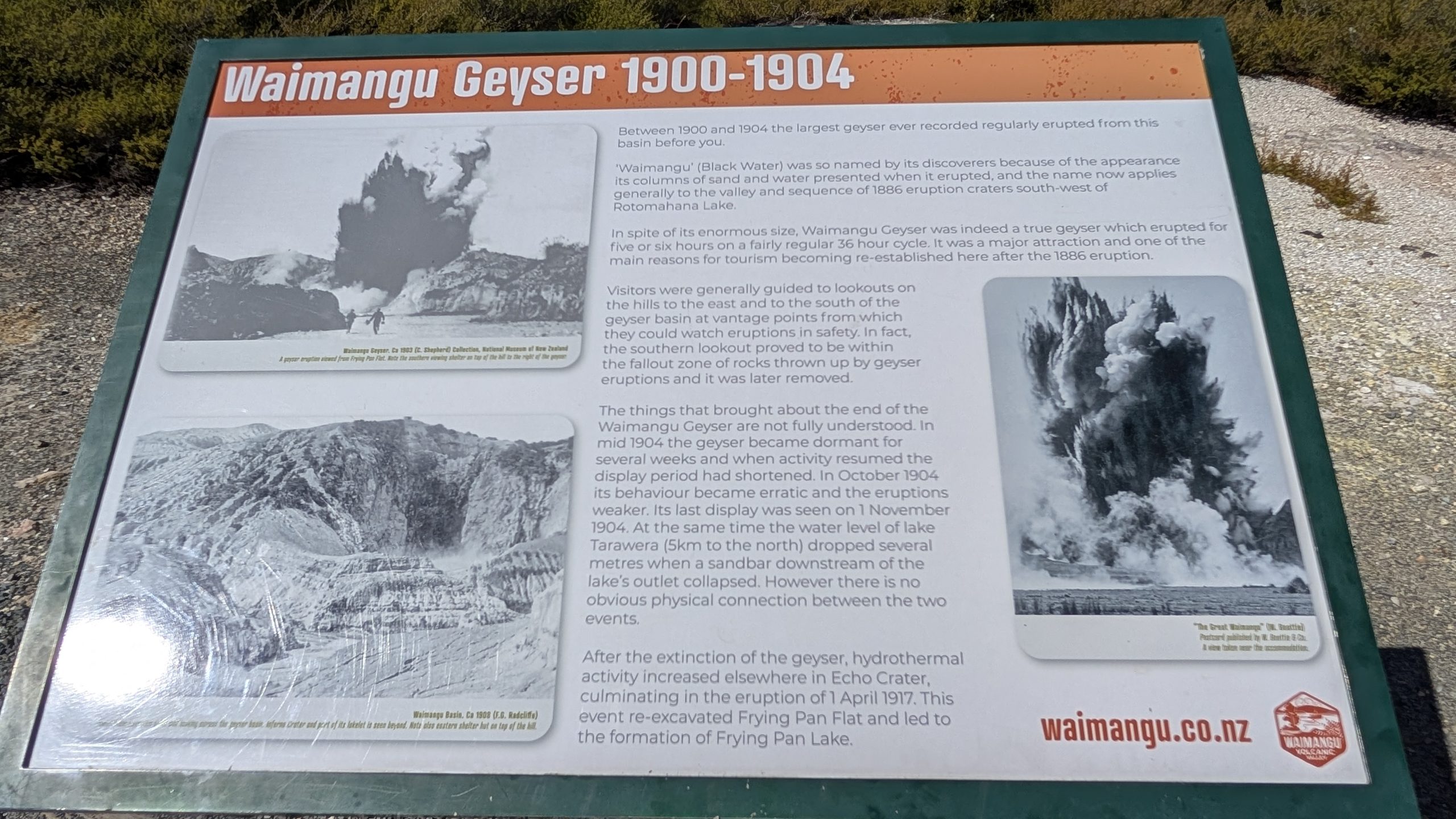
Further up the valley we passed the location where Waimangu Geyser, the tallest geyser in the world, had spectacular eruptions from 1900 to 1904. Now there was no trace it had ever existed: the crater had been completely filled in by activity from surrounding features.
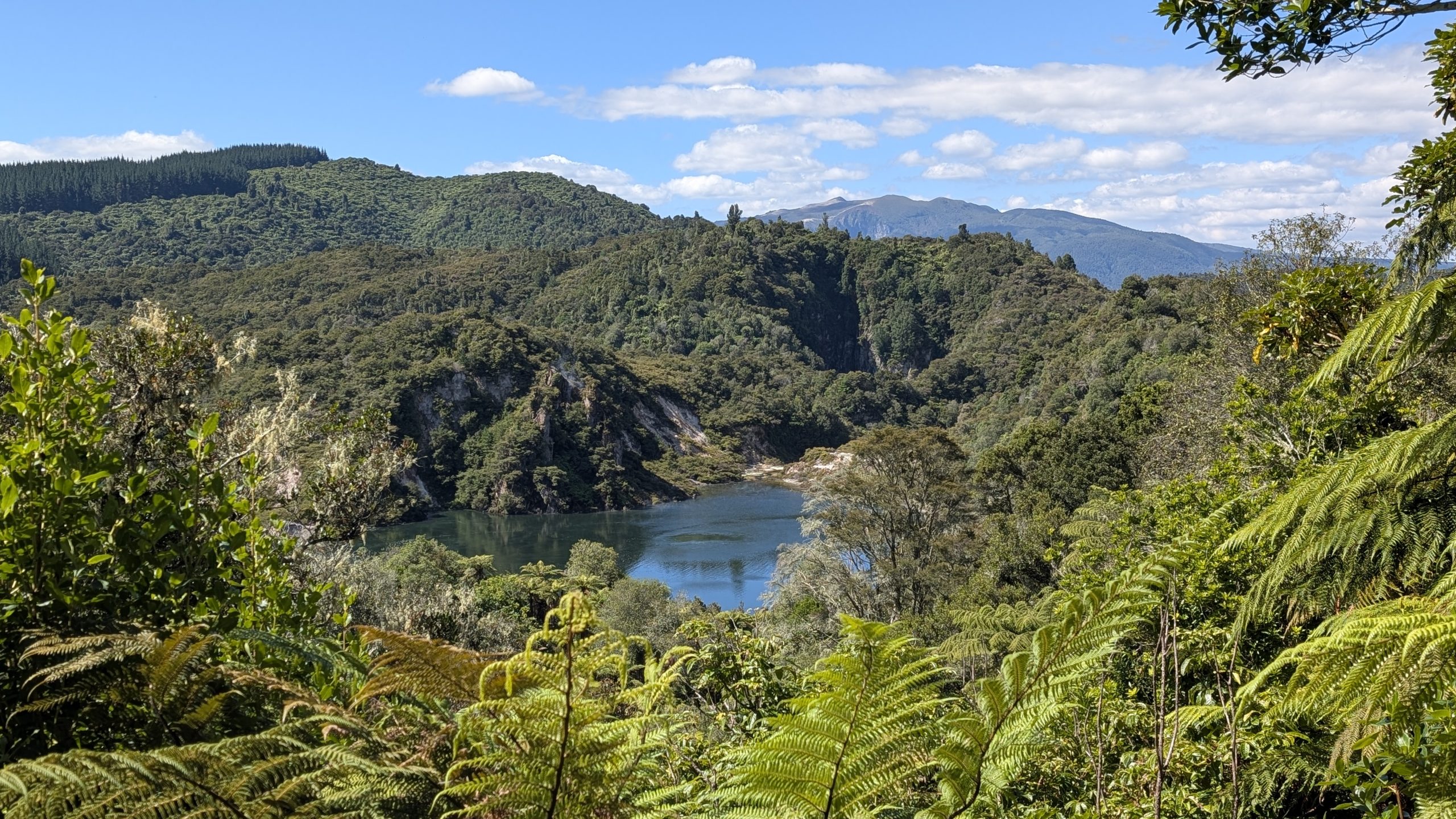
Near the top of the valley and close to the entrance we passed a lookout to Frying Pan Lake. The photo below shows the lake as well as the areas we had passed, with Inferno Crater at about the 1:00 position.
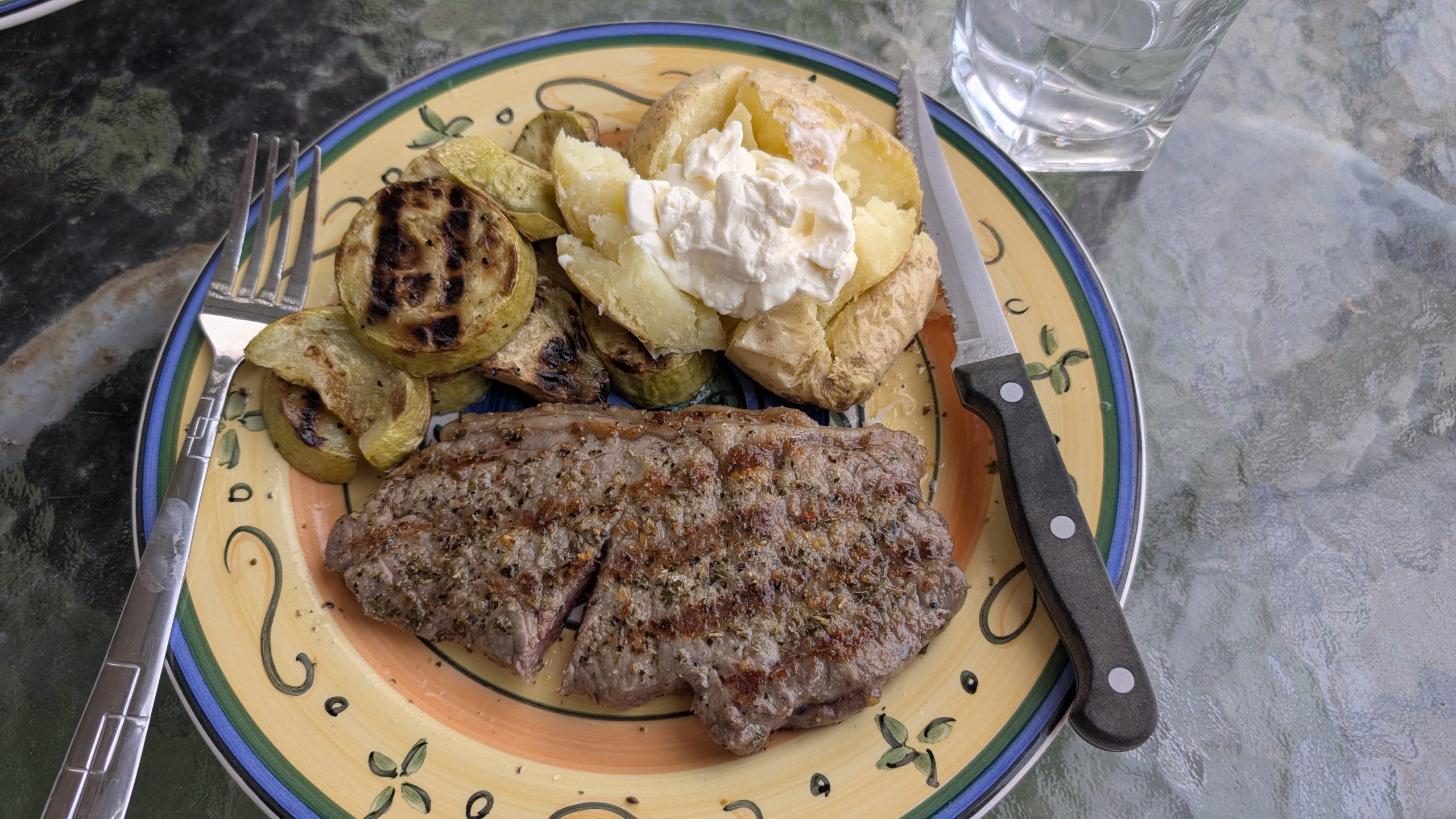
We drove back to Rotorua and stopped at the Pak'nSave supermarket to buy food for dinner, and we started stocking up on Whittaker's chocolate to take home. Back at the BnB, we used the electric grill for our dinner. Shami had given us zucchini fresh from her garden, and it turned out great on the grill.
Link to Heinrich's thermal observations: http://geysers.org/wordpress/2026/03/06/observations-for-2026-march-06/
It was the best weather day so far that week with sunny skies and a temperature in the low 70's. It was a short drive to visit the Whakarewarewa Village which was adjacent to Te Puia. The Māori people lived in the village and charged a separate admission fee from Te Puia. We had booked the 9 AM guided tour to visit the village. It was the second time we had done the tour: the first time was in 2023. Not much had changed, but it was interesting to see the village again. The tour guide talked about the Māori way of life in the villlage: using the heat from the hot springs to cook their food and diverting water from the hot springs into baths . A highlight of the tour was getting served an ear of corn that had been cooked in the Parekohoru hot spring.
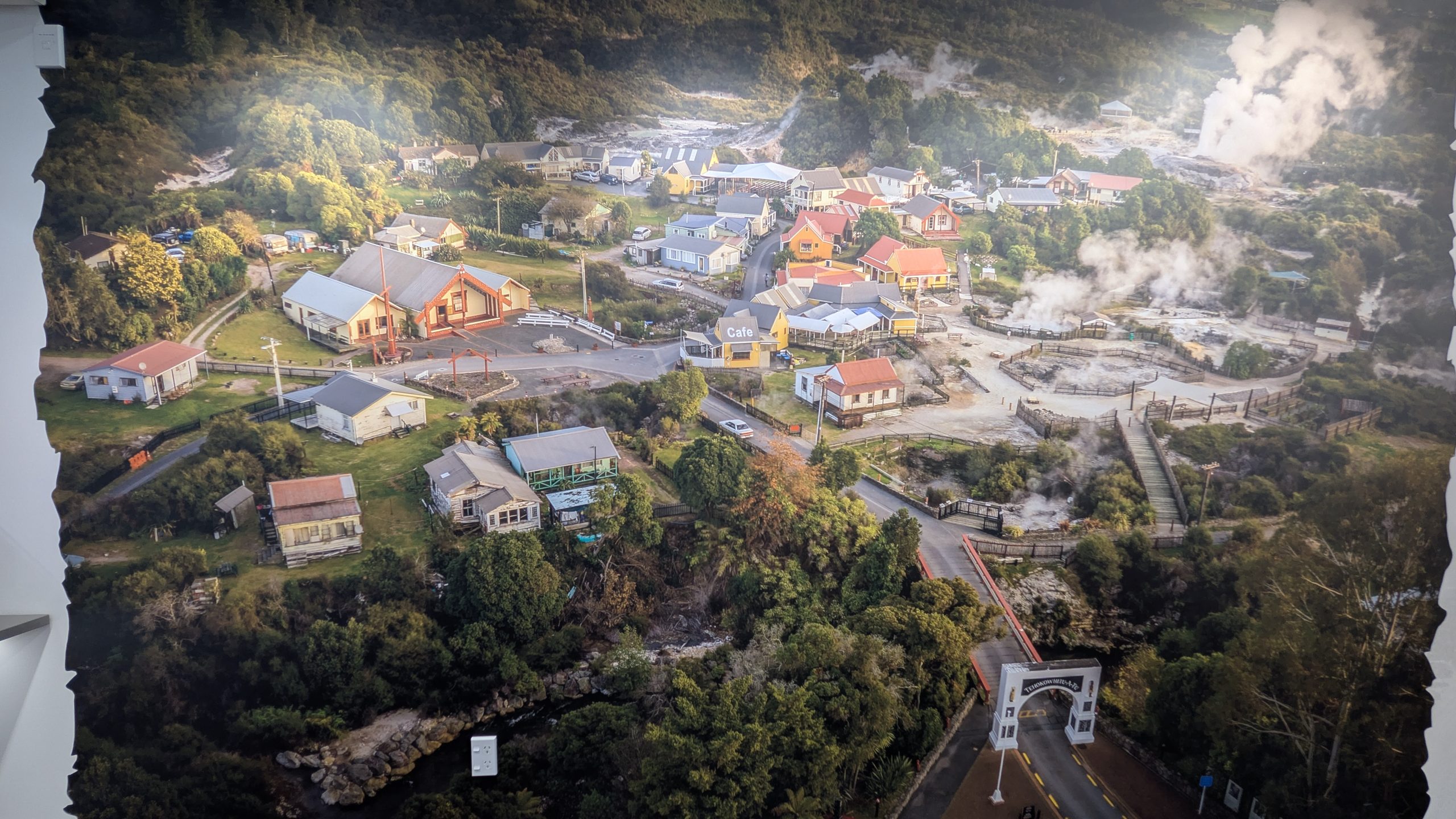
During the tour we visited an overlook of the Te Puia side that had a nice view of Geyser Flat containing Pōhutu and the other major geysers. At the same time Graham was spending his day at Te Puia, and he communicated to us periodically the status of Kererū: it was quiet, so he was waiting for a major eruption. At the overlook I was able to see Graham standing on the bridge.
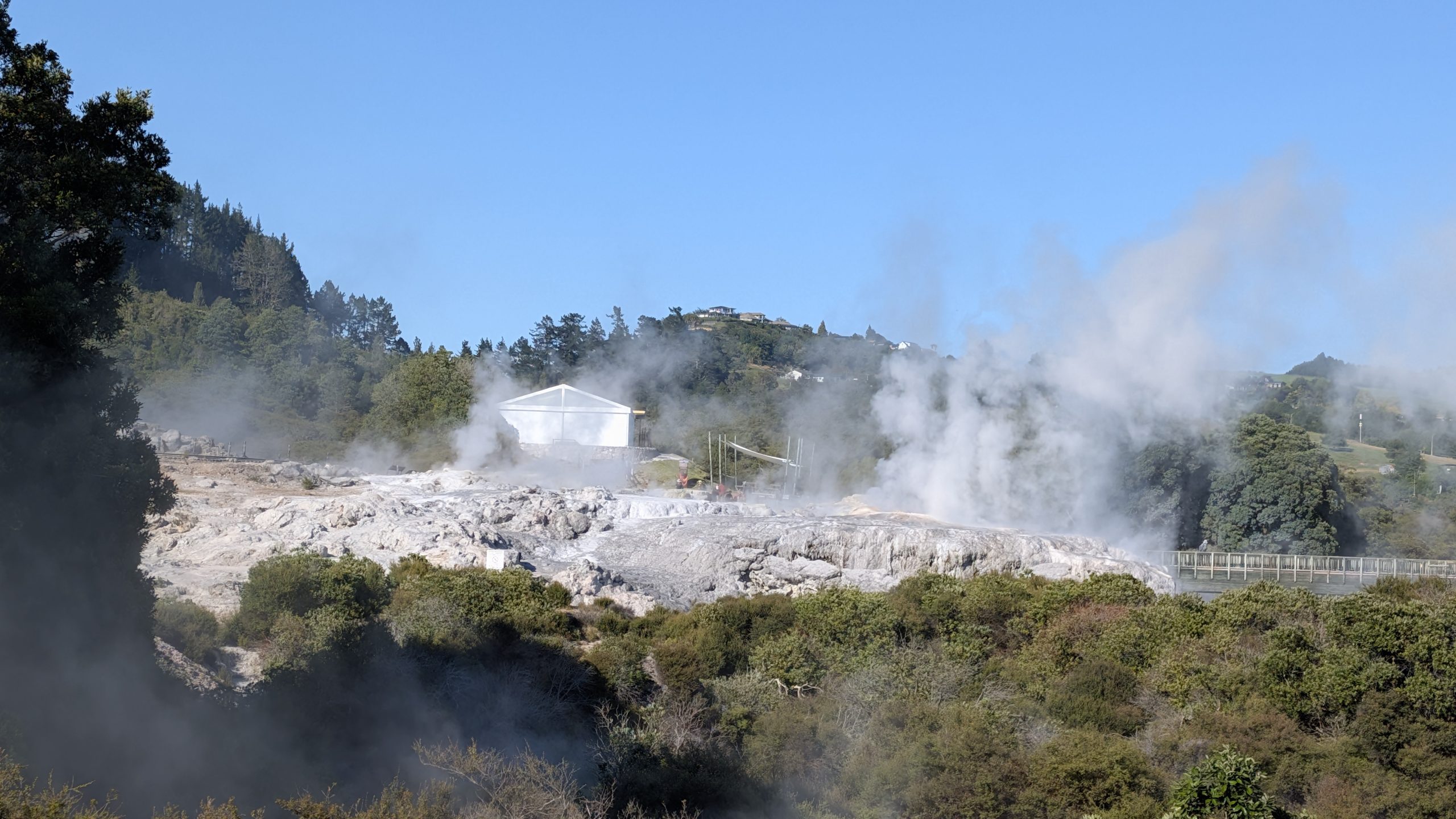
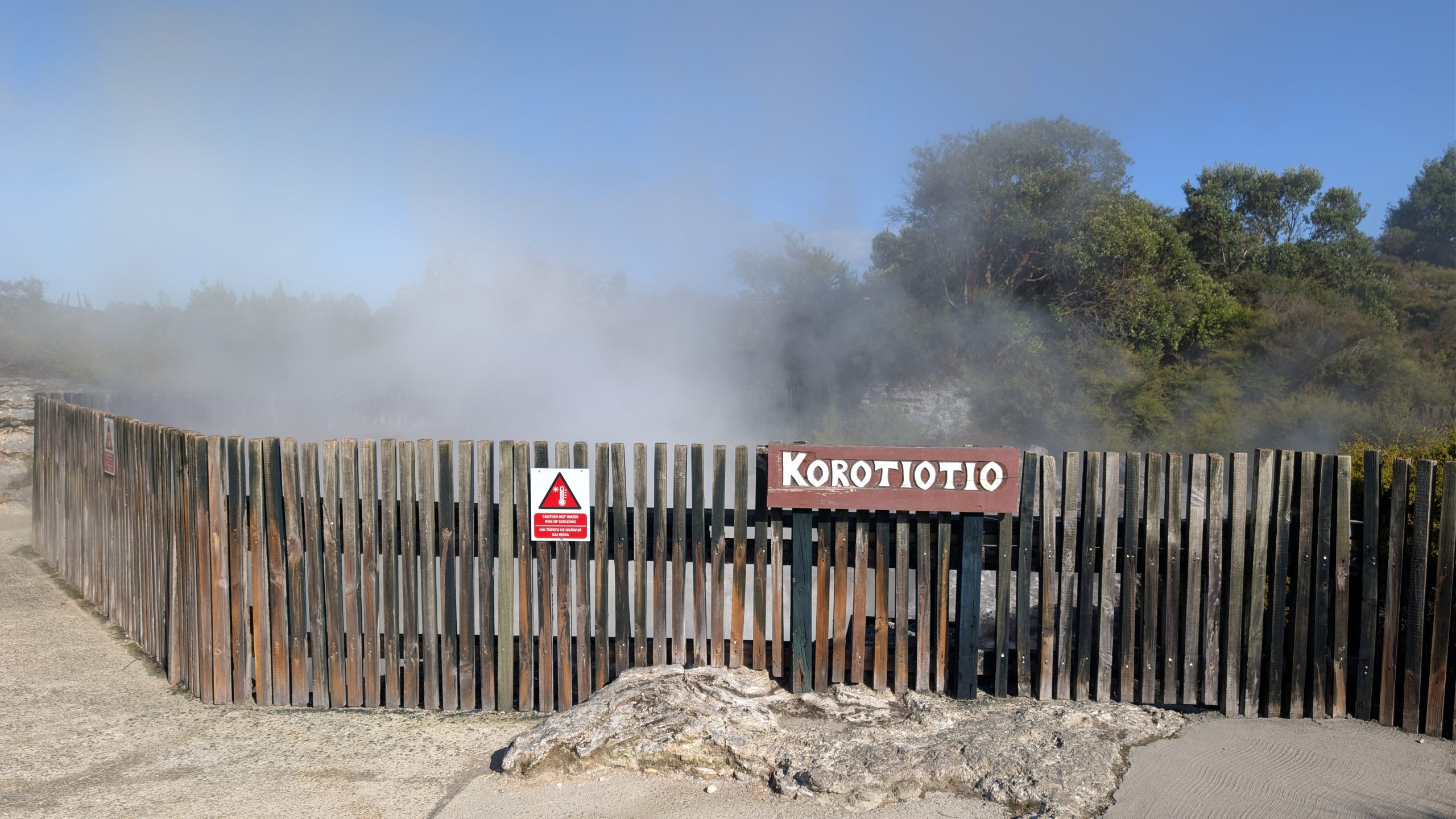
The tour stopped only for a few minutes at the overlook, and then we circled back to the village area to the Korotiotio boiling spring which was very steamy. In the past this spring had been used for cooking until the 1870's when a Māori woman fell into the pool and died.
The tour went on to explore some more of the village grounds, and we stopped back near Parekohoru to get served the corn cooked in the hot spring. Afterwards we walked over to the main overlook of Te Puia where the village tour ended. The people who only purchased the village tour could stay there as long as they wanted, but once they left they were not allowed back in. We had purchased the geothermal tour ticket that allowed us to stay there until closing and explore the other thermal areas as well. The only place we could not get back to was inside the main village thermal area.
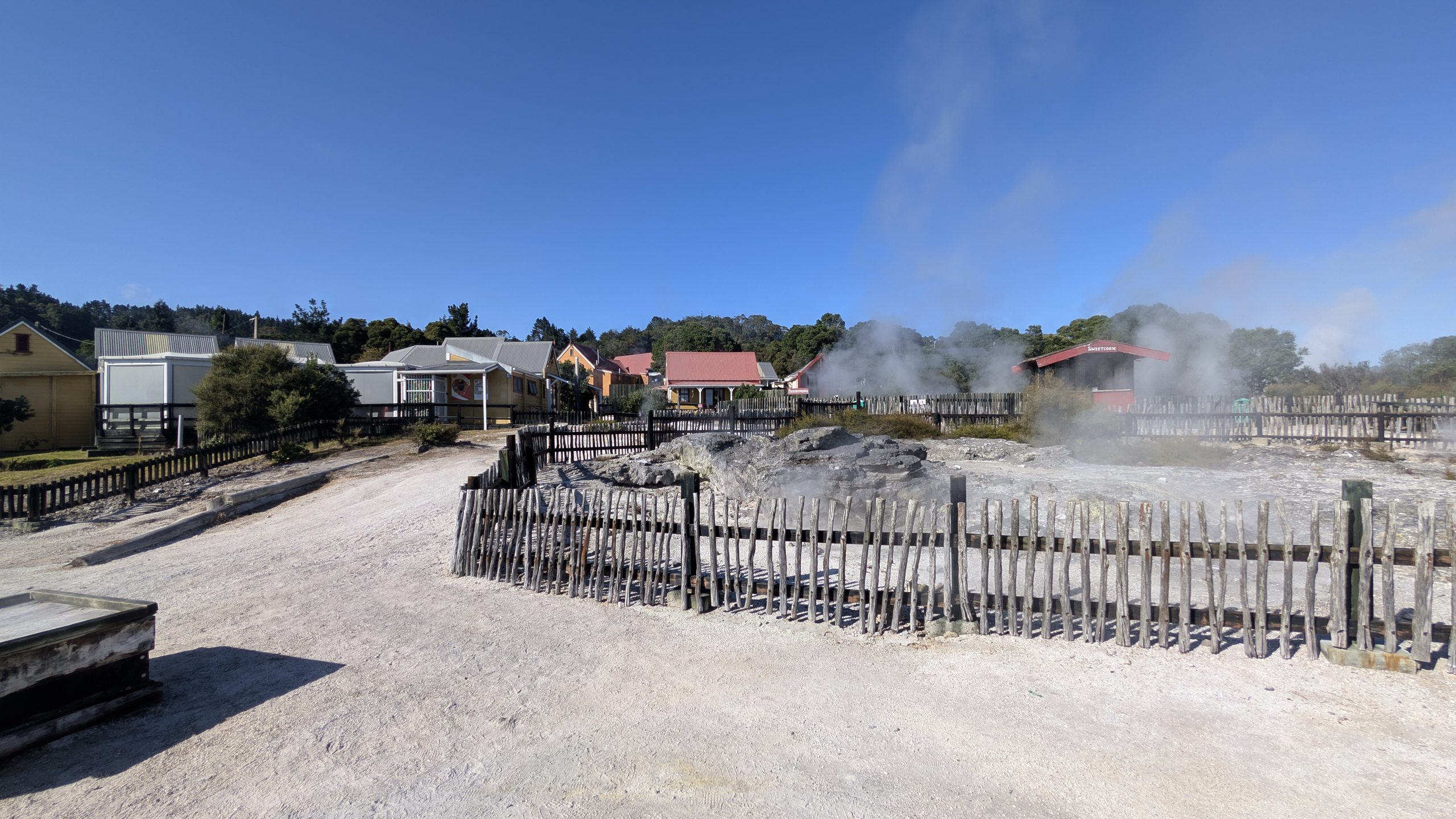
We stayed at the overlook to wait for the expected major eruption of Kererū Geyser. We were there less than an hour before Kererū had its first major eruption for the day at 11:29 AM. Unfortunately it was a very steamy eruption, so it was difficult to see the jets of water from our viewing spot.

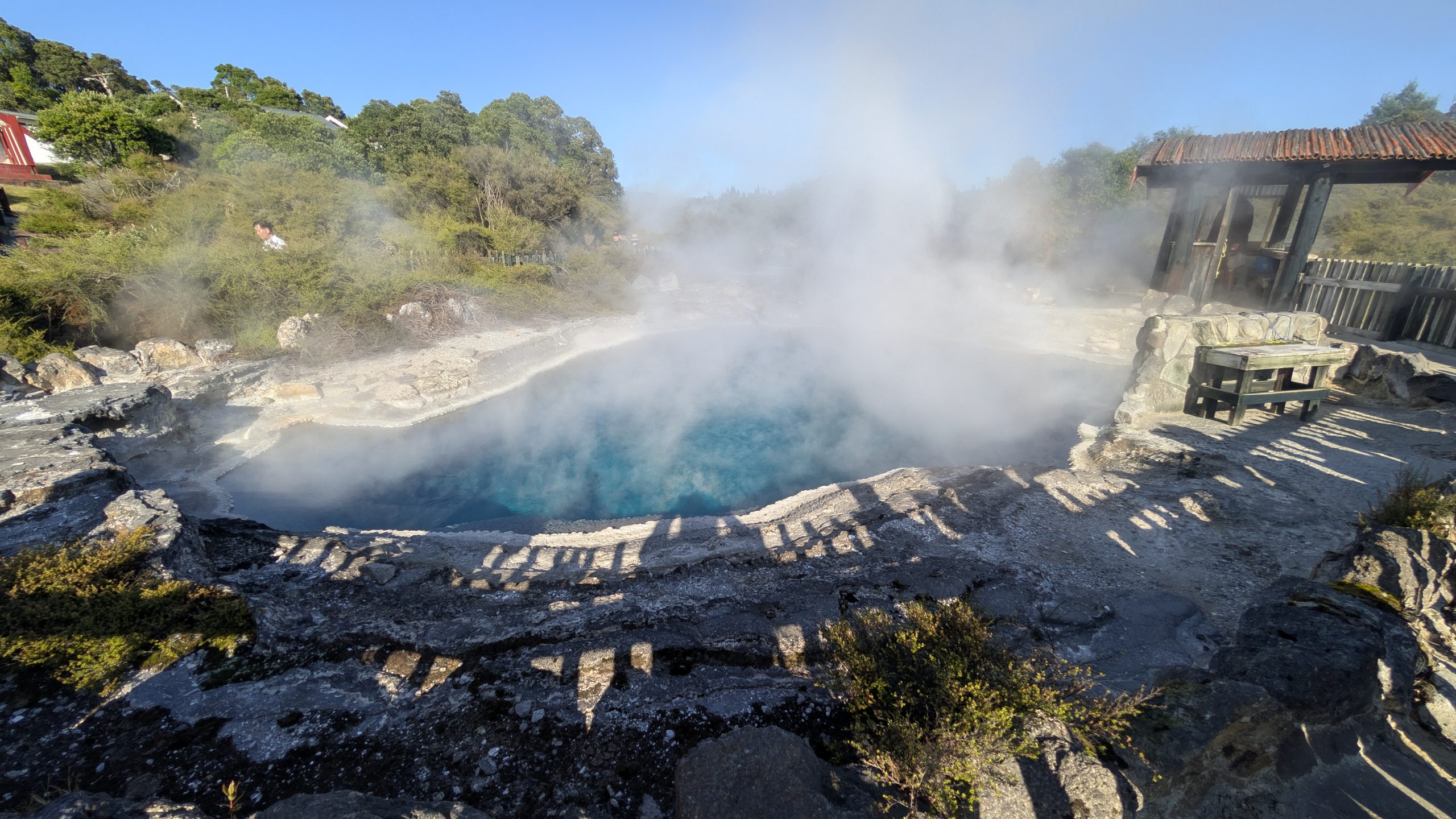
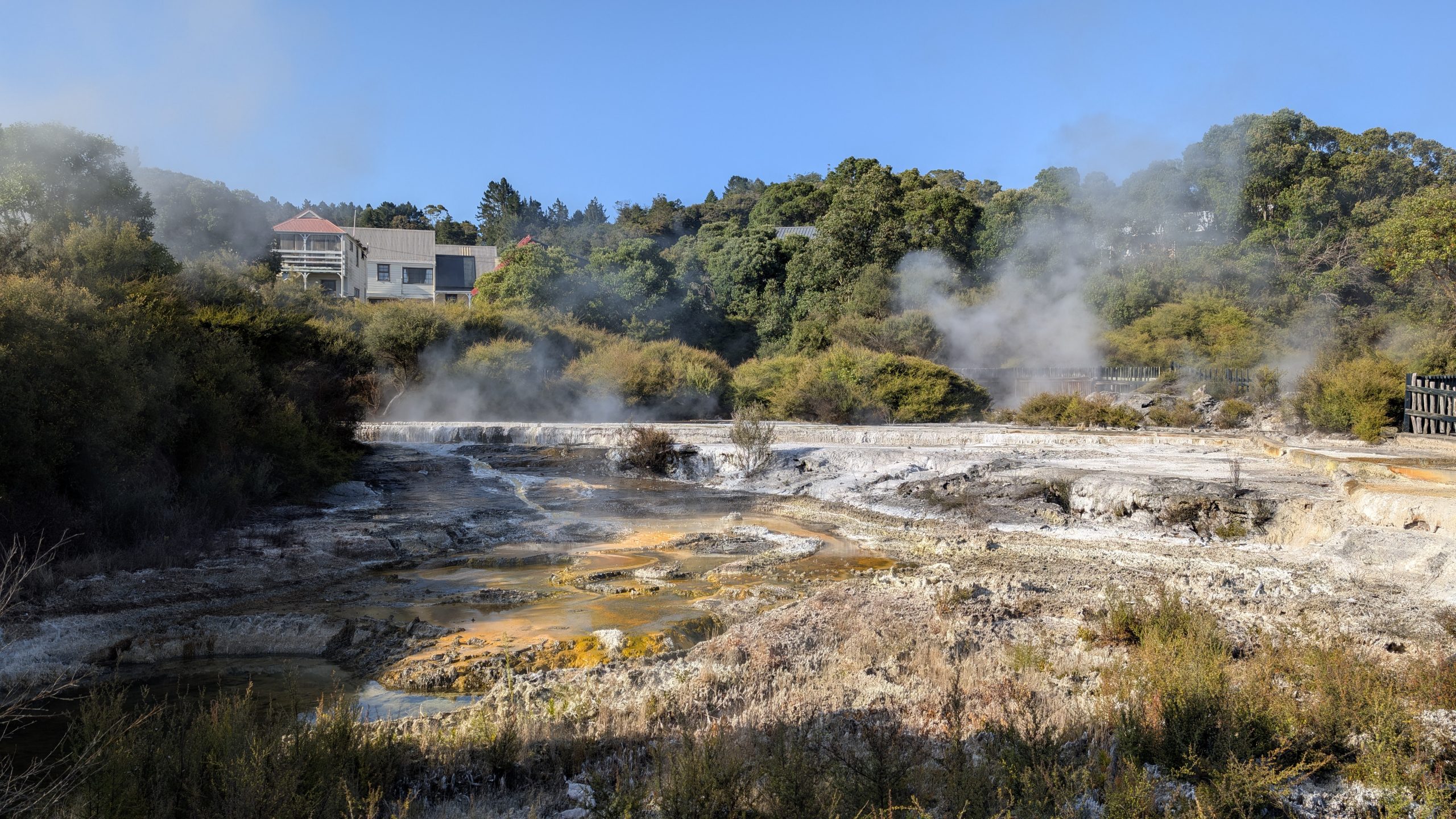
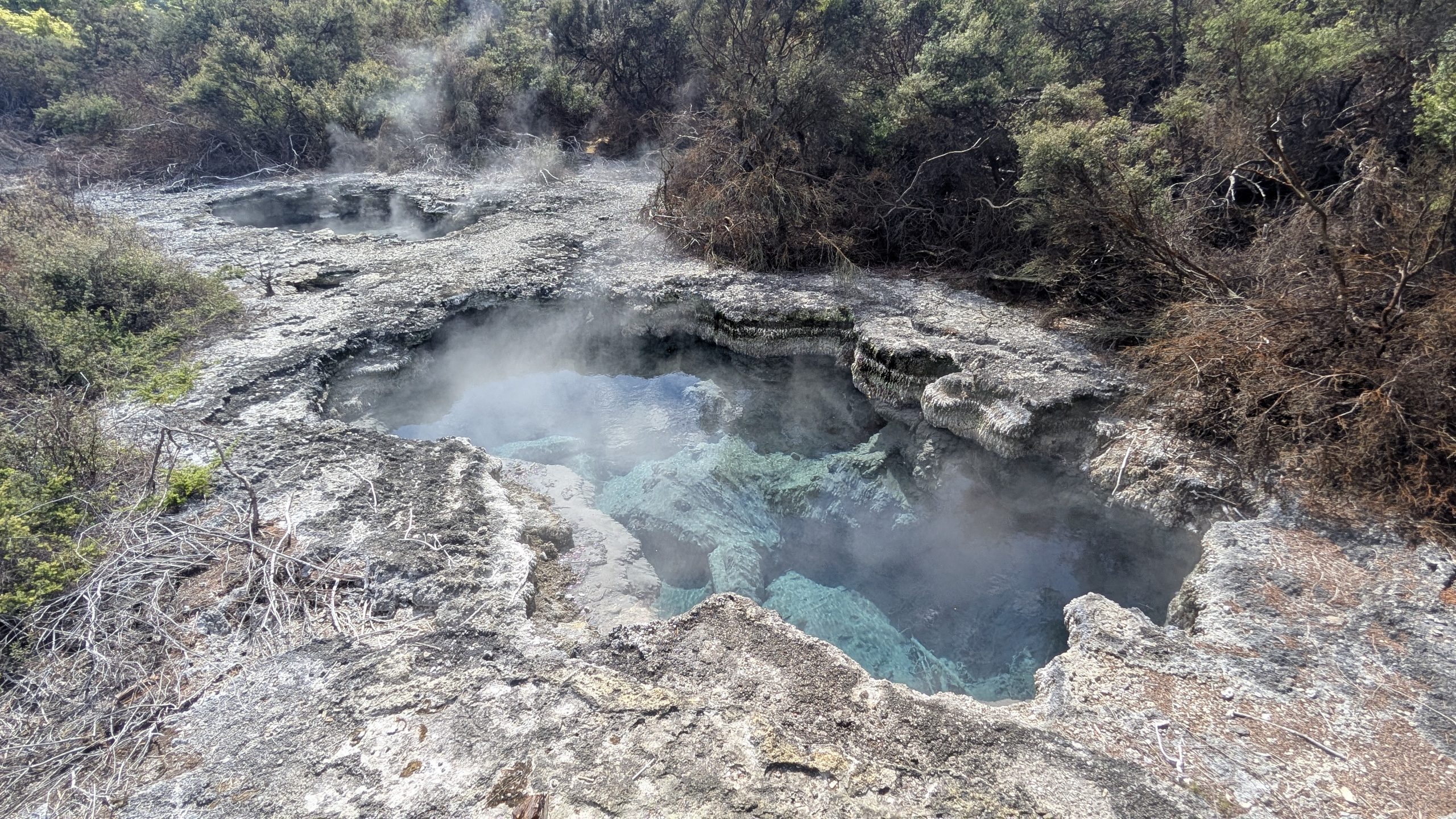
After the major eruption, Kererū started having a cycle of minor eruptions, so we left the overlook to explore the other thermal areas that were accessible on our geothermal trail ticket. We had walked the trails on our visit in 2019 and were interested to see if there were any changes to the features. We did not notice any obvious changes. We did not see any geyser activity, but there were some nice hot springs that we saw on the walk. Below are some of my favorite photos from the area.
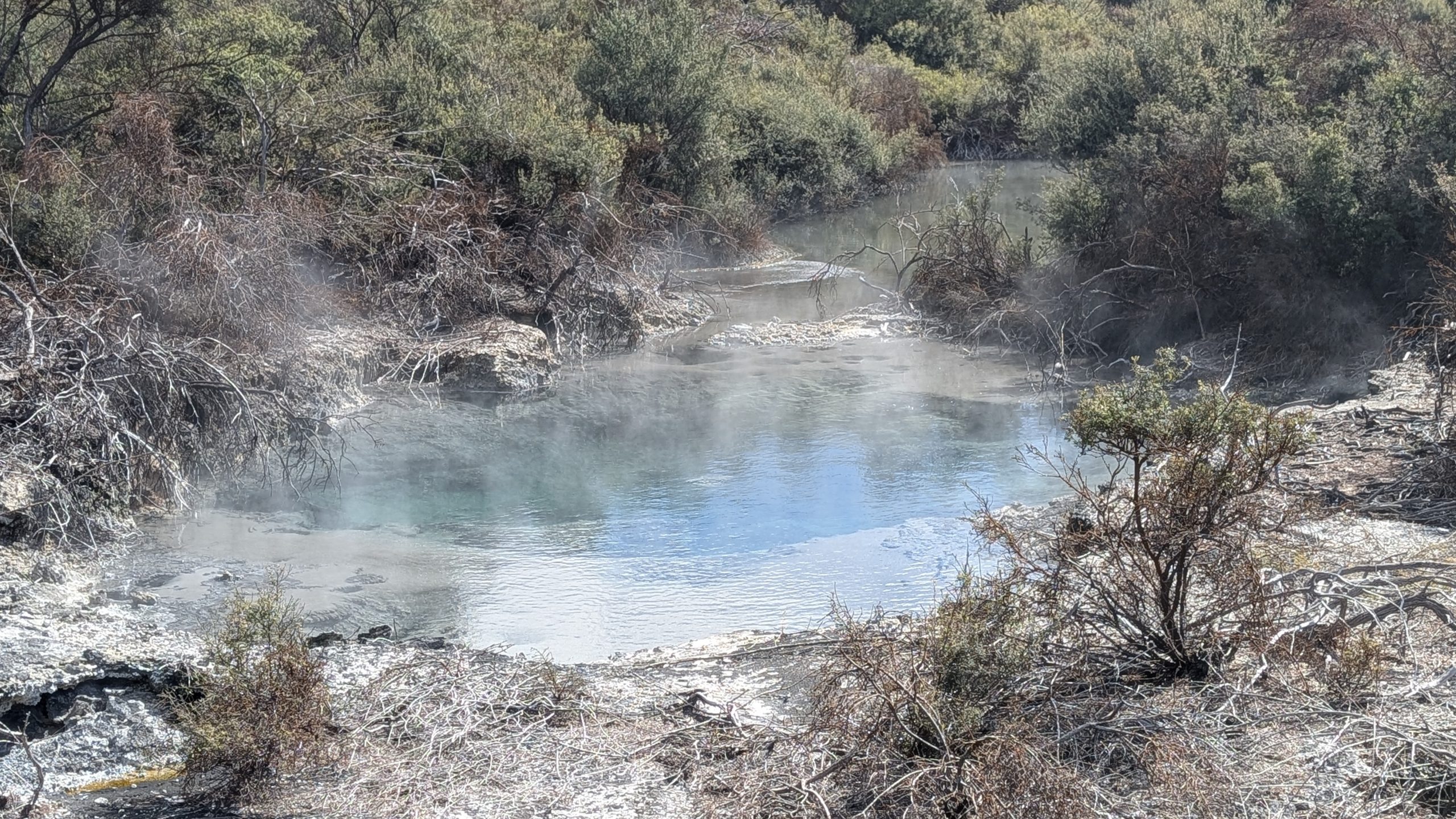
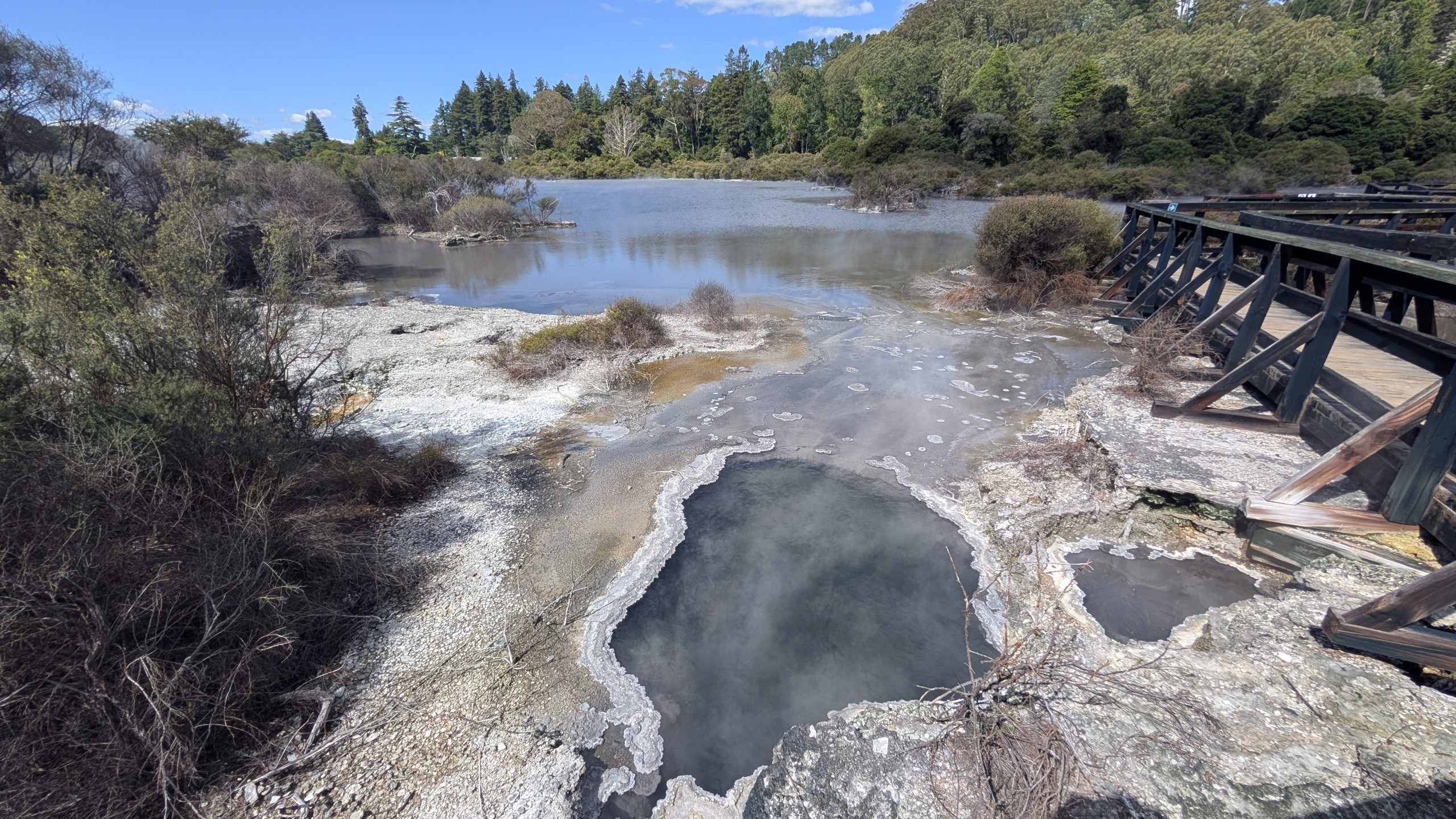
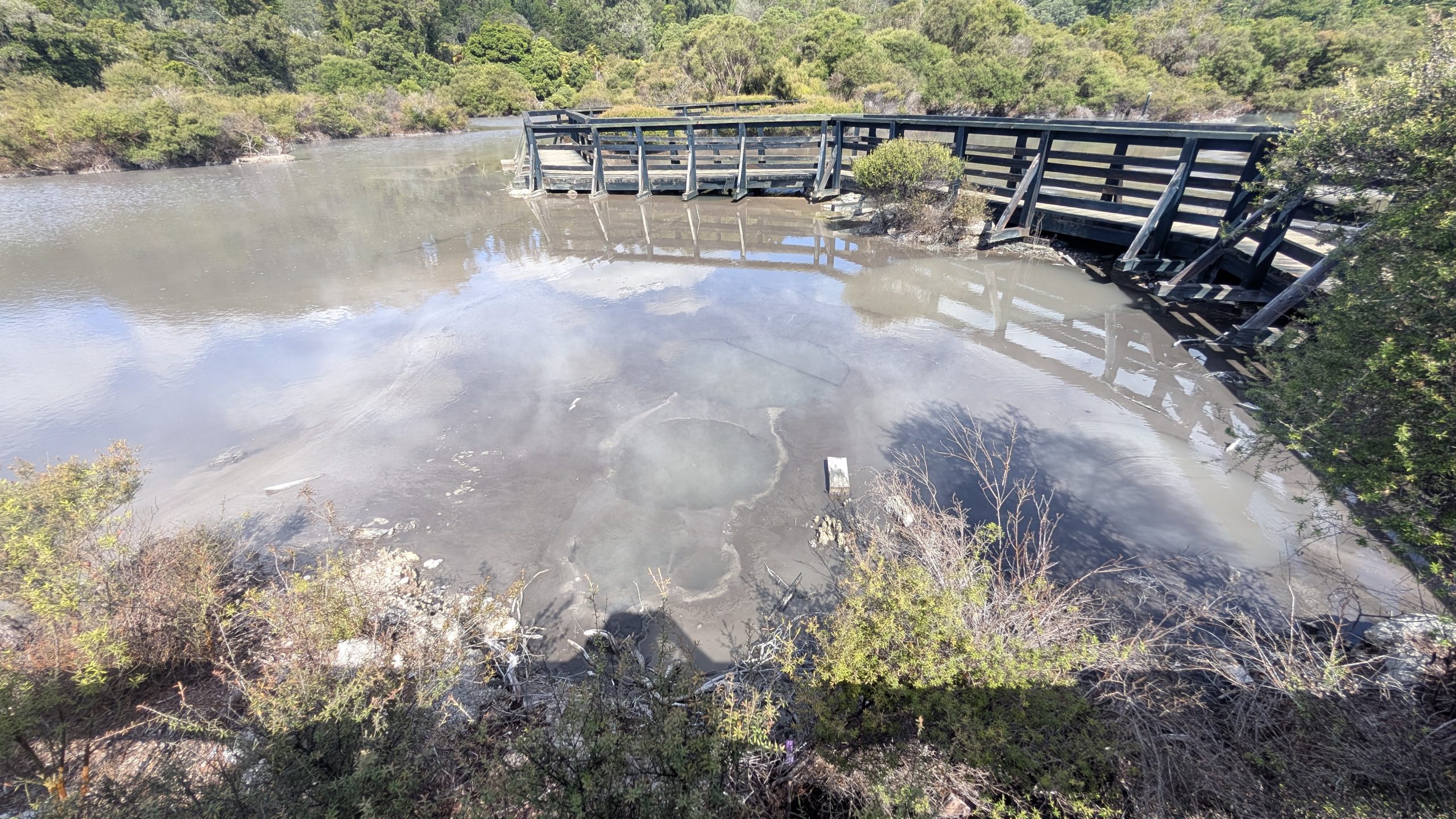
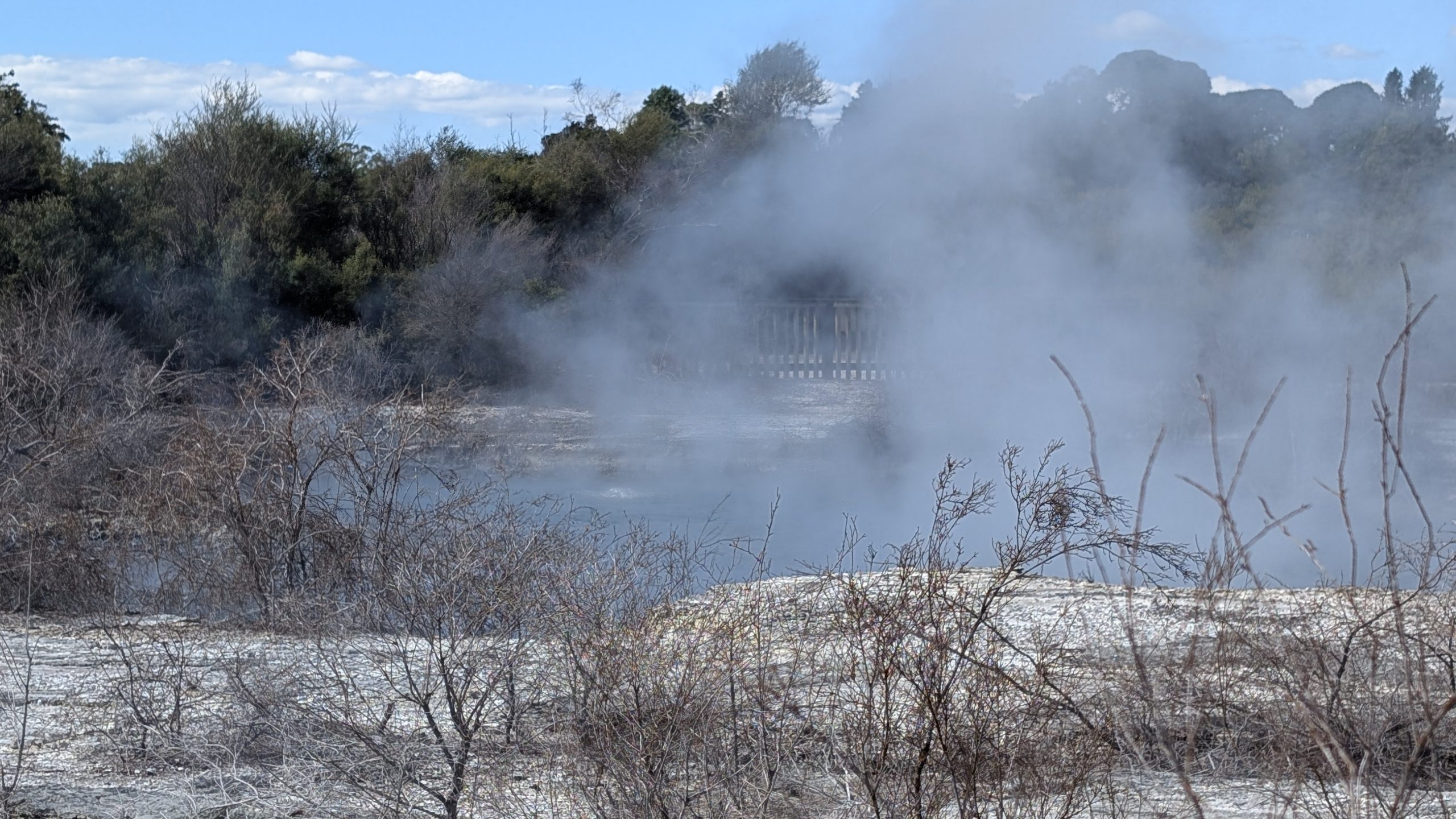
We had only walked about half of the trail when Graham texted that the Kererū minor eruptions had quit and it was entering a period of quiet. We did not want to miss a major, so we headed back to the overlook to wait. While waiting there we saw nice eruptions of Pōhutu, Te Tohu, and Waikorohihi geysers.
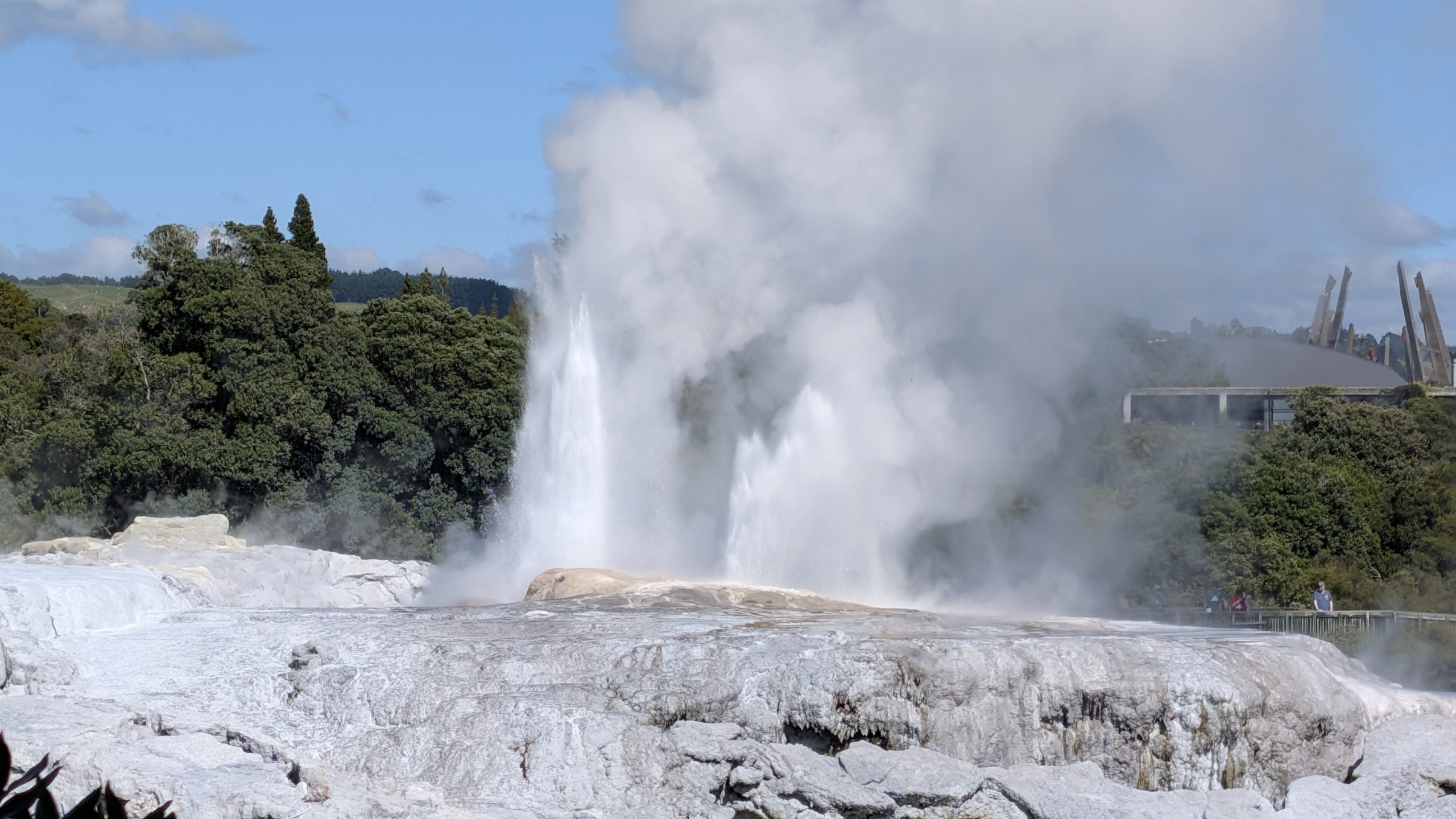
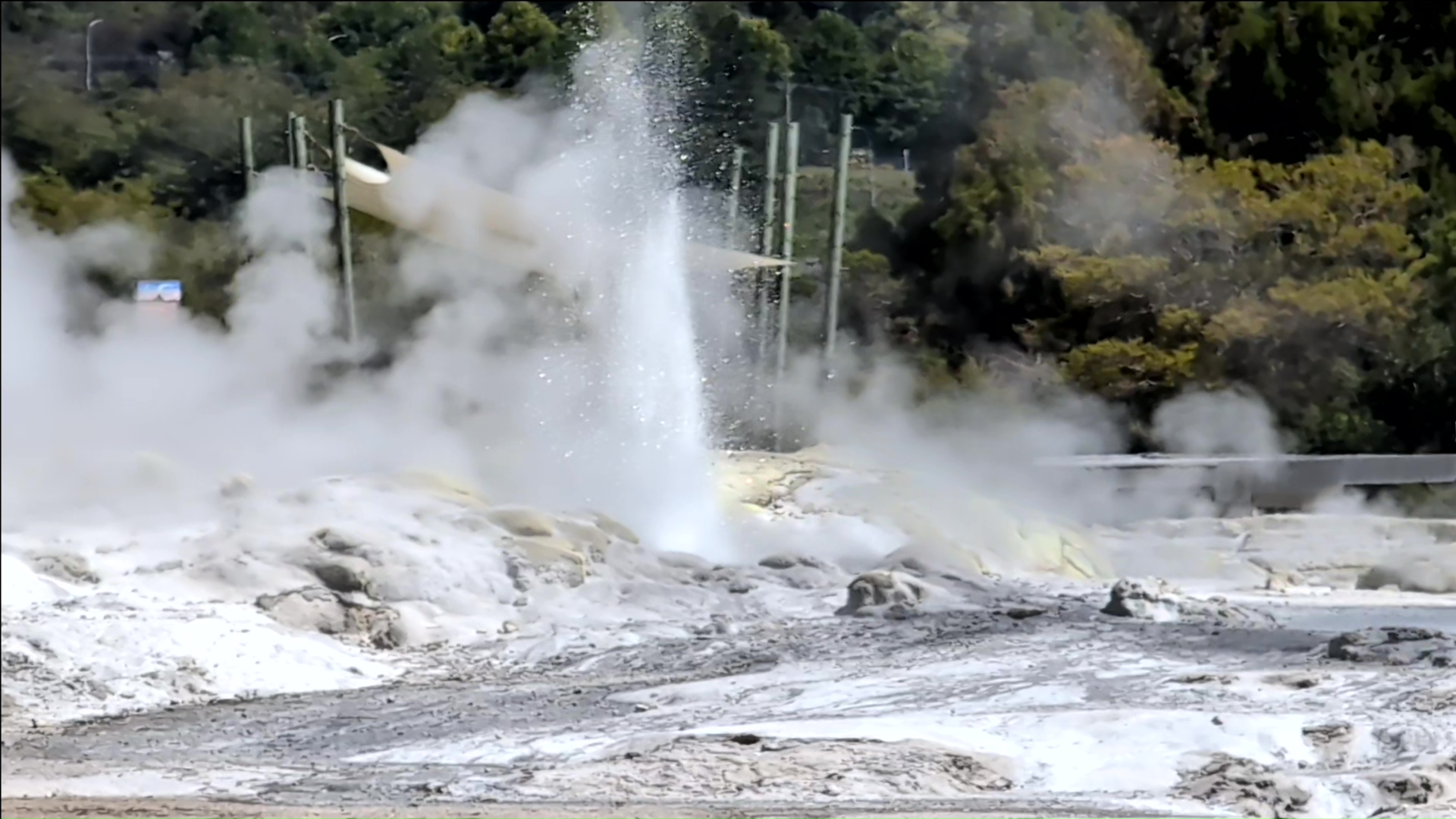
We waited for about 2-1/4 hours when we were rewarded with a second major eruption of Kererū at 2:52 PM, under better conditions this time.
There was still about an hour left before the village closed to visitors at 4 PM, so we walked back to finish the geothermal trails portion of our tour.
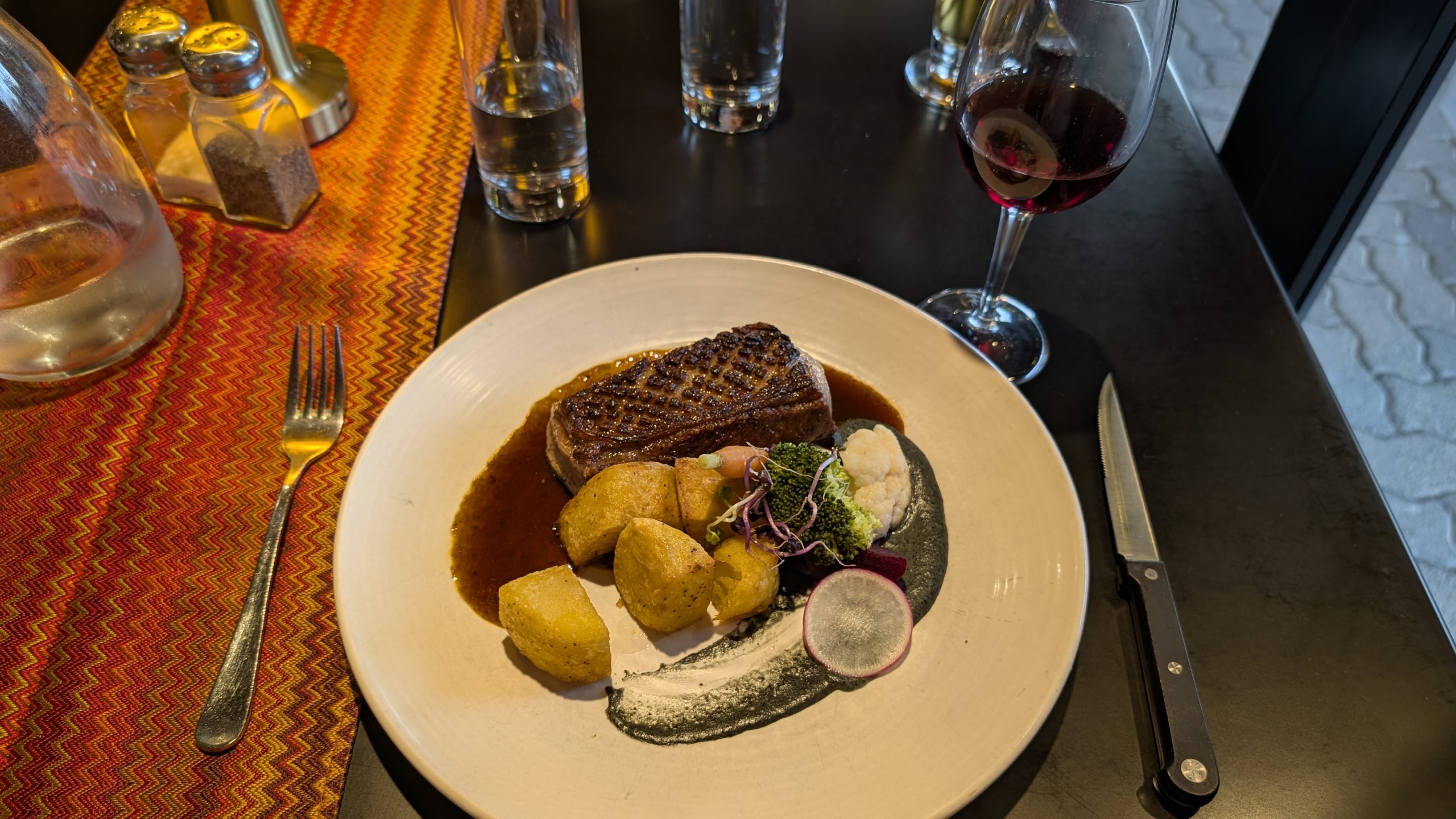
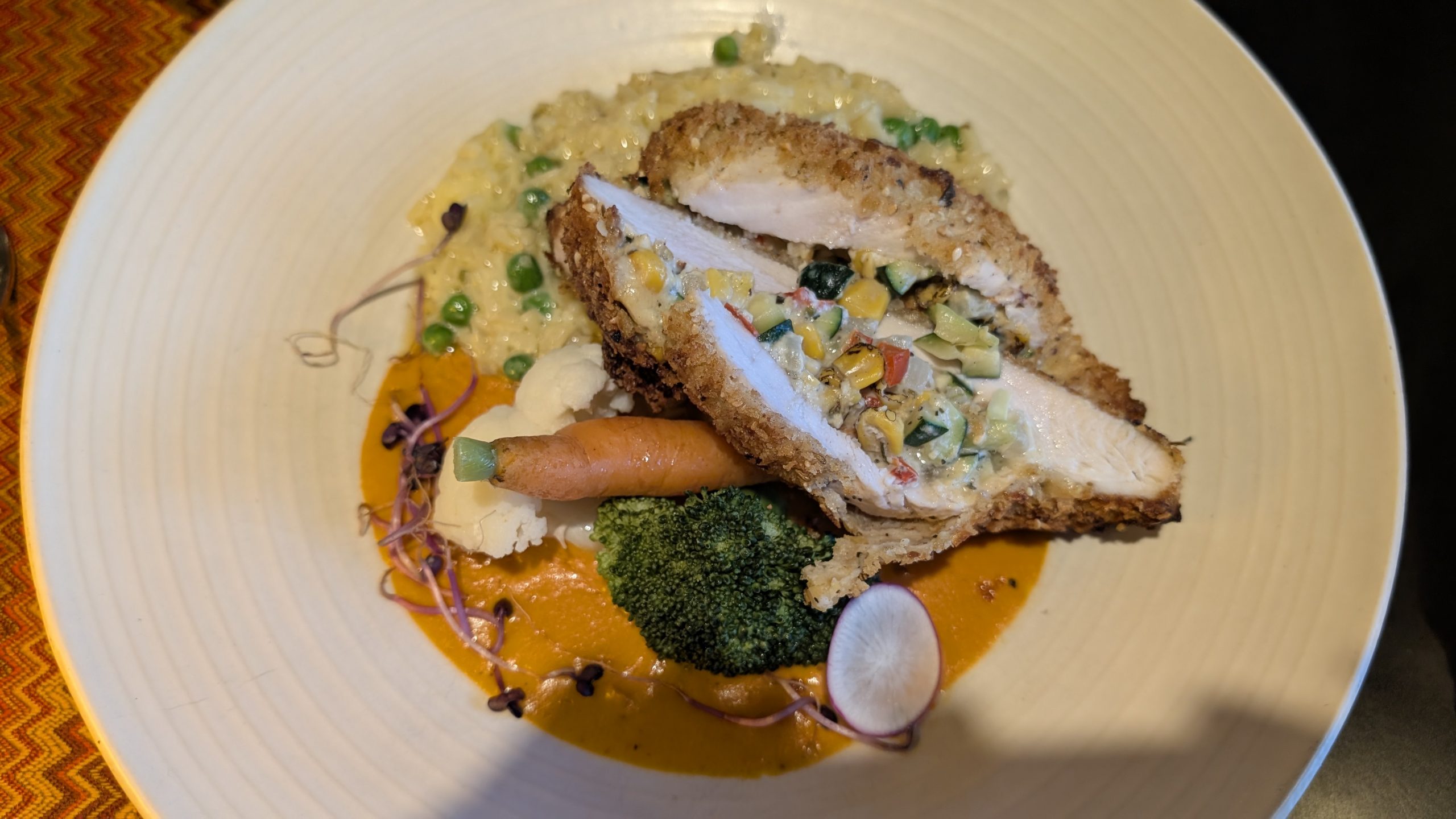
Later in the evening, we met Graham at the Urbano Bistro restaurant and had a nice sit down dinner together. Graham had the luxury of walking to the restaurant; we had to drive. The food, wine and beer were very good.
Link to Heinrich's thermal observations: http://geysers.org/wordpress/2026/03/05/observations-for-2026-march-05
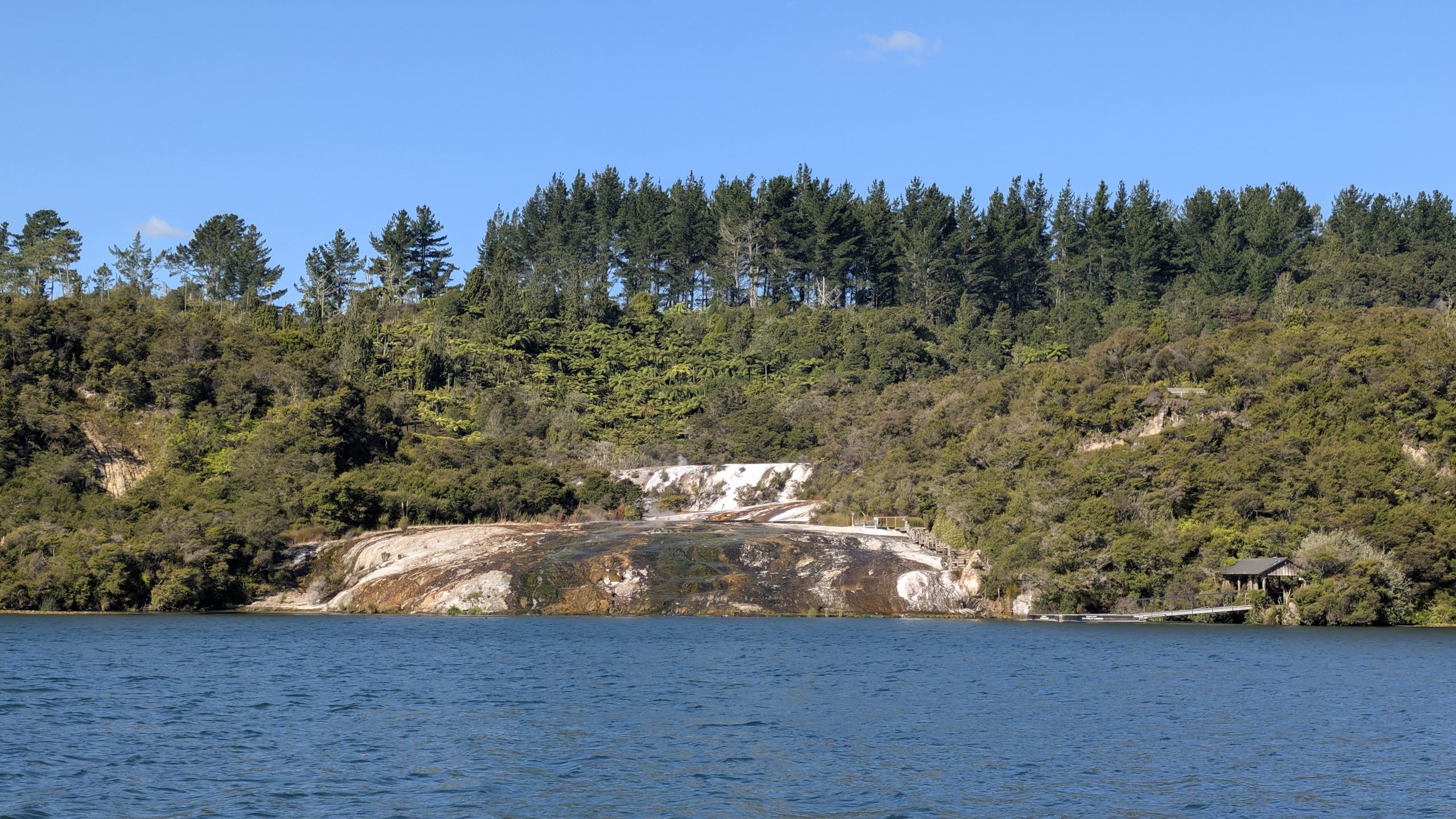
We woke up to good weather with the forecast of being a nice day and warming to the high 60's by the afternoon. It was about an hour drive in foggy weather to the Orakeikorako thermal area, and we arrived about a half hour after the park opened. The park was still very empty of tourists when we arrived, and we were the only people on the boat that ferried us over Lake Ohakuri to the geyser basin.
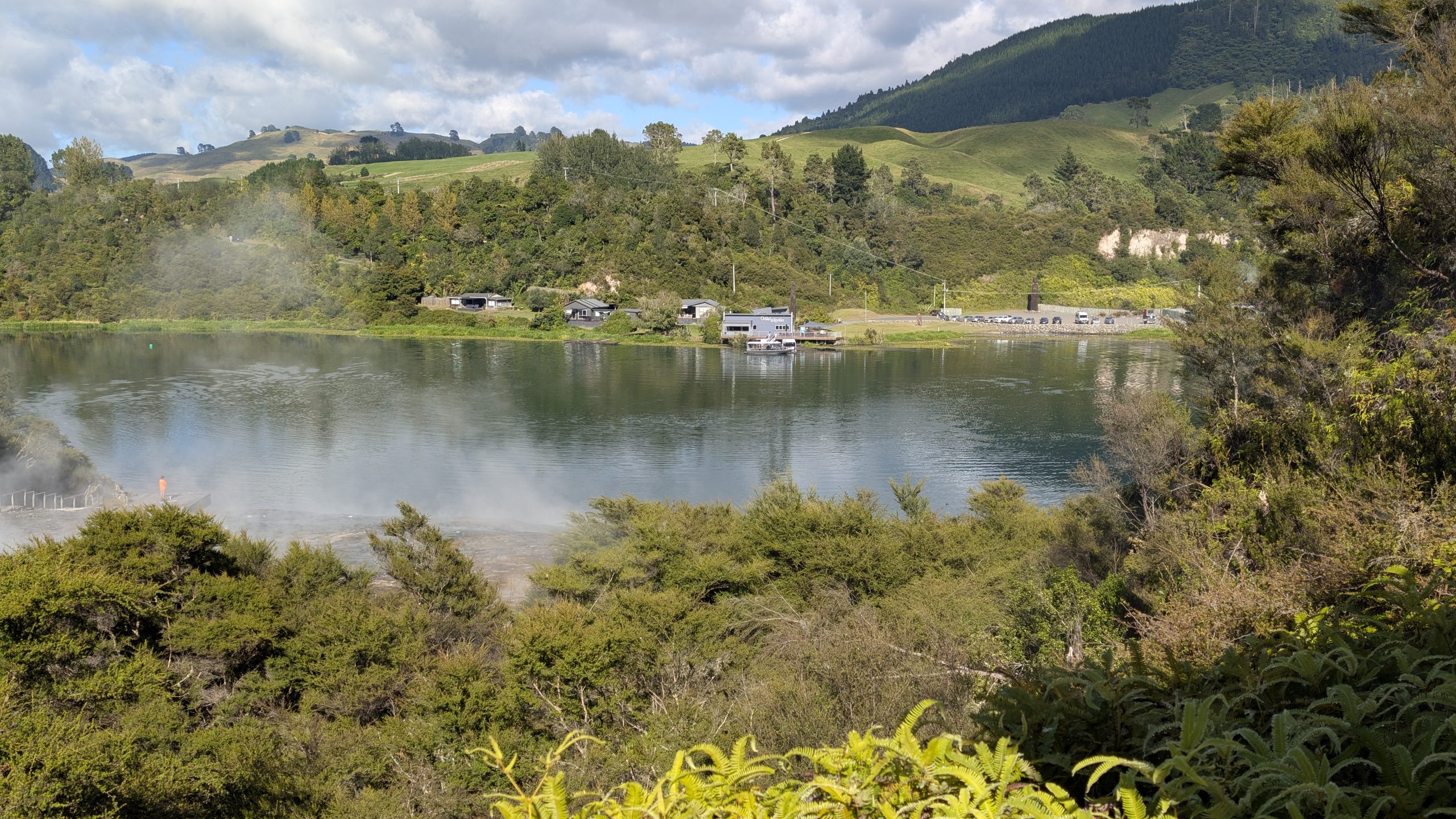
This was another occasion where we crossed paths with Graham Meech, who was going to be staying in Rotorua for the next several days, the same time period as us. Graham had arrived first and was watching Sapphire Geyser which was starting an eruption just as we got there. The intent for the day was for us to not be together all of the time so that each of us could be observing different features in the geyser basin and maximize our observations. So Graham stayed to watch Sapphire for a while while Heinrich and I walked up to the overlook to watch the next eruption of Sapphire, and afterwards we visited the Artist's Palette. Later in the day we continued to switch our locations. Heinrich has the details of everything we observed that day, so I am not going to repeat them here. Please refer to the link to Heinrich's observations at the top of this page.
The highlight of my day was getting to see a new geyser erupt. Heinrich identified it from our map as feature #123. I had left the Artist's Palette area and was on my way to watch Sapphire. I stopped briefly to watch Manganese Pool which was overflowing and boiling. Suddenly I noticed splashing coming out of a vent at the base of the Golden Fleece Terrace. After a few seconds the splashing increased, and I had just enough time to start recording a video on my phone when it started erupting at an angle up to about 2 meters high. The eruption reminded me of a mini Daisy Geyser. The total duration was about 40 seconds.
After the eruption, I walked down to watch another couple of eruptions of Sapphire, and then I walked back to see what #123 was doing. It was quiet, but I decided to wait there to see if I might be lucky enough to see another eruption and get an interval. After about 40 minutes of waiting, I started to see a small trickle of water overflowing from the vent. I texted Heinrich and Graham to come join me, and we watched the overflow progressively get stronger with small splashing. 23 minutes after I noticed the overflow, all three of us got to see an eruption. This second observed eruption lasted 44 seconds and had an estimated height of 1.5 to 2 meters. Assuming it did not erupt again while I had been watching Sapphire, this would be a closed interval of 2 hours and 6 minutes.
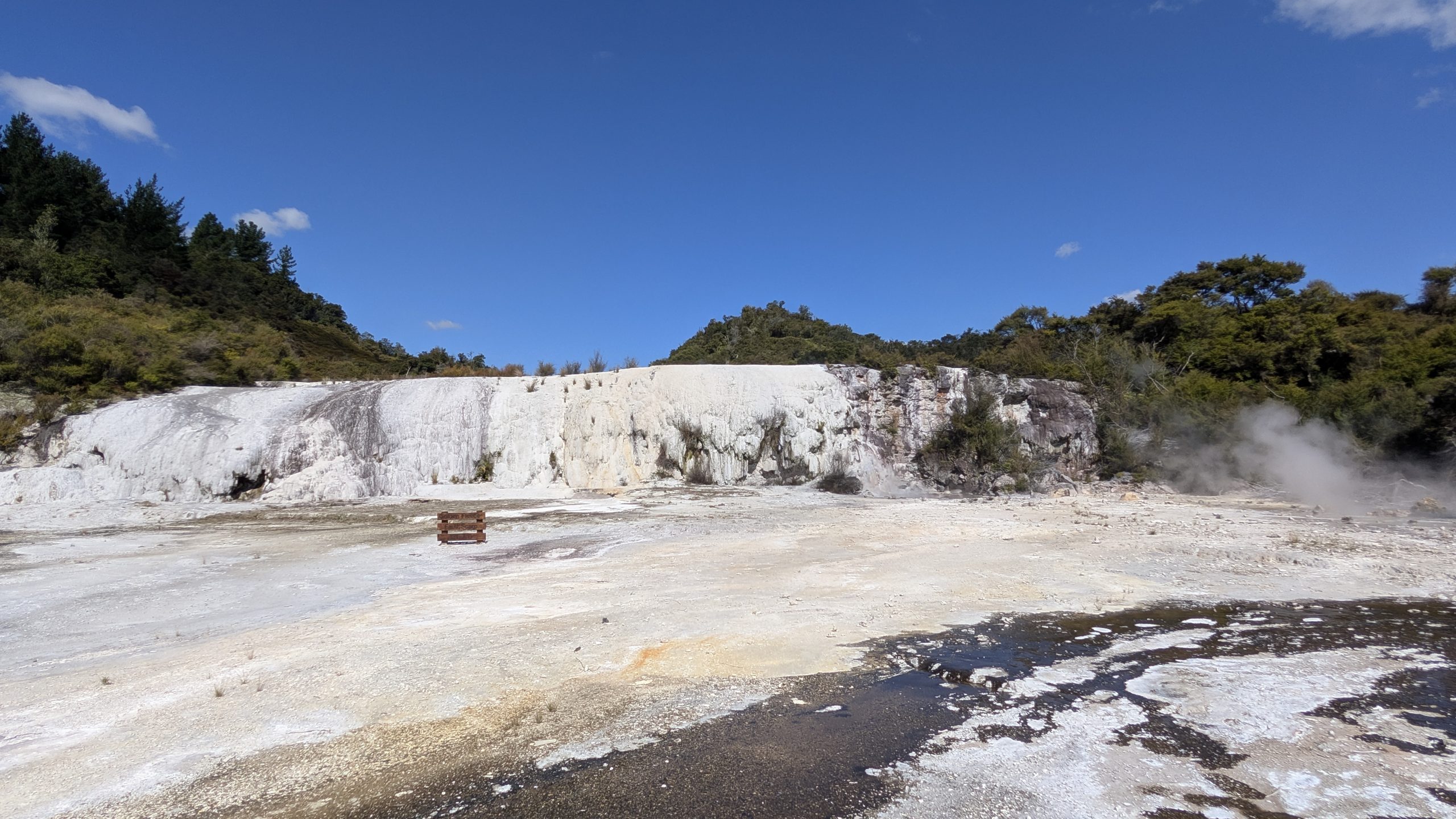
Afterwards I walked back down to watch another eruption of Sapphire, and then I decided to walk back up to Artist's Palette. As I walked past the Golden Fleece Terrace, I noticed #123 overflowing again. It started erupting less than a minute later at 3:41 PM, giving a closed interval of 1 hour and 6 minutes. The total duration was 35 seconds.
Based on that eruption time and the interval, we thought we might be able to see one more eruption before we had to catch the last ferry boat at 5 PM. Heinrich and I walked down to see one more eruption of Sapphire, and then we walked back to #123. It did start splashing while we were waiting, but by the time we had to leave, the splashing did not look heavy enough for an imminent eruption.
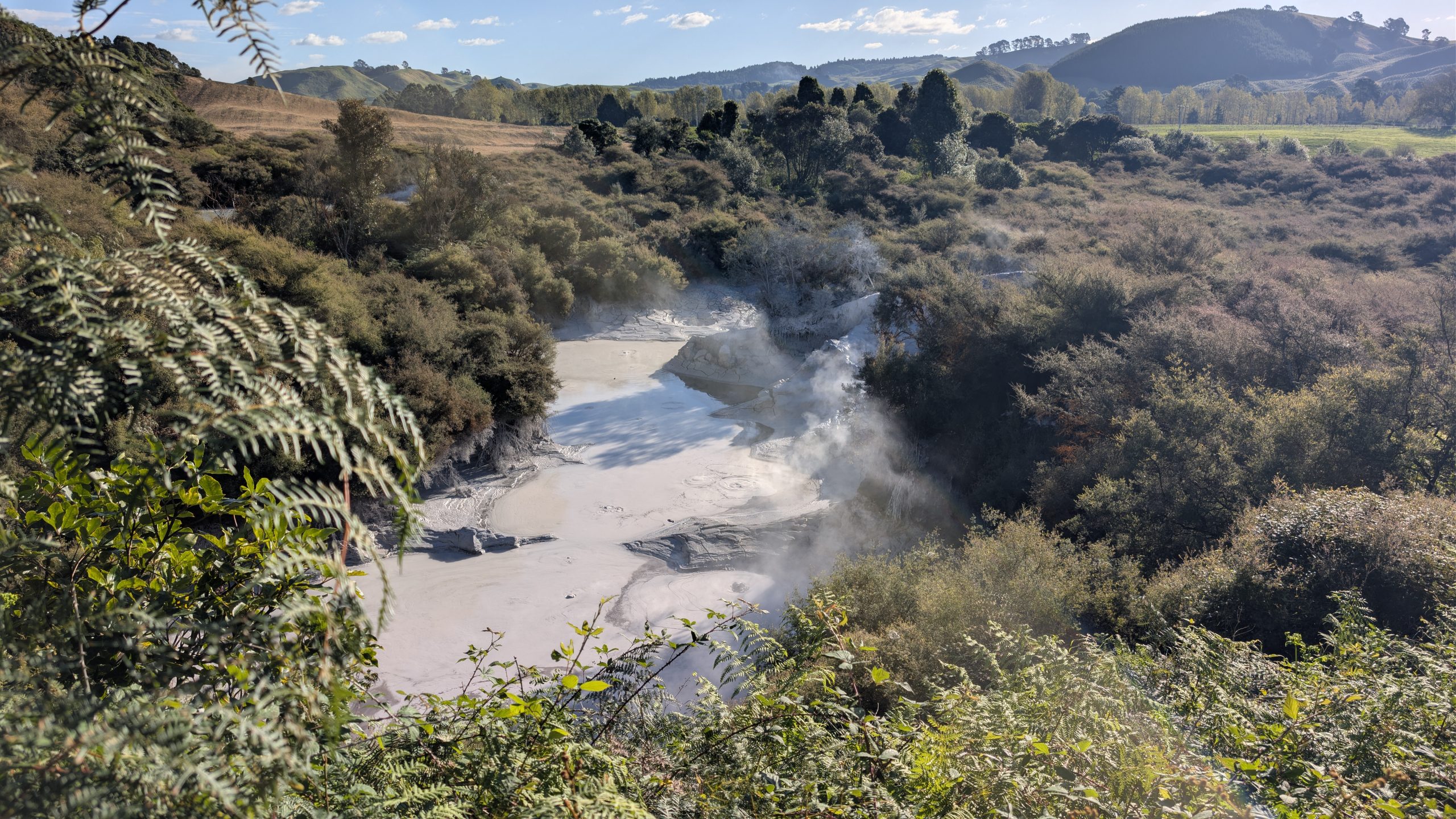
On the drive back to Rotorua we stopped at the Te Kopia Mudpots. The trail to the mudpots was quite overgrown, so not many people had visited there. This was our third visit to the area, and not much had changed.
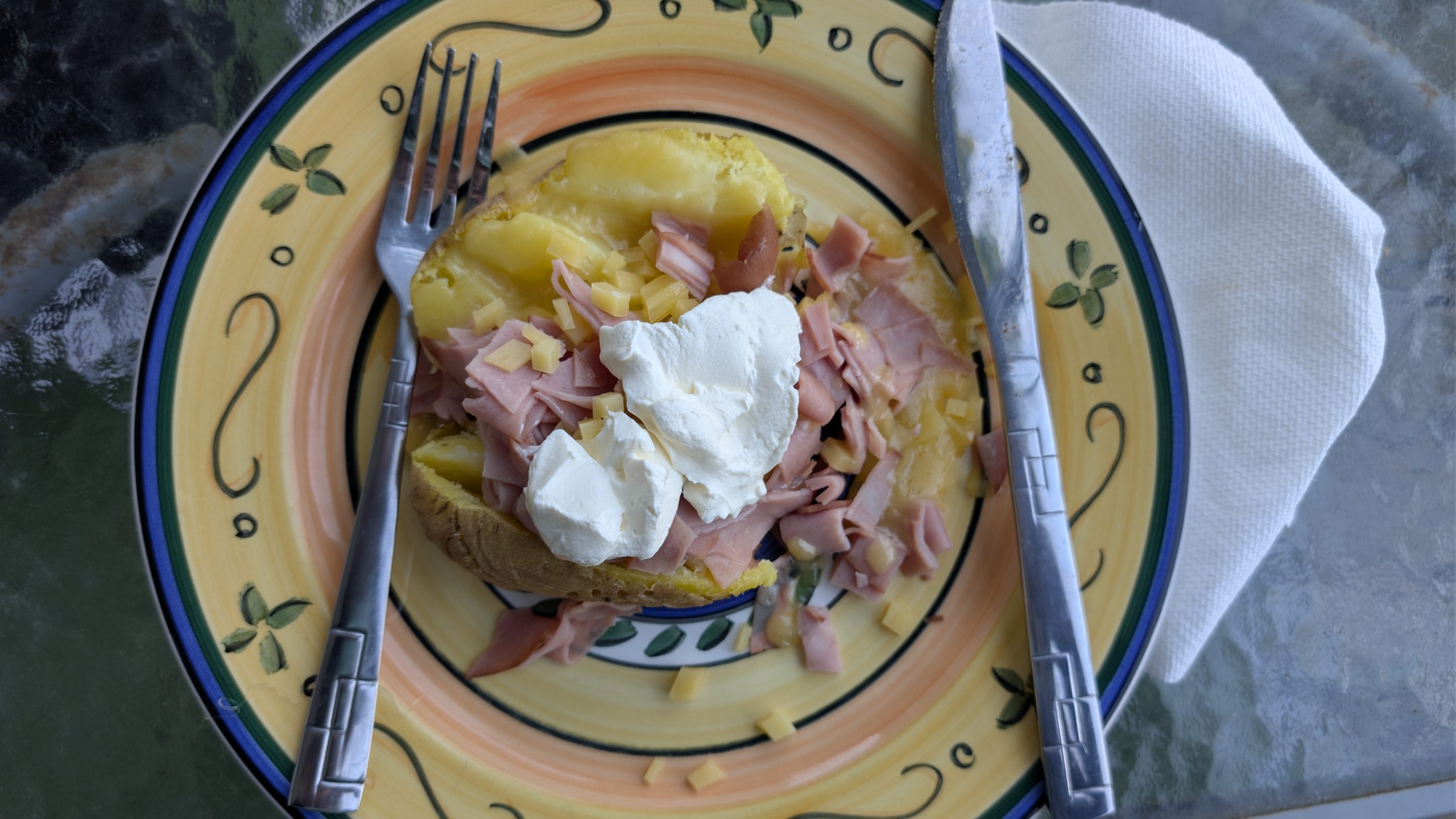
Back at our BnB we fixed a simple dinner of baked potatoes with toppings.
Link to Heinrich's thermal observations: http://geysers.org/wordpress/2026/03/04/observations-for-2026-march-04/
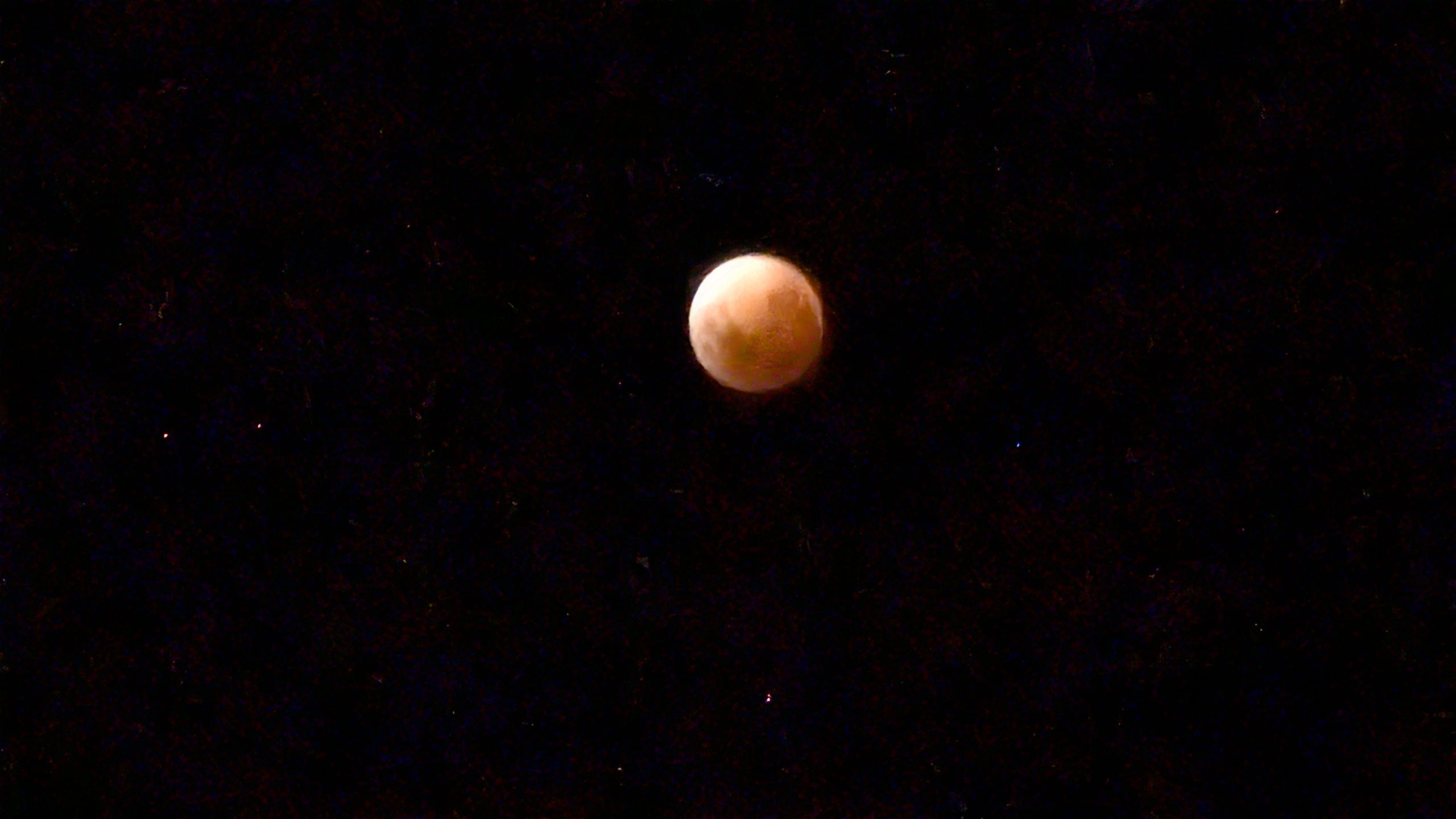
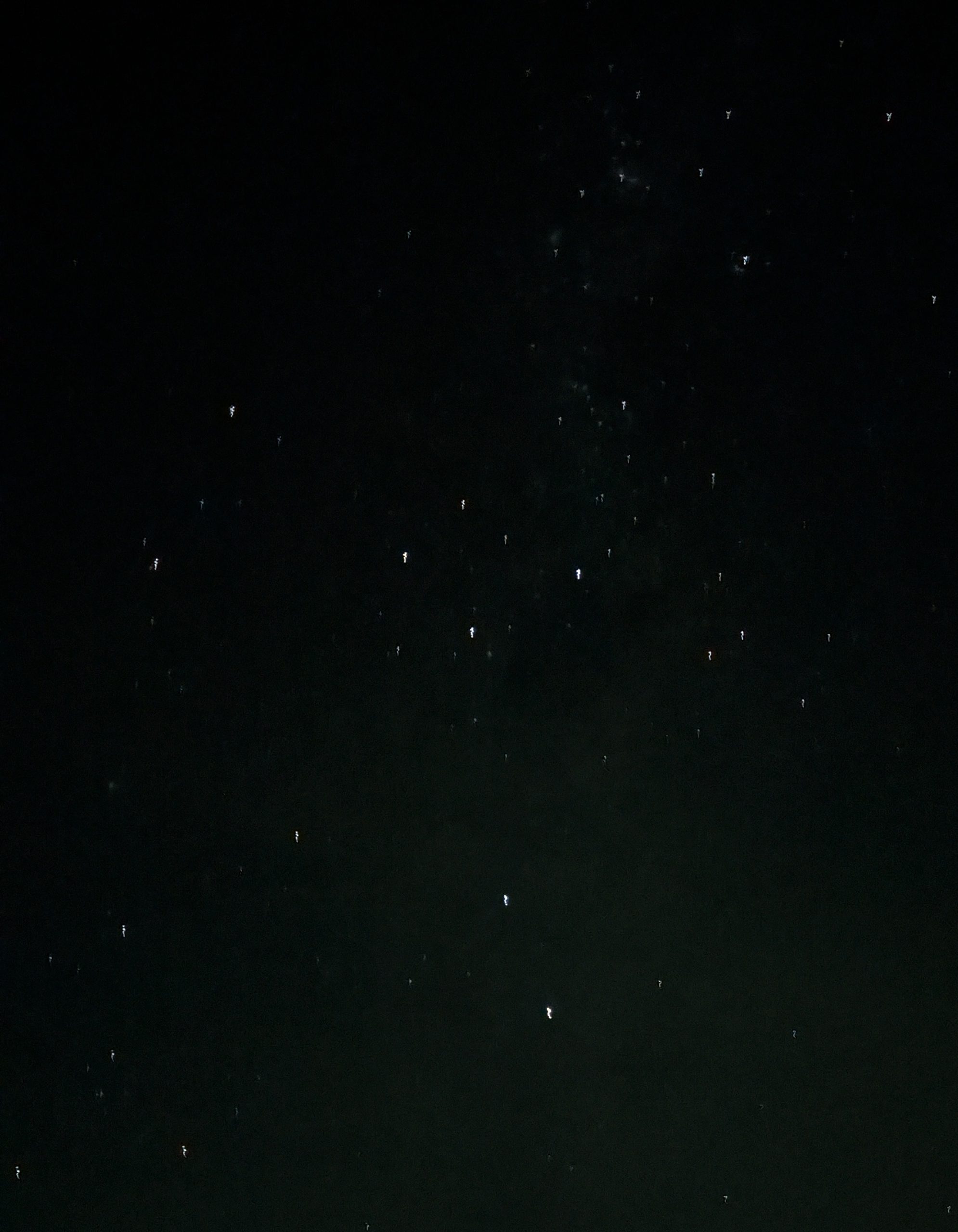
The "day" started early with a lunar eclipse with totality that began at about midnight. It was a beautiful and clear starry night in Rotorua: perfect observing conditions right from the back yard of the Geyser Lookout BnB, although the temperature was in the mid 40's. I bundled up and played with the settings on my phone to take photos at various exposures. I also took a nice photo of the Southern Cross. I watched the eclipse for about a half hour before going back inside to sleep.
We woke up to another sunny but cold morning. The forecast looked promising with a warming trend on the way. Our geothermal activity for the day was to visit Te Puia, just a 5-minute drive from the Geyser Lookout BnB. We had booked the 9 AM tour, which involved a visit to the Maori Arts and Crafts Center followed by a guided tour into the geyser basin. Since we had already done the tour in 2023, I asked to talk to a supervisor when we arrived to get permission to skip the tour and go directly to the geyser basin. We were both eager to maximize our geyser observations. The supervisor agreed to let us go.
We walked down to the bridge area where we could observe Pōhutu, Te Tohu, and Kererū geysers. Mahanga and Waikorohihi geysers were also active and visible, although it was harder to get start times and durations for them from the bridge vantage spot. Kererū was having minor eruptions every 2 to 3 minutes, so I started entering them into the GeyserTimes database.
Te Tohu, which is the indicator geyser for Pōhutu, was already in eruption when we arrived, and it was only a short wait before Pōhutu started its eruption. It was a great time to watch it since the tour groups had not yet arrived.
Kererū continued having minor eruptions for 3.5 hours before it finally quit at 12:55. We had been hoping the minors would quit since all of our observations from previous years showed that Kererū needed to have a period of quiet before it could have a major eruption. The length of the quiet period was variable.
I had been recording minor eruptions almost all morning except for a short break when Heinrich took over. During my break I walked up to the overlook and took a picture of The Blueys pool. This pool was named for its cobalt blue color, although on that day it had brown mixed in with the blue. I had seen it prettier during the 2019 and 2023 visits. I learned from a guide that this was due to the prevailing wind direction where not as much water was flowing into it from Pōhutu.
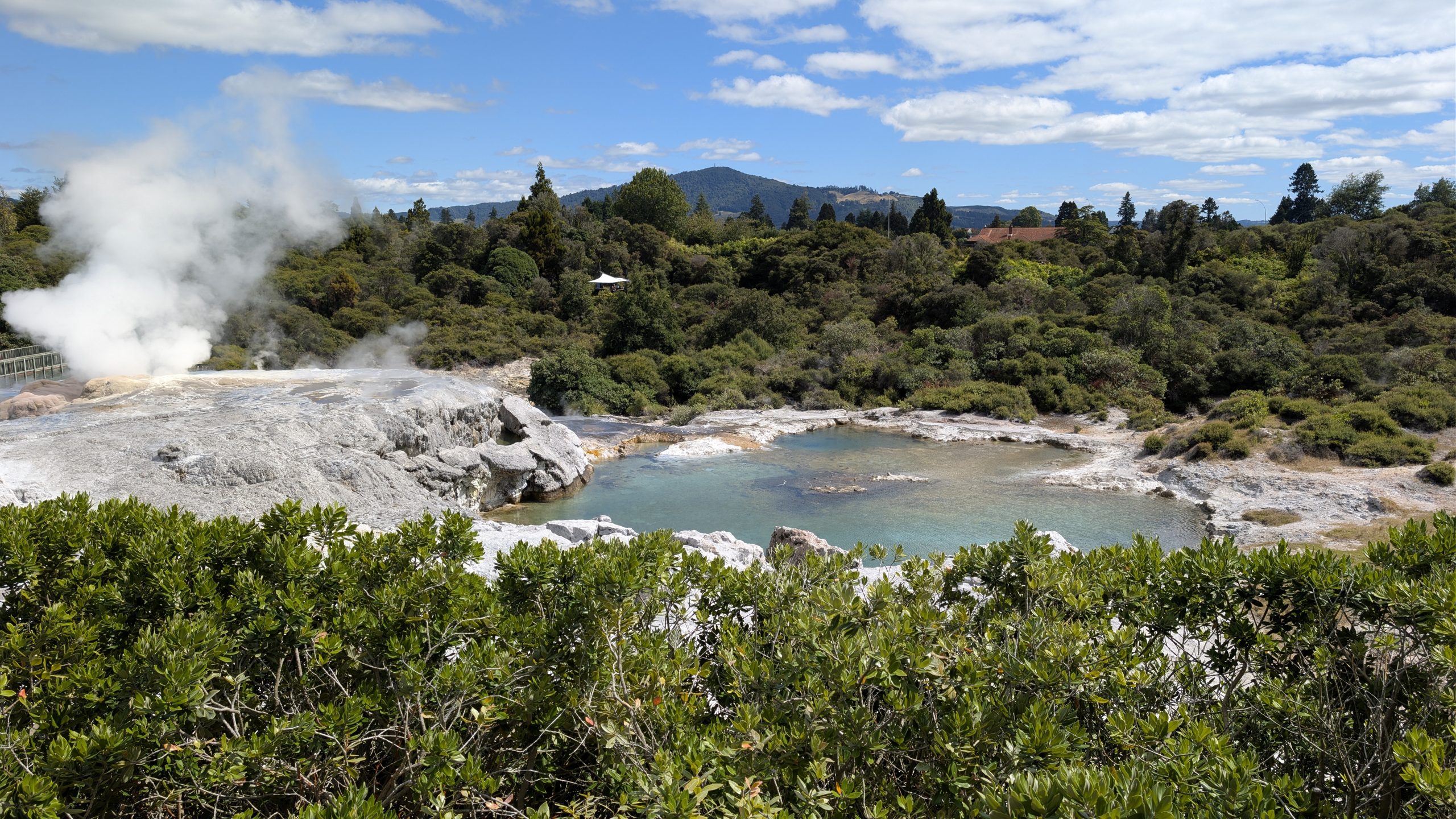
Kererū was quiet for 3 hours and 20 minutes, with occasional slight splashing. During that time I did not stray far from the bridge since I did not want to miss a major if it occurred. One change from my previous visit in 2023 was that the vegetation had grown, and a small tree on the island between the bridge and Kererū's vent obscured a few of the previous viewing spots that I had used. After a while it became uncomfortable waiting in the same spot, especially since there was no place to sit.
The tour groups coming through the area were not annoying since they were spread out, and often there were large periods of quiet time with few other people around.
About once an hour Kererū's splashing became more vigorous for a few minutes, and each time we thought it might lead into a major eruption. Finally after another vigorous round of splashing, it had a major eruption at 4:19 PM. I got a good view of the start, but unfortunately the wind shifted and then it looked like a big steam cloud at the height of the eruption.
After the major eruption finished, Kererū went back to having minor eruptions every 2 to 3 minutes. We walked over to the Ngā Mōkai-a-Koko mud pool. The viewing platform to the right of the mud pool was a nice place to watch Te Tohu, Pōhutu, and Kererū minors from a different direction. We hung out in that area until we had to leave the park at the 5:30 PM closing time. The Kererū minors were still continuing when we left.
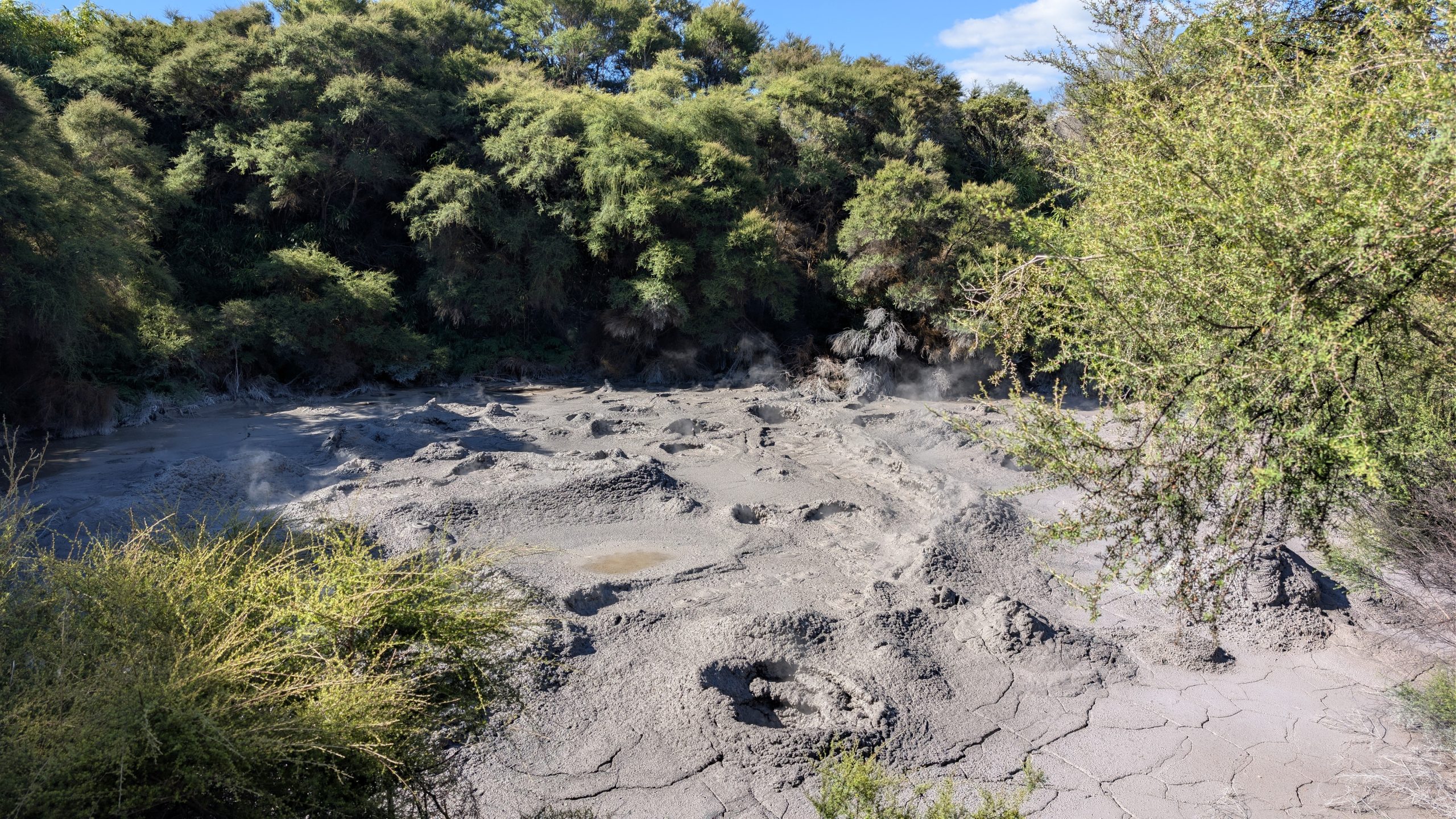
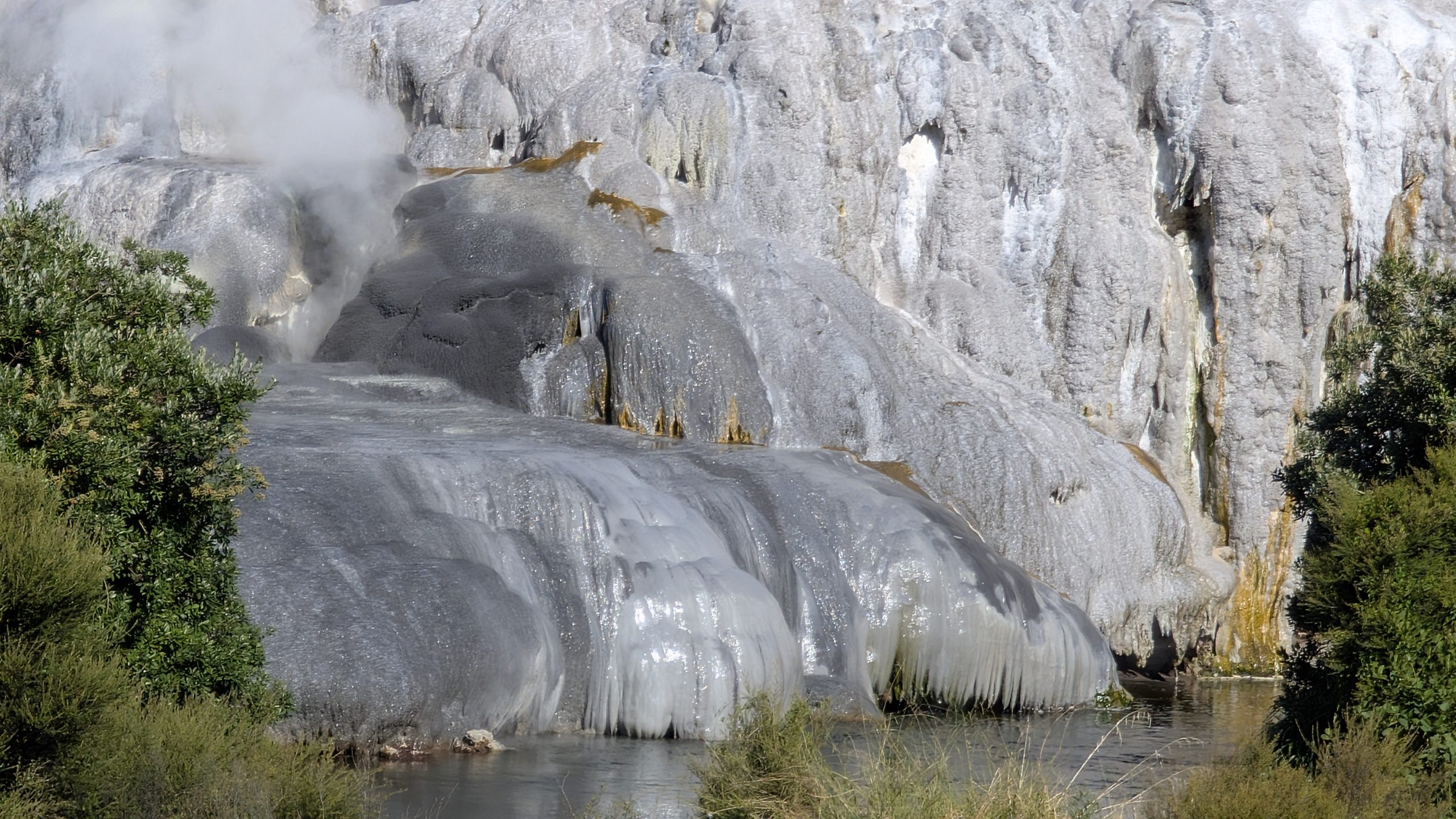
It was a good day there, although a bit too cold and steamy to get good geyser photos and videos with a lot of clouds appearing in the late morning and early afternoon. Graham told me afterwards that Heinrich and I had entered 102 Kererū minor eruption times into the GeyserTimes database, which was a record number of observations for one day. That was not a record I was particularly happy to have, since it meant I gave up exploring other areas to record all of those minors. We discussed possibly returning for another day on March 8 or 9, depending on the weather and other activities.
Aside from Kererū, below is a summary of the geyser activity that we saw.
Pōhutu: 8 eruptions with intervals ranging from 56 minutes to 1 hour 14 minutes
Te Tohu: 7 eruptions with intervals ranging from 54 minutes to 1 hour 14 minutes
Mahanga: 3 eruptions with very erratic intervals ranging from 5 minutes to 3 hours 17 minutes
Waikorohihi: 7 eruptions with erratic intervals ranging from 13 minutes to 1 hour 54 minutes
Back at the house we used the outdoor grill for pork noisettes and some zucchini given to us by our host. This was the first time I had tried noisettes. They were very good.