March 4, 2026
Link to Heinrich's thermal observations: http://geysers.org/wordpress/2026/03/04/observations-for-2026-march-04/
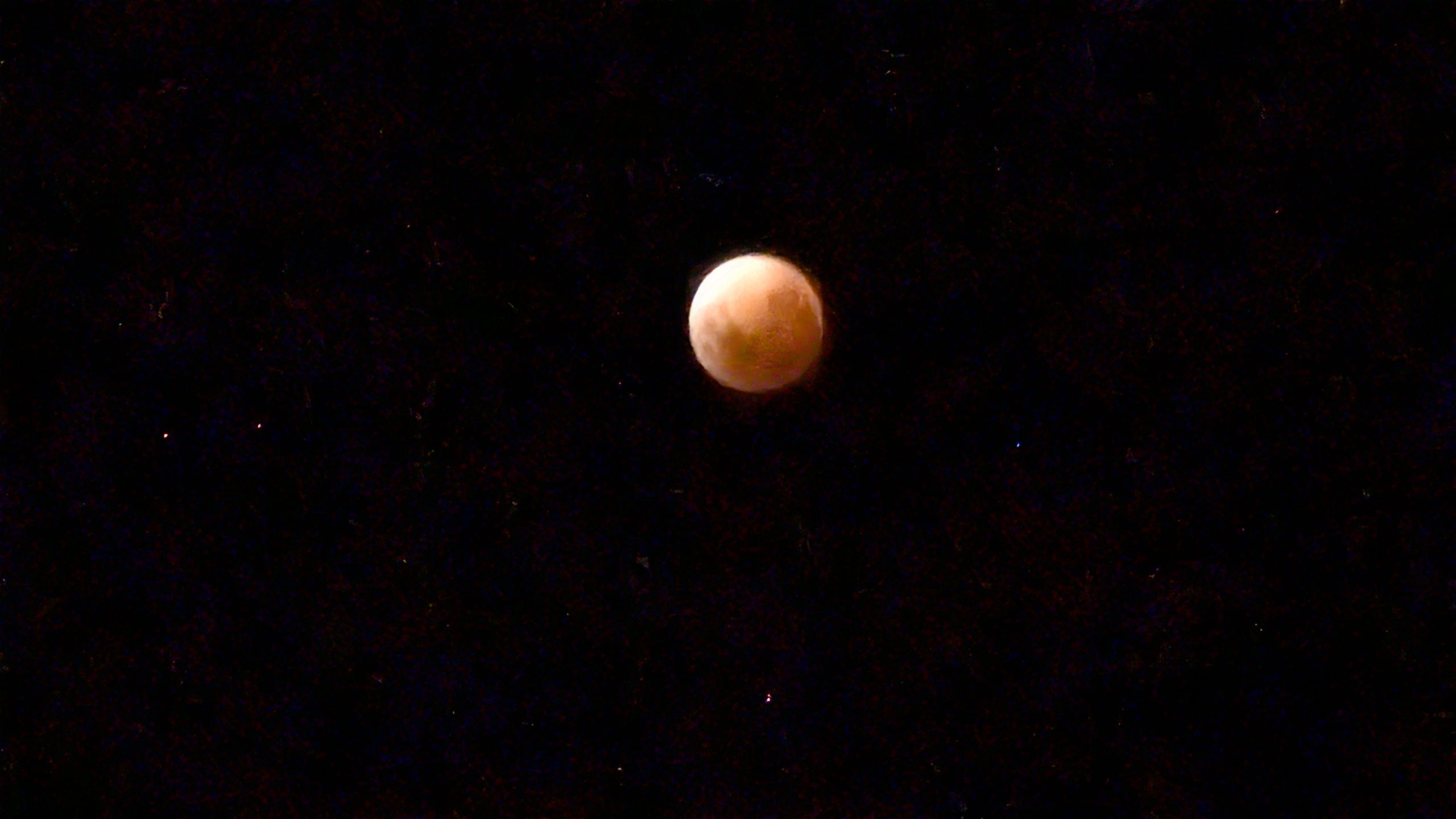
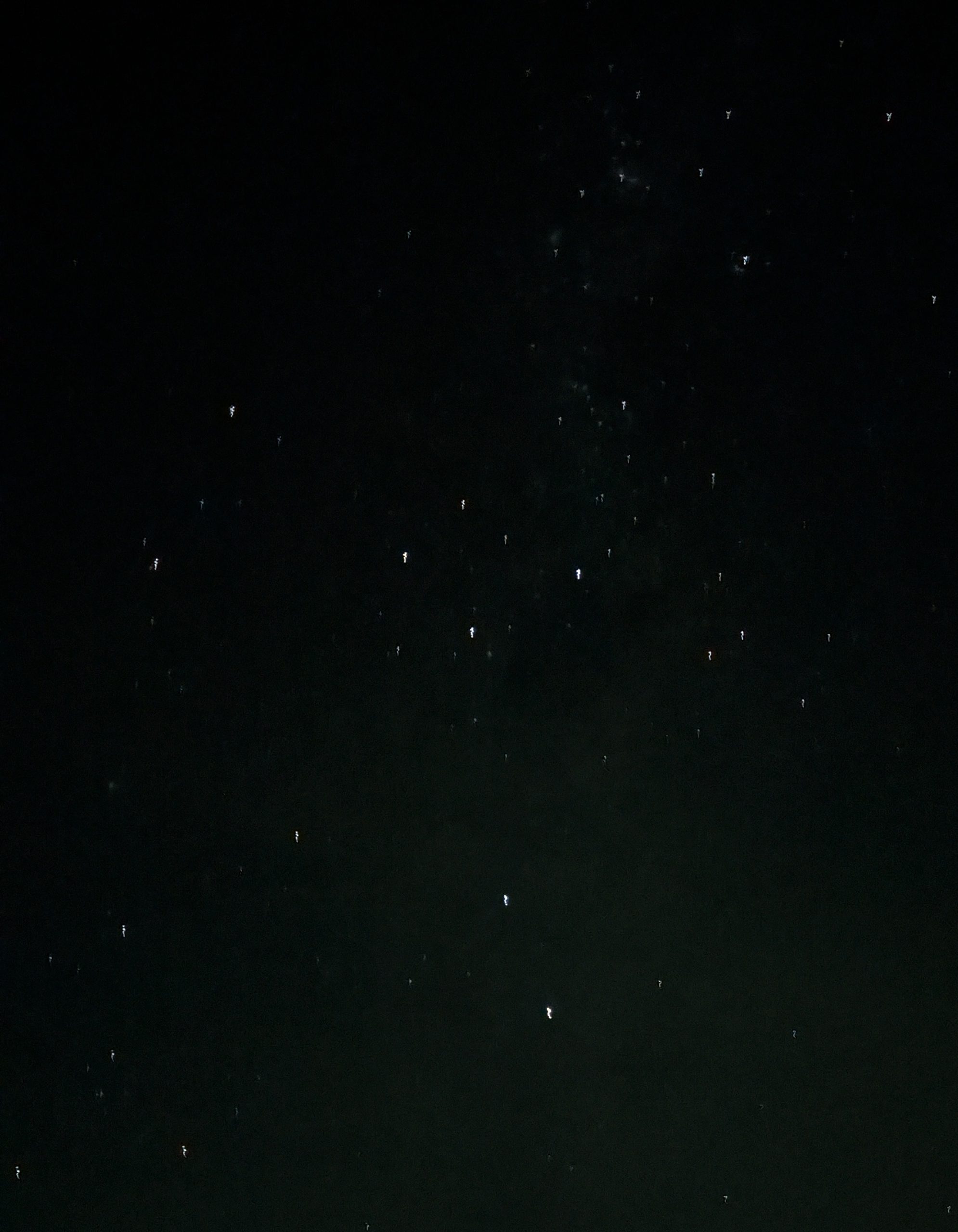
The "day" started early with a lunar eclipse with totality that began at about midnight. It was a beautiful and clear starry night in Rotorua: perfect observing conditions right from the back yard of the Geyser Lookout BnB, although the temperature was in the mid 40's. I bundled up and played with the settings on my phone to take photos at various exposures. I also took a nice photo of the Southern Cross. I watched the eclipse for about a half hour before going back inside to sleep.
We woke up to another sunny but cold morning. The forecast looked promising with a warming trend on the way. Our geothermal activity for the day was to visit Te Puia, just a 5-minute drive from the Geyser Lookout BnB. We had booked the 9 AM tour, which involved a visit to the Maori Arts and Crafts Center followed by a guided tour into the geyser basin. Since we had already done the tour in 2023, I asked to talk to a supervisor when we arrived to get permission to skip the tour and go directly to the geyser basin. We were both eager to maximize our geyser observations. The supervisor agreed to let us go.
We walked down to the bridge area where we could observe Pōhutu, Te Tohu, and Kererū geysers. Mahanga and Waikorohihi geysers were also active and visible, although it was harder to get start times and durations for them from the bridge vantage spot. Kererū was having minor eruptions every 2 to 3 minutes, so I started entering them into the GeyserTimes database.
Te Tohu, which is the indicator geyser for Pōhutu, was already in eruption when we arrived, and it was only a short wait before Pōhutu started its eruption. It was a great time to watch it since the tour groups had not yet arrived.
Kererū continued having minor eruptions for 3.5 hours before it finally quit at 12:55. We had been hoping the minors would quit since all of our observations from previous years showed that Kererū needed to have a period of quiet before it could have a major eruption. The length of the quiet period was variable.
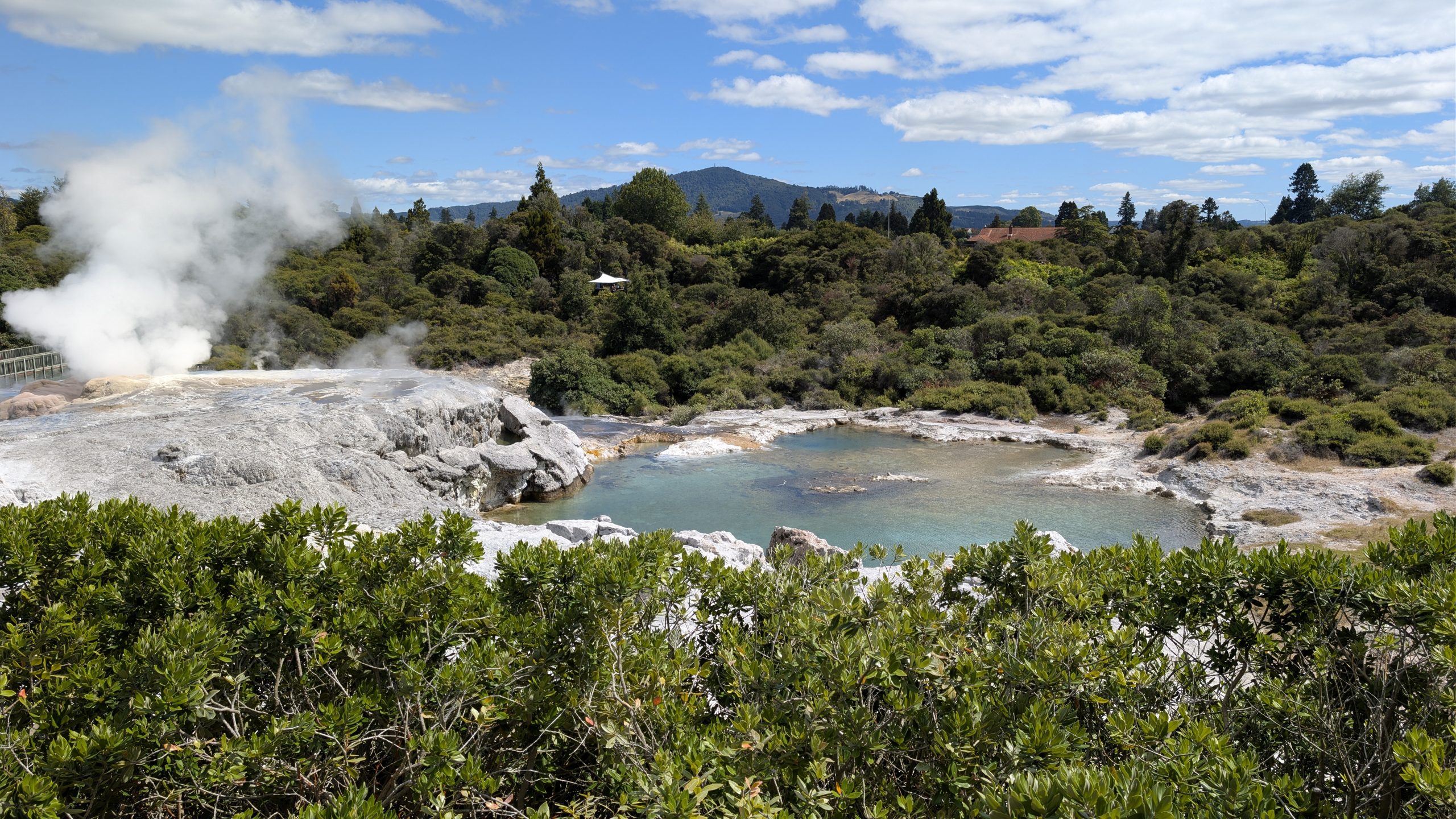
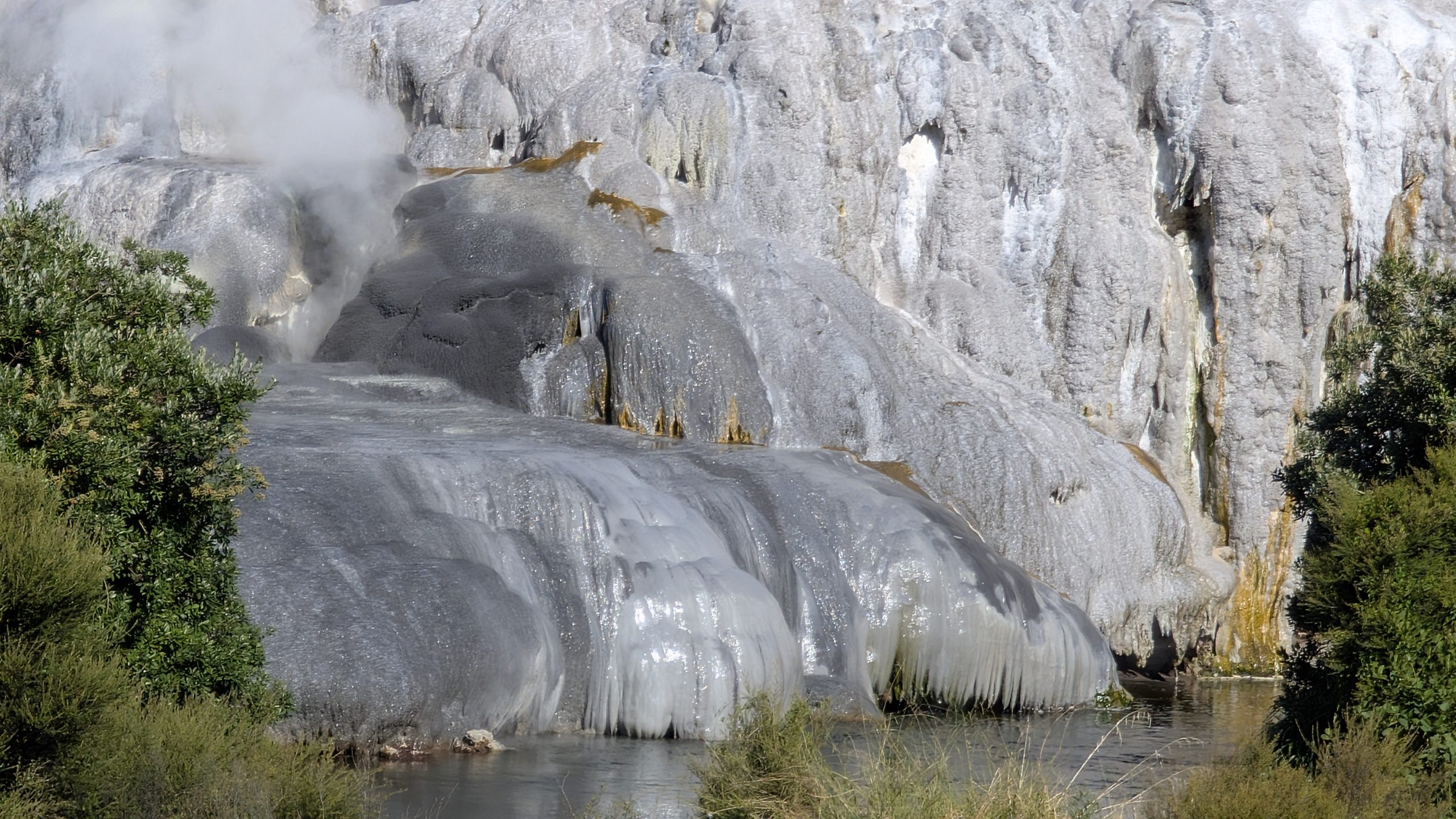
I had been recording minor eruptions almost all morning except for a short break when Heinrich took over. During my break I walked up to the overlook and took a picture of The Blueys pool. This pool was named for its cobalt blue color, although on that day it had brown mixed in with the blue. I had seen it prettier during the 2019 and 2023 visits. I learned from a guide that this was due to the prevailing wind direction where not as much water was flowing into it from Pōhutu.
Kererū was quiet for 3 hours and 20 minutes, with occasional slight splashing. During that time I did not stray far from the bridge since I did not want to miss a major if it occurred. One change from my previous visit in 2023 was that the vegetation had grown, and a small tree on the island between the bridge and Kererū's vent obscured a few of the previous viewing spots that I had used. After a while it became uncomfortable waiting in the same spot, especially since there was no place to sit.
The tour groups coming through the area were not annoying since they were spread out, and often there were large periods of quiet time with few other people around.
About once an hour Kererū's splashing became more vigorous for a few minutes, and each time we thought it might lead into a major eruption. Finally after another vigorous round of splashing, it had a major eruption at 4:19 PM. I got a good view of the start, but unfortunately the wind shifted and then it looked like a big steam cloud at the height of the eruption.
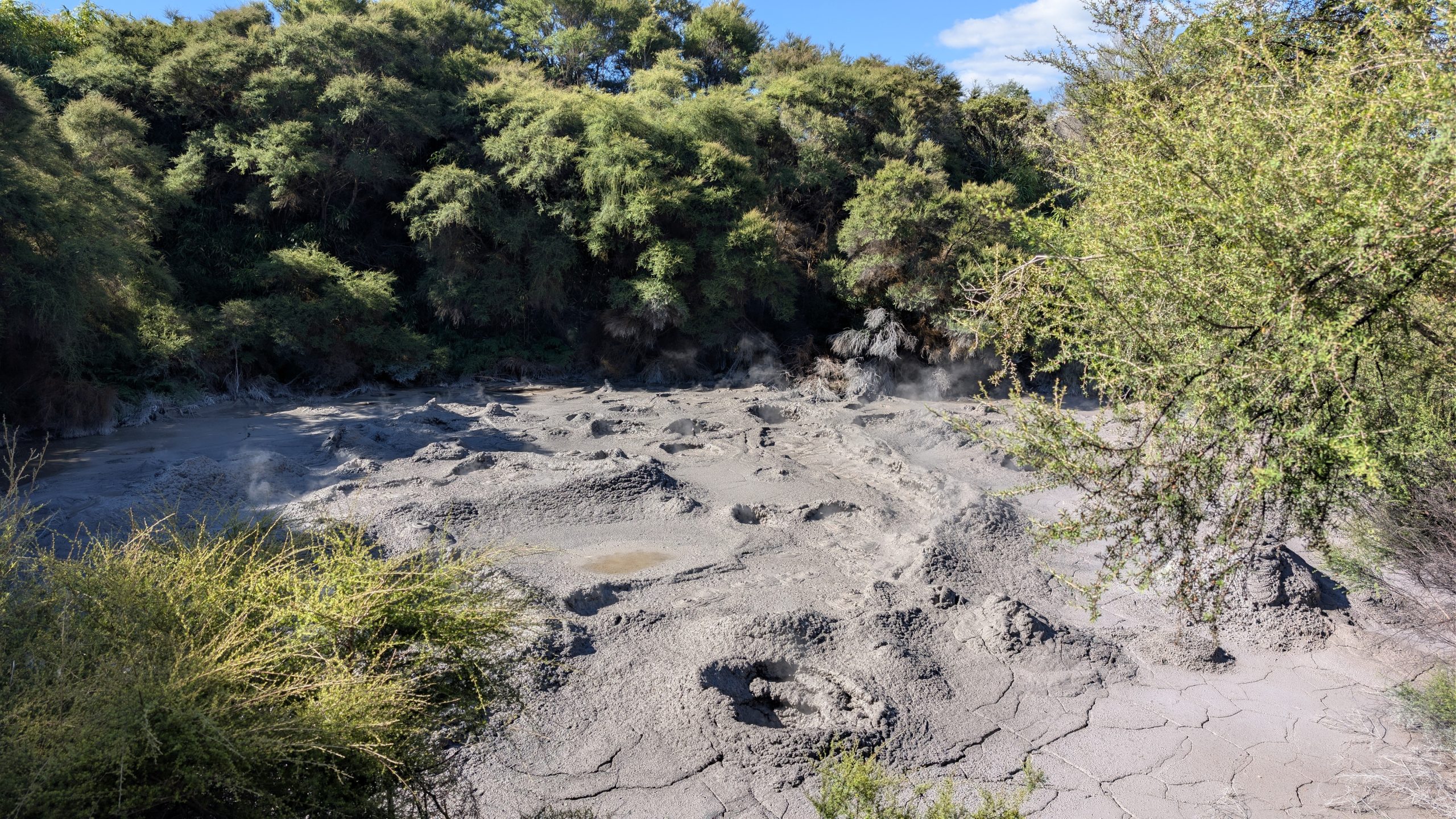
After the major eruption finished, Kererū went back to having minor eruptions every 2 to 3 minutes. We walked over to the Ngā Mōkai-a-Koko mud pool. The viewing platform to the right of the mud pool was a nice place to watch Te Tohu, Pōhutu, and Kererū minors from a different direction. We hung out in that area until we had to leave the park at the 5:30 PM closing time. The Kererū minors were still continuing when we left.
It was a good day there, although a bit too cold and steamy to get good geyser photos and videos with a lot of clouds appearing in the late morning and early afternoon. Graham told me afterwards that Heinrich and I had entered 102 Kererū minor eruption times into the GeyserTimes database, which was a record number of observations for one day. That was not a record I was particularly happy to have, since it meant I gave up exploring other areas to record all of those minors. We discussed possibly returning for another day on March 8 or 9, depending on the weather and other activities.
Aside from Kererū, below is a summary of the geyser activity that we saw.
Pōhutu: 8 eruptions with intervals ranging from 56 minutes to 1 hour 14 minutes
Te Tohu: 7 eruptions with intervals ranging from 54 minutes to 1 hour 14 minutes
Mahanga: 3 eruptions with very erratic intervals ranging from 5 minutes to 3 hours 17 minutes
Waikorohihi: 7 eruptions with erratic intervals ranging from 13 minutes to 1 hour 54 minutes
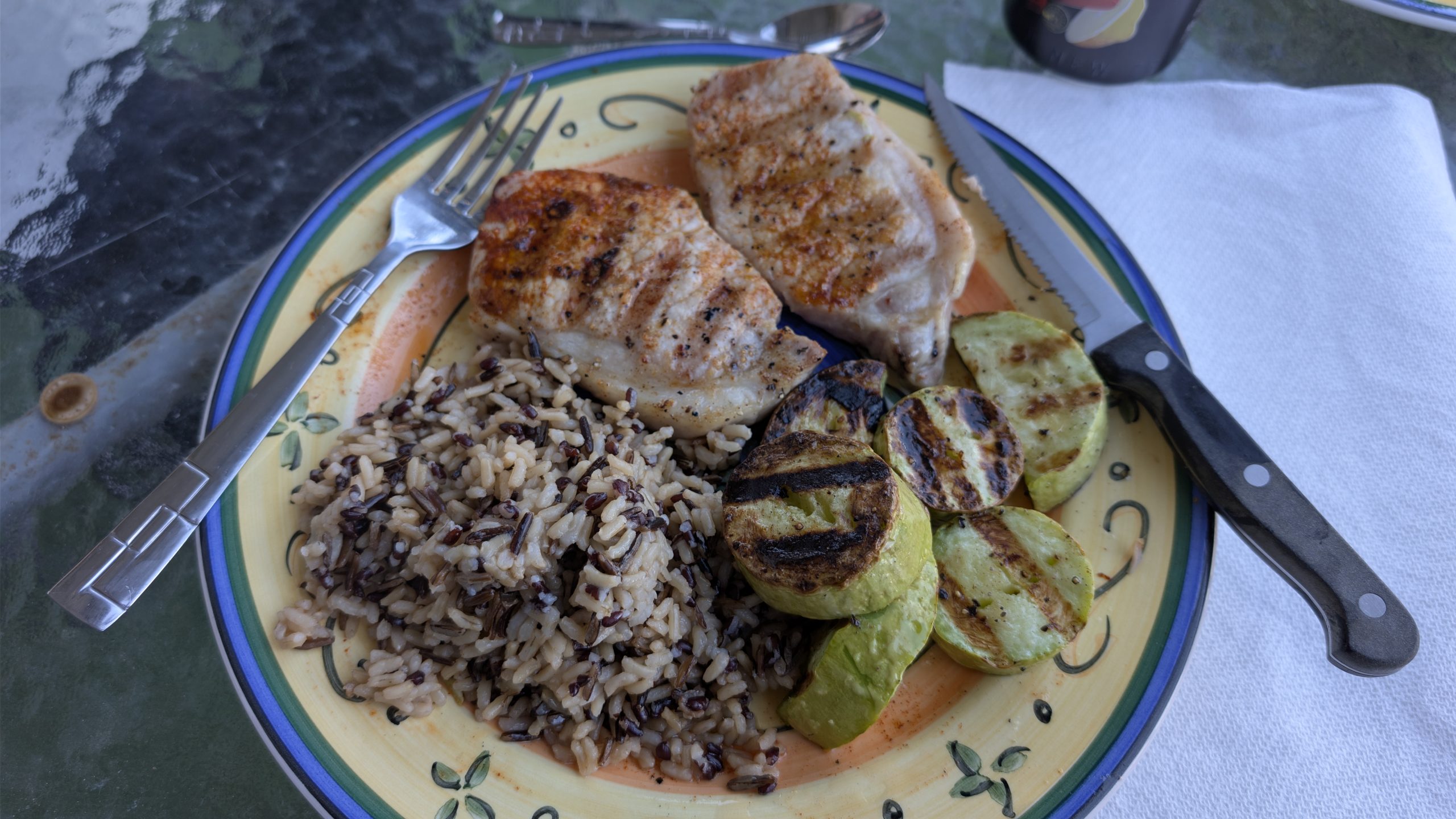
Back at the house we used the outdoor grill for pork noisettes and some zucchini given to us by our host. This was the first time I had tried noisettes. They were very good.