March 6, 2026
Link to Heinrich's thermal observations: http://geysers.org/wordpress/2026/03/06/observations-for-2026-march-06/
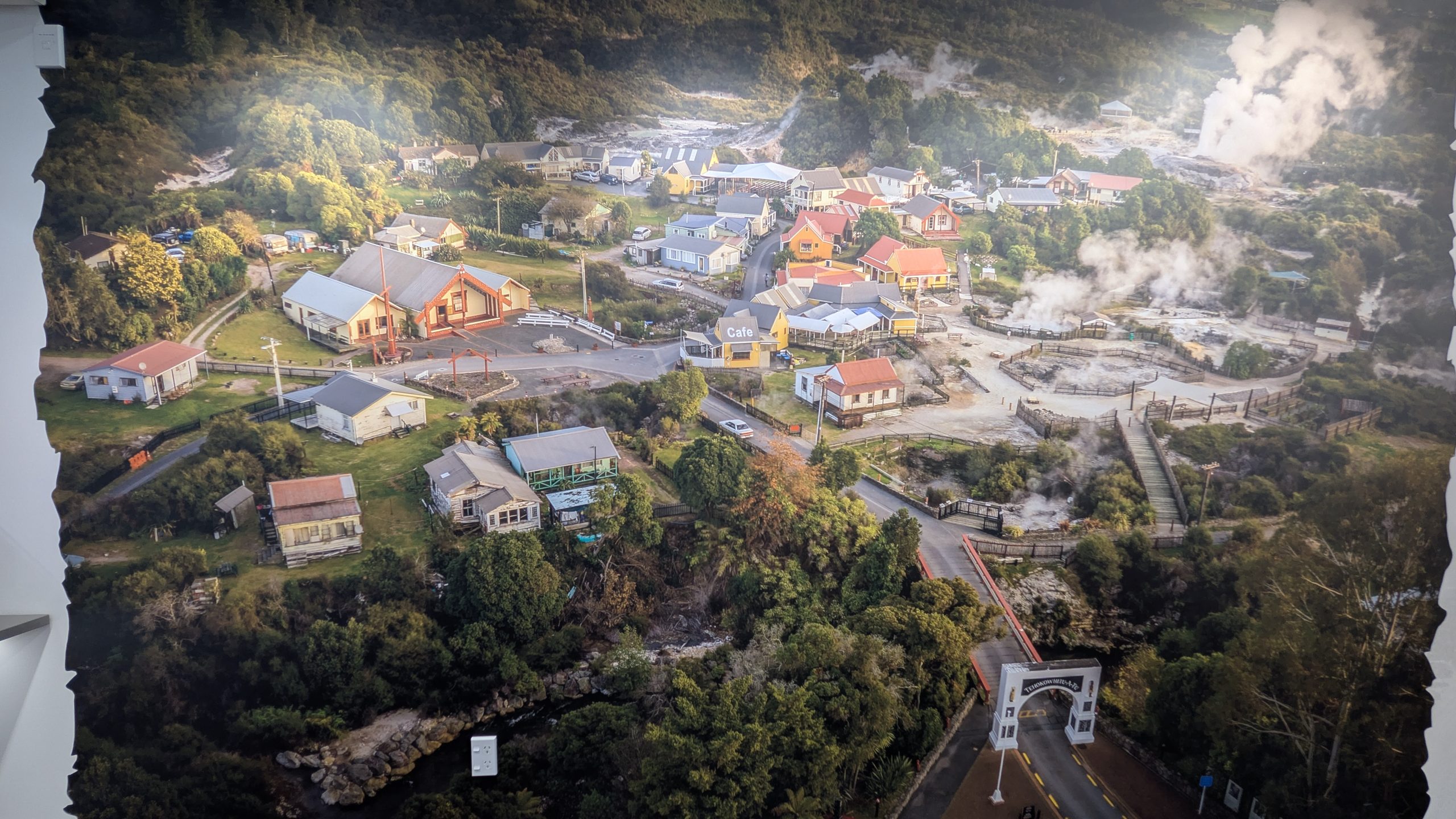
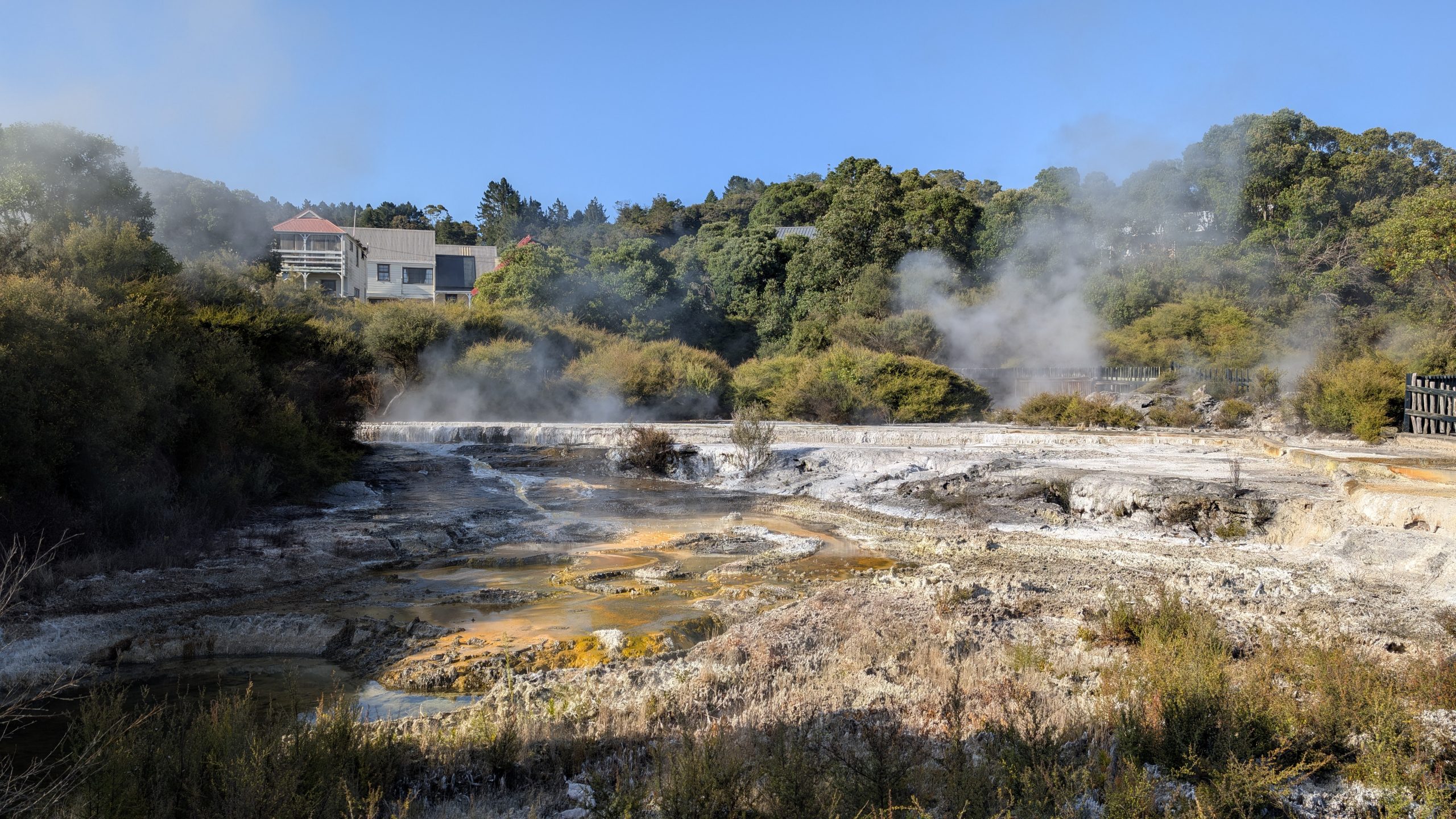
It was the best weather day so far that week with sunny skies and a temperature in the low 70's. It was a short drive to visit the Whakarewarewa Village which was adjacent to Te Puia. The Māori people lived in the village and charged a separate admission fee from Te Puia. We had booked the 9 AM guided tour to visit the village. It was the second time we had done the tour: the first time was in 2023. Not much had changed, but it was interesting to see the village again. The tour guide talked about the Māori way of life in the villlage: using the heat from the hot springs to cook their food and diverting water from the hot springs into baths . A highlight of the tour was getting served an ear of corn that had been cooked in the Parekohoru hot spring.
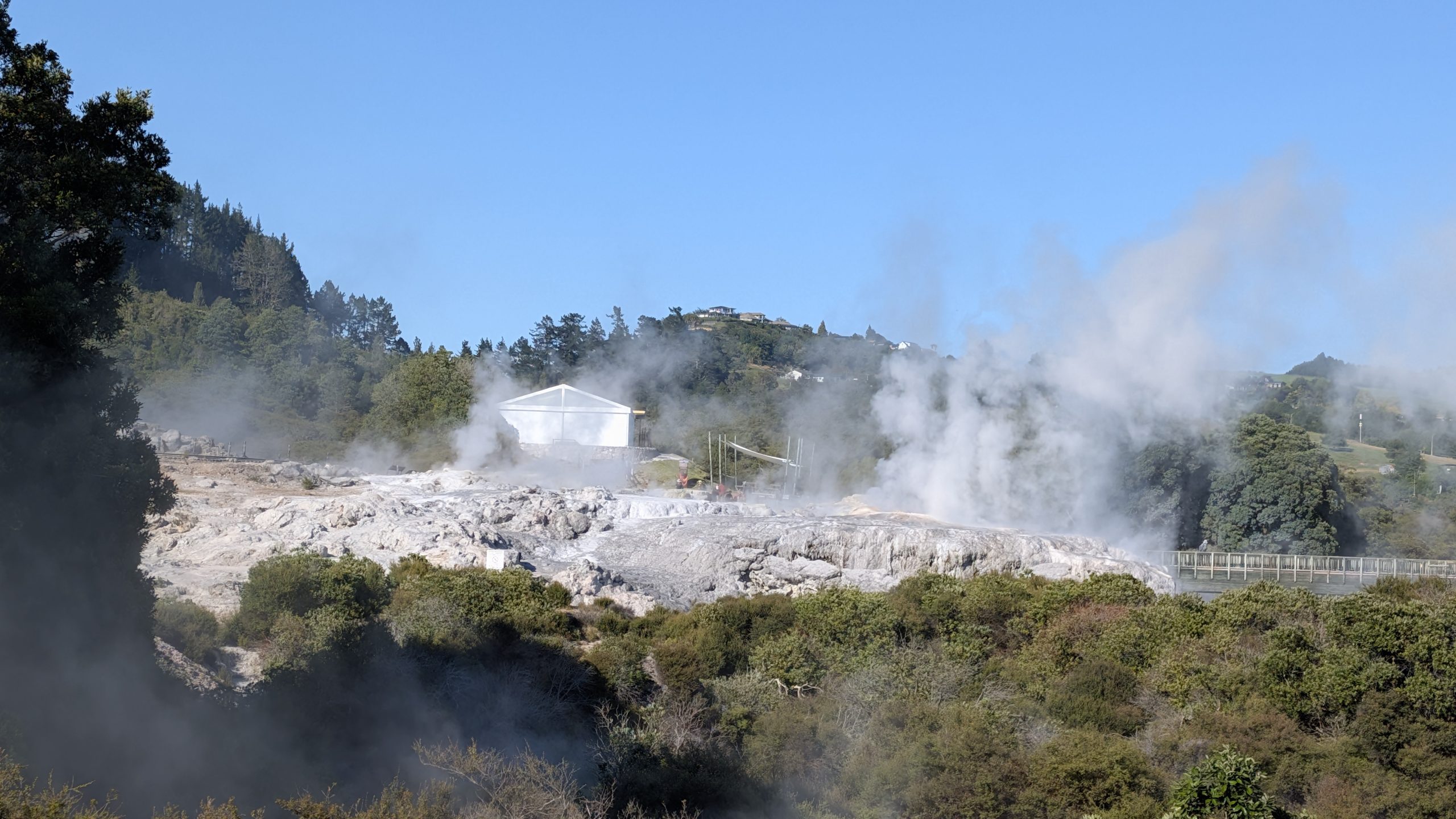
During the tour we visited an overlook of the Te Puia side that had a nice view of Geyser Flat containing Pōhutu and the other major geysers. At the same time Graham was spending his day at Te Puia, and he communicated to us periodically the status of Kererū: it was quiet, so he was waiting for a major eruption. At the overlook I was able to see Graham standing on the bridge.
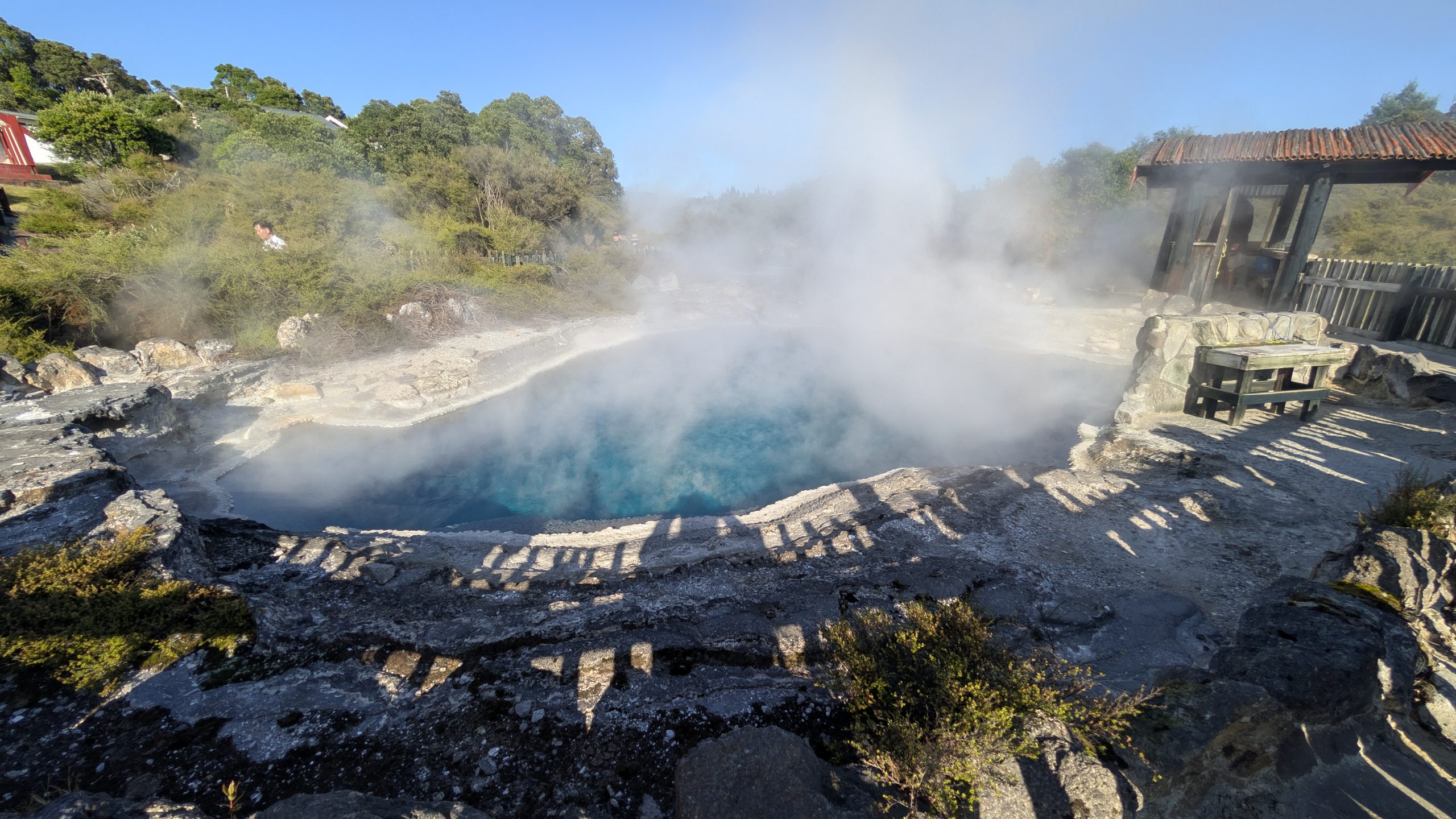
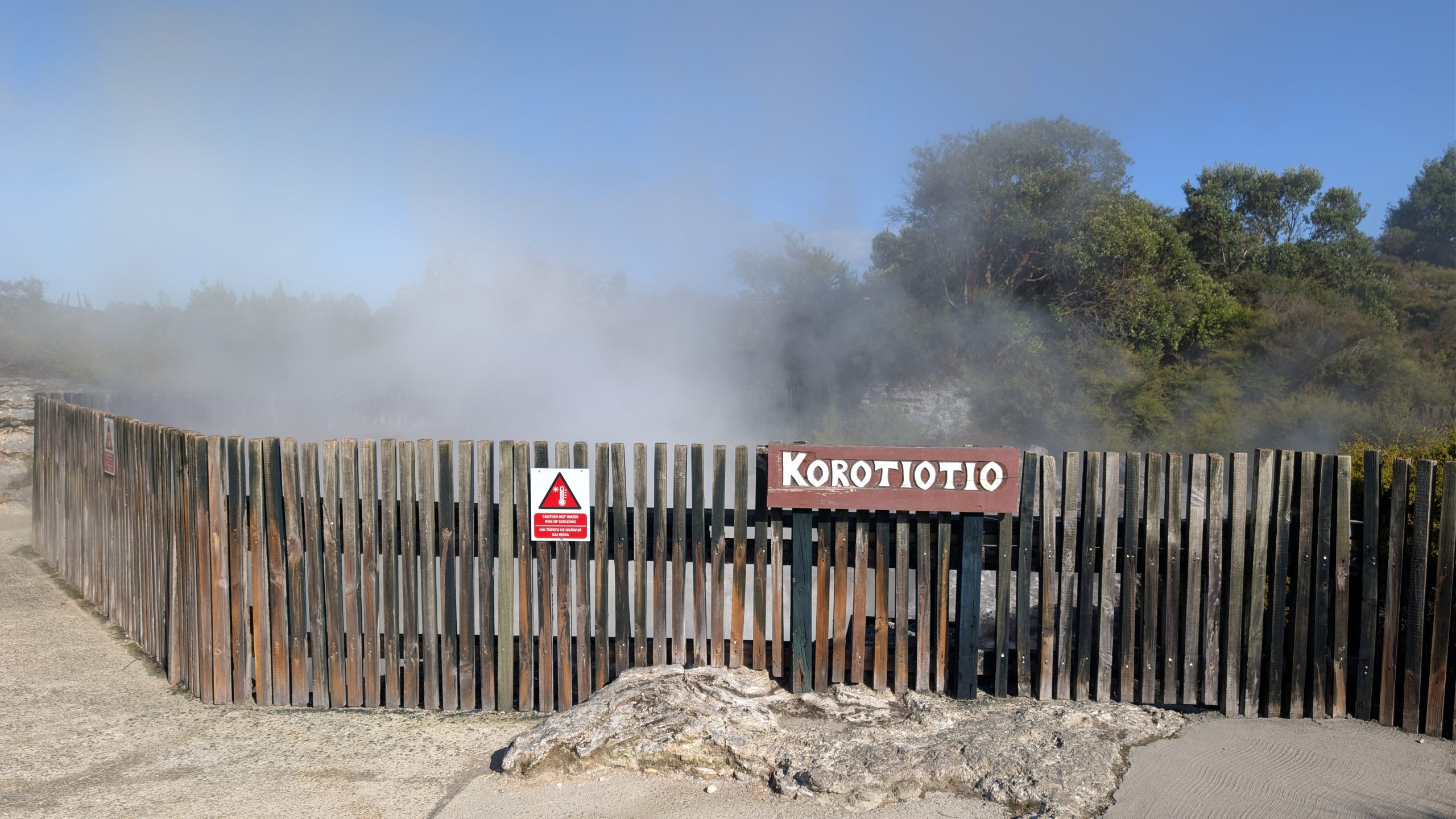
The tour stopped only for a few minutes at the overlook, and then we circled back to the village area to the Korotiotio boiling spring which was very steamy. In the past this spring had been used for cooking until the 1870's when a Māori woman fell into the pool and died.
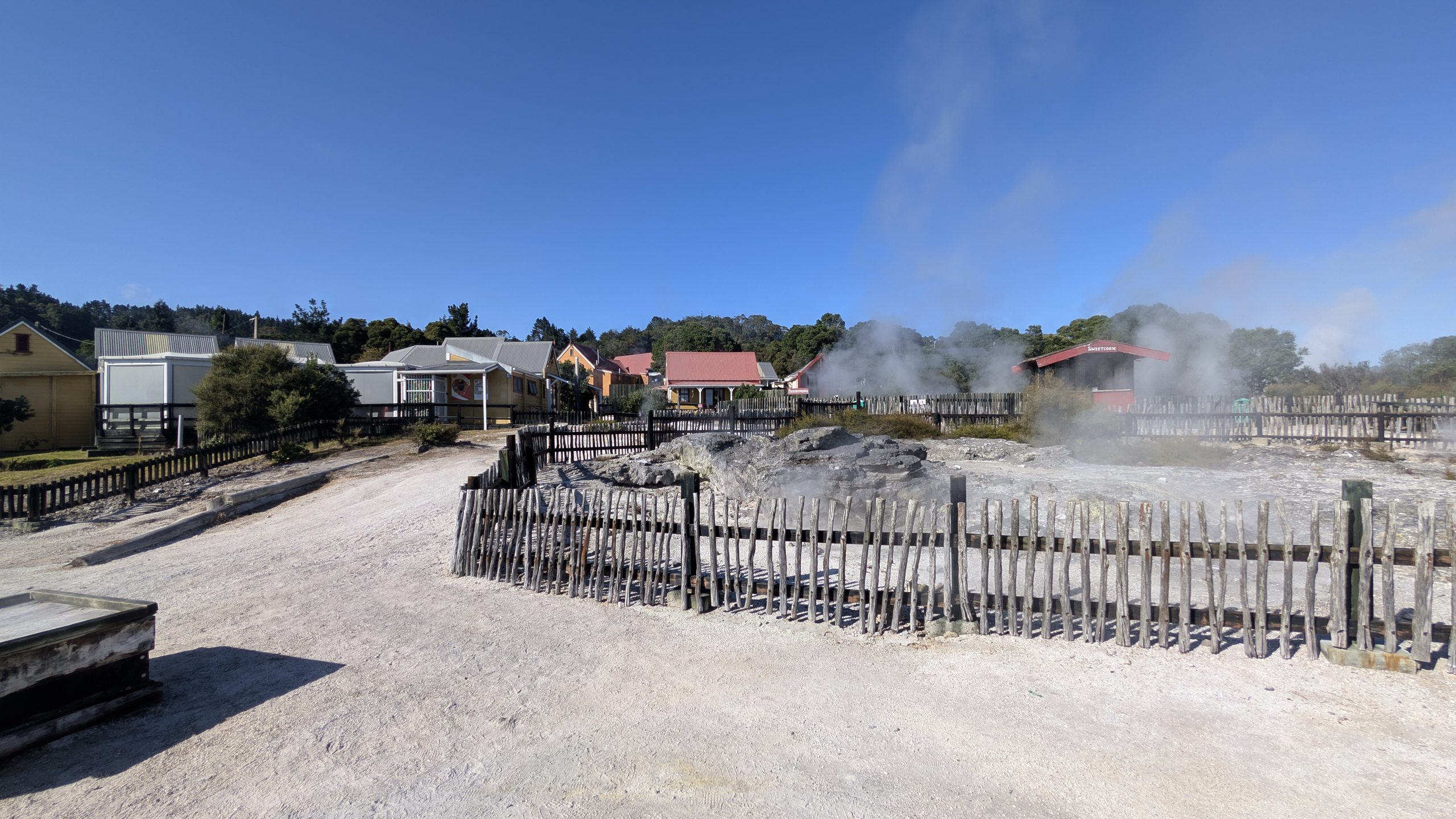
The tour went on to explore some more of the village grounds, and we stopped back near Parekohoru to get served the corn cooked in the hot spring. Afterwards we walked over to the main overlook of Te Puia where the village tour ended. The people who only purchased the village tour could stay there as long as they wanted, but once they left they were not allowed back in. We had purchased the geothermal tour ticket that allowed us to stay there until closing and explore the other thermal areas as well. The only place we could not get back to was inside the main village thermal area.
We stayed at the overlook to wait for the expected major eruption of Kererū Geyser. We were there less than an hour before Kererū had its first major eruption for the day at 11:29 AM. Unfortunately it was a very steamy eruption, so it was difficult to see the jets of water from our viewing spot.

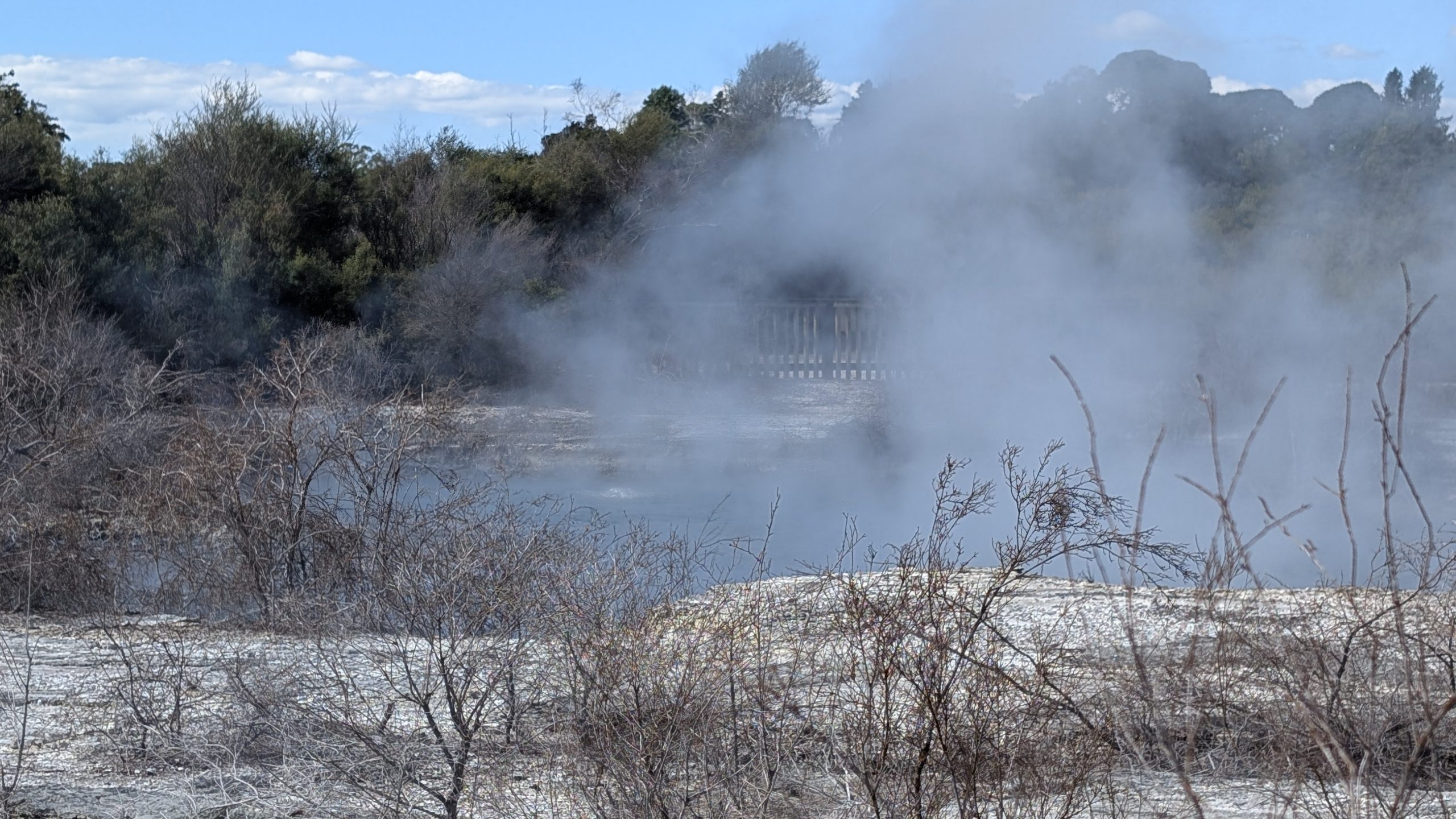
After the major eruption, Kererū started having a cycle of minor eruptions, so we left the overlook to explore the other thermal areas that were accessible on our geothermal trail ticket. We had walked the trails on our visit in 2019 and were interested to see if there were any changes to the features. We did not notice any obvious changes. We did not see any geyser activity, but there were some nice hot springs that we saw on the walk. Below are some of my favorite photos from the area.
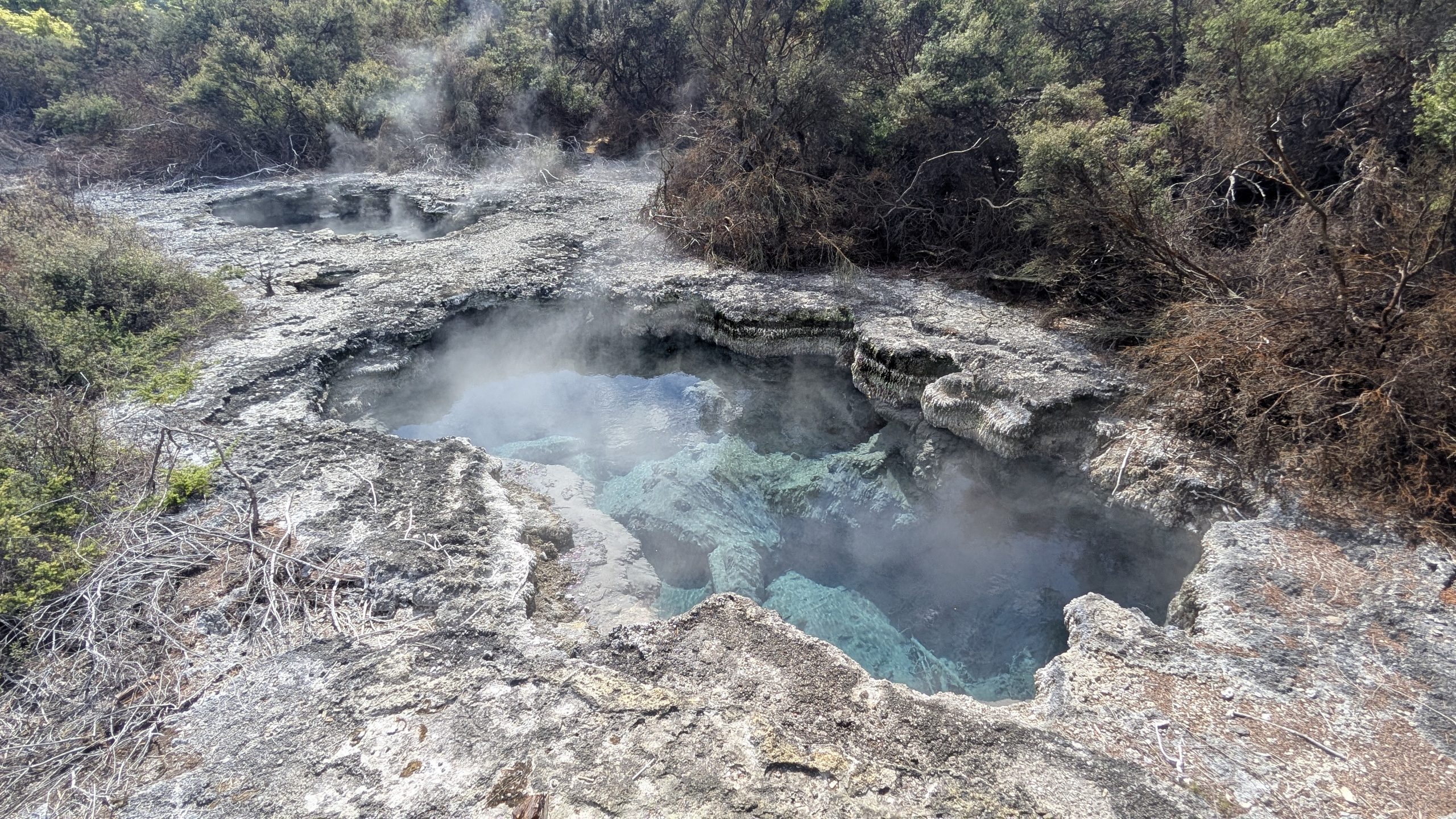
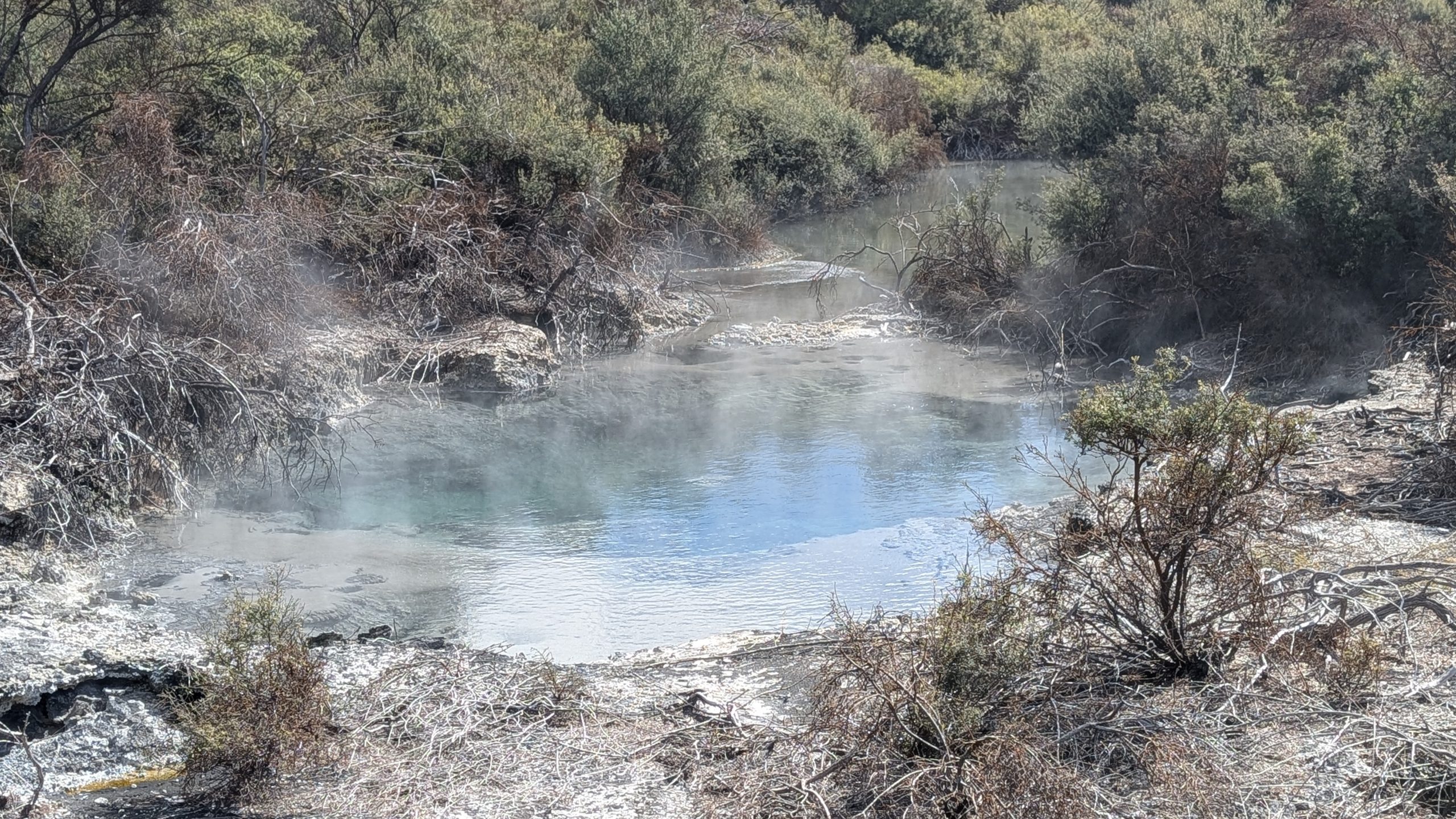
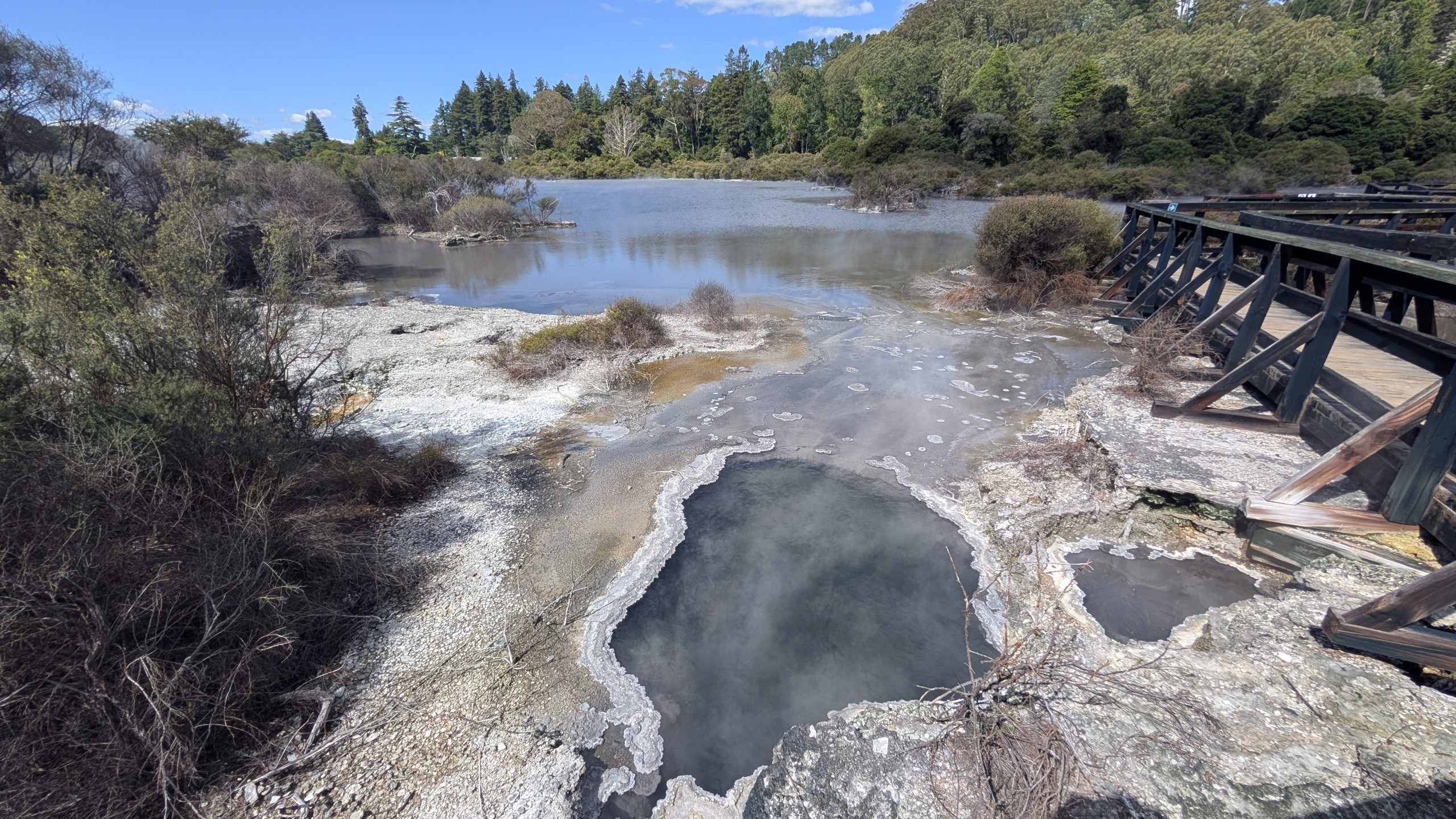
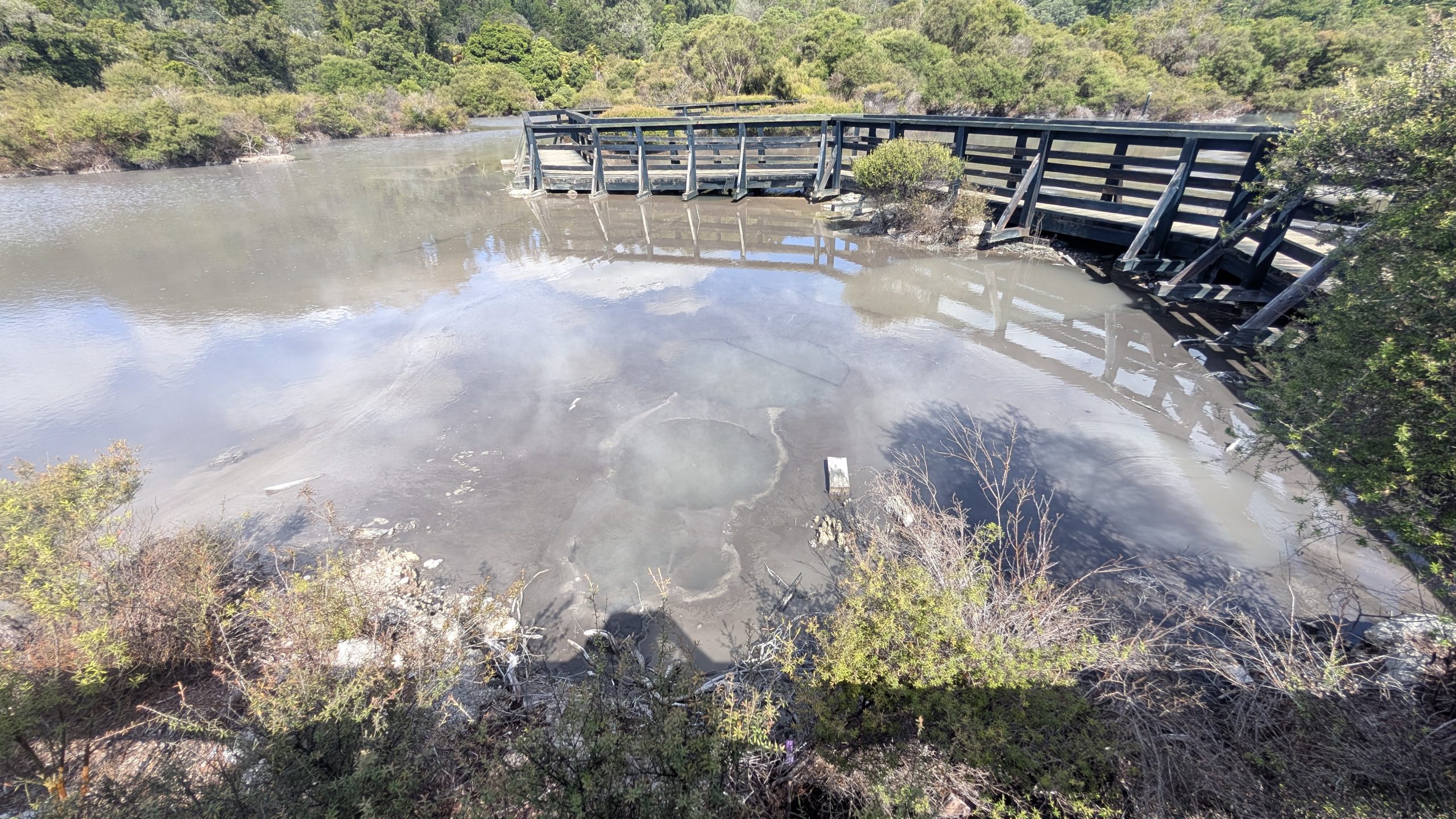
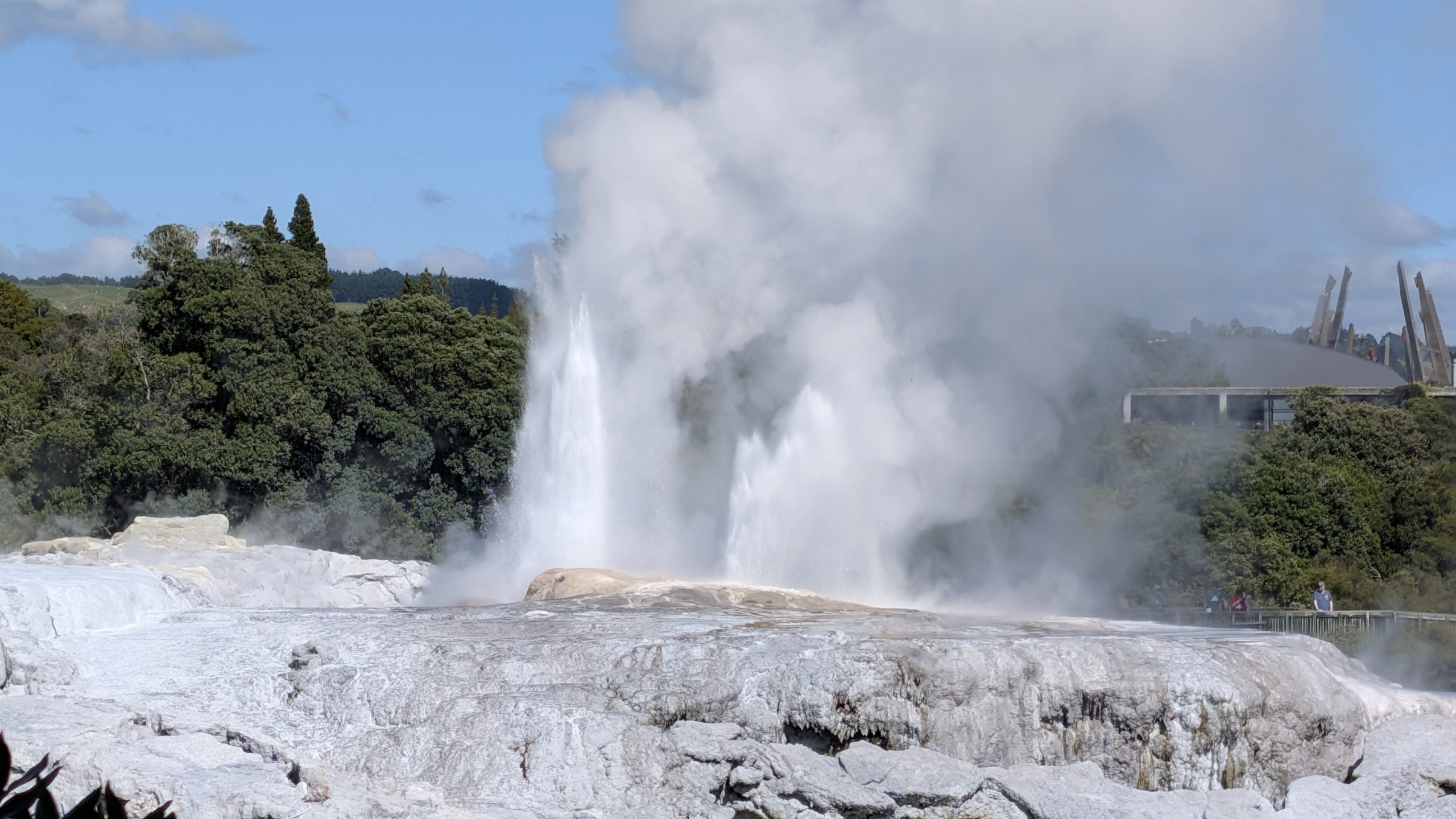
We had only walked about half of the trail when Graham texted that the Kererū minor eruptions had quit and it was entering a period of quiet. We did not want to miss a major, so we headed back to the overlook to wait. While waiting there we saw nice eruptions of Pōhutu, Te Tohu, and Waikorohihi geysers.
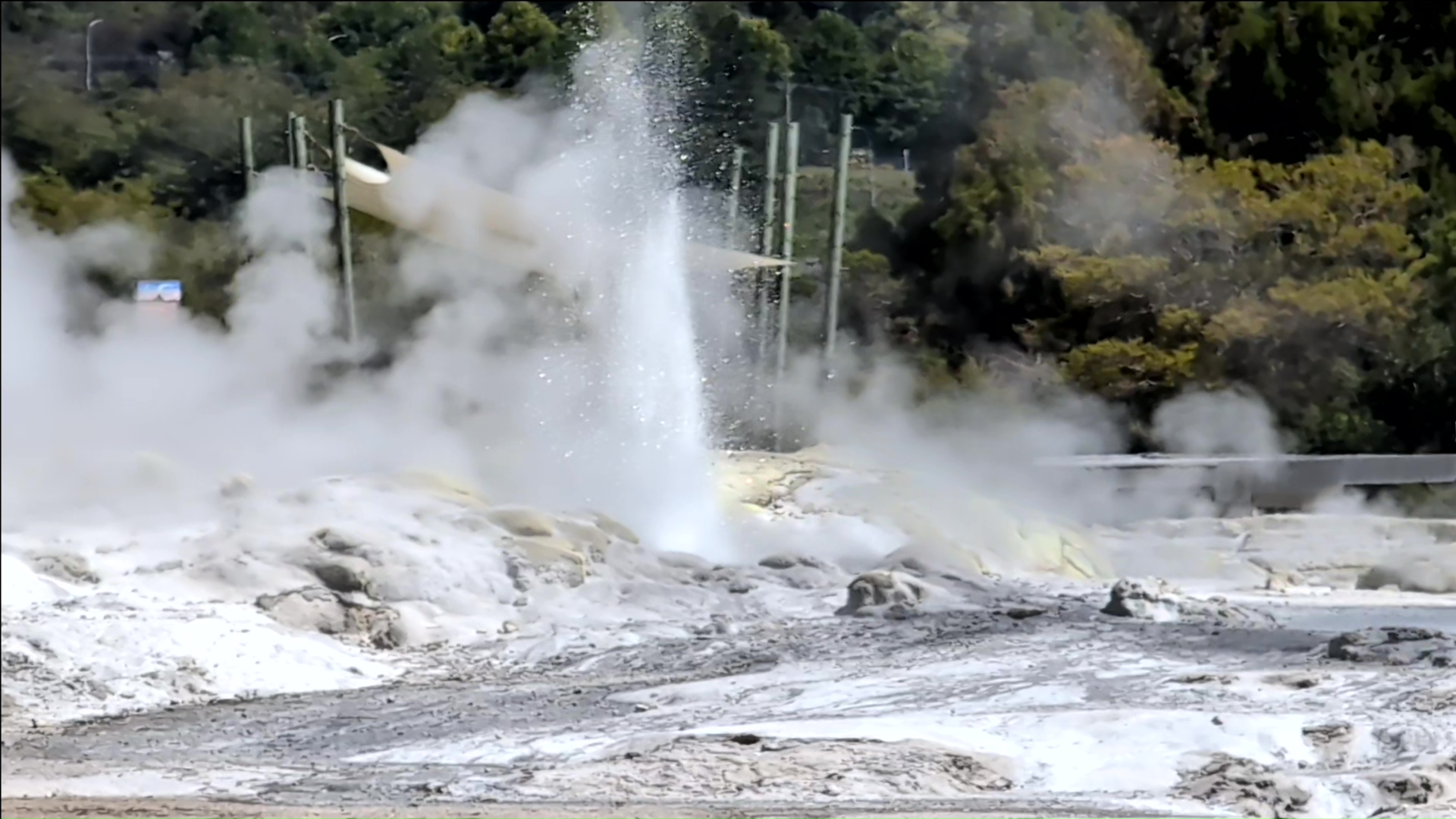
We waited for about 2-1/4 hours when we were rewarded with a second major eruption of Kererū at 2:52 PM, under better conditions this time.
There was still about an hour left before the village closed to visitors at 4 PM, so we walked back to finish the geothermal trails portion of our tour.
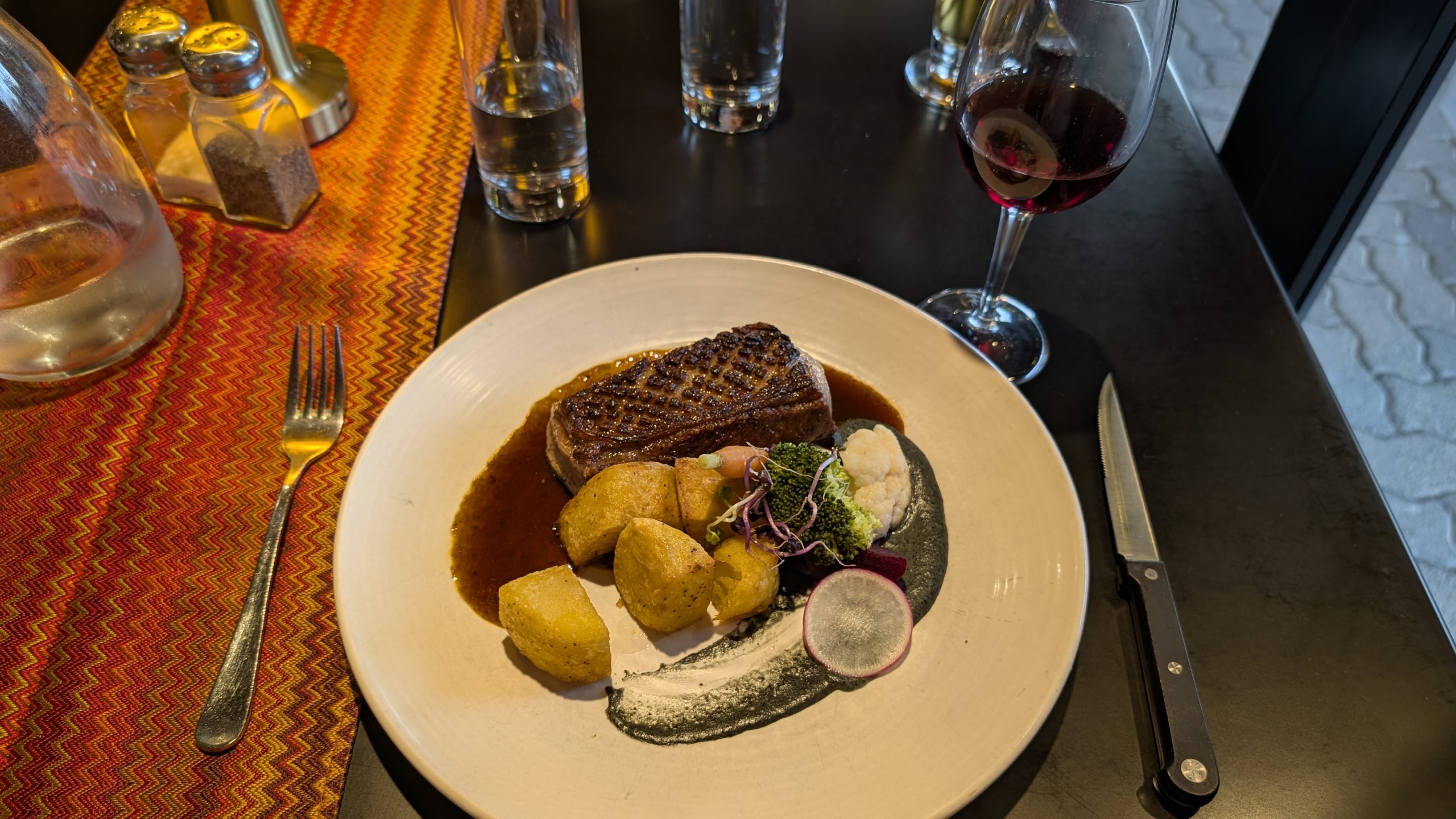
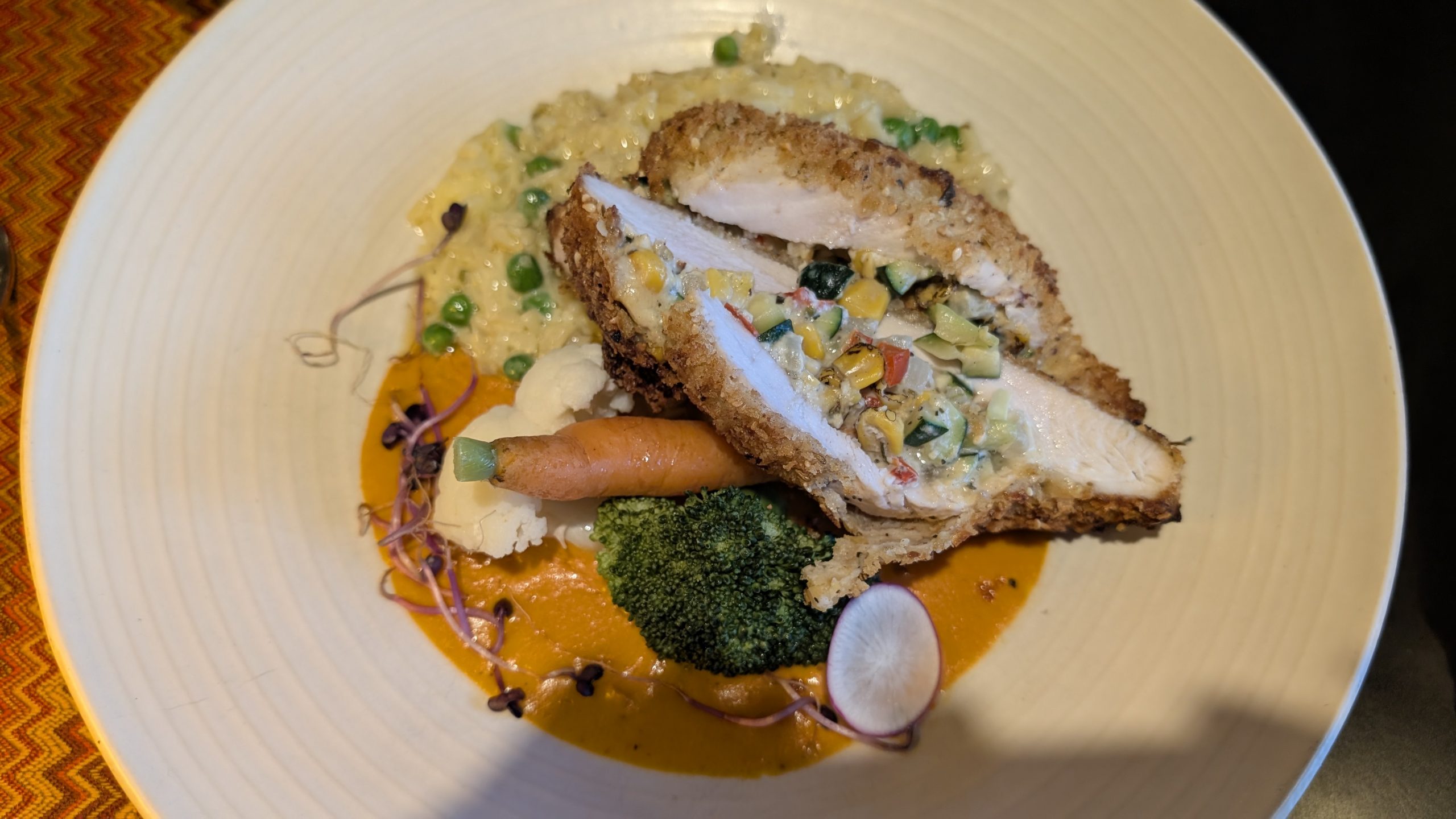
Later in the evening, we met Graham at the Urbano Bistro restaurant and had a nice sit down dinner together. Graham had the luxury of walking to the restaurant; we had to drive. The food, wine and beer were very good.