March 7, 2026
Link to Heinrich's thermal observations: http://geysers.org/wordpress/2026/03/07/observations-for-2026-march-07/
This was another great weather day. Months before, along with Graham we had booked a private kayaking tour on Lake Rotomahana in the Waimangu Volcanic Valley. It was about a 20-minute drive to the Waimangu Vaolcanic Valley entrance where we met Graham and our guide for the tour. This was the same guide that we had 3 years ago when we went on a slightly different public kayaking tour. We were able to customize this tour to spend as much time as possible on the lake near where the geysers were erupting.
We rode a bus down through the valley to the shore of Lake Rotomahana, where we got our kayaks. Graham was in one kayak, and Heinrich and I shared another, with me in the front and Heinrich in the back doing much of the steering.
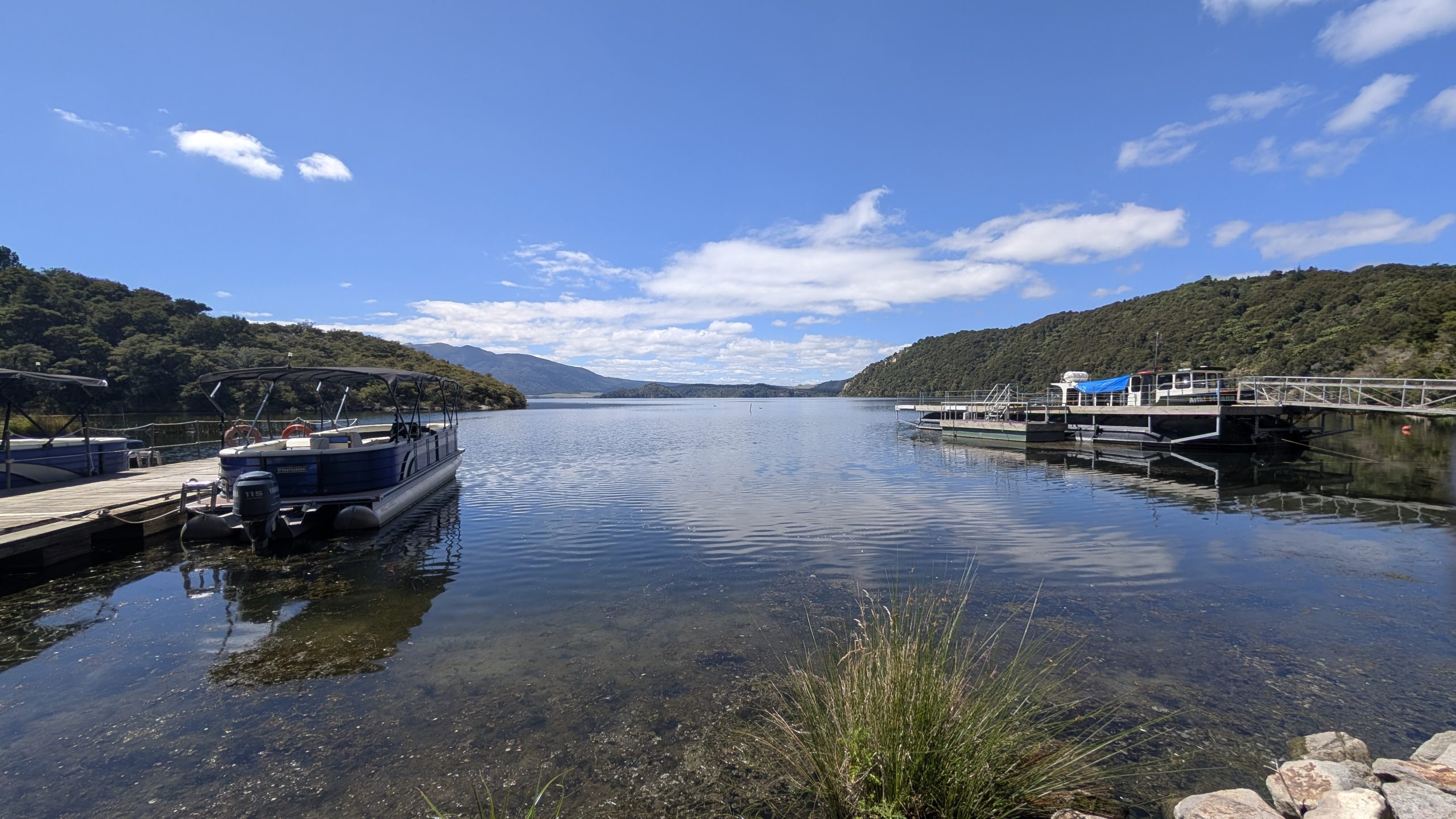
We kayaked close to the shore where we saw many steaming vents and small bubblers. We stayed several minutes near the Angel Wings perpetual spouter and waited for at least 5 eruptions of "Oyster Geyser," as it was called by our guide. Oyster sent out a spray about every 2 to 3 minutes from its uniquely shaped vent.

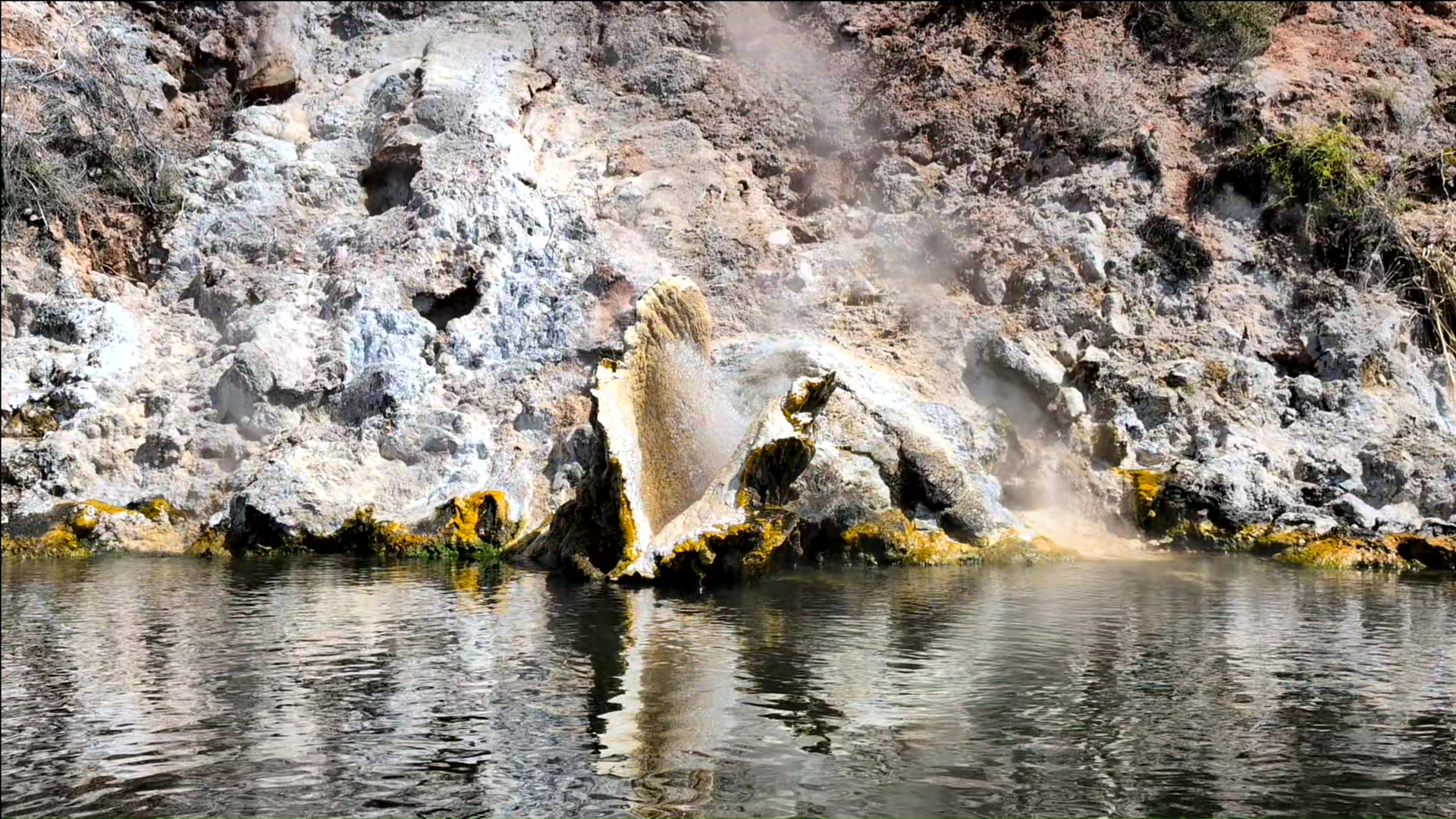
We paddled on to see several other steaming cliffs and bubblers in the lake.
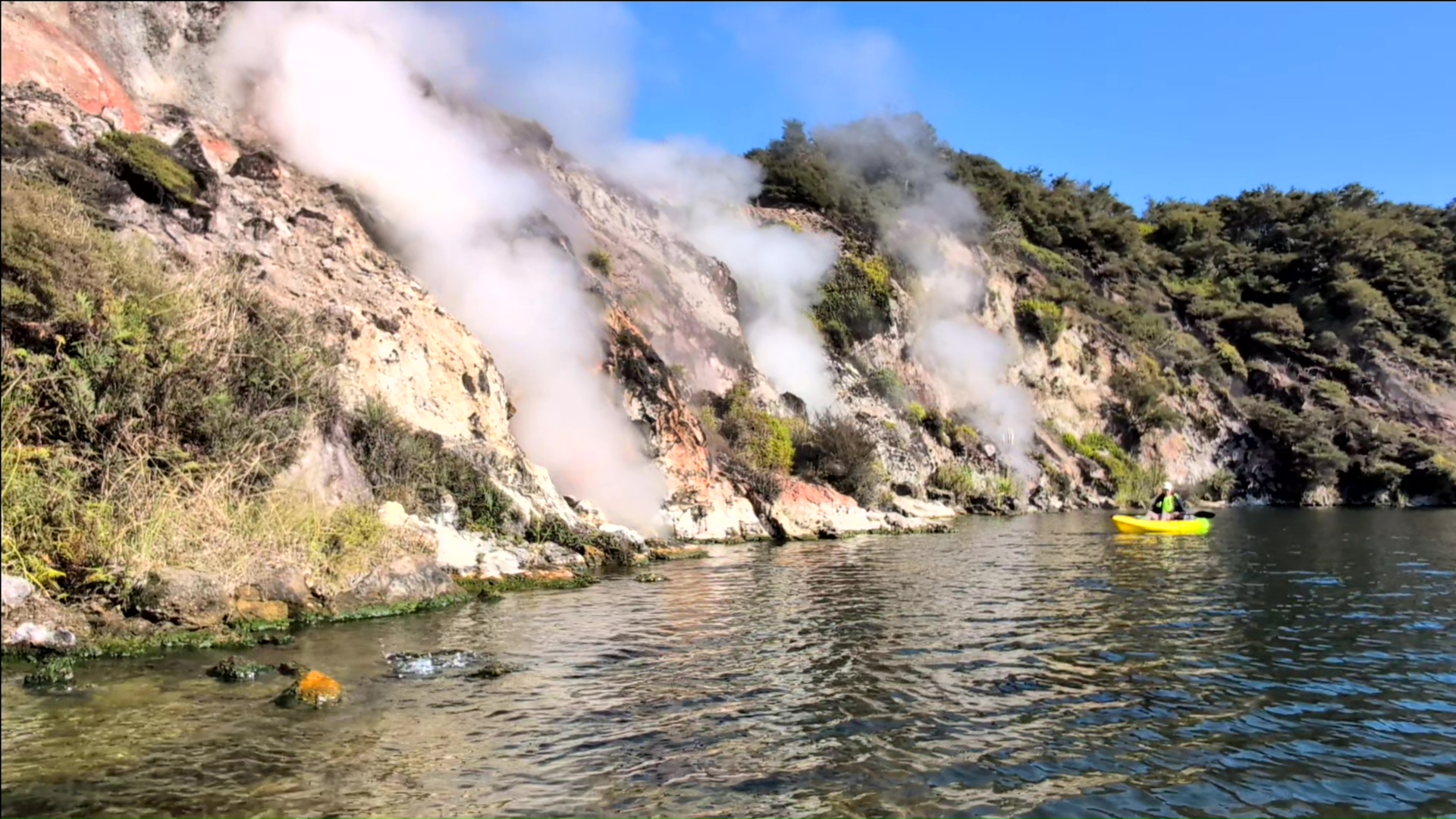
Then we reached the main focus of our trip: the Pink Terrace Geyser (its Māori name is Otukapuarangi). This was a really nice geyser with intervals of about 8 and 9 minutes and a height of about 10 meters. We watched a couple of eruptions up close, and then we paddled past the geyser to our turn-around point where there were more bubblers and steaming cliffs.

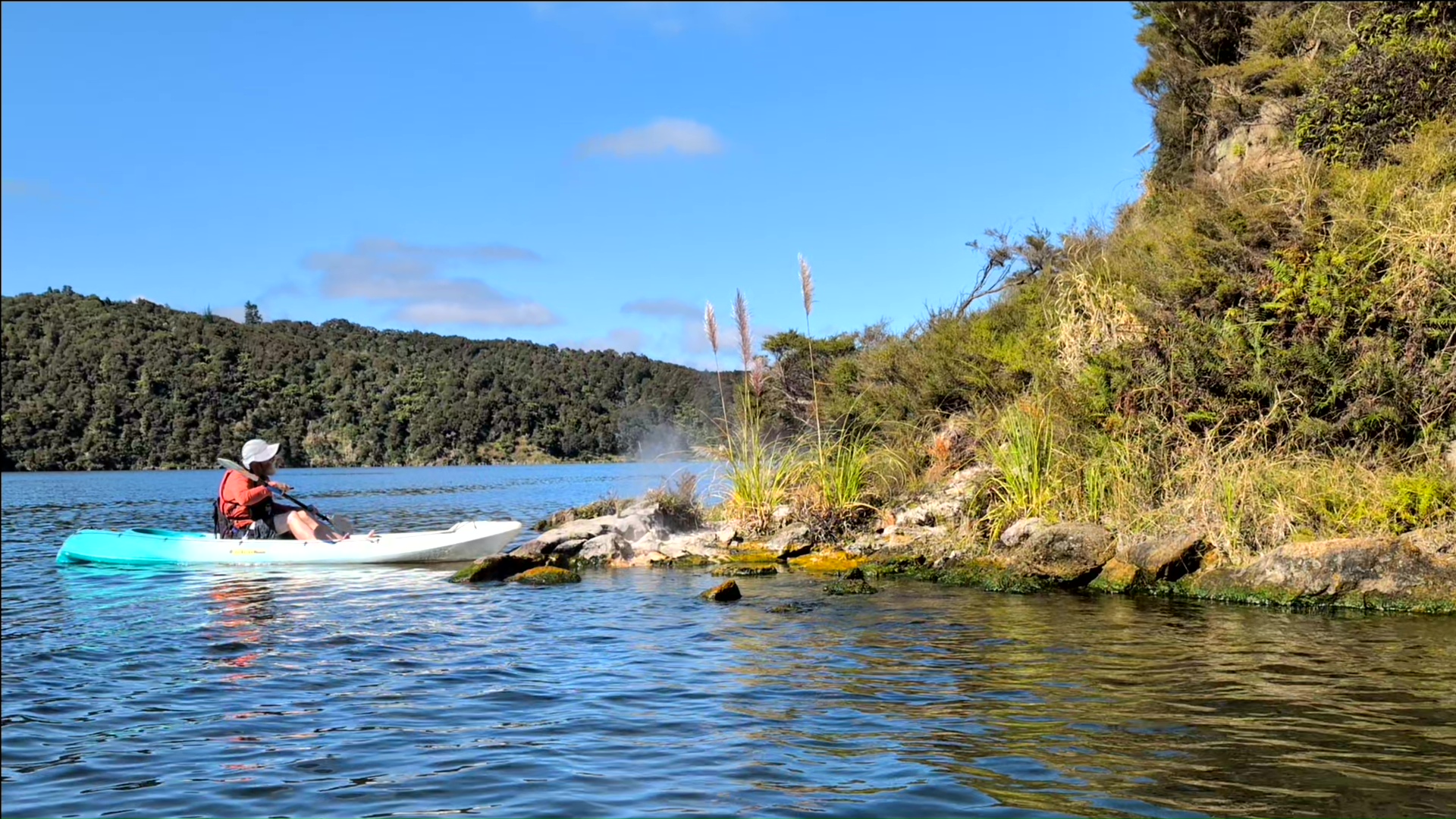
We were back in time to see the next Pink Terrace eruption from a distance, and then we paddled closer to it to watch a few more. Our guide had picked out a beach on the way back from Pink Terrace to stop and have lunch, but when she saw how much we liked watching the geyser, she found a place on the shore within viewing distance: Pink Terrace was just on the other side of a small hill. So we sat on a small rocky area with ground very nearby that was steaming. Our guide said she had never done this before. We thought it was great: we saw 3 more eruptions while I was eating my chicken and avocado sandwich and pastry.

After lunch we paddled closer to the Pink Terrace vent, and I got a nice video from there. It was interesting being so close to it. The runoff grom the geyser poured into the lake, and hot water didn't mix with the cold water. It was easy to see the separation of the runoff from the rest of the lake. I put my hand in the water and it was quite warm.
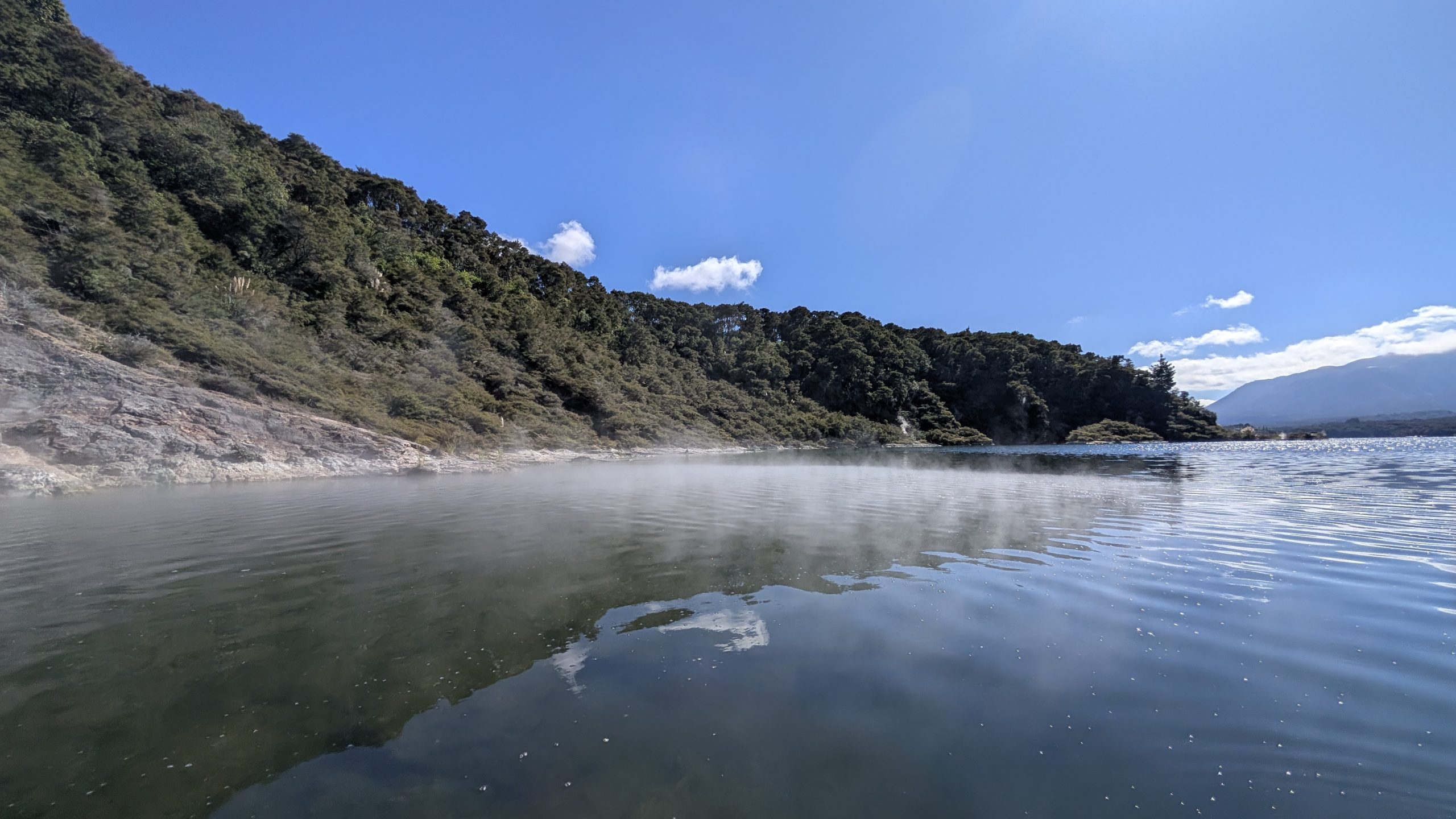
We recorded 11 total eruptions of Pink Terrace Geyser while we were out on the lake. We took our time paddling back to the dock and saw 3 more eruptions of Oyster Geyser before we had to leave the area. Our total time in the kayaks was about 3.5 hours. Our guide said this was the longest she had been out on the lake. Normally the tour included a guided walk through the valley, but we swapped that for more time on the lake.
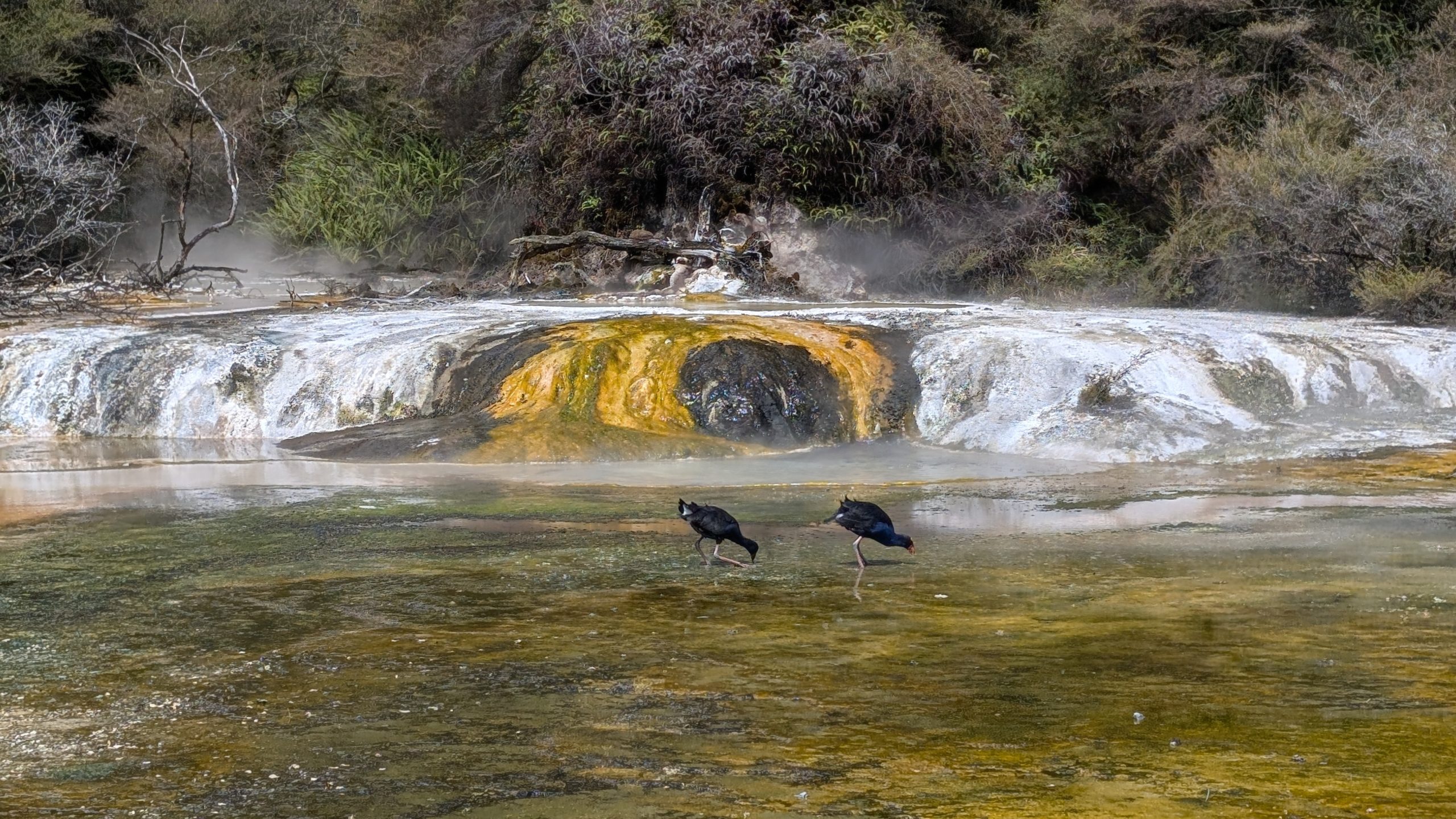
We said farewell to our tour guide at the dock and started our way back through the valley. Graham walked the entire way, but we rode the bus and got off at the first stop where we met Graham again near Warbrick Terrace. This was a colorful area with a perpetual spouter at the top of the terrace. I had fun watching some variable oystercatcher birds that were quite vocal in the runoff channel.
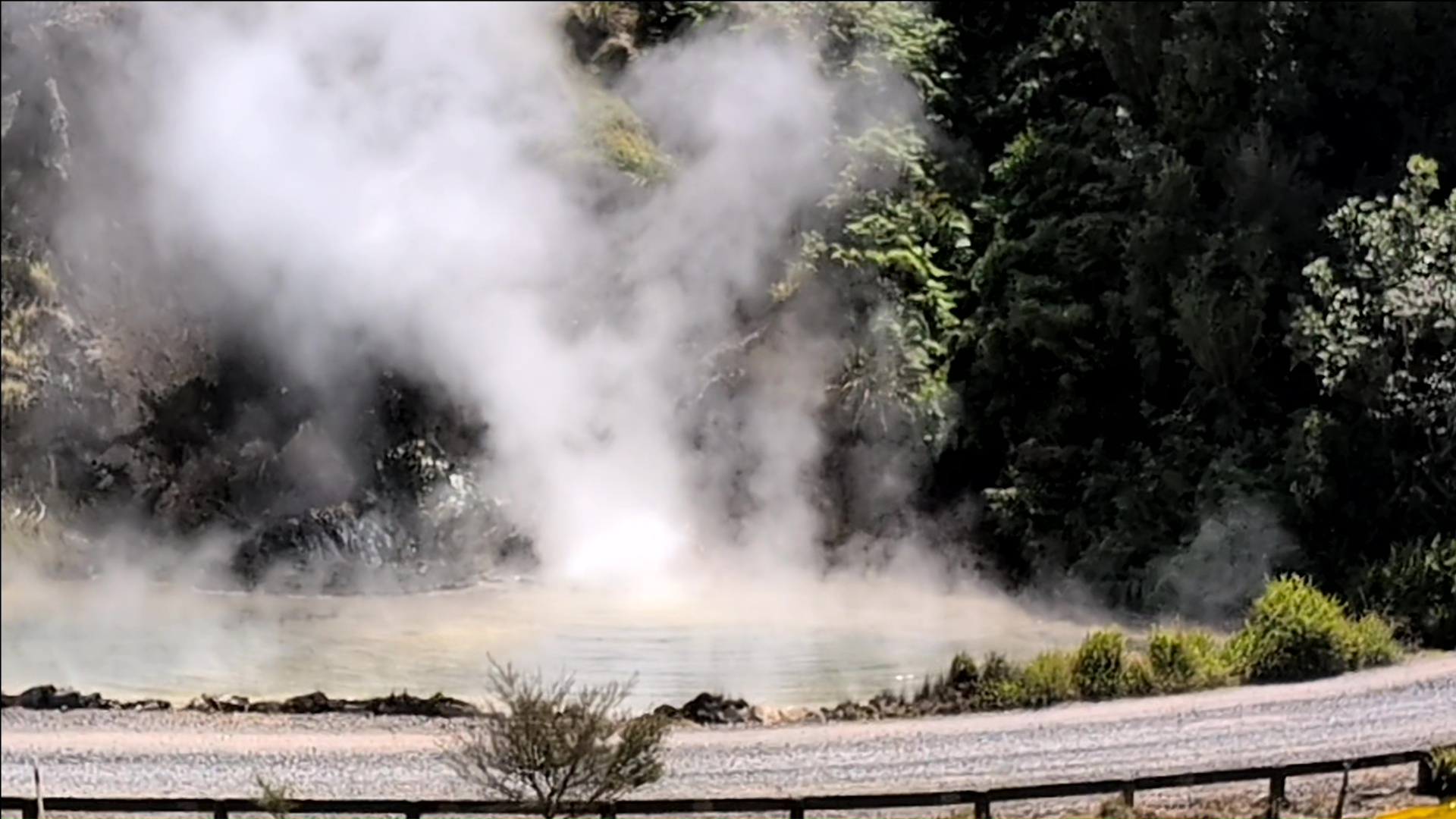
We walked to Iodine Geyser and saw 3 small eruptions with about 8-minute intervals.
Then we continued on to Inferno Crater. We found out from the morning bus driver that it had started overflowing, probably overnight, and we were eager to see the overflow because the water level cycled, and it overflowed only once about every 38 days. Unfortunately by the time we had arrived the overflow had already stopped, probably recently. Graham said he could see a visible drop in the water level during the short time he was there. The pool was still a pretty blue color, so worthwhile to visit.
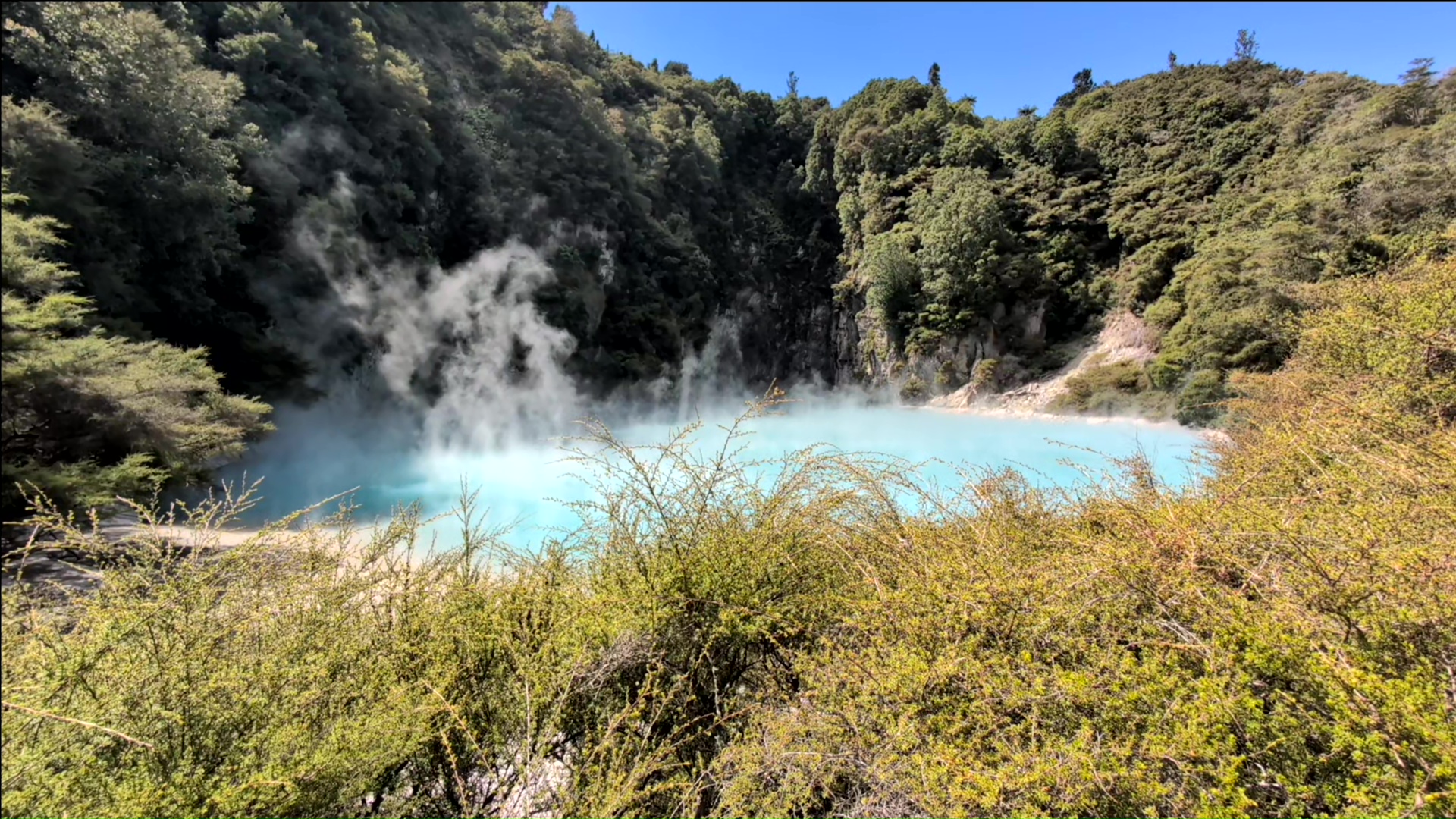
Near the base of the hill to Inferno Crater was the Bird's Nest perpetual spouter, which was a favorite of mine because of the pretty green colors surrounding the crater.
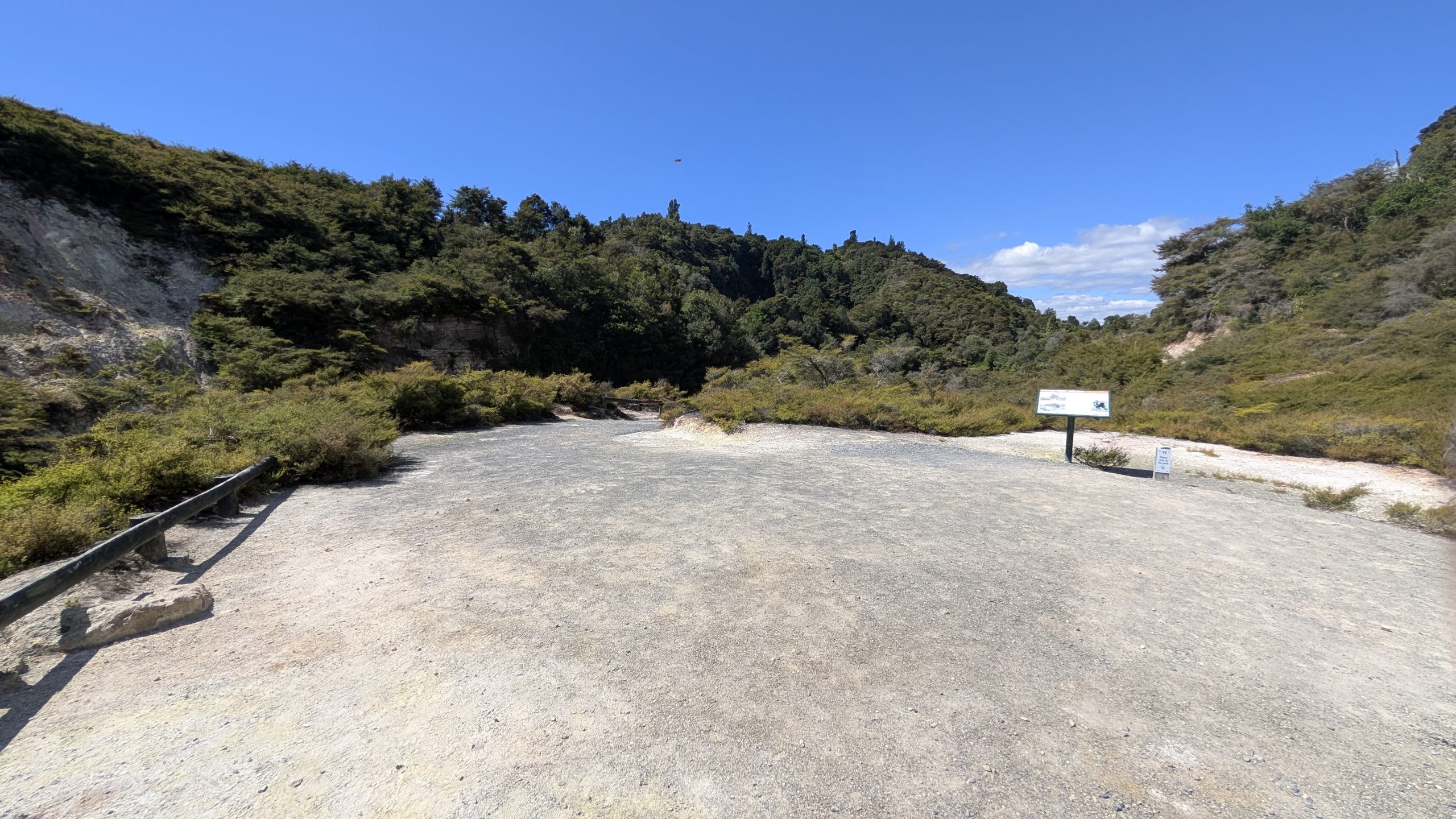
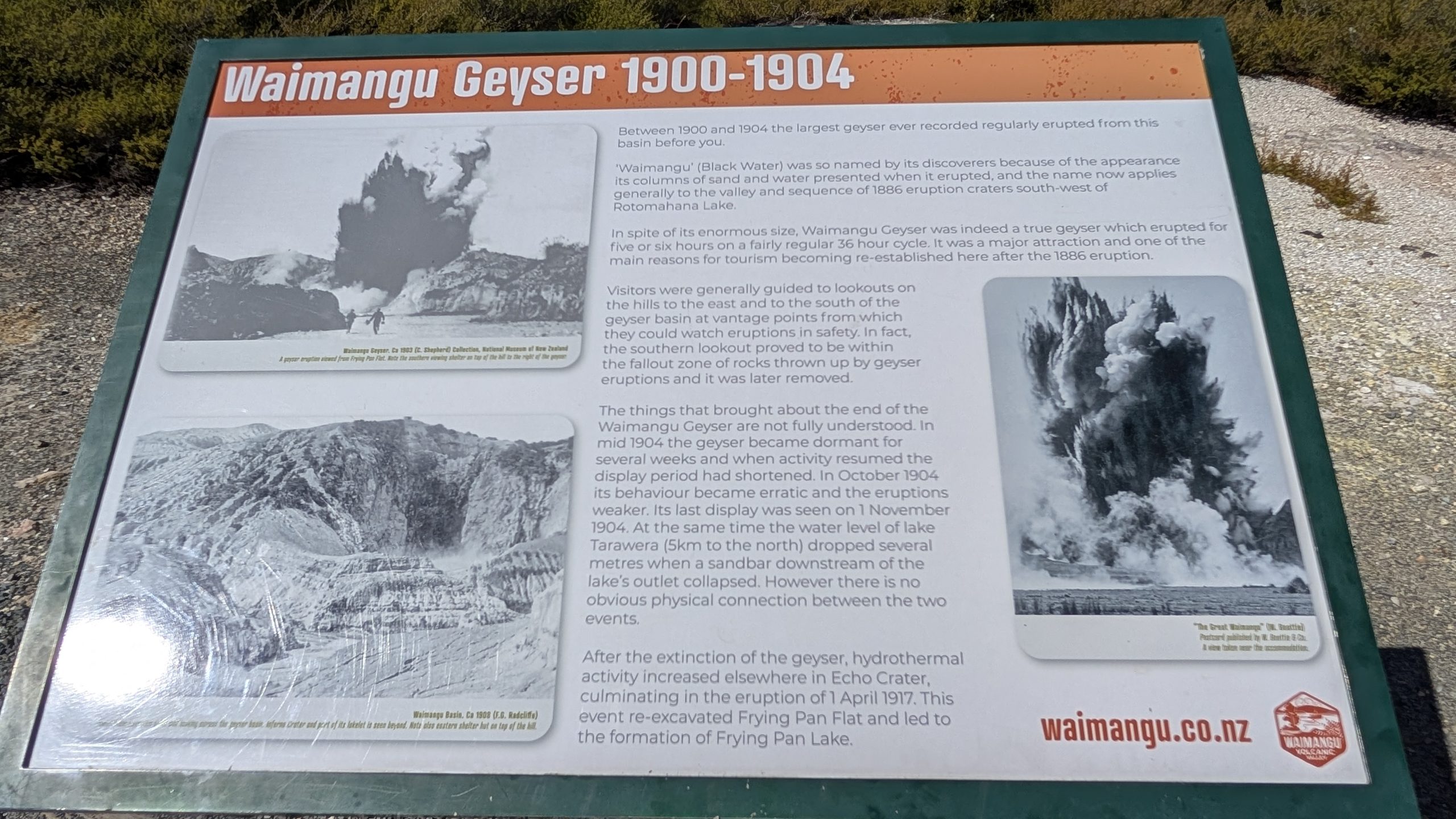
Further up the valley we passed the location where Waimangu Geyser, the tallest geyser in the world, had spectacular eruptions from 1900 to 1904. Now there was no trace it had ever existed: the crater had been completely filled in by activity from surrounding features.
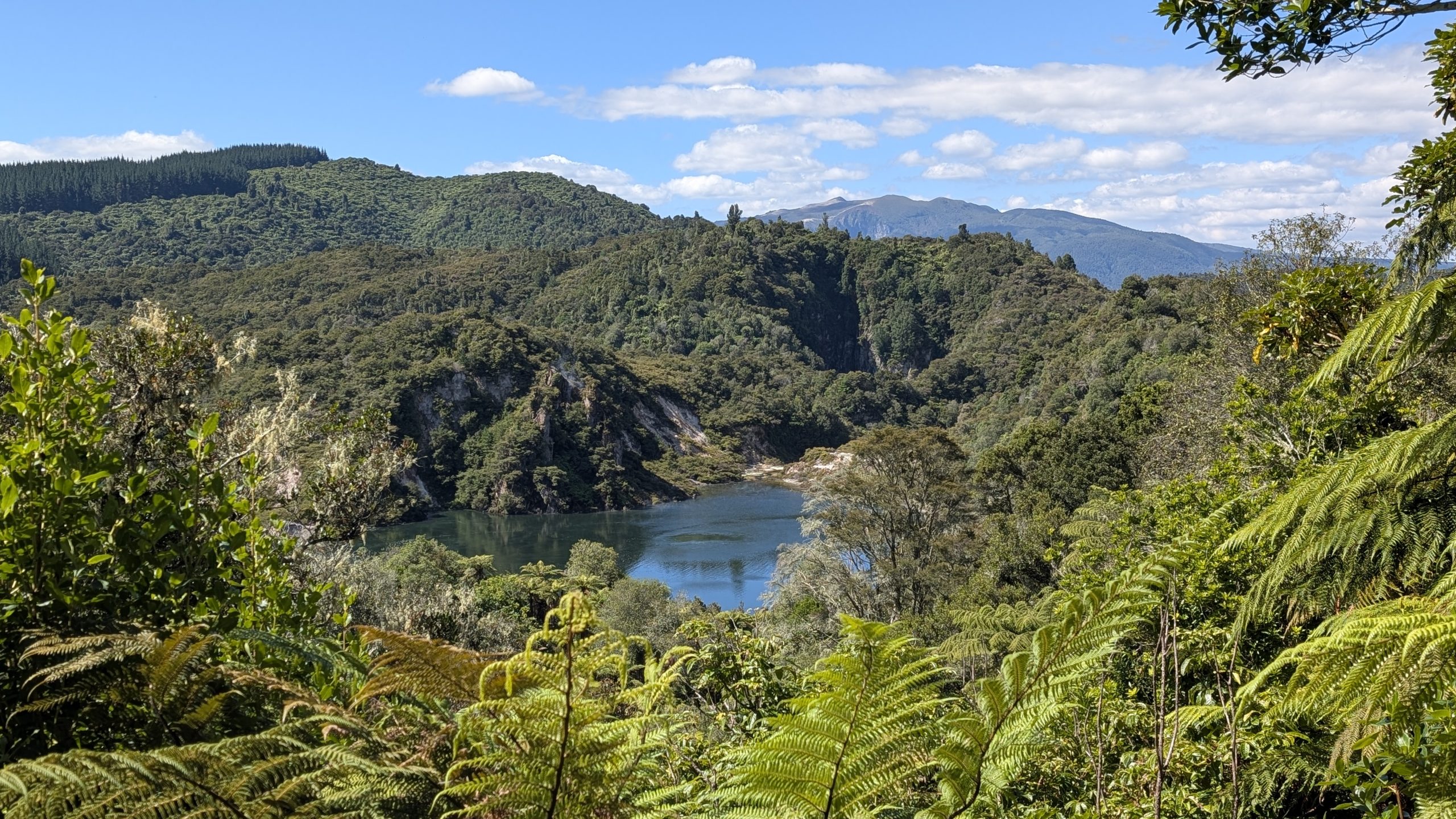
Near the top of the valley and close to the entrance we passed a lookout to Frying Pan Lake. The photo below shows the lake as well as the areas we had passed, with Inferno Crater at about the 1:00 position.
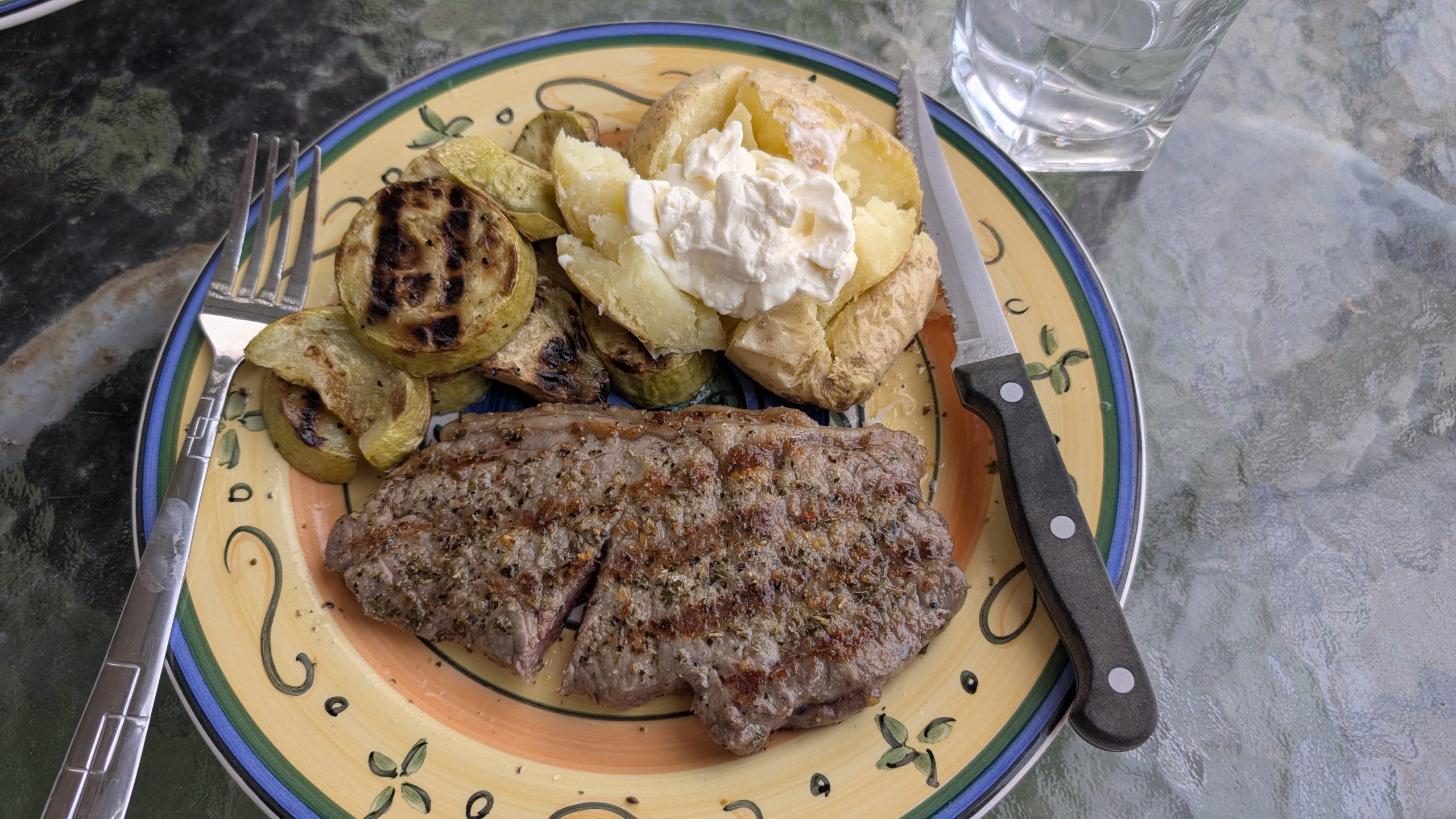
We drove back to Rotorua and stopped at the Pak'nSave supermarket to buy food for dinner, and we started stocking up on Whittaker's chocolate to take home. Back at the BnB, we used the electric grill for our dinner. Shami had given us zucchini fresh from her garden, and it turned out great on the grill.