March 8, 2026
Link to Heinrich's thermal observations: http://geysers.org/wordpress/2026/03/08/observations-for-2026-march-08/
We had a free day to travel around various places in Rotorua. The weather was mostly overcast, but it was fairly warm and it didn't rain. We took our time getting up and had a leisurely breakfast.
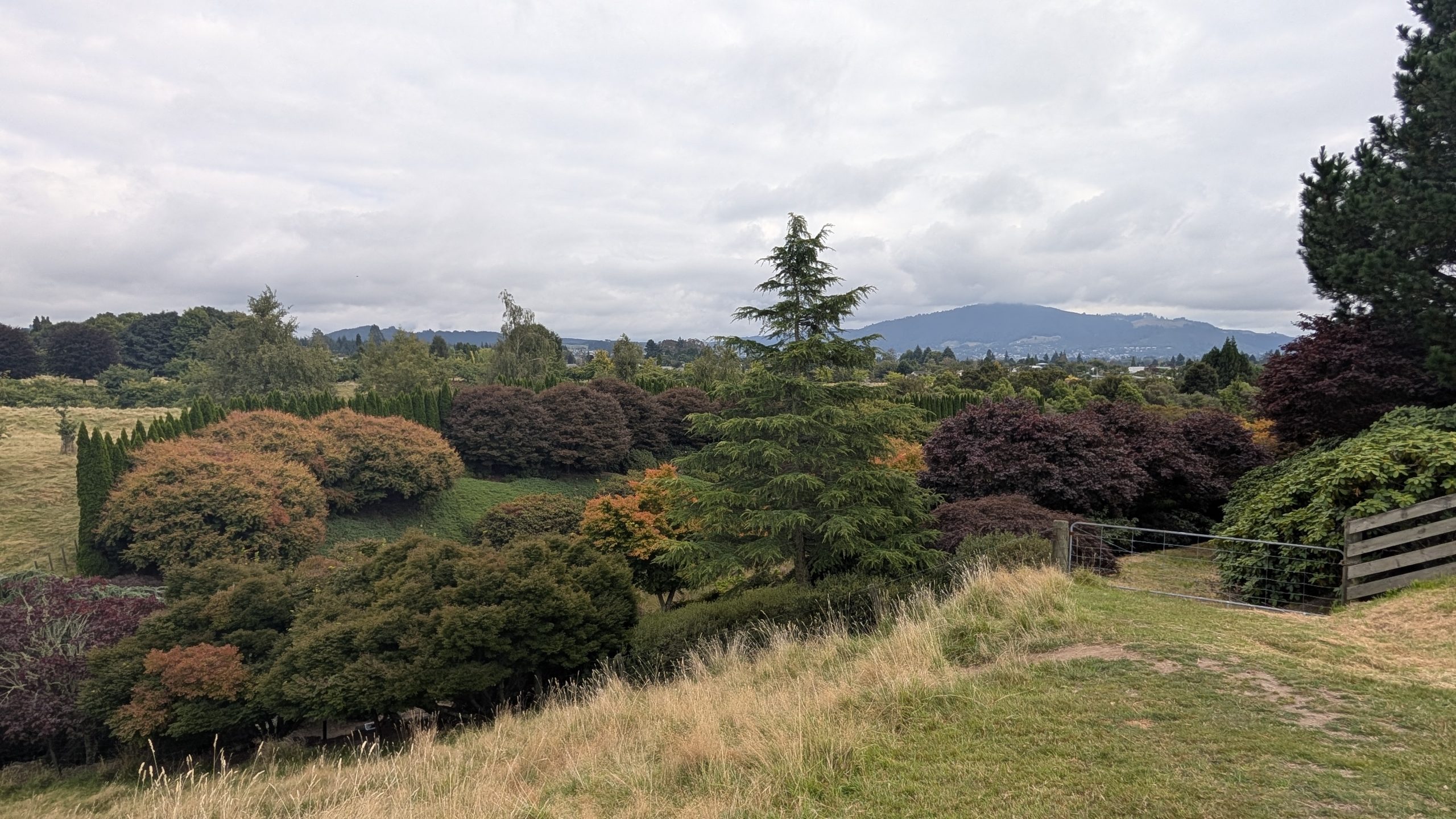
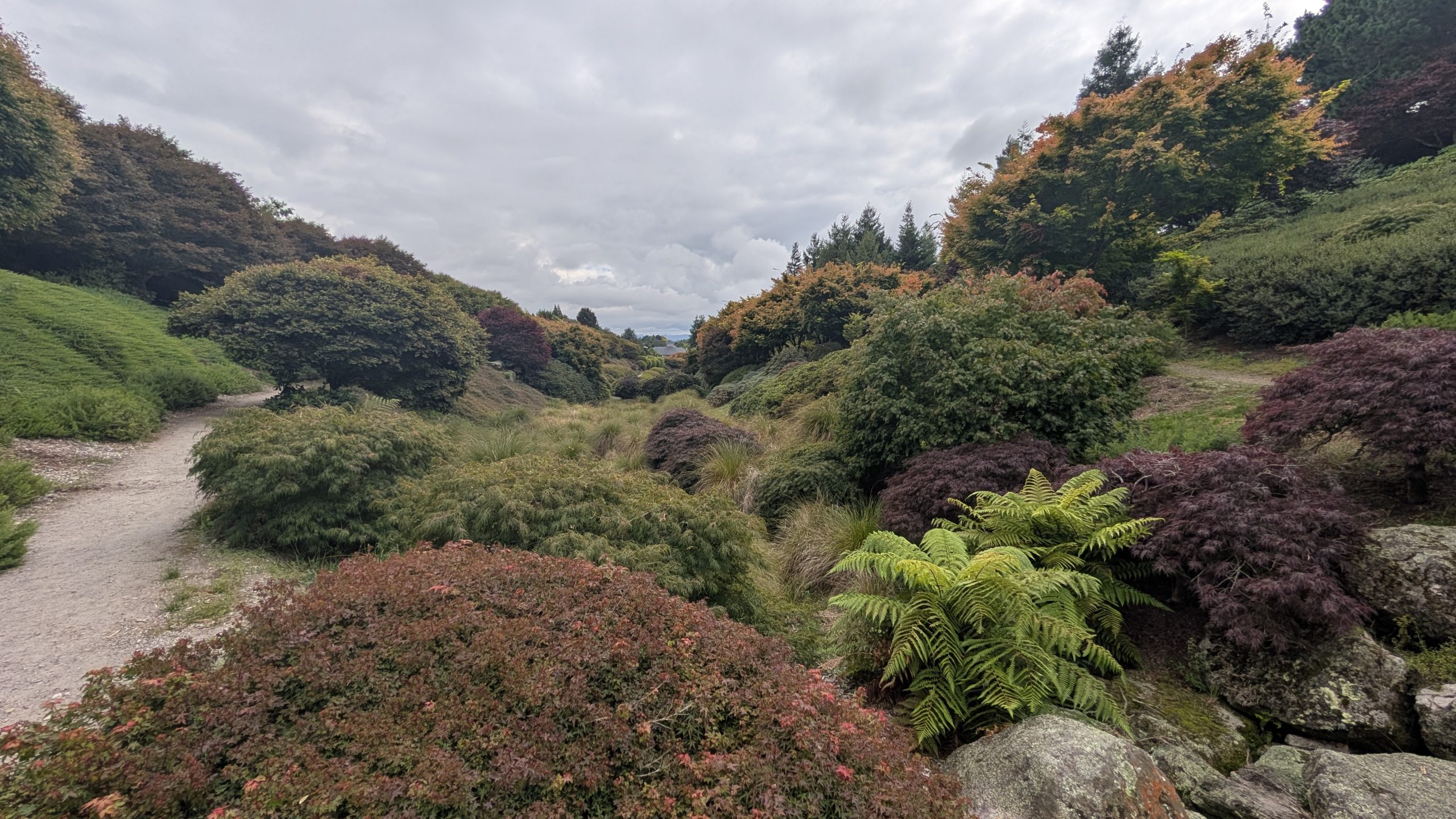
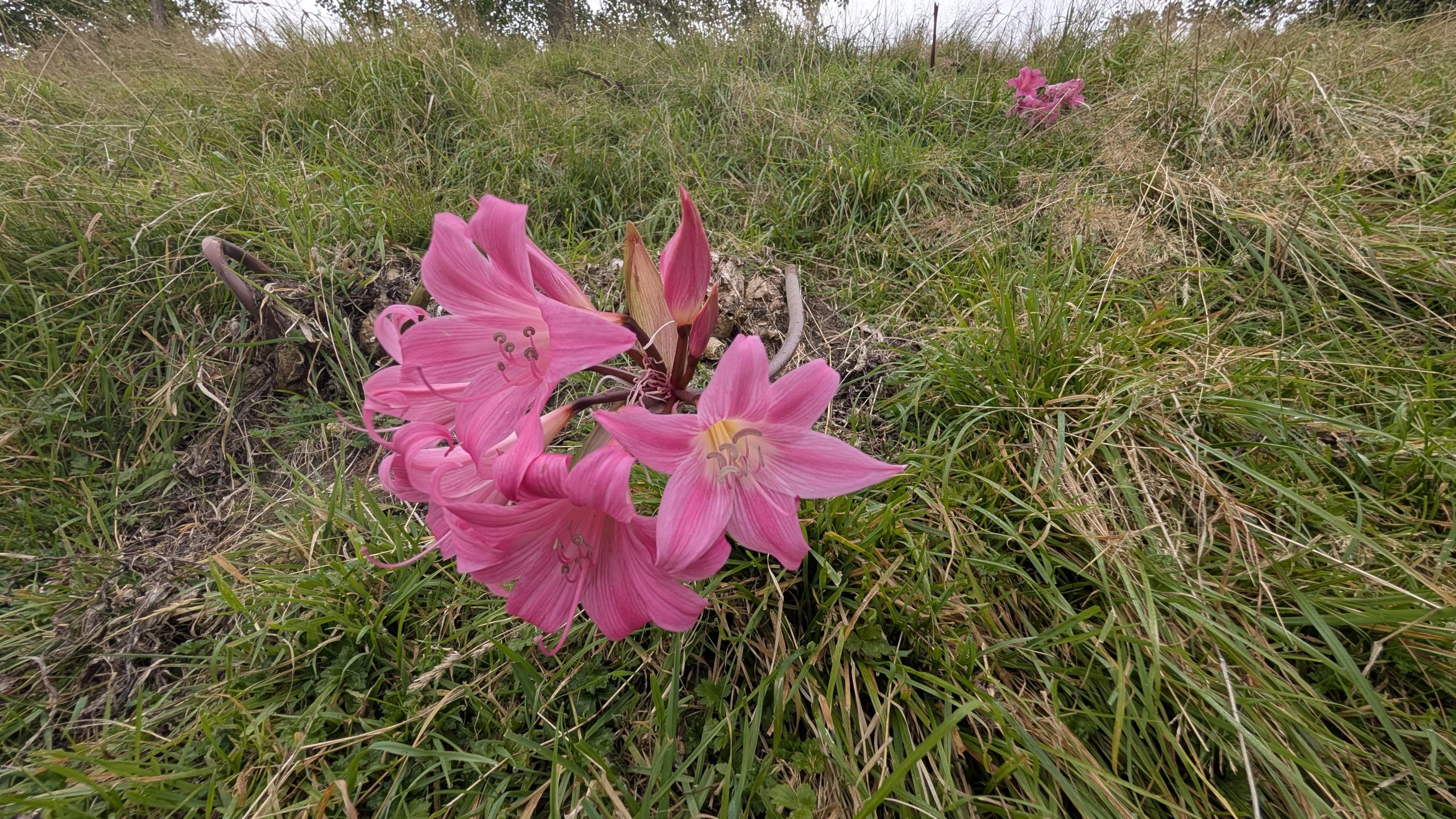
Our first stop was the Rotorua Tree Trust which was less than a mile away from our BnB. The park contained trees from around the world, including maple trees which I had seen nowhere else in New Zealand. It was interesting to see the maple trees were already turning color in March. There were many trails in the area, and we walked a short way along one of them.
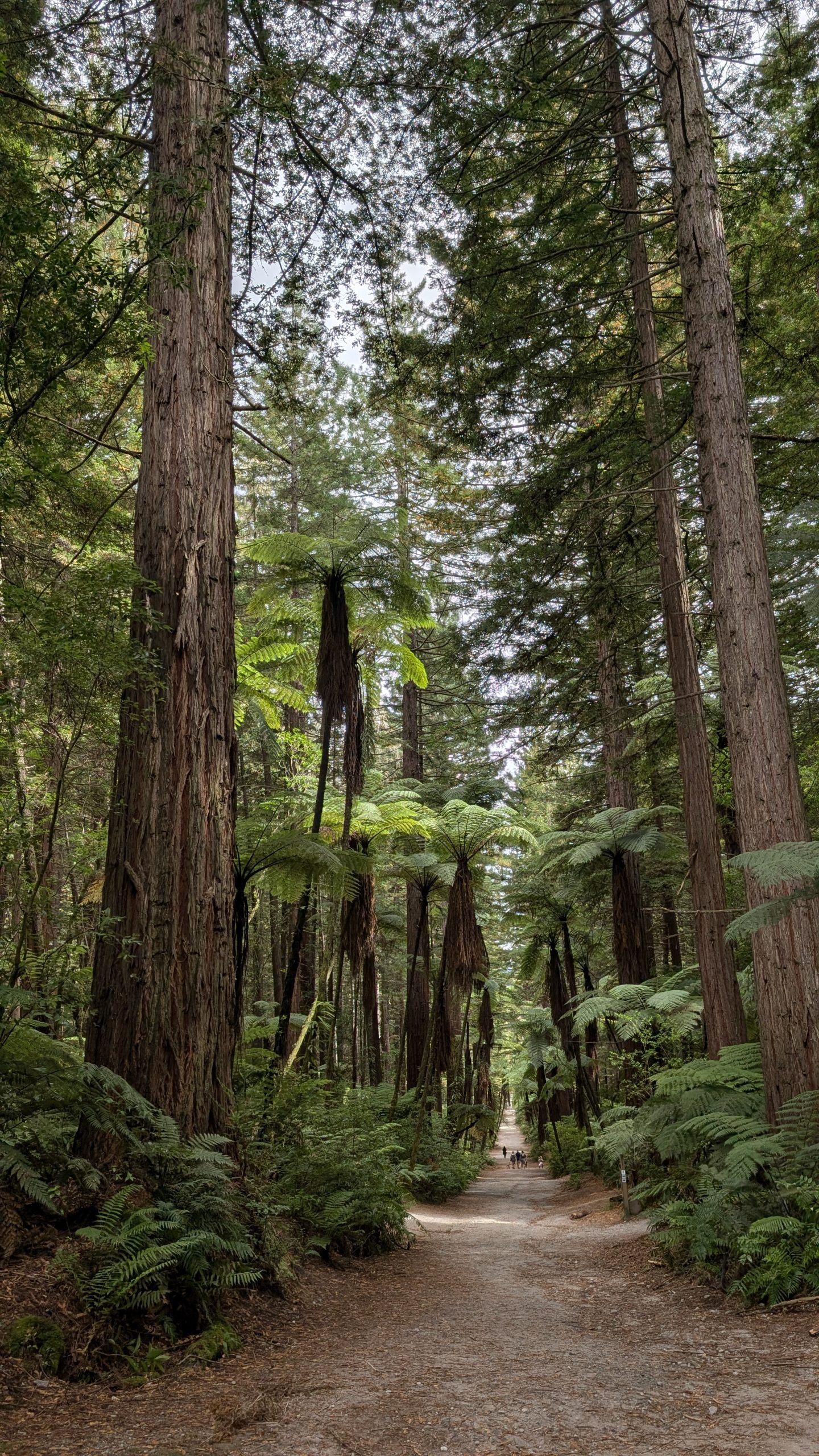
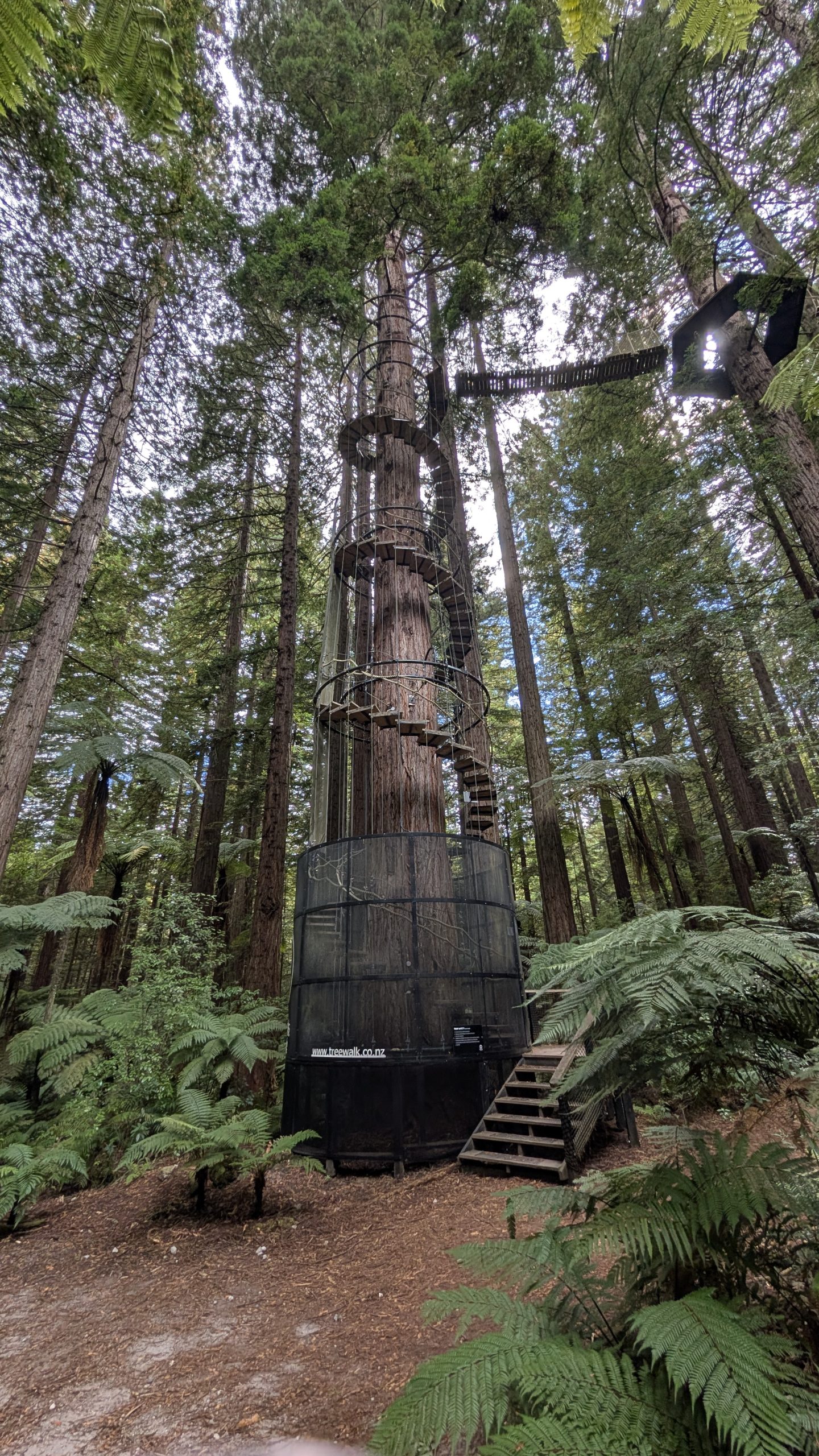
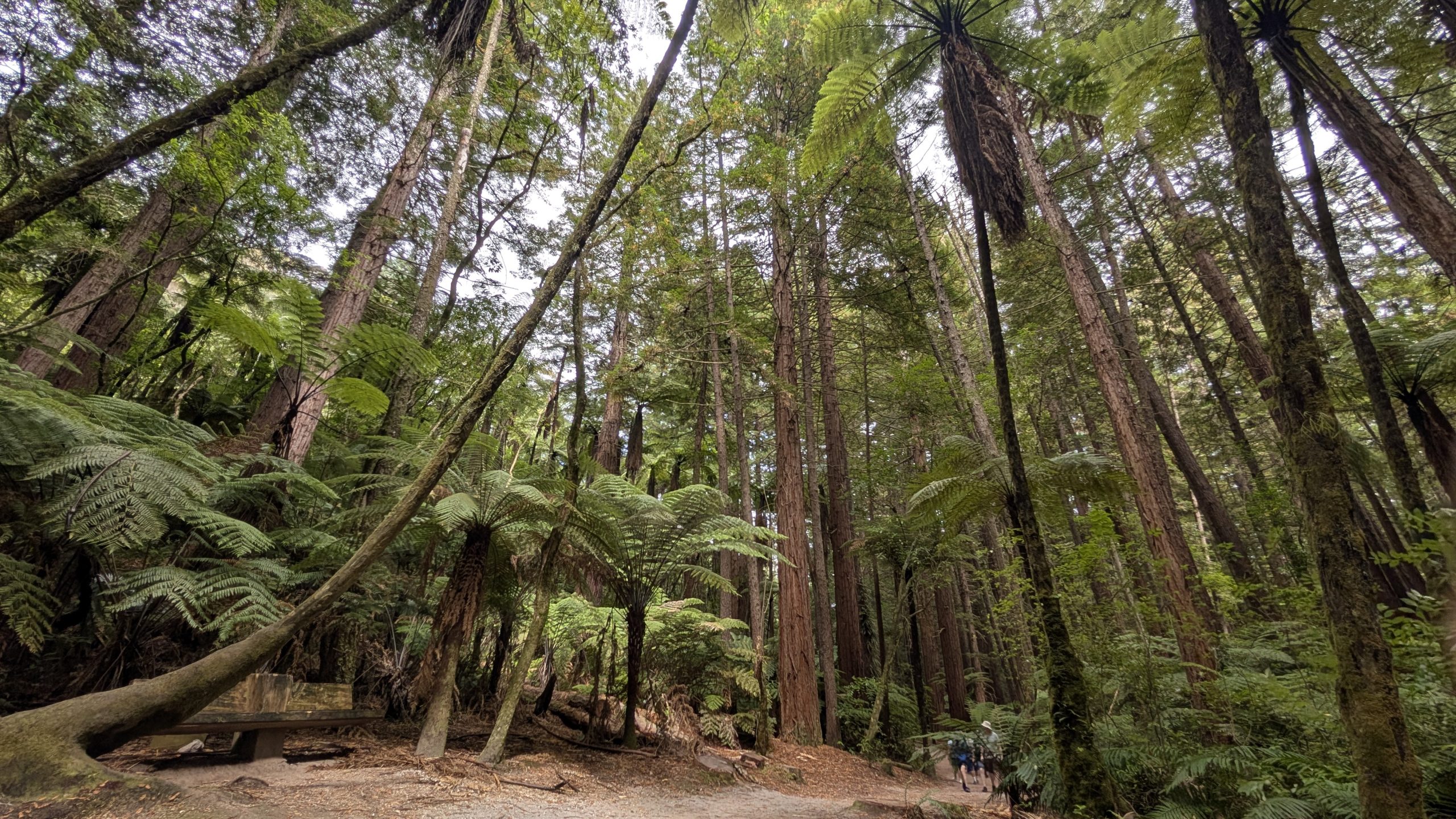
Next we drove to the Whakarewarewa Forest with non-native redwood trees. We spent a few hours hiking some of the trails. The forest was not too crowded while we were there, which made the hiking very pleasant. We passed a few of the structures used for the Redwoods Treewalk, a paid attraction with suspension bridges high above the forest floor.
Next we drove to Kuirau Park and visited its various thermal features. It was one of the few places in New Zealand where we could see thermal activity for free: a steaming lake, hot springs, and mudpots.
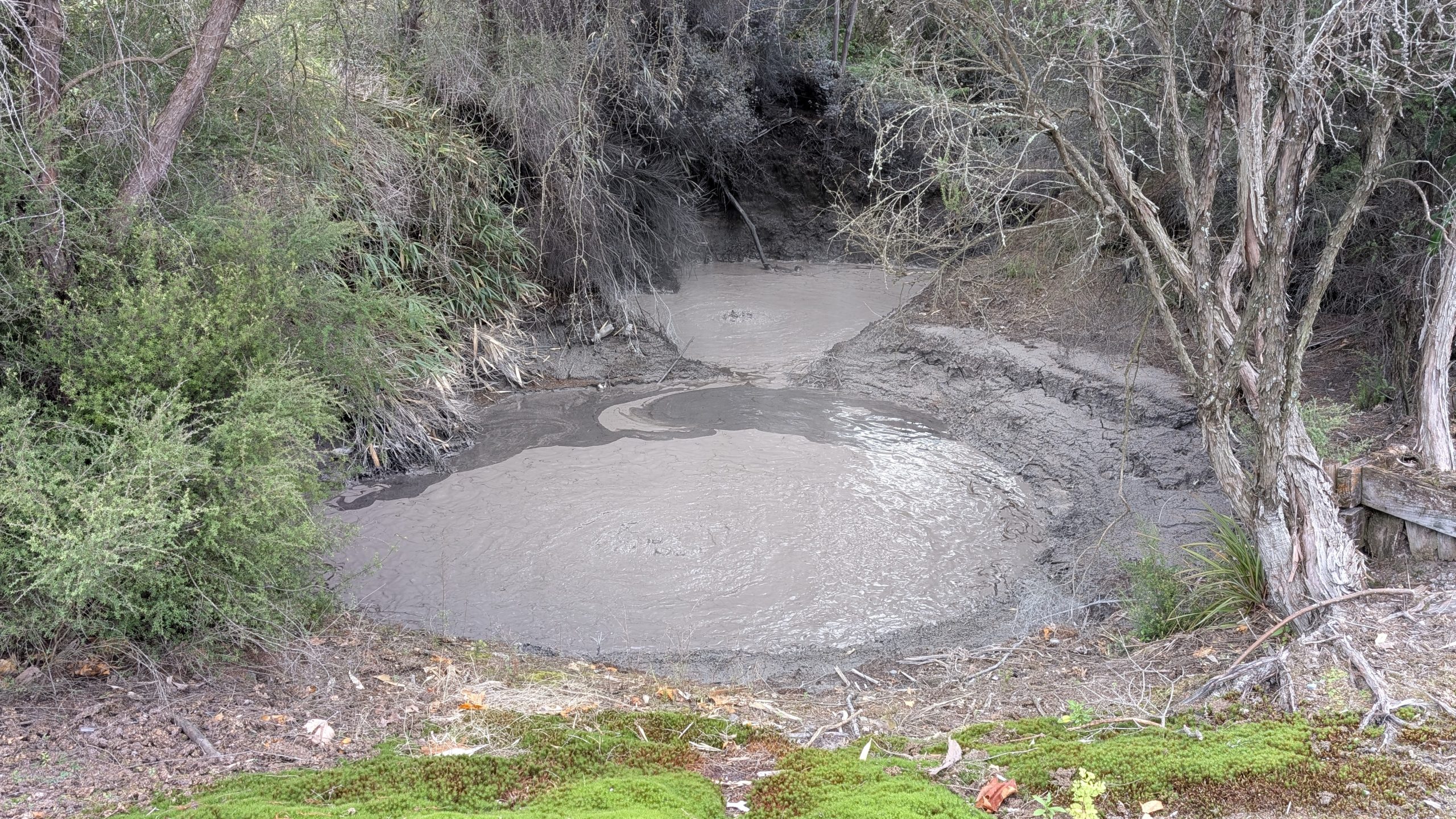
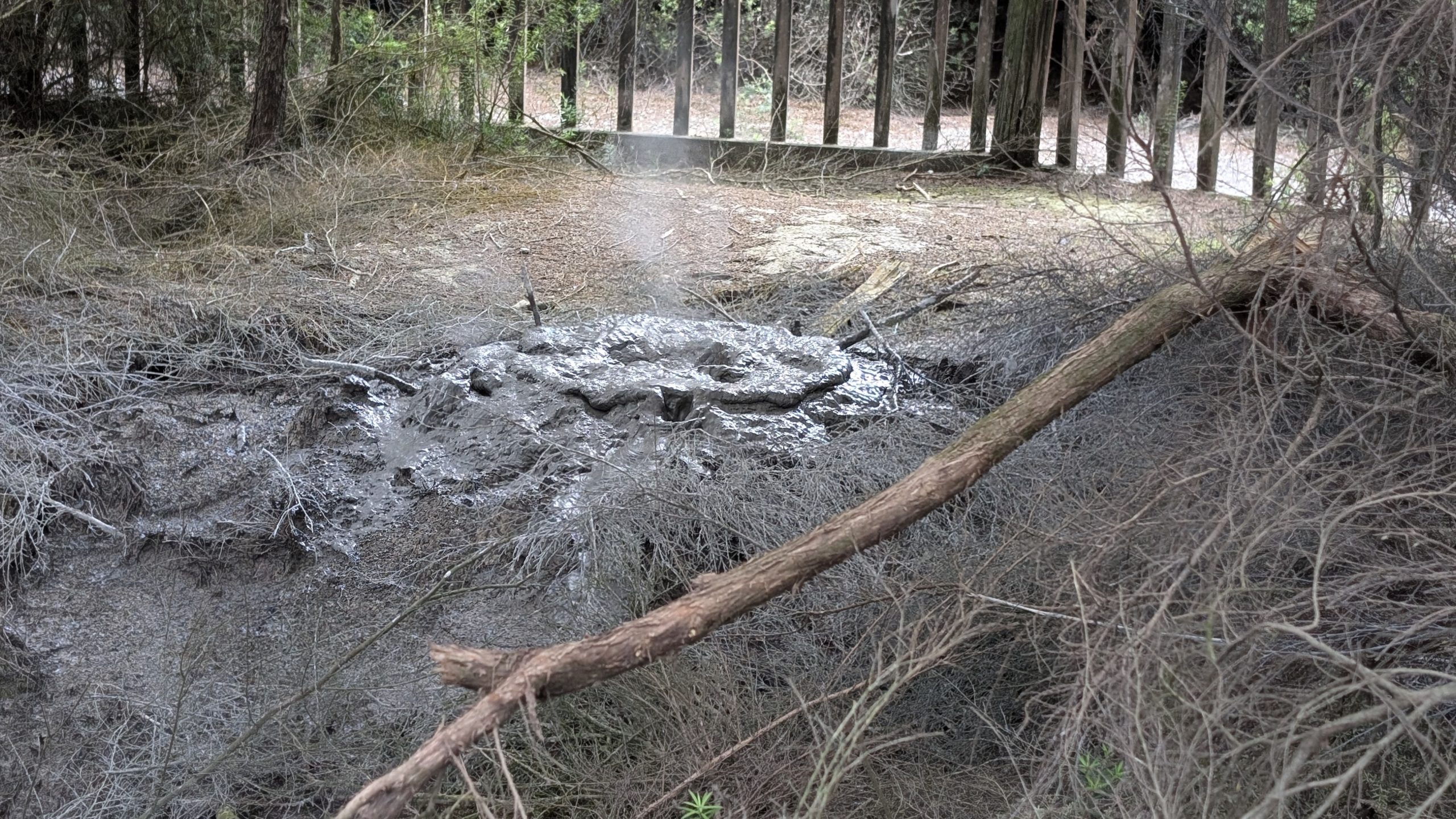
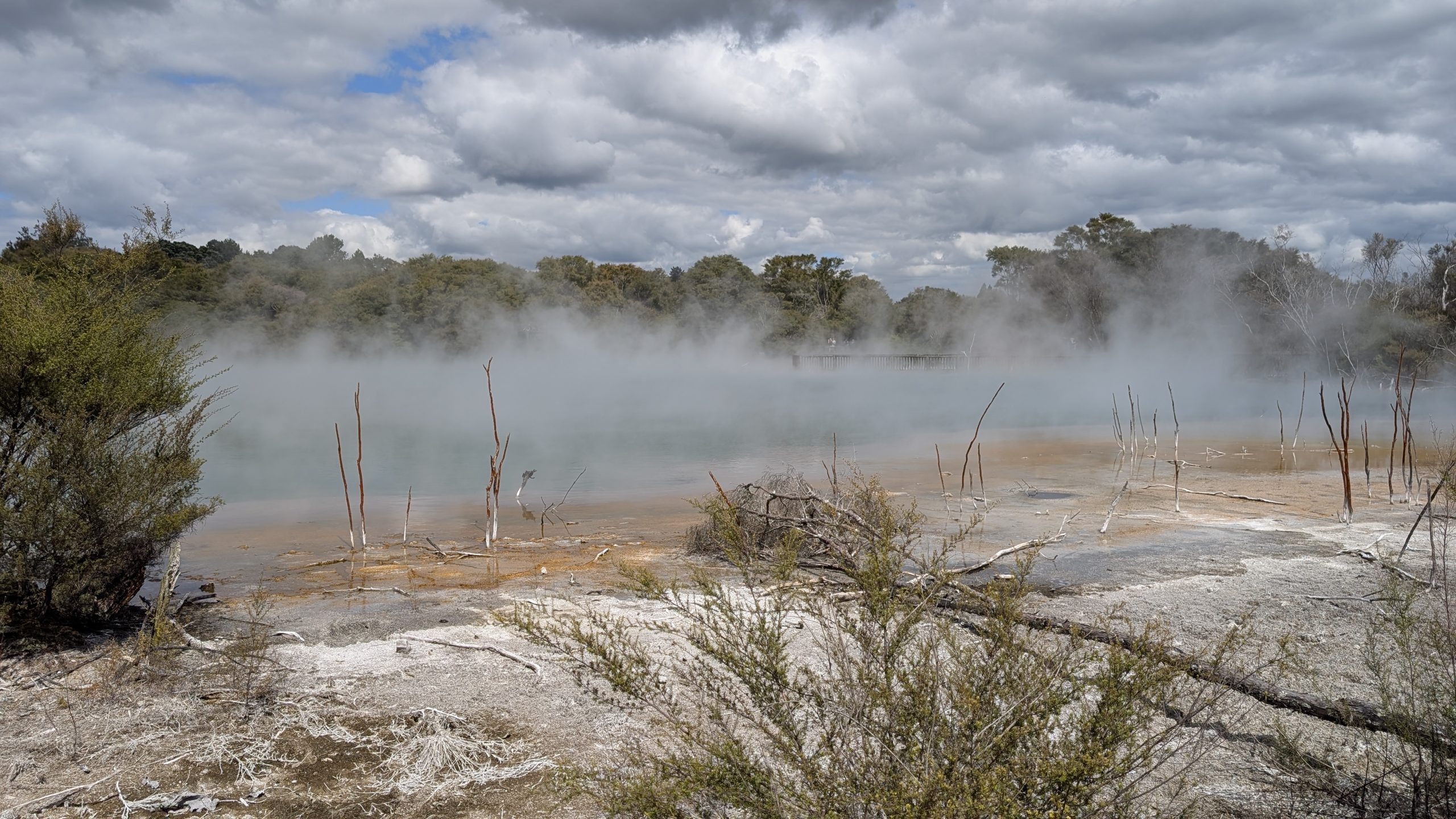
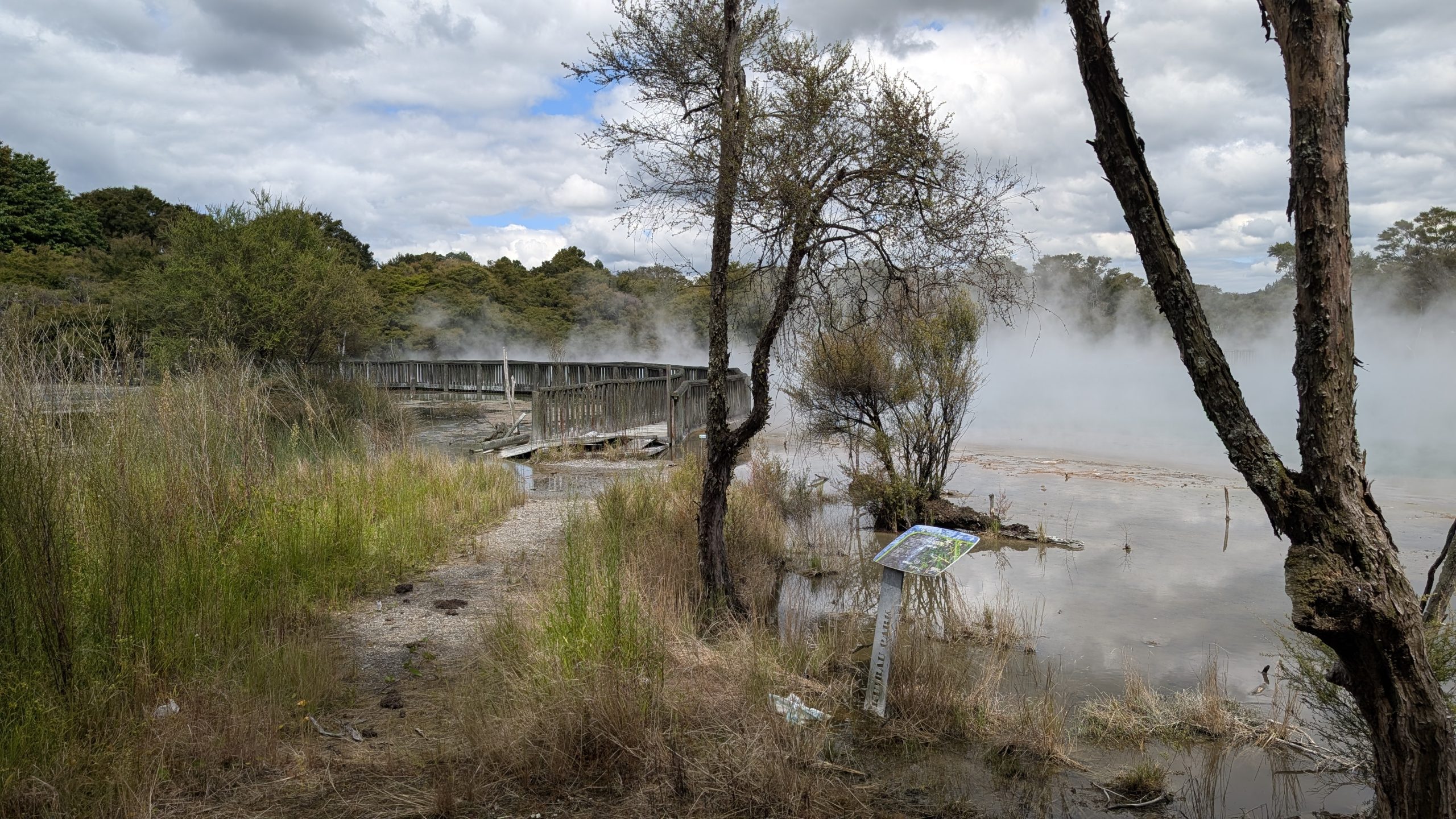
The most interesting area was on the west side of the park near Tarewa Road. A hot spring, which Heinrich identified as #648 on his map, was continuously boiling heavily and producing copious amounts of runoff. We walked around the area and found a trail that looked newly closed due to the runoff. (The following day Graham visited this feature and saw distinct pauses in the boiling, making #648 a geyser.)
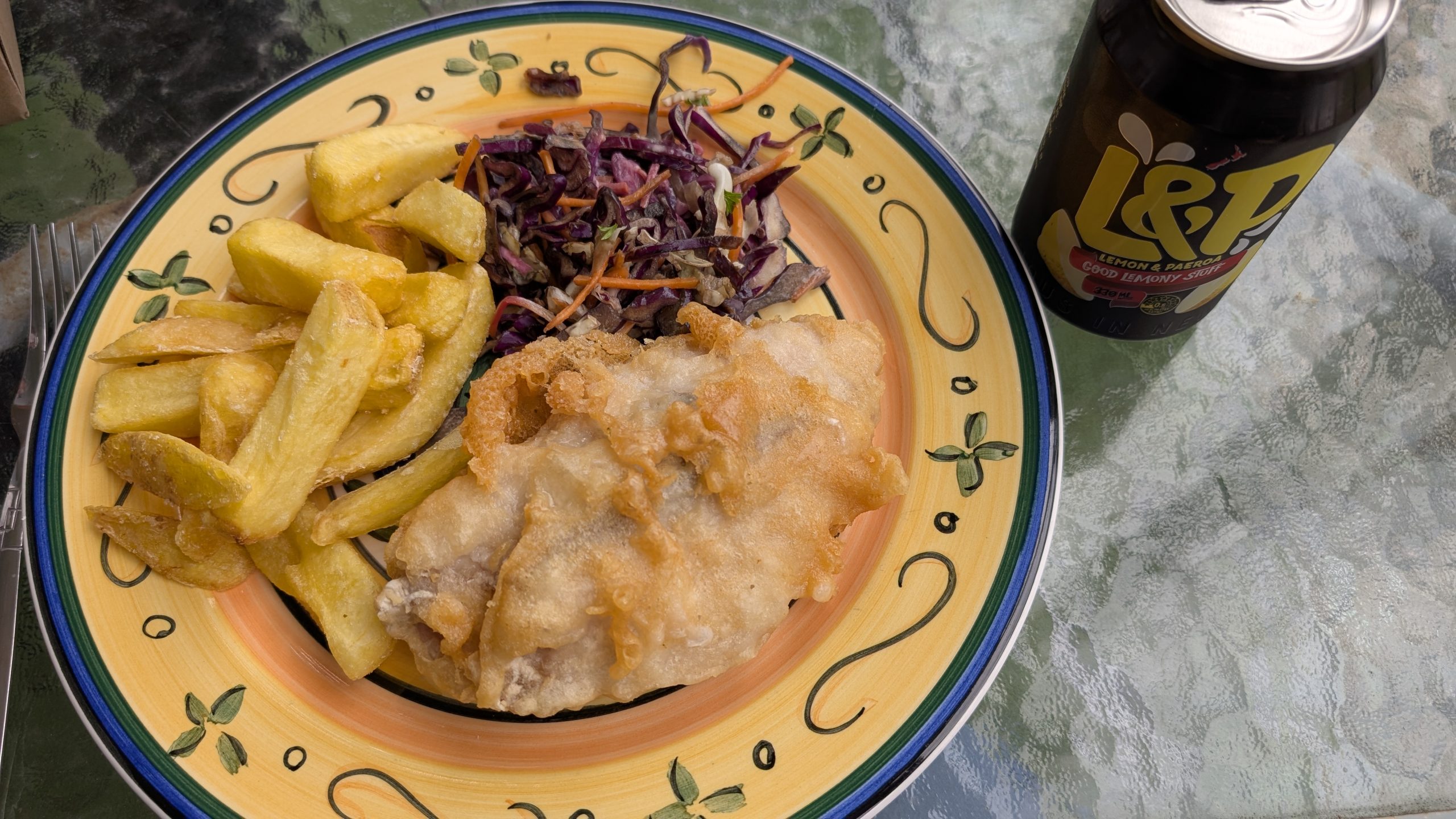
Next we drove to the River's Catch takeaway, which was conveniently close to our BnB. We bought a package of fish and chips and brought it back the BnB for an early dinner.
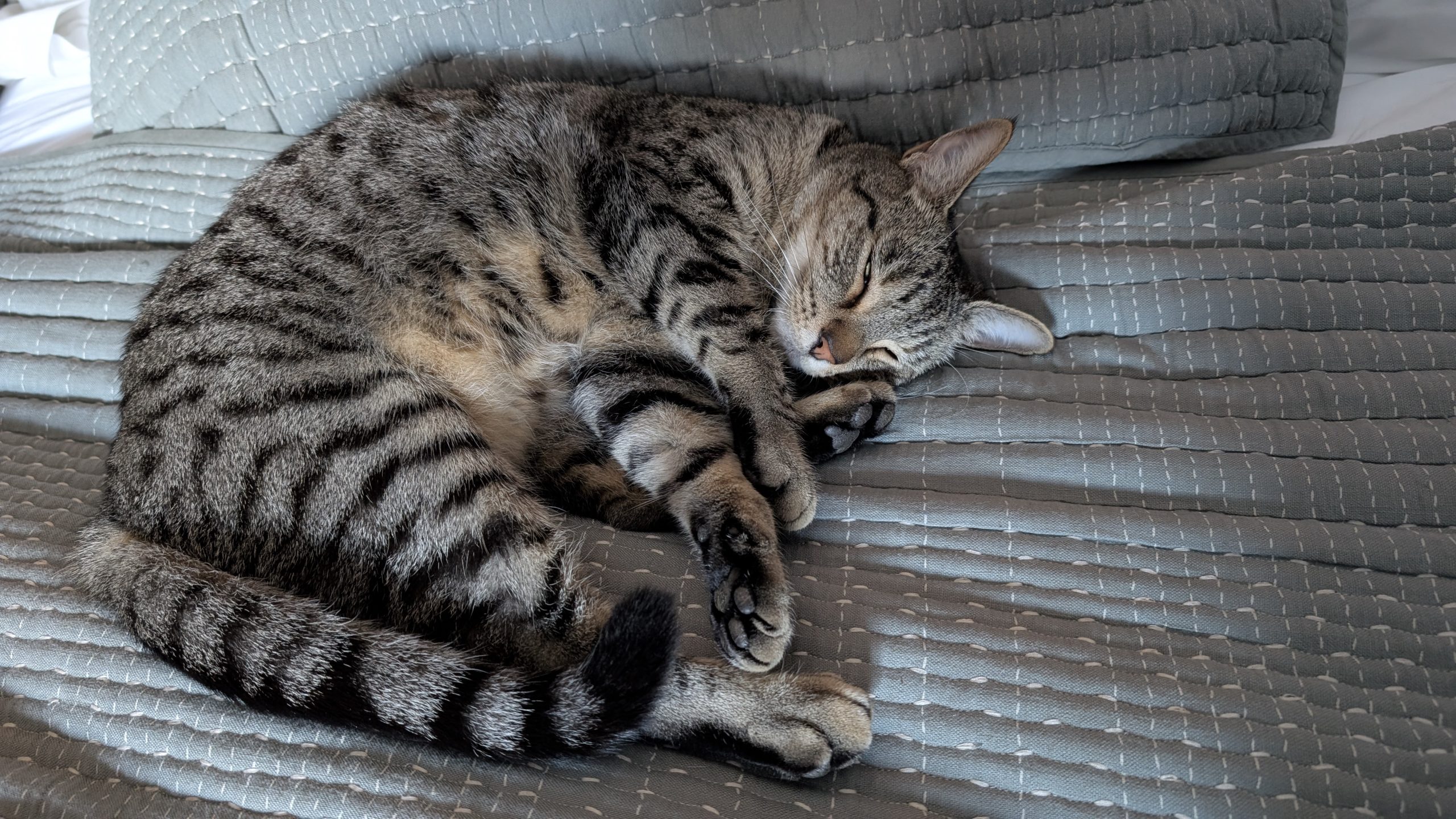
Antonio, the resident cat, wanted to visit us and curled up on the bed for a while.
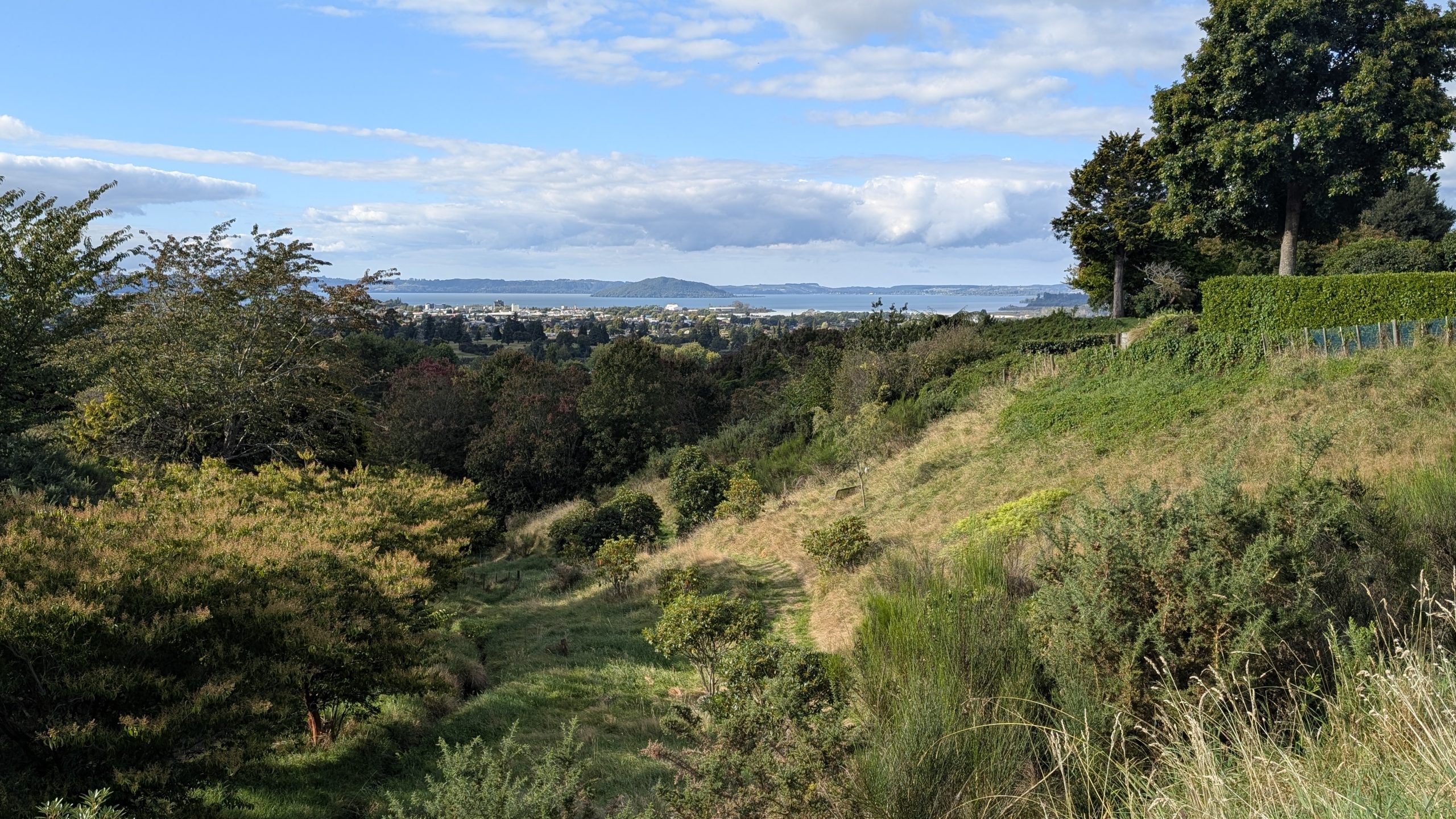
After dinner I took a short walk in the neighborhood and had a nice view looking down the hill to the Rotorua Tree Trust and Lake Rotorua.
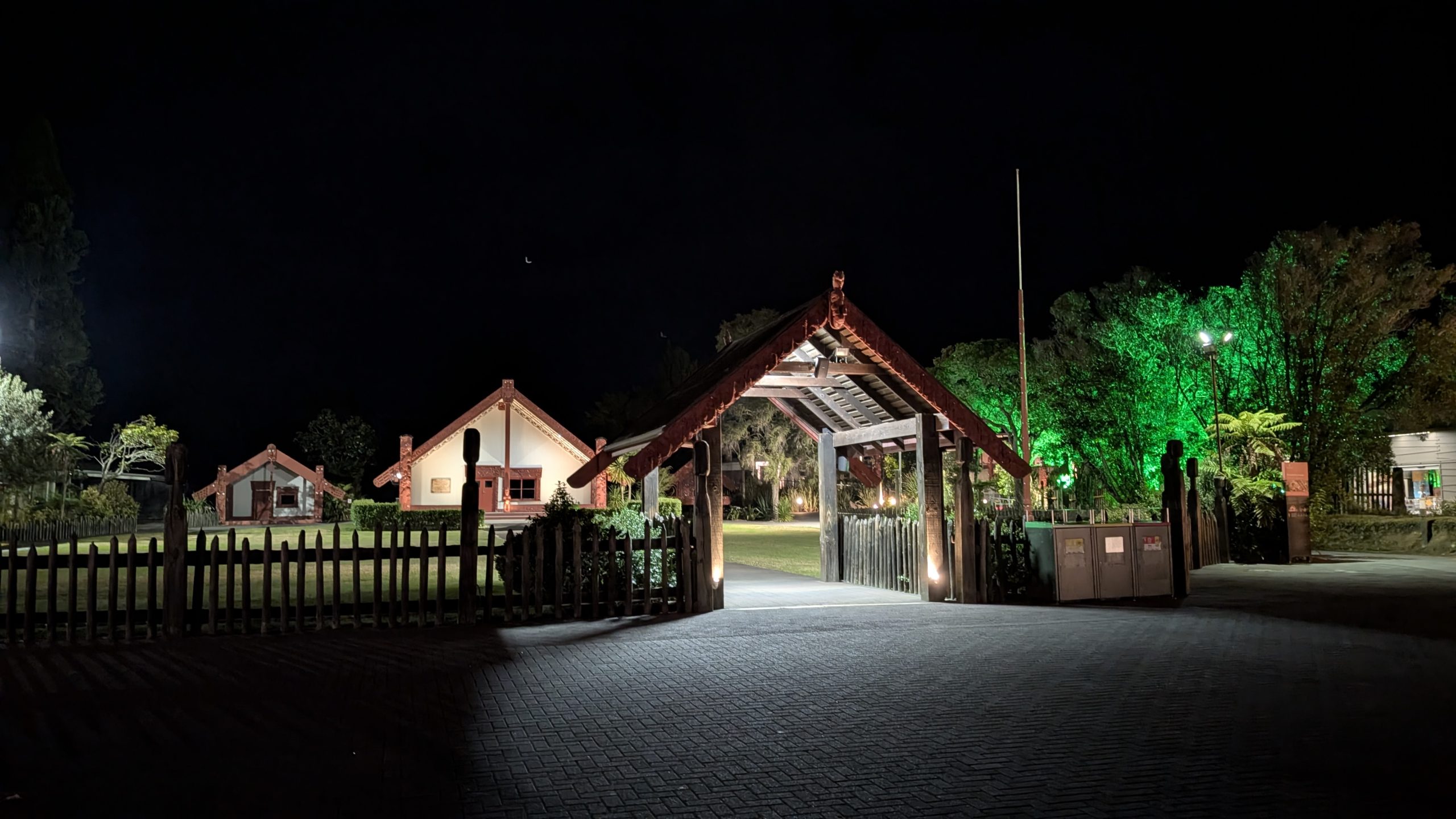
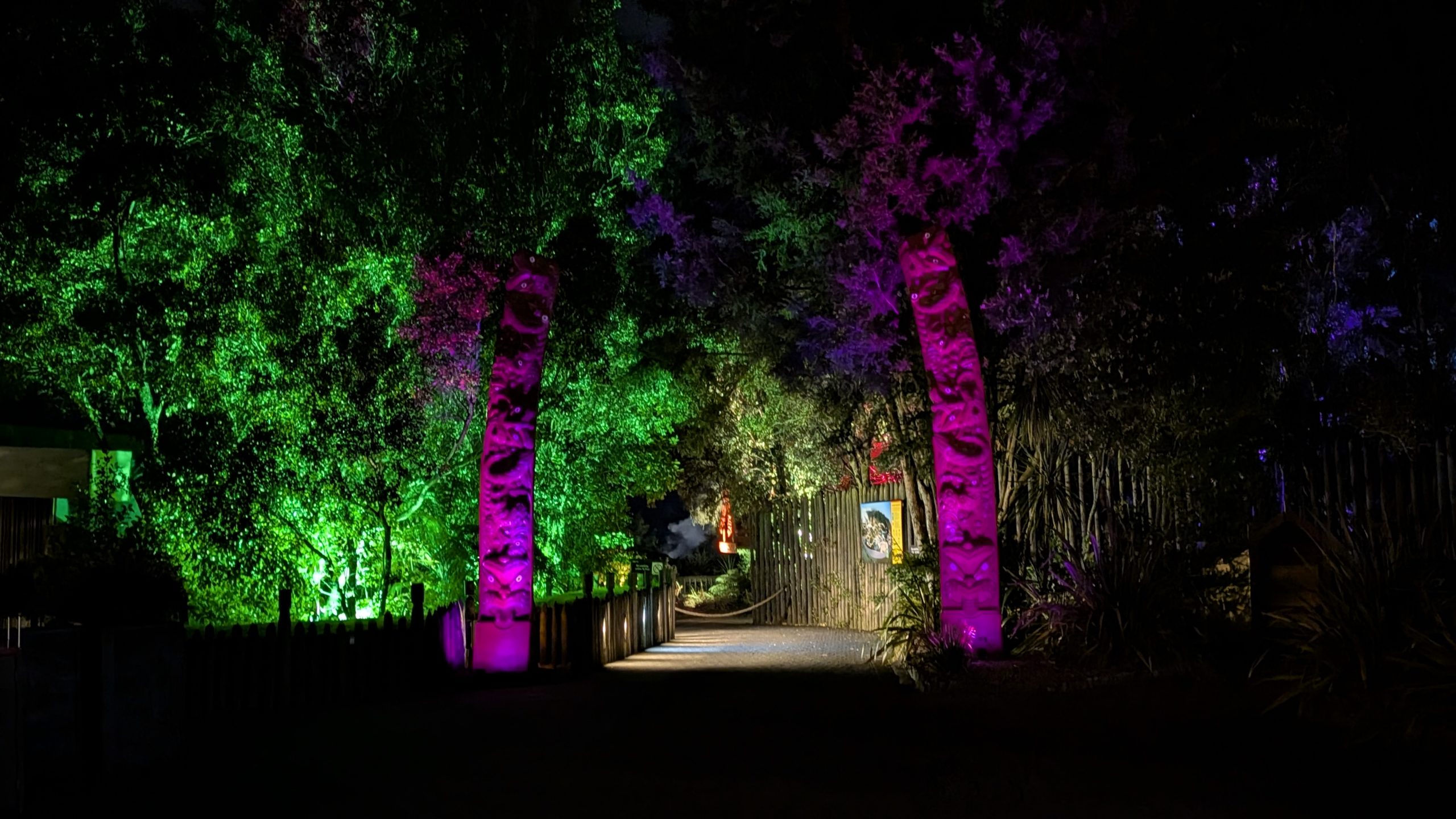
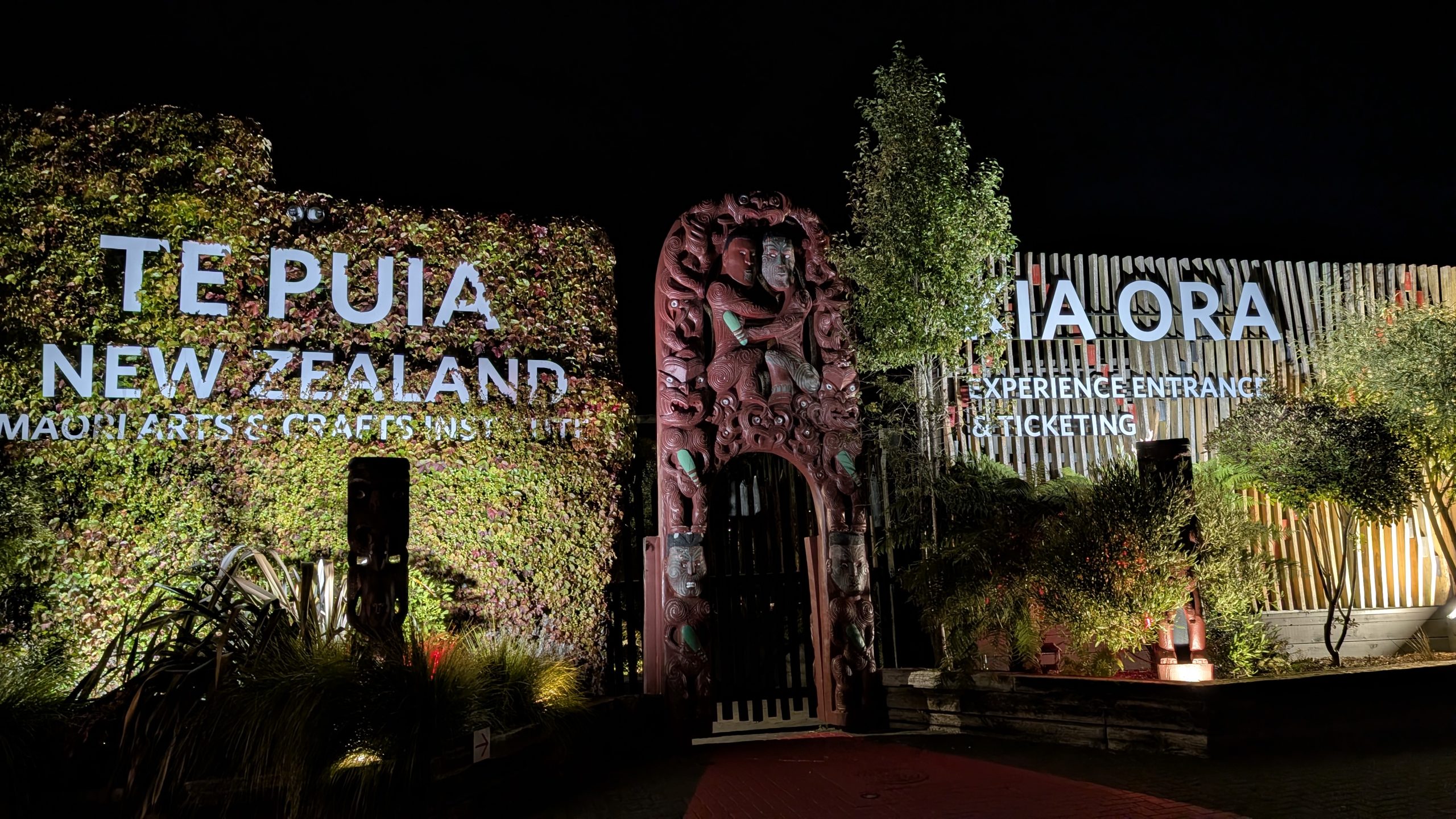
Afterwards we went to our nighttime activity: a visit to Te Puia for the Mārama light show. This was a self-guided tour: after our reserved entry time, we could spend as much time as we wanted (until the park closed at 12:30 AM) in the geyser basin along the trails that were illuminated with lasers and colored lights. Our admission time was 8:45 PM, but we arrived early and were able to join the 8:30 PM tour. We watched a short video for a safety briefing, and then a tour guide led us to the start of the trail. The guide offered to show a hāngī to the group, but we skipped that and bypassed just about everyone else in the group to get a head start on the trail. Thus it was very quiet all the way down to the geysers. We took our time walking down the path and enjoyed various displays of colored lights.
It was interesting to see various thermal features illuminated with other colored lights in the background.
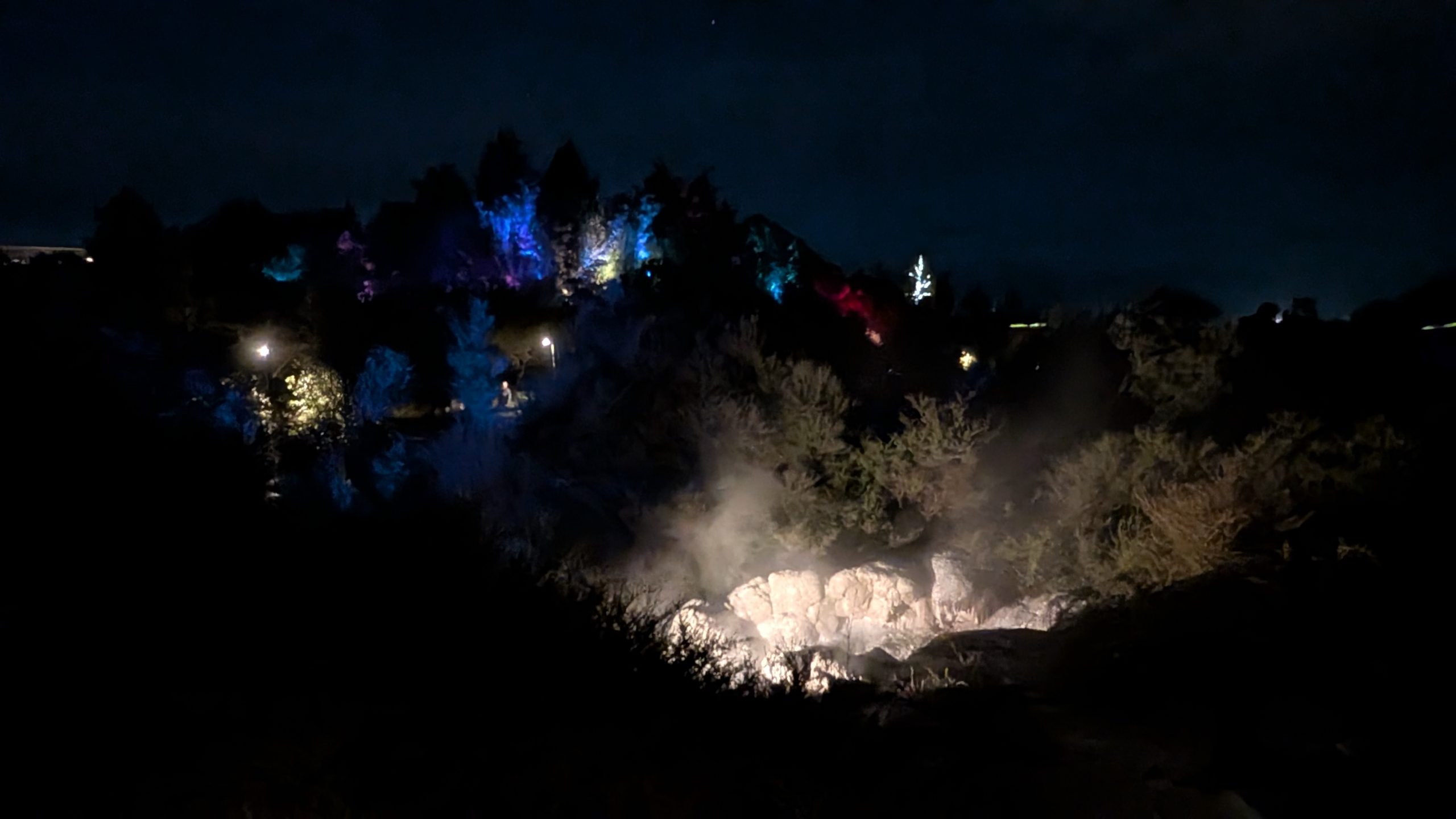
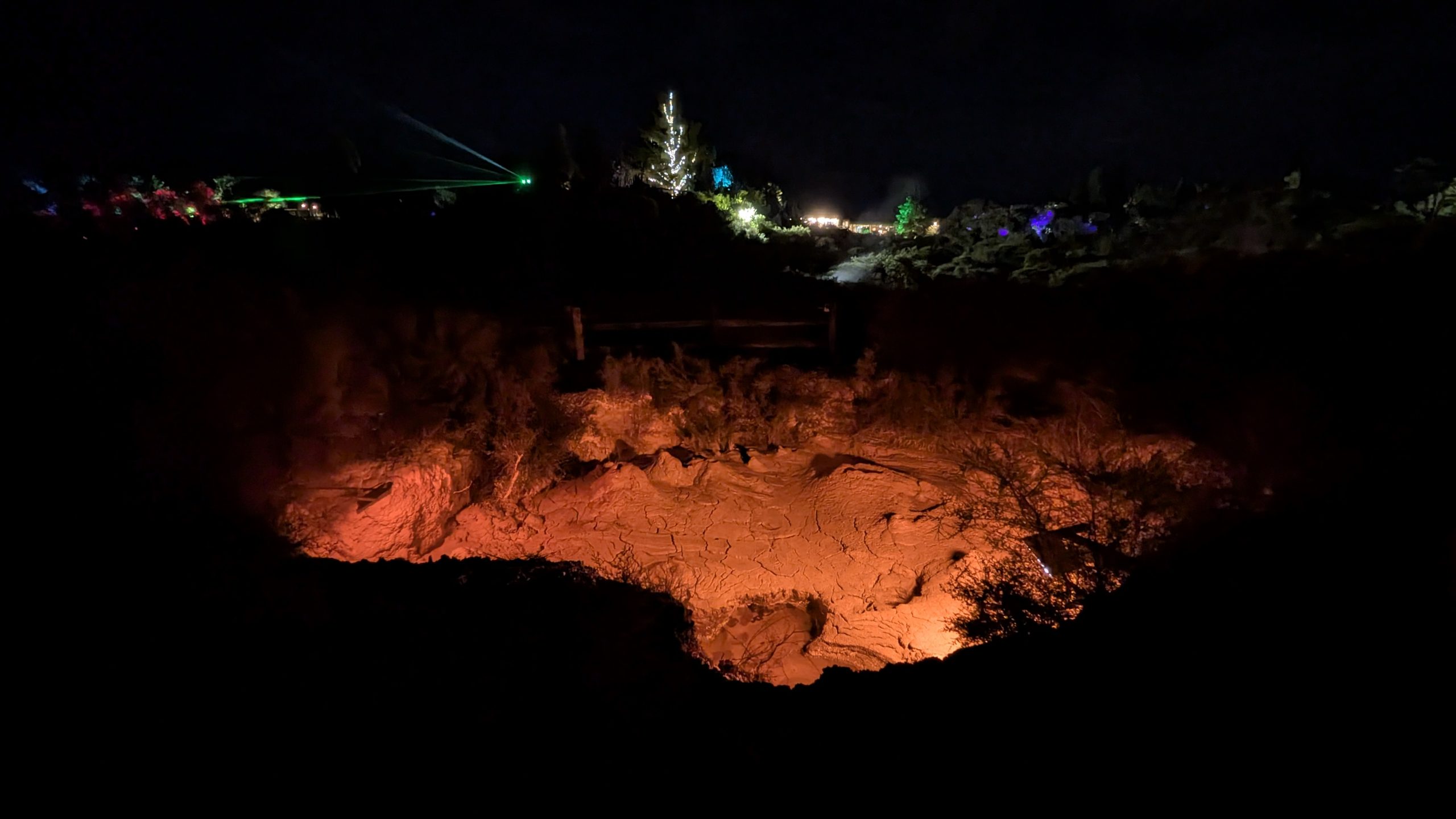
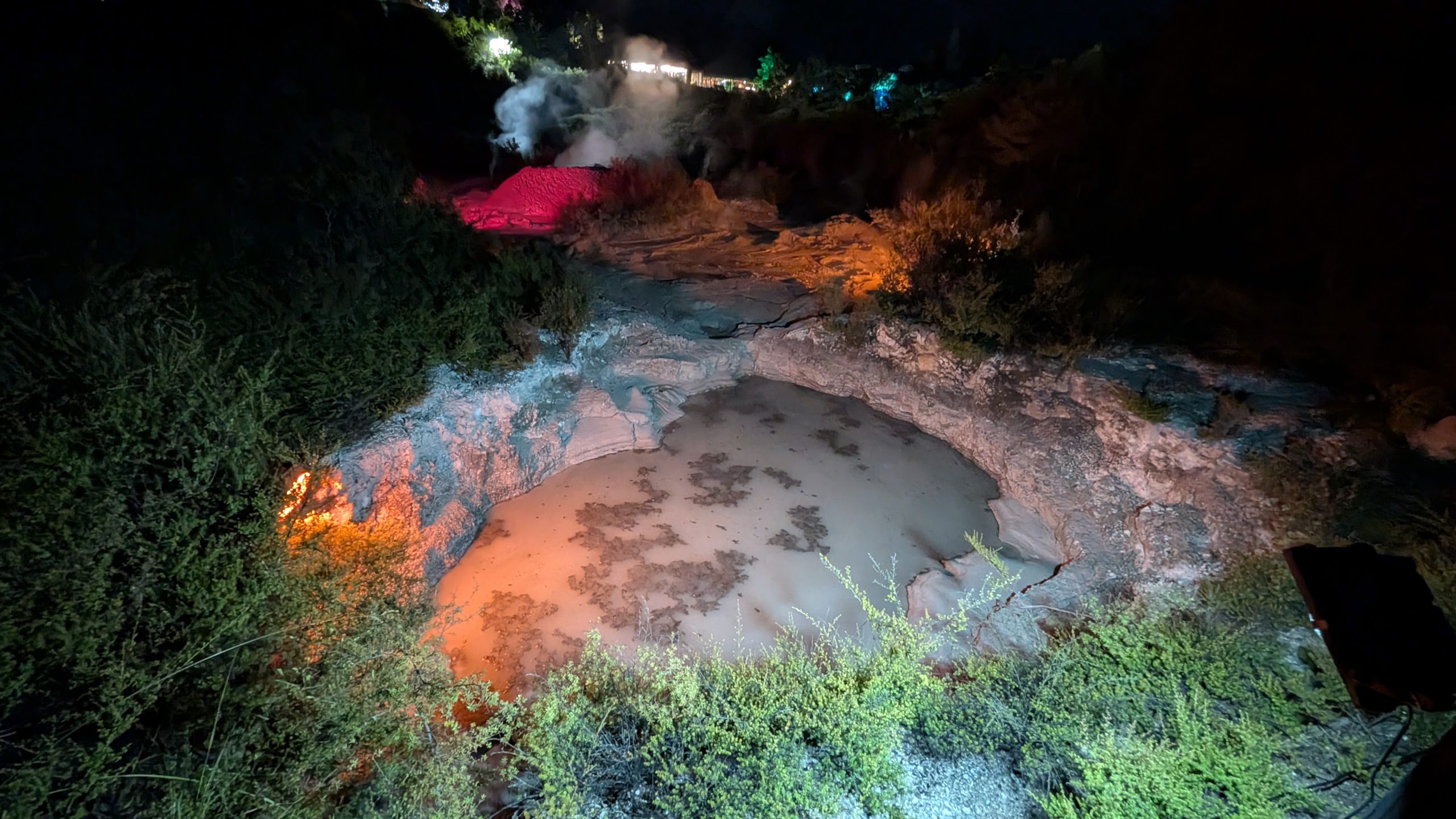
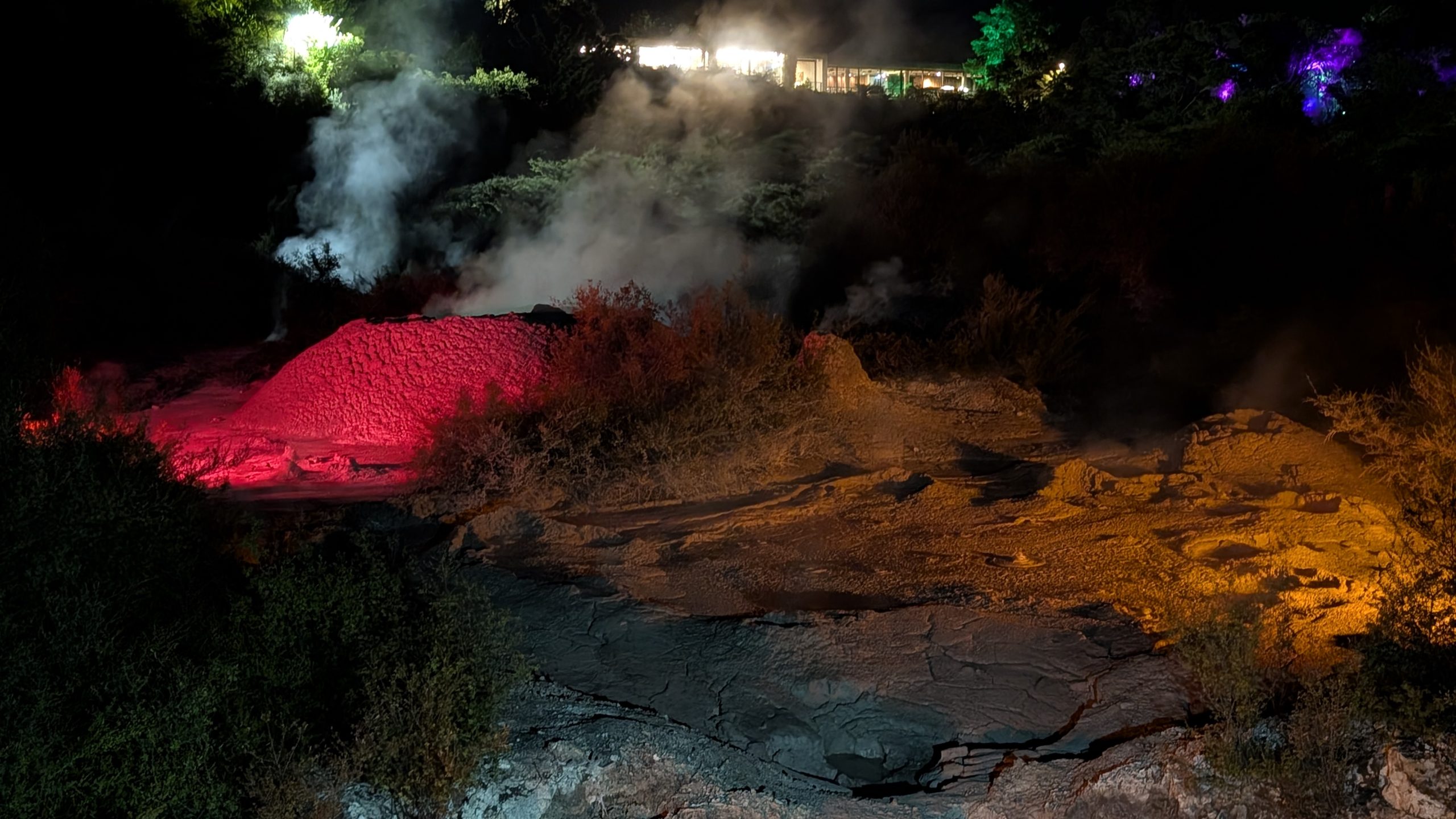
When we reached Geyser Flat, Kererū was having minor eruptions. Graham had made a second visit to Te Puia earlier that day, and Kererū had been in a quiet period starting at 4:07 PM until he left at the 5:30 PM closing time. So a major eruption must have occurred between the time he left and before we arrived that evening. We were hoping the minors would quit soon so we would have a chance to see a major, but that was not the case. Kererū had minor eruptions the entire time we were there. Lucky me got to record another series of minors from 8:58 PM until we left the area at 11:32 PM.
We saw two eruptions of Pōhutu and Te Tohu while we were there. This was in contrast to what Graham had seen earlier in the day: unusual conditions with Te Tohu erupting non-stop (except for a 2-minute pause) the entire day and no Pōhutu major eruption. He saw only two minor eruptions of Pōhutu that were not full height and only lasted 4 and 5 minutes respectively. A guide had reported that this behavior was associated with nearby Te Horu pool being empty when usually it was full.
It was too dark for us to be able to see the level of Te Horu pool, but the two eruptions we saw of Pōhutu that night were normal, so the unusual activity ended sometime after Graham left.
We did not stay until the park closed at 12:30 AM. We started walking back to the entrance an hour earlier, after we decided there would be no way we would see a Kererū major eruption that evening with the minors still continuing. There was another long light show on the walk back.
By the time we reached the overlook near the entrance, we could see that Pōhutu was in eruption for a third time that night.
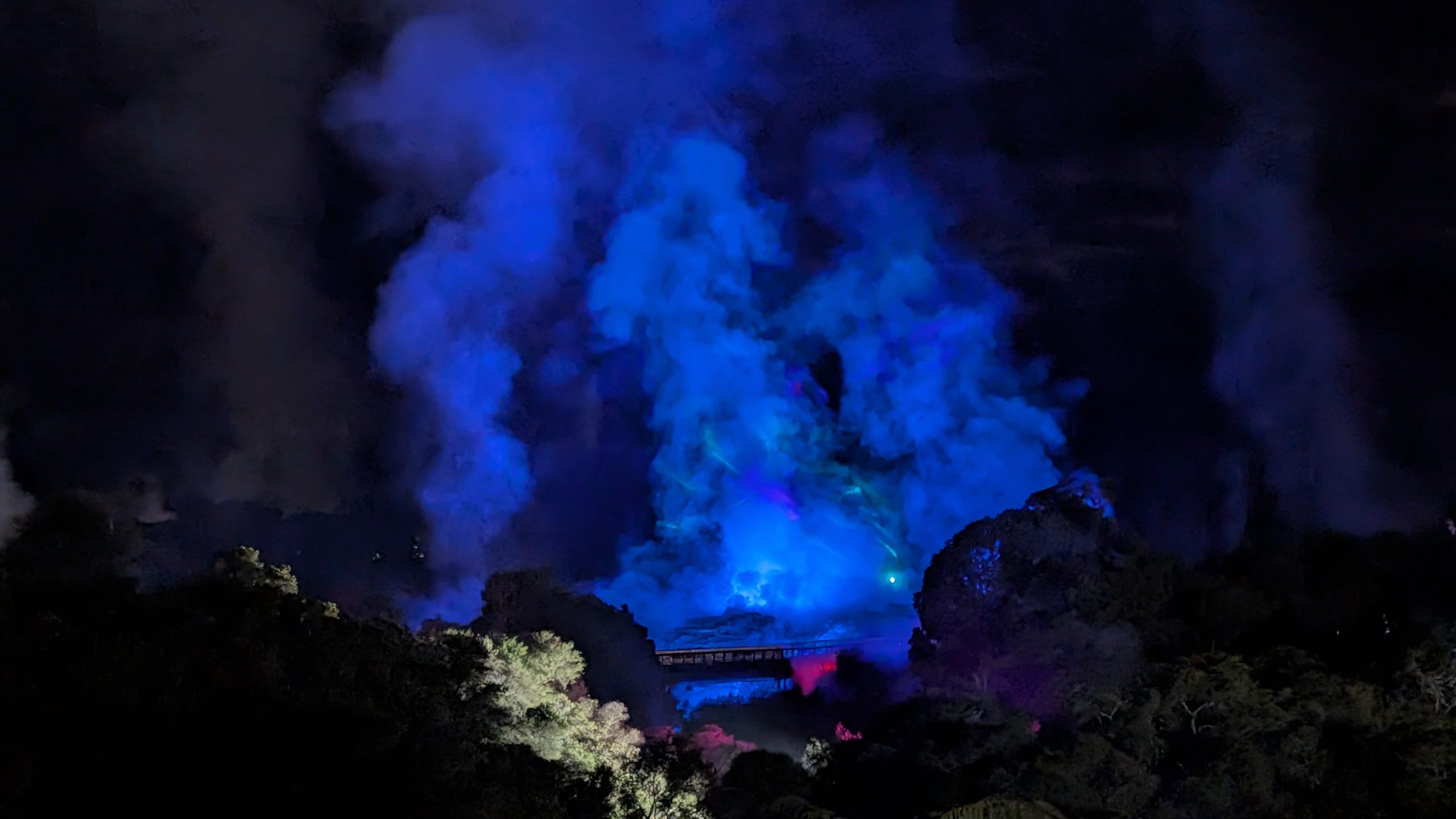
I enjoyed the nighttime tour and would do it again. I was surpised at how few people were there. Maybe it was an off night, but I wondered how many people were needed for Te Puia to make a profit. At any rate, I enjoyed it because it was so peaceful and it was a fairly cheap way to get an extra 4 hours in the geyser basin.