
March 9, 2026
Link to Heinrich's thermal observations: http://geysers.org/wordpress/2026/03/09/observations-for-2026-march-09/
We had one last day in Rotorua, and we decided to spend it going to Te Puia for another day. The temperature was in the upper 60's, and it was a nice sunny day. Once again we were able to skip the 9:00 AM tour and go directly to the geyser basin.
Kererū Geyser was quiet when we arrived, so we settled in to wait for a major eruption. And we were rewarded with a major less than 45 minutes after we arrived. There wasn't a single cloud in the sky, but... the conditions were awful. A few minutes before the eruption, the wind shifted and was blowing straight toward us. So all of the steam from Kererū came straight toward us, along with the stream from Pōhutu and Te Toru which were also erupting at the time. All we saw was a big massive cloud of steam. My video is so bad that I won't post it here. I even had to ask Heinrich afterwards if that was a major eruption since I couldn't see anything.
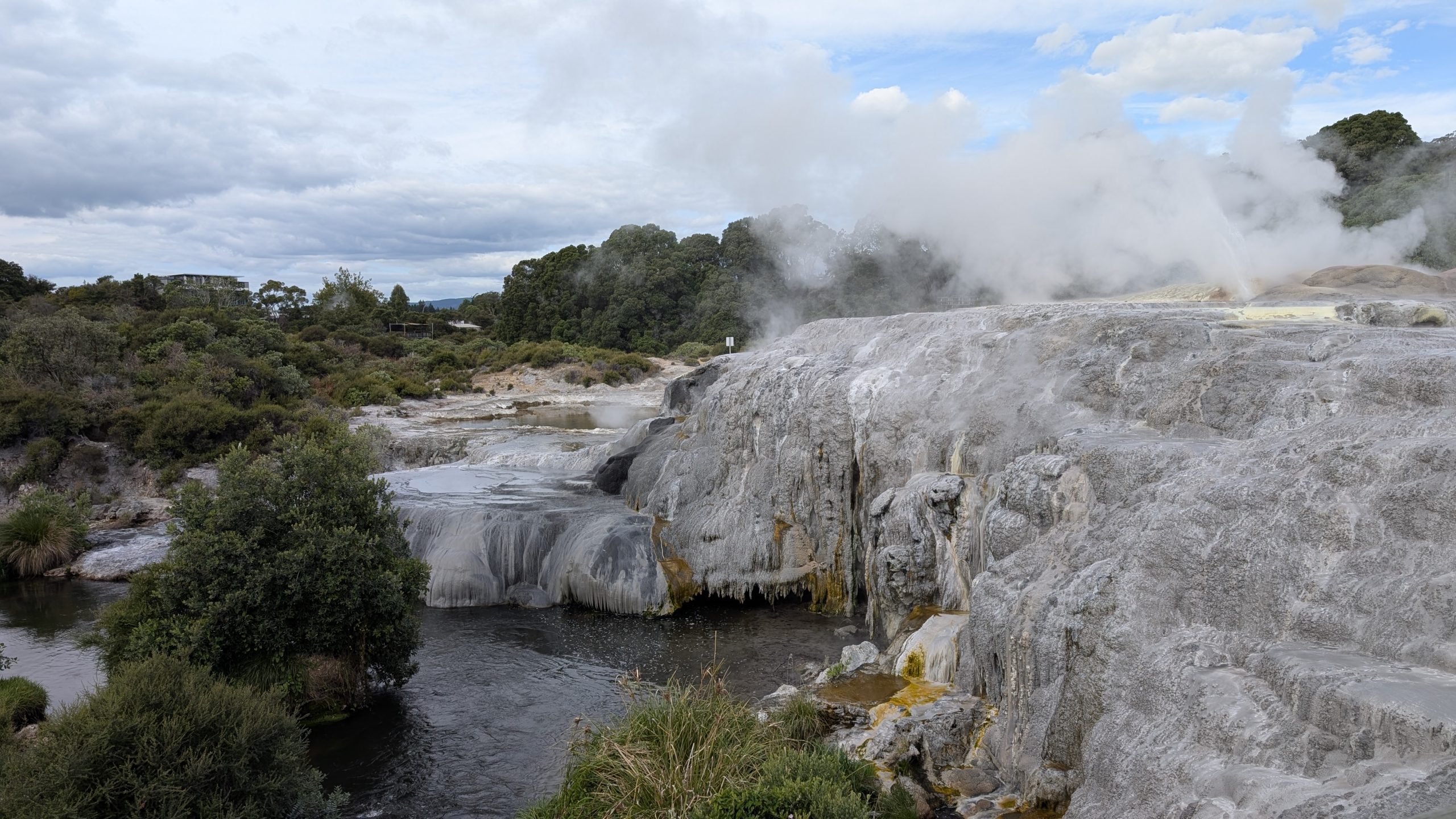
Immediately afterwards, Kererū went into minor eruption mode, and the minors lasted the entire day until we left at the 5:30 PM closing time. This was a new personal record for us in seeing almost 8 hours of minors. It was frustrating for me to have to leave without ever knowing how much longer those minors would last. And sadly I now have to say that I broke my previous record of recording minors with 111 posted for the day. I would have posted even more except for taking a much needed break for 2.5 hours when I walked around elsewhere. Heinrich recorded 8 more minors while I was on break, giving a total of 119 minors for the day.
During that break, I visited the kiwi house. The entrance to the house was locked, so I had to wait for a tour to show up to enter. When the guide saw me standing at the entrance, he asked me if I would like to go ahead of the group, and I happily agreed. So I had somewhere around 5 to 10 minutes of uninterrupted time to watch the kiwi while the guide gave an introductory talk to the people outside. There was an adult kiwi running back and forth inside the first enclosure, and the second enclosure contained a baby kiwi that was sitting in the front corner. It was fun to see them again.
Back at Geyser Flat, Pōhutu cooperated with a total of 8 eruptions for the day. We also saw many eruptions of Mahanga and Waikorohihi geysers. I spent more time at the overlook near the Ngā mōkai-ā-Koko mud pool since it was much more comfortable for me to stand there instead of on the bridge. For most of the time it was quieter there as well, since the tours usually did not stay long at that location.
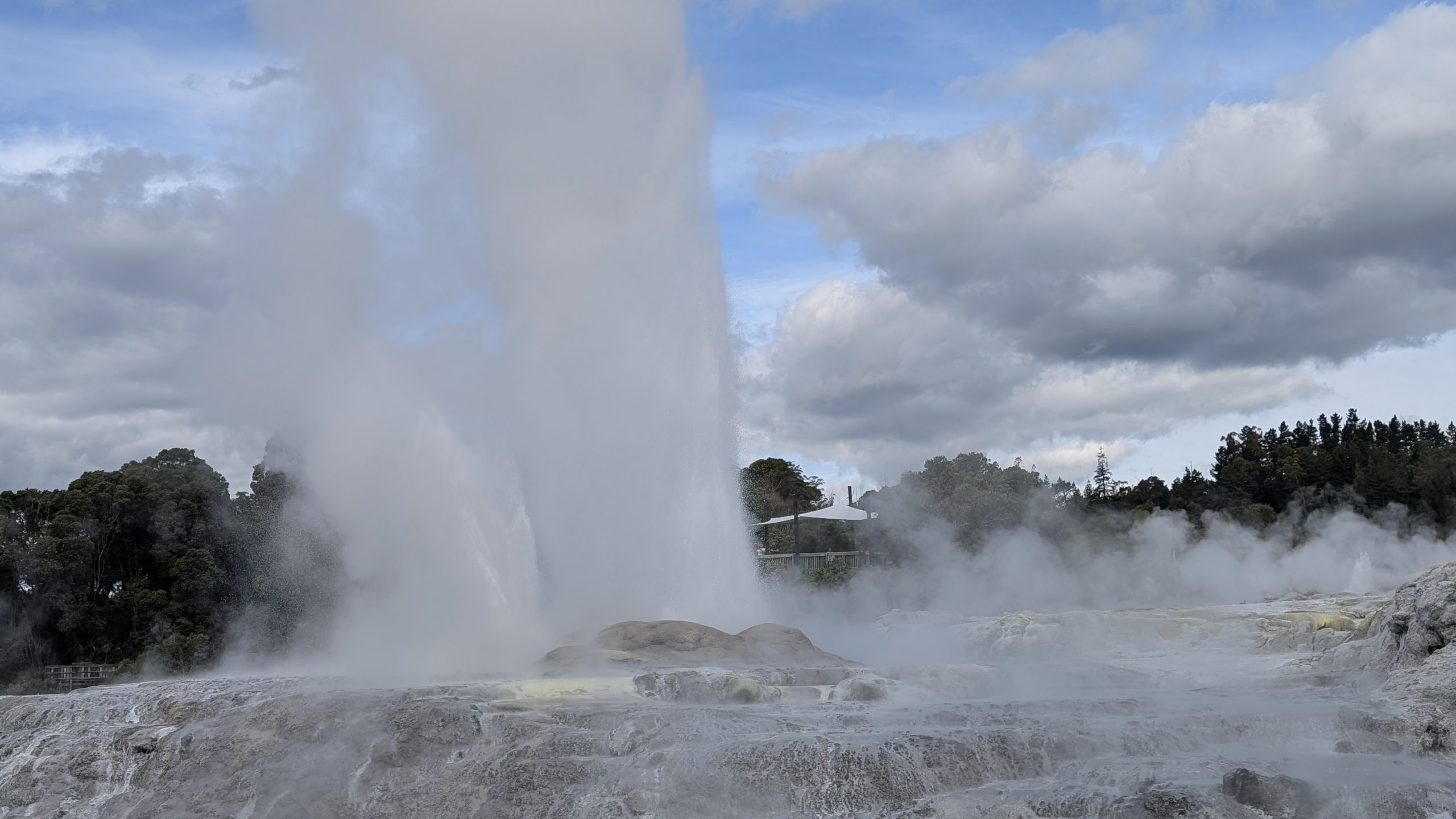
We checked on the level of Te Horu pool, and while it was too steamy to see in the morning, it appeared to be full in the afternoon. It had been empty the day before when Graham reported the unusual Pōhutu minor activity with Te Tohu erupting almost non-stop all day.
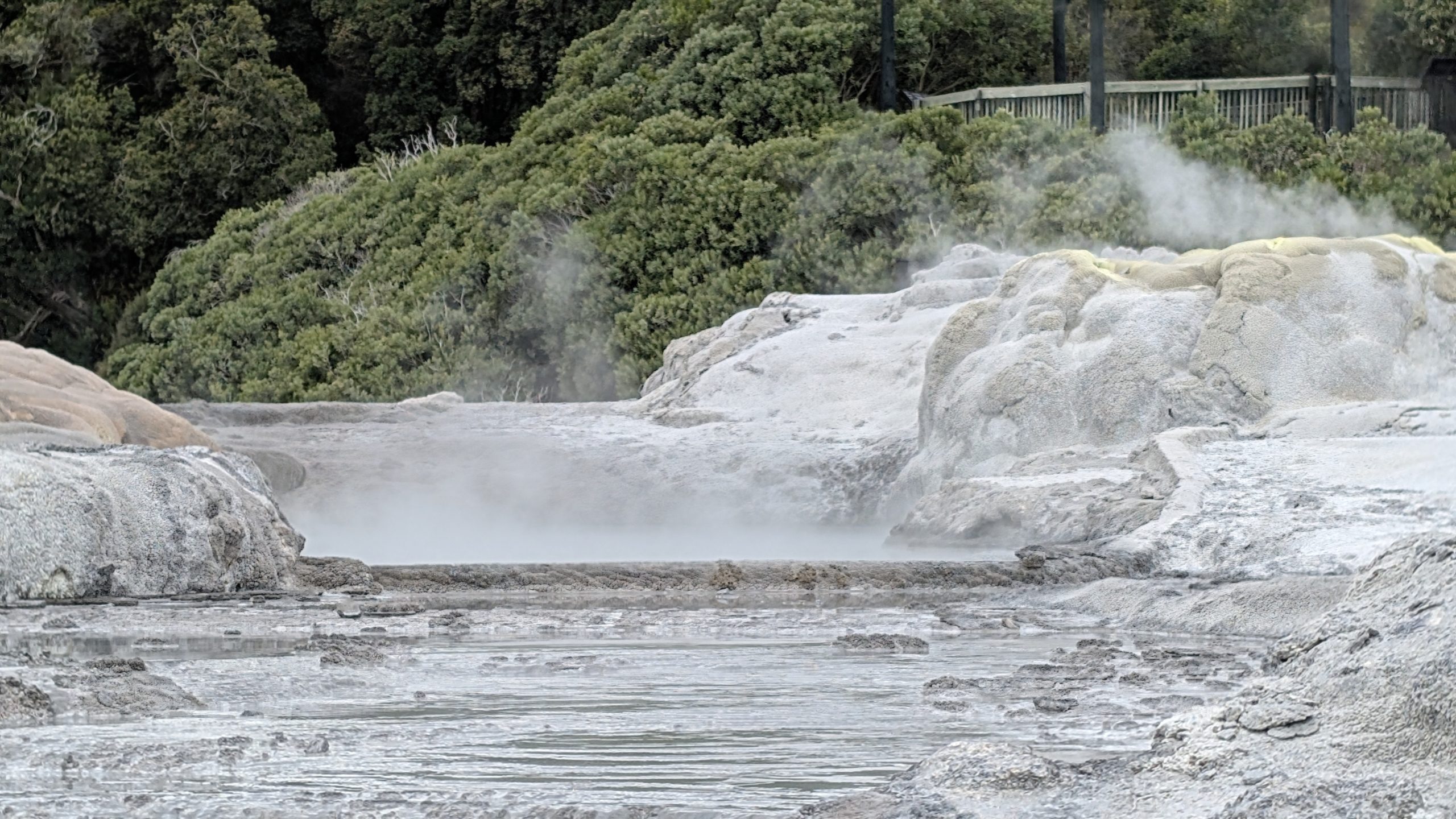
After the park closed, we drove back to the BnB and packed most of our luggage to get ready to leave the next morning. I made a big potato and egg dinner with a lot of leftovers.